Monthly Archives: January 2022

Pivoting in 2022

2022 is but a young green bud on the branch, and the Chinese New Year lurks just under the bark, a twinkle in the eye of the tree that plays the main role in this metaphor, if trees were to have eyes. It’s the time for resolutions, or for the slow withering on the vine of them (if these particular trees were to also have vines), and I have been in Seattle for over a month now, surrounded by many sleeping trees.

If resolutions were buds on tree branches, and the month of January a greenhouse of most people’s hopes and dreams, then what I’m experiencing is the opposite of that, a wallowing in the rubble of my hopes and dreams — a reverse-resolution, if you will. My fairly healthy routine in Thailand, when met with the Seattle cold and snow, has come completely undone. What this means is that, whereas some people lose weight, I gain it. Where some people sweat out their worries in gyms and studios and on rooftops, I stew in front of the TV. Where some start counting the calories on their plate, I ingest indiscriminately and voraciously. And where some commit to a dry January, well … (hides bottles of wine in garage). 

So it’s just me and the couch, my new(old) friend. But because of spotty wifi, I don’t even have working Netflix here, so cannot tell you anything about the exploits of Emily in Paris, or those people in Archive 81, or even Jerry Seinfeld. What I can tell you is that I might need psoriasis shots, am possibly battling insulin resistance, should look into that cool new inhaler that promises me a new day, and could even stand to ask my doctor about Botox for migraines, even though I’m not sure I have migraines. I am struck by how many well-known character actors (and maybe an Oscar winner or two) are taking jobs away from regular jobbing actors in commercials, hawking insurance and detergent as well as starring in well-regarded television shows and movies. As I write this, I see … is that Jewel? … in a murder mystery series on the Hallmark channel. Is inflation really this bad, where everyone must take whatever job they can get, thereby forcing all the other actors to fight over mattress factory and adult diaper ads? It feels greedy, doesn’t it? Won’t someone please think of the regular actors?

I write of this because I also find myself at something of a loose end: what to do in 2022? I am all out of projects, and though I have been lucky enough to have had some great things fall into my lap, I can’t rely on “the universe” granting my wishes forever, however much I’d like it to be true. Should I pivot like an Oscar winner shilling insurance for his Maui vacation home? Or should I stick it out, like the person who has not booked enough jobs to buy a Maui vacation home? Decisions, decisions.

Until then, at least I will have the crackling bonfire of all my previous healthy habits to keep me warm. Here, presenting the first fatal wound to my dreams of sticking to a pescatarian intermittent fasting regime in the States:  nuea khem. My father made this to go with sticky rice and nam prik tha dang (garlicky red eye chili dip) for a traditional Northern Thai-style breakfast during my parents’ time Stateside. It’s delicious and unfairly, unwholesomely easy. Perfect for enjoying while mulling over what to do with the ashes of your former princples.

Marinating beef

Nuea Khem (Salted beef)

  • 1 lb sirloin or ribeye
  • 4 Tbsps fish sauce
  • 2 Tbsps oyster sauce
  • 1 Tbsp sugar
  • A few generous grinds of black pepper
  1. Mix all ingredients together. Marinate in fridge for 1/2 hour to an hour, depending on how salty you’d like the meat to be. 
  2. After marinating, drain and fry in 4 Tbsps vegetable oil in batches over high heat. Do not crowd pan.
Frying beef

3. Fry until meat curled and edges and is a deep mahogany color.

4. Drain on a plate covered with a paper towel.

5. Eat with sticky rice or white rice with a chili dip or sambal if you have it.

Nuea khem

1 Comment

Filed under Uncategorized

Non-Glutton related: A Covid Christmas

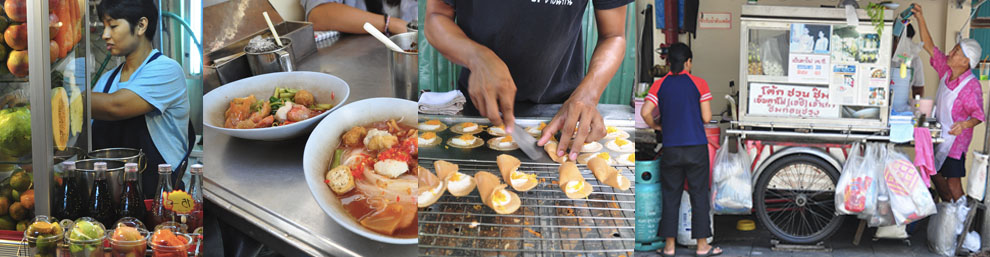
Homemade beef noodles

I wasn’t sure about writing this post because it has to do with someone else’s health and not mine. It also has nothing to do with food. But after sending a draft to my friend Karen first, I decided to post a little (or rather lot of) something in case it does end up helping someone navigate a similar situation.

What happened was this: Karen caught COVID, probably in New York, and started showing symptoms while mid-flight on the way to Seattle to visit us. Unlike the teacher en route from New York to Iceland, Karen did not self-quarantine in the airplane bathroom. However, she did text me the instant she landed, asking me to help transport her to a PCR testing site “just in case”, since she had a sore throat, cough and headache, three early symptoms of Omicron. She had already booked an appointment the next morning, the earliest appointment she could find that was near us.

We hung out tentatively, with Karen always masked around us, because even if it wasn’t COVID, she was showing signs of a really bad cold, which none of us wanted. All the same, we believed that the likelihood of Karen having COVID was very low, since she had had two Moderna shots and a recent Moderna booster. She also didn’t seem to be as sick as we would have expected for a person suffering from COVID; she did not have trouble breathing, and she still had her sense of taste and smell. 

Although we’d managed to get one PCR appointment in downtown Bellevue, Karen booked a second PCR test at Bellevue University because results for both tests were expected to arrive anywhere between 24-48 hours after, which is both 1) terribly inconvenient for people who don’t want to spread the virus and 2) something to be expected when holiday-time demand for tests was so high. At this point, Washington was relatively free of COVID; 400 cases had been detected in the state in the run-up to Christmas.

Karen had her second PCR test, and we spent a quiet day at home as she recovered from her cold. That night, you can probably guess the rest: the results from her first COVID test came back positive. That meant everybody in the house had to be tested, but, as it was coming up on Christmas Eve, appointments were hard to come by. By this point, Washington’s COVID cases had grown exponentially and everyone was getting worried about spreading the disease at a holiday gathering. Rapid at-home tests were also impossible to get; Karen made us visit many a CVS or Rite Aid since their websites indicated tests were available, but shelves (for a lot of things, not just COVID tests!) were bare, giving off a kind of surreal, end-of-the-world vibe.

A friend saved the day with a bagful of at-home tests he had at home, and very kindly drove to our house o’COVID to drop them off at our doorstep. We all tested negative, and even though it made us feel relieved, we knew it wasn’t as reliable as an up-the-nose-into-your-brain type of test, the kind they favor back in Bangkok.

The earliest available tests for the household were on Christmas Eve in the morning. So we headed to the test site, where Karen had had a very easy and efficient experience getting her second PCR test. Just like when we took Karen, our car was rejected for being outsized and unable to fit into the garage where a long line of car occupants waited to be swabbed. So we were told by the security guard to head to the upstairs car park, armed with the words “tell them Ron sent you.” Upstairs, we joined a lone woman braving the cold in a sweatshirt and leggings, who had been driving a similarly oversized car and had been waiting for her test since 7:45 in the morning.

Our experience diverges from Karen’s here. I think they saw that Karen managed to bypass the long snaking wait in the garage by coming in an outsized car, and that her quick, efficient experience was not indicative of their “brand”. So a bit after 9am, the lone testing person showed up and promptly told the sizeable queue that had formed that he would only be testing people who had made appointments. That disqualified more than half of the line, including the lady who had been waiting for over a hour in front of us. She did not take this well. When we informed this man that we had made appointments, he asked us for a code that would enable us to go through with the test. I asked him if the code was “Tell them Ron the security guard sent you”. By now it was 9.15, and this ordeal was beginning to resemble a game show where we were to overcome obstacles of increasing difficulty in order to win the prize of having a swab up your nose.

We eventually persuaded this guy that we really did actually know Ron, and were given swabs to put up our own noses that he then took from us to put into our personal beakers. After us he did allow the woman who had been waiting for two hours to finally get a test; thankfully, she now had the code.

We got our results, surprisingly, by Christmas morning (I was the last, of course). We were all surprisingly negative. This could be due to any number of factors, including 1) we were all vaccinated and boosted and 2) Karen was extremely careful around us, especially in the first few days of her visit, when she never left her room and I brought all her meals to her door. This was helpful, since we learned that the first few days are when COVID is at its most contagious. By the end of Karen’s trip, she was absolutely recovered and even tested negative on two (!) at-home COVID tests, which we took to mean that she was no longer contagious.

Some very obvious takeaways to this story that ultimately ended well:

  1. The stinginess with which organizations use their PCR tests is, to put it mildly, unhelpful. People have to really, really, really want to be tested, or really, really, really lucky to know someone who can give them access to a test. It is much, much easier to pretend everything is hunky-dory and that, even if you do get sick, it’s not COVID since your non-existent test didn’t tell you so.
  2. Vaccines and boosters aren’t Captain America shields keeping you from getting the virus. They are intended to keep you from getting so sick that you need hospitalization, thereby taking up the space of someone else who needs the bed for a non-COVID reason.
  3. As Karen said herself, what if she had been another kind of person? It would have been easy for her to pretend she had only had a cold, or to be less vigilant about testing (in fact my parents had been joking that we were planning to do a tour of all the PCR sites in the Seattle area and writing a guide book about them). Even when she didn’t know she had COVID, she had her meals in another room or in front of an open door and wore her mask when around people. Which leads me to the next point.
  4. Masks do work in preventing the transmission of this respiratory virus. I know people for some reason (usually Western, and, in Bangkok, a lot of men) like to make fun of them as some sort of evidence of hysteria, but I can personally attest to their efficacy in fighting the spread of COVID. Make of that what you will.

Leave a comment

Filed under Uncategorized