
There are cities where you will never feel at home, no matter how often you go or how much you like the friends you have there. San Francisco, unfortunately for me, is one; London is another. As nice as Cape Town seems, I wanted nothing more than to get back onto my ship and sail away; I felt the same way about Charleston, South Carolina, but in that case, it was fleeing by car and Karen was the one who was driving. Some cities just don’t feel right, like you always have to be on your guard, like shoes that are a little too small.
And then there are the cities where you just feel at ease, no matter where you wander. Barcelona is one of those cities for me. The buildings are beautiful and the people wear colorful clothing. The weather is mostly sunny and everyone is for the most part generally friendly. As for the food, well…enough said.
It’s just a shame that I was hoping to lose weight here. After five and a half months on a ship and even longer away from home, I am now the biggest I’ve been since giving birth to my son 13 years ago. My husband has now taken to reflexively patting his bulging belly, which we refer to as his 8-month food baby, whenever he is deep in thought. We are in dire need of a diet.
But Barcelona just won’t let that happen. I don’t know if it’s the result of having been cooped up on a ship where the croissants taste like they came from an airport kiosk, but the bread here is the most delicious manna from heaven that I’ve had in ages. Ditto the olive oil. Then there are the tomatoes. Will this city not just let us be?
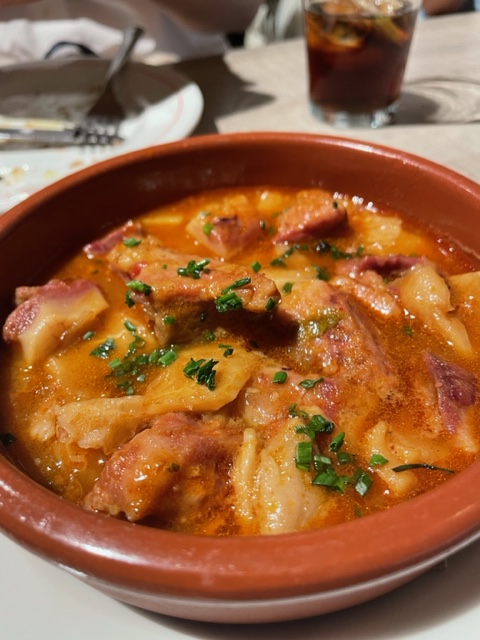
We get our first taste of Barcelona where we always do, at La Boqueria market. It has gotten to be a massive tourist draw since I was here last, only 6 or 7 years ago, where the famous Pinotxo Bar was only selling coffee and cream puffs, or xuxo de crema, in the morning. Now there’s a whole bar-long display of food and a full tapas menu offering the usual suspects like pan de tomate and ham, sandwiches, and Russian salad, alongside more unusual dishes like braised bull’s tail stew.

There are now a plethora of other shops selling ready-to-go food arranged in impossibly beautiful ways: olives and peppers skewered to resemble bouquets, slices of meat made into edible blossoms in bowls, and cones of ham and sausages just about everywhere you look. Razor clams and limpets are packaged separately with little wooden forks and wedges of lemon. Figs and avocados are lovingly wrapped individually in big green leaves and displayed like jewels. There is no way you will not be dazzled. I made it out of the market with a box of spicy olives, a wedge of cheese with quince jelly, and a clutch of sausages and pre-sliced ham and considered myself lucky. You can do real damage here.
But little did we know the serious damage (to our waistlines and our wallets) that was to come. After yet another pleasant lunch at Madre Taberna Moderna, we found ourselves at Nectari, recommended to us by our new friend from the ship, Jean-Claude. When we arrived, we knew nothing about what we were going to get; Jean-Claude had simply said that Chef Jordi would prepare something for us.
We arrived, as always, a little early (Karen says our family motto is “Hurry up and wait”) and consoled ourselves with a trip to the fruit stall next door, where I bought avocados, extremely fragrant red onions, and a handful of very sweet mini-plums and mini-pears that looked made for little forest sprites.

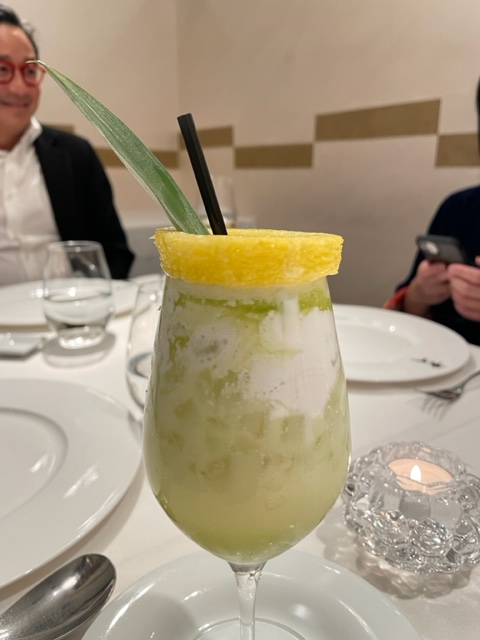
Jean-Claude had made us a reservation at the very unSpanish time of 7:30pm; unfortunately, the restaurant doesn’t even open until 8pm. Luckily, the very accommodating waitstaff allowed us to wait inside at our table. They even attempted to make my son his new favorite drink from the boat, a virgin pina colada (in spite of, I suspect, having never clapped eyes on one before).
We then met Chef Jordi Esteve, who told us that he wanted to show us his vision of what high-end tapas could be. The meal that followed is one that I can honestly say had its highs and lows: the highs, some of the best bites of food that I’d had in years; the lows, the fact that there was just so much of it. I am not as young as I used to be, and I now have to mentally prepare myself for meals spanning more than 4 courses. I lost track of how many courses we had. I do know that, towards the end, if we were indeed living a high-concept horror movie and being fattened for the kitchen, I would have willingly submitted to the knife and the culinary ministrations of our skilled chef. I was that full.
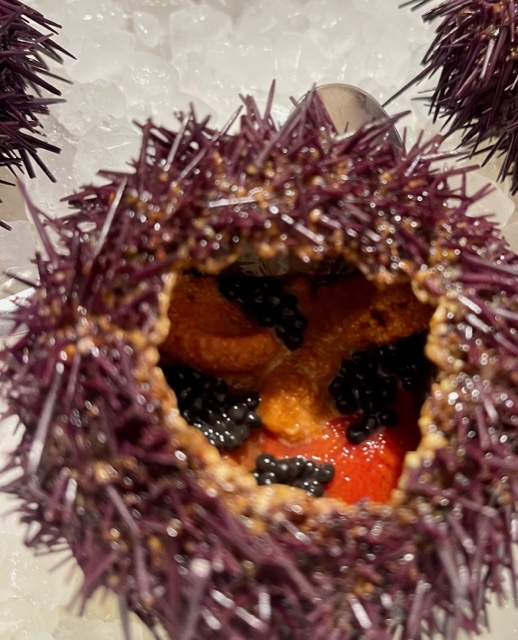
I cannot document everything we had — there were croquettes filled with a chorizo cream, and a Russian salad topped with caviar — but the things that stood out were numerous and varied. There was fresh endive topped with juicy white asparagus, mayonnaise and sea urchin; later, we had that sea urchin alone, topped with more caviar.

There were tiny razor clams in fragile shells so delicate that they were almost see-through, while the meat inside was tender and strangely peppery.

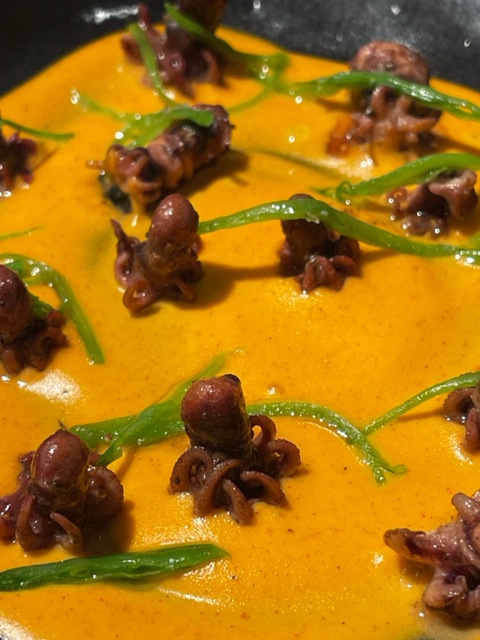
In a course that I described as the “baby” course, Chef Jordi brought out a plate of tiny smoked baby octopus, adrift in a chorizo cream and enmeshed in tendrils of samphire.
At the same time, we also had plates of Spain’s famous baby eels atop a perfectly fried egg in a garlic cream.

Of course we had paella, but in mini-pans, garnished with the fatty underside, or double chins, of fish, breaded and deep-fried.

But the dish that blew my mind arrived with this “plancha” of raw red shrimp from Galicia: the raw shrimp head, simply garnished with a dollop of caviar.
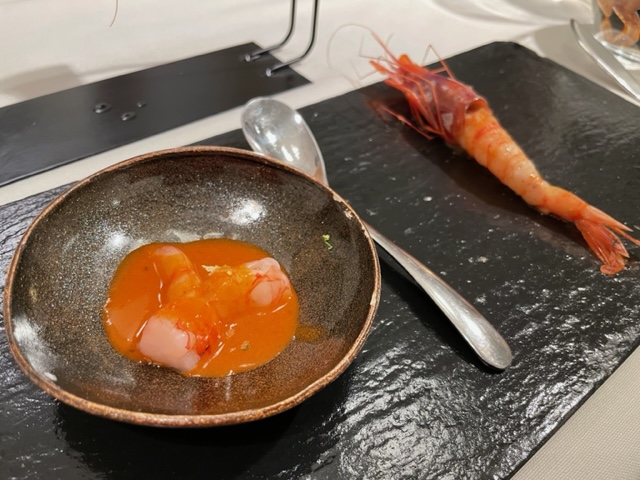

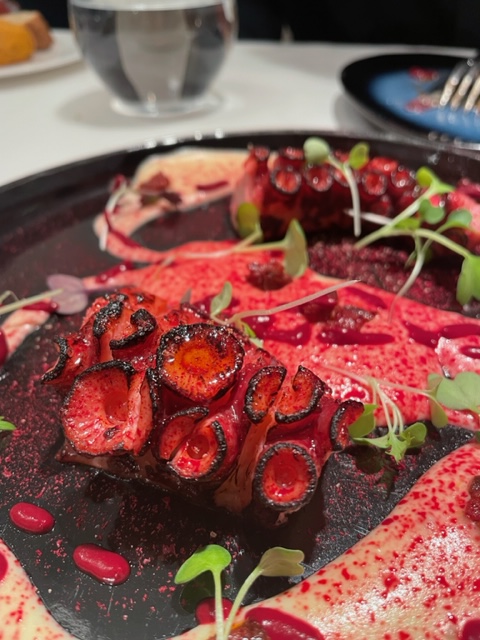
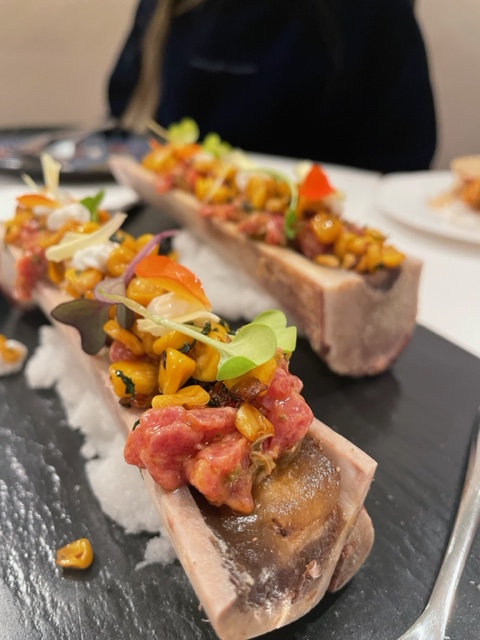
So fresh, so sweet was this dish, I became a convert to Spanish red shrimp for life. But alas, I was emotionally (and physically) spent. The next course, a beautifully seared octopus, as well as the one after, a beautiful steak tartare plated on a perfectly grilled tranche of bone marrow, were only tasted out of a sense of duty.
At the end, the only people able to have the playful golden “hamburger” dessert with raspberry “ketchup” and passionfruit “mustard” was my daughter. It was, I must admit, a terrible shame. But then Chef Jordi offered us a chance to redeem ourselves, by promising to take us out to his favorite tapas places the next day. This time, we would know to arrive very hungry.



 Bangkok Glutton