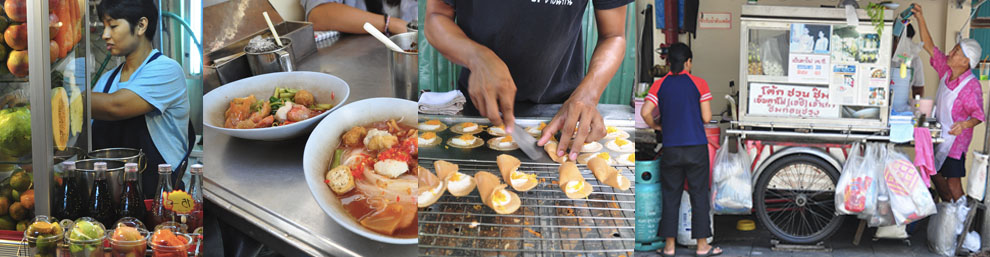


In many respects, Bangkok is locked in a rivalry with Singapore, but it’s one that Singapore doesn’t really know about. It’s like the rivalry between the Cleveland Browns and the Cincinnati Bengals, or between me and Martha Stewart — one side constantly pushing, pushing, the other side going “who?”
So it makes sense to view Singapore with a little bit of trepidation, especially since it’s the one buzzword that every single official in Bangkok’s government chooses when asked about the “vision” for a future Bangkok. When Thais claim to want Bangkok to turn into Singapore, what they mean is “orderly streets”, “clean sidewalks”, “rule of law”, and an obliging, compliant populace. You and I both know that this is never going to happen in Thailand (the ban on online porn alone is impossible). Yet the officials continue to bang their Singapore drum, clearing out the low-hanging fruit, like mobile vendors…(uh, that’s it because no one wants to make the effort to fine litterers) on a quest to one day, some day, be like Big Sis SG, wildly divergent GDPs be damned.
Singapore is often the brunt of jokes from other Southeast Asians. “Disneyland,” sniff some, and “sheep,” decry others; “They stole all our dishes,” claim the Malaysians, who have a case. Yet the evidence is clear — Singapore is a beautiful city, run very well, even if wealth and power are all centralized and the whole system vulnerable to a Singaporean Trump who can ruin everything. The restaurants are good, the parks are lovely, and the hawker centers are well located and clean. It’s little wonder that visitors who view the chaos and arbitrary nature of Thailand and Cambodia as frightening find refuge in the logic inherent in a place like Singapore…even if the service still, even now, kind of sucks.
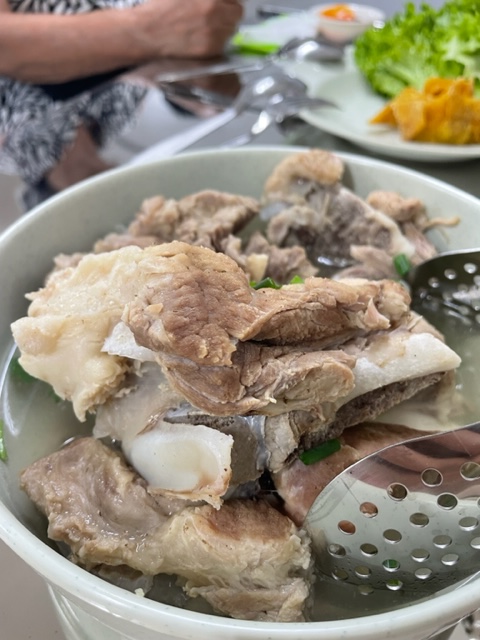
I can say this because my husband, once again, was miffed after a server bearing a tray laden with soups shouted at him to get out of the way. This was at Ng Ah Sio Bak Kuh Teh, a longtime favorite of the family and much looked-forward-to by a person who professes bak kuh teh, pork ribs stewed in a peppery broth with rice, one of his favorite dishes in the world. Our server was nicer after, with typical Chinese straightforwardness, he noted, “Oh, you ordered a lot.”And we did: there was also three kinds of tofu, and pickled cabbage, beef liver, boiled peanuts, deep-fried crullers, and a smattering of greens. “It’s very light,” he reassured us, noting my stricken face on seeing the crowded tabletop.
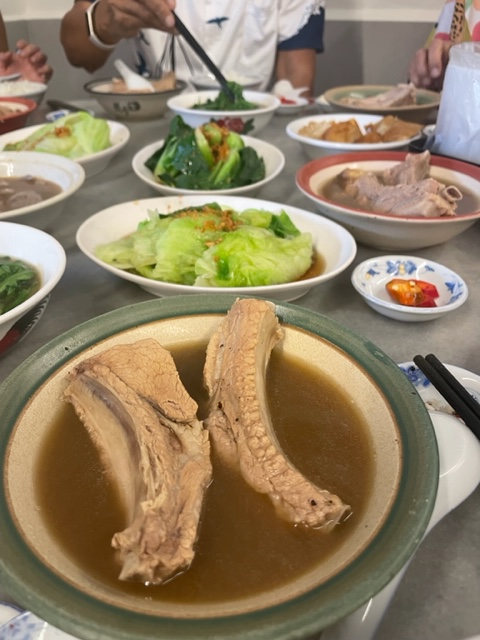
The verdict? Honestly, meh. The meat clung to the bones like Bangkok officials to a Singapore map, victim to too few hours in the soup pot. I told my mother-in-law that she made a better bowl, and I meant it!
That evening, when everyone else was celebrating the end of yet another leg of the cruise at a beautiful venue with too little food, my husband and I met our friends Khim and Galen at Chin Chin Eating House, famous for its Hainanese chicken rice, which is one of Singapore’s national dishes (even though it’s from Hainan?) We got there at 7pm during a torrential downpour, and no chickens were hanging in the window, prompting a mini-panic attack from my husband. “Quick, reserve one!” he said, prodding at my arm, but I was adamant that we would be fine, since the flood of people seated after us would have seriously revolted if left without chicken on their tables.
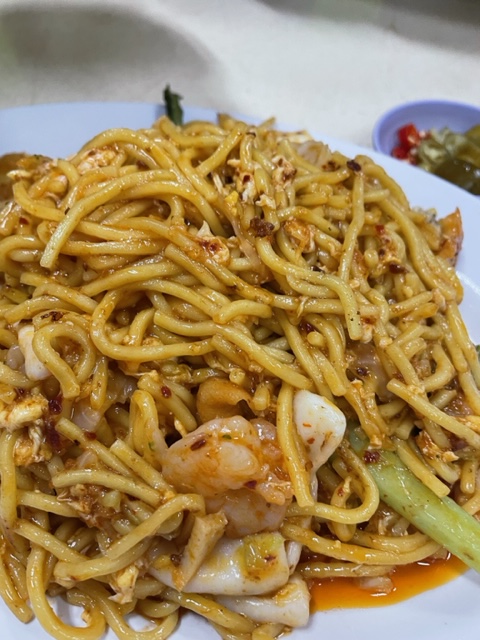
Because Galen and Khim might have felt bad for being a bit late, they ordered EVERYTHING: half a chicken, four bowls of fatty rice, sambal-laced morning glory, dou miao (a kind of Taiwanese sprout, seen on every table), a smoky char guay thiew, a mountain of prawn mee, and most intriguingly a “pork chop” with gravy and peas resembling the dish found at Thai cook shops, first started by Hainanese chefs in Bangkok many decades ago.

Unlike in Thailand, the pork chop is served with the tomatoey gravy on the side, so that the pork retains its tonkatsu-like crispness. I have to say, it’s a great idea.

As for the chicken rice, well, both Malaysians and Singaporeans make a much bigger deal over the taste of the chicken and the quality of the rice than we Thais do. Yes, indeed: chicken rice is made by steaming the chicken and cooking the rice in the fat that drips off the flesh, yadayadayadayada. Thais only care about the sauces, and here at Chin Chin? You mix your own. I’m not sure whether to be outraged or elated. My only real criticism is that they do not give you enough fresh garlic or chilies, for when you really want to go Thai on a chicken rice’s ass.
The next day, we walked through Tiong Bahru Market, which hosts a fairly famous food center with not one, but TWO Michelin-starred vendors. There were no Jay Fai-level lines, and no hysteria about getting your food before everyone else, unlike at popular food places in Bangkok. It’s sedate enough that I might even be able to take my mother — that’s how orderly I think it is.
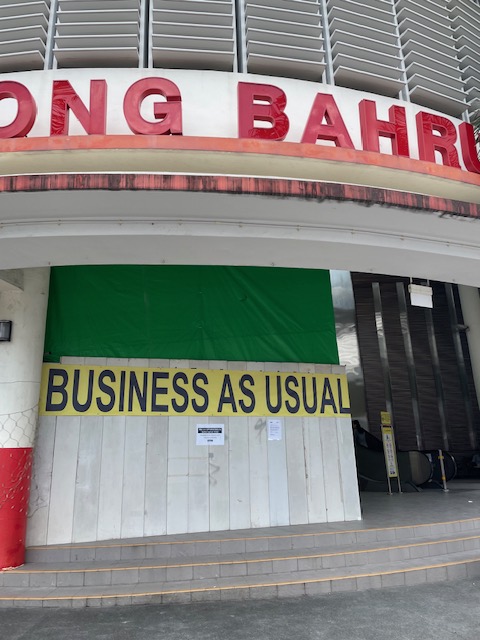
It would make sense to sit down and enjoy a meal there, but the real objective of our trip was just down the road, at De Golden Spoon Seafood. Famous for its crab bee hoon, this restaurant sits right in my sweet spot: old, mostly empty, delicious.
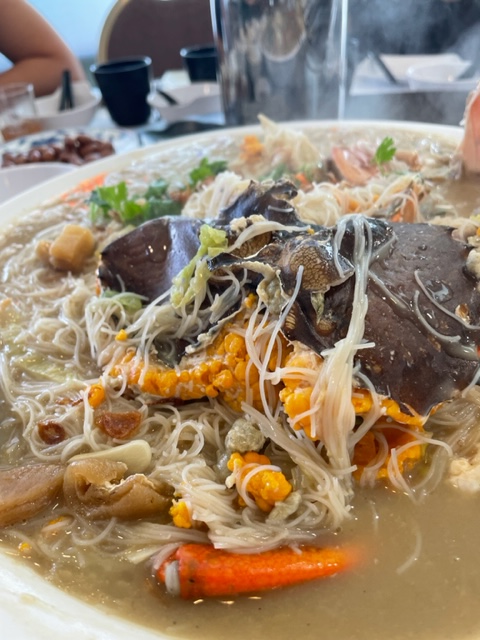
But crab bee hoon (crab with rice vermicelli in a gravy) isn’t the only thing you should order here. There’s also black pepper crab, thick enough to stay under your finger nails, and crab swimming in a lake of tomatoey curry, roe-studded crab parts barely visible above the murk. There are razor clams stuffed with glass vermicelli and garlic, and Chinese kale, stems shaved and served in a thin hoisin sauce. And there is chicken fried rice, for your son who eats nothing.
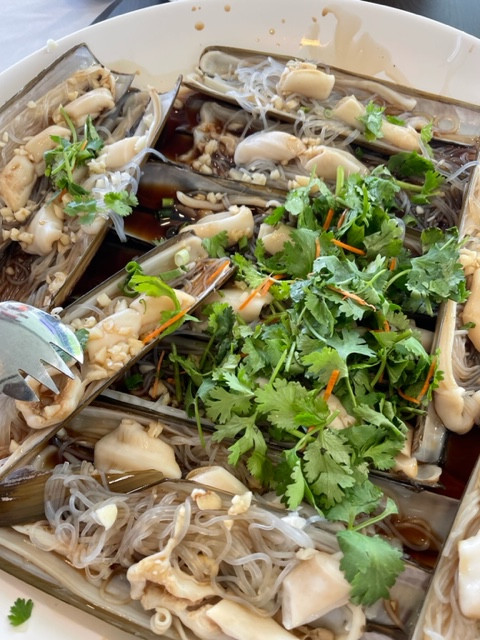
What transpired was my favorite meal in Singapore, in a fairly rundown restaurant resembling the eateries you find next to the gas station on the highway in Southern Thailand. Cooks were wildly generous with the crab roe, the crabs themselves enormous enough for us to suspect they hailed from Australia instead of Sri Lanka. My only complaint is that I did not have enough space in my stomach to eat it all.