Category Archives: Asia

So good, it will send you into labor

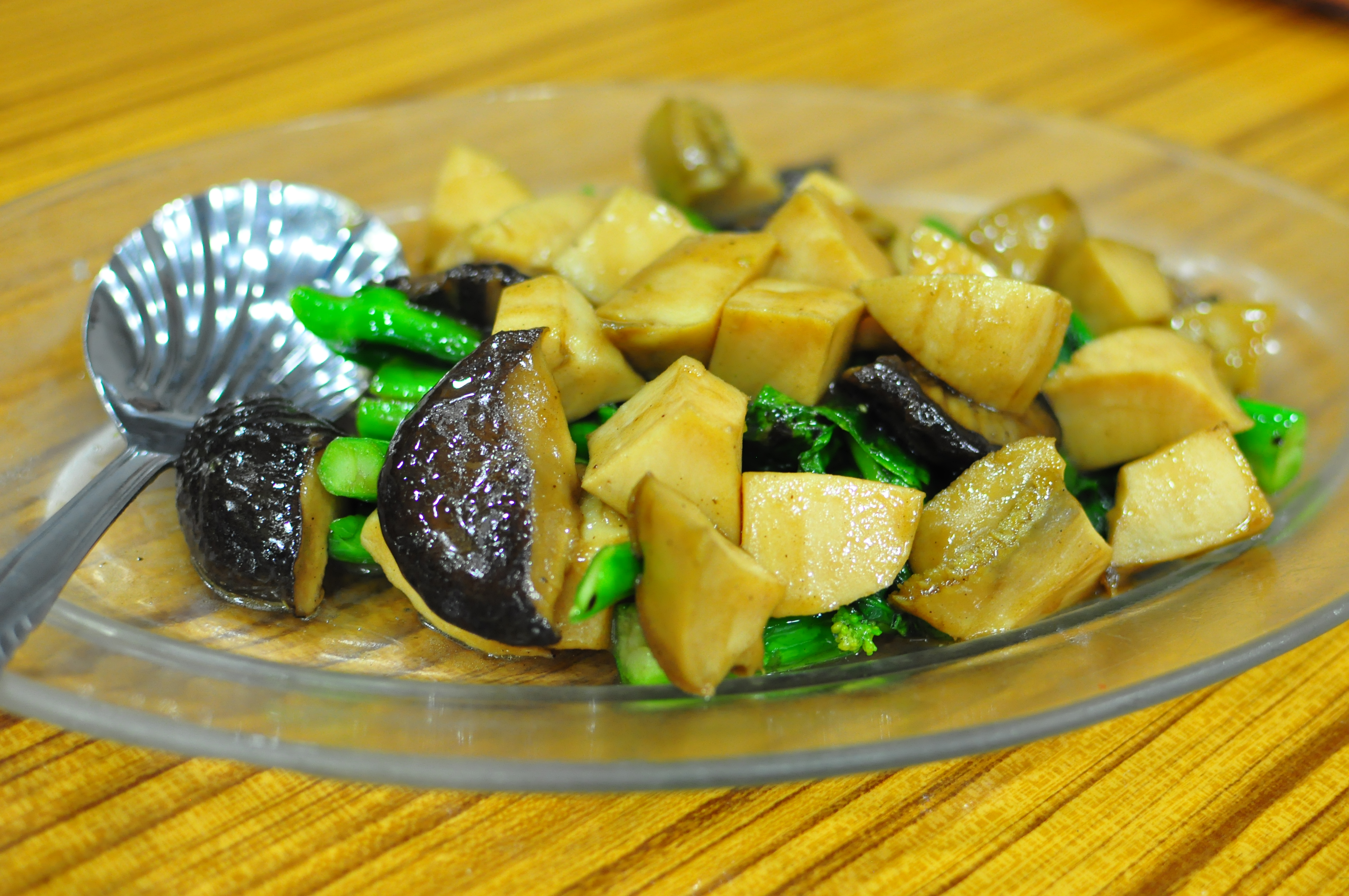
Nakorn Pochana's abalone and mushrooms (het hom) with Chinese kale

==Was strolling along Chinatown today when it hit me — I needed to make two corrections! The mushrooms in the abalone dish are called hed hom, or shiitake. They are NOT oyster mushrooms. Also, the Thai seafood restaurant I refer to near the end of the piece is called Sorntong Pochana, NOT Sorndaeng. Don’t know what I was thinking.== 

Picture this: we are close to Sam Yan market, at Nakorn Pochana (“Pochana” is a common Thai word to designate “restaurant”, particularly Thai-Chinese restaurants). Called “Nai Hai” by its unusually loyal regulars, Nakorn is generally regarded as one of Bangkok’s premier Thai-Chinese restaurants, alongside stalwarts like Pen on Chan Road and, once upon a time, Jay Ngor (where the quality has slipped as it expands). Like its Thai-Chinese peers, Nakorn specializes in stir-fried greens, deep-fried and steamed fish, and a smattering of well-loved fried noodle dishes — all showcasing the enormous contributions Thailand’s Chinese community has made to the country’s cuisine (noodles, the frying pan, and the steamer among them).

Where was I? Oh yes. A mass of flesh and hormones, inching ever closer to 80 kg and my tenth month as a pregnant person, I was stuffing my face with one of Nai Hai’s most well-known dishes: chunks of tender abalone, bulked up with juicy shiitake mushroom caps, a savory shellfish bounce with the slightly bitter backbone lent by shards of bright, brittle kale. My enjoyment of this dish was so intense my blood pressure shot up to stratospheric levels, a development that was initially blamed on the restaurant’s tea, then to a panic attack, and finally to the rapid onset of pre-eclampsia. I was unable (to my regret) to attend to a highly anticipated dessert of sugar-encrused taro, and was rushed to the hospital in time for 16 hours of labor-induced fun. My son was called “pow hu” (Thai for “abalone”) for weeks afterwards.

Needless to say, it took me a few months to get back to Nai Hai. But like all good things, it was worth the wait.
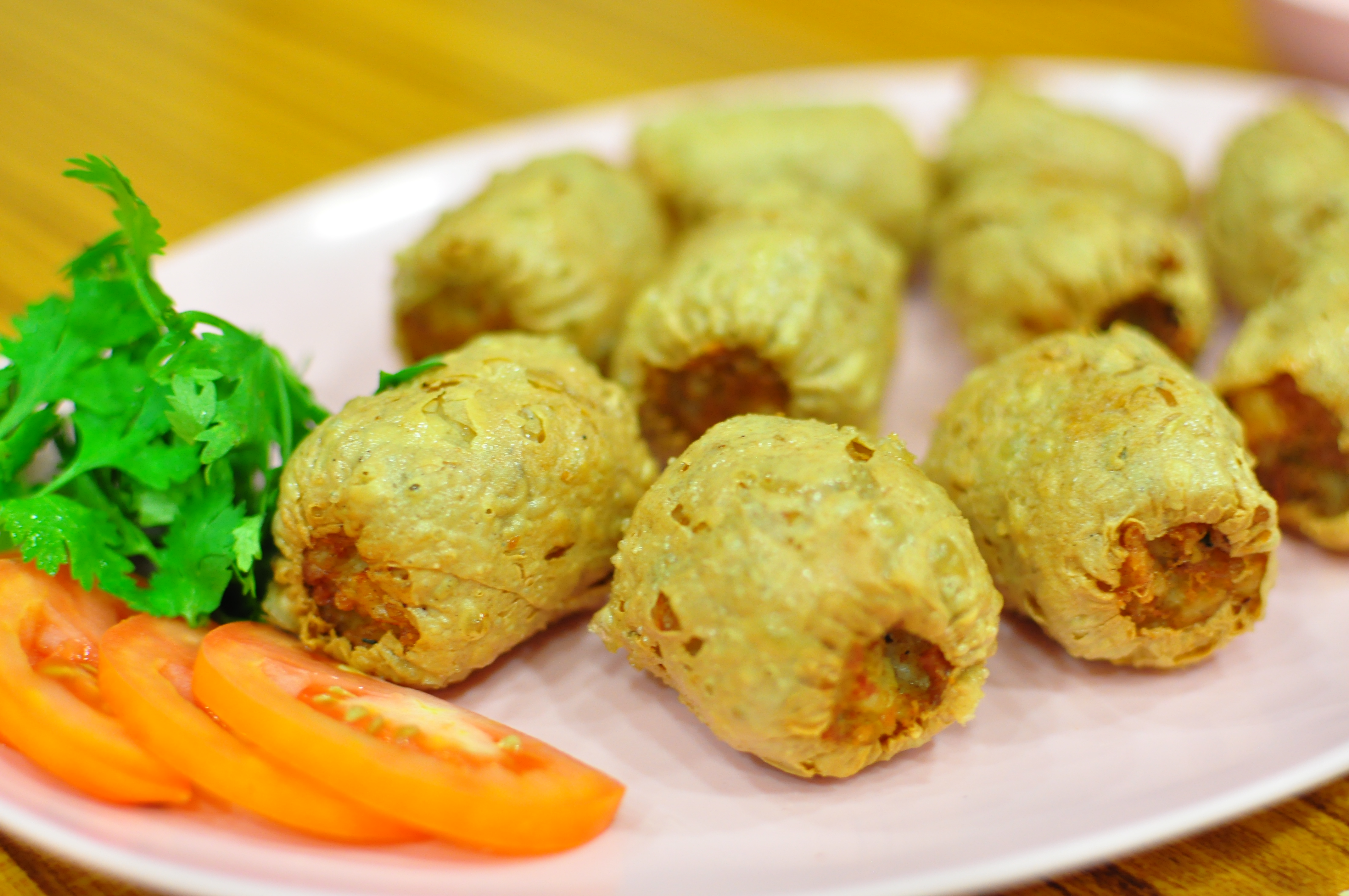
Hoy jaw, deep-fried crab dumplings

 Like an old friend, Nakorn’s hoy jaw (deep-fried crab dumplings, which differ from the shrimp variety, called hae gun) presents familiar flavors, but in a superlative fashion. A crinkly, crackly package of the sea, here it is never too greasy, not too heavy.

Like a classy party-goer who can hold her liquor, the rest of the menu shows similar restraint. Its gaengs (an all-encompassing word running the gamut from thick curries to clear soups) are never too obnoxious or obtrusive. Its extensive range of stir-fried greens — including, but nowhere near limited to garlic chives, pumpkin shoots, young spinach, broccoli sprouts and the ever-present morning glory — are always seasoned to perfection, and never oily (a recurring theme in lesser Thai-Chinese restaurants) or over-cooked to oblivion.

Garlic chives with pork liver

But the best part of Nakorn’s menu may be its seafood. This is not the fiery, in-your-face stuff of Bangkok’s well-known seafood purveyors (of which Sorntong Pochana on Rama IV is a good example; Somboon Seafood is better-known but a mere echo of a good restaurant). This is also more restrained, including the popular specials (steamed seabass with pickled plum) with the more esoteric (deep-fried split langoustines). The best, though, may be a dish beloved in Thai-Chinese restaurants across town: stir-fried cracked crab in curry, comparable (and almost as good) as the version at Pen.
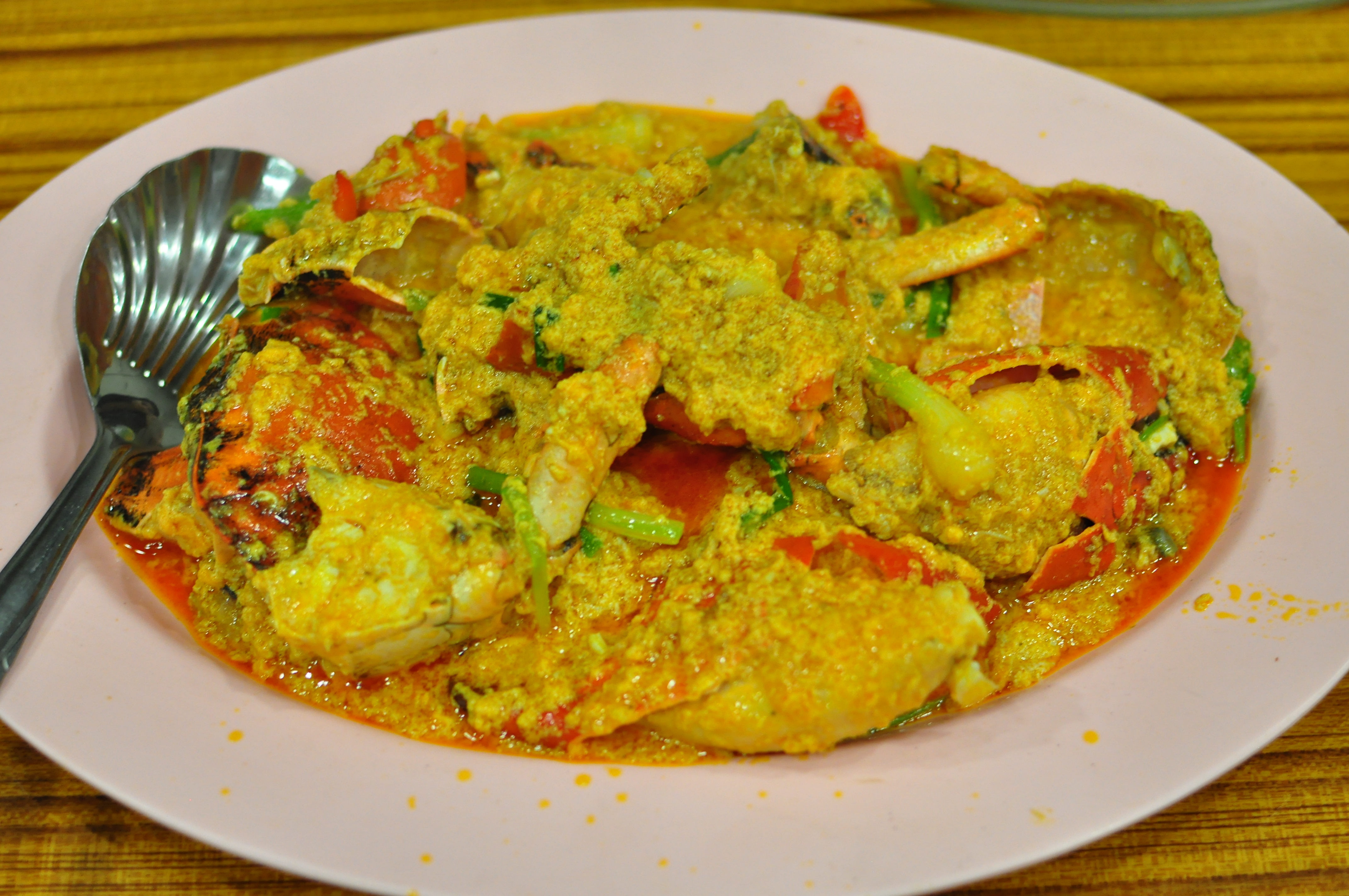
Stir-fried curry crab

Best of all, it’s the little details that set Nakorn apart from the rest of the pack: the casual, convivial atmosphere, conducive to lots of shouting and (of course) grabbing; a loyal coterie of customers ranging from college students to middle-aged “khunying” types on their hair’s day off; the ability to take out excellent jok (Chinese-style rice porridge) for the next day’s breakfast just next door at Jok Sam Yan; and service that remembers the last time you came and expects to see you again.

 Nakorn Pochana (Sam Yan market, 02-214-2327, 02-215-1388, 02-215-4418)
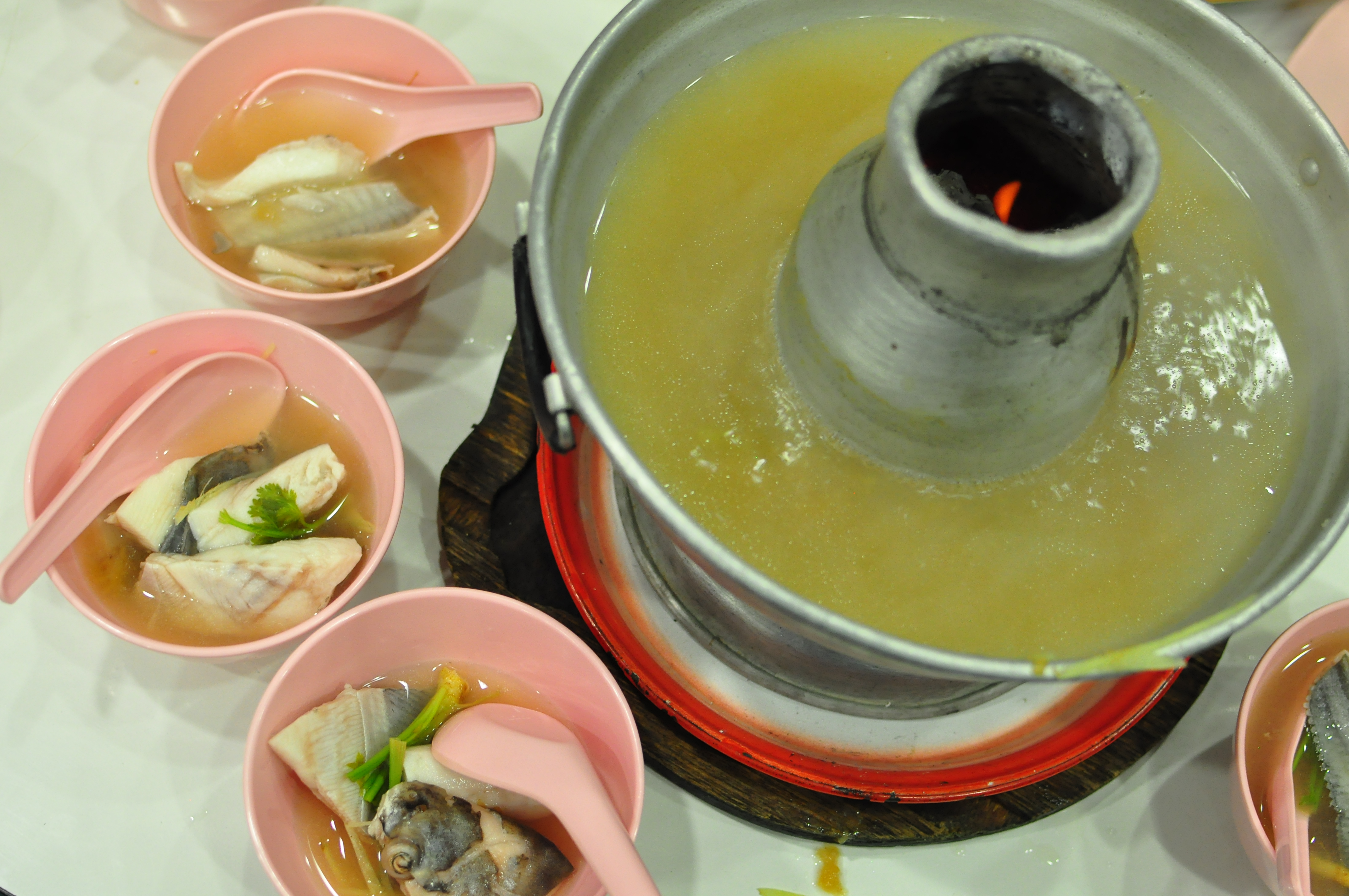
"Tom som", or tart-spicy soup of pomfret

All photos by @SpecialKRB
1 Comment

Filed under Asia, Bangkok, fish, food, restaurant, seafood, Thai-Chinese, Thailand

Markets: the Best of the Best

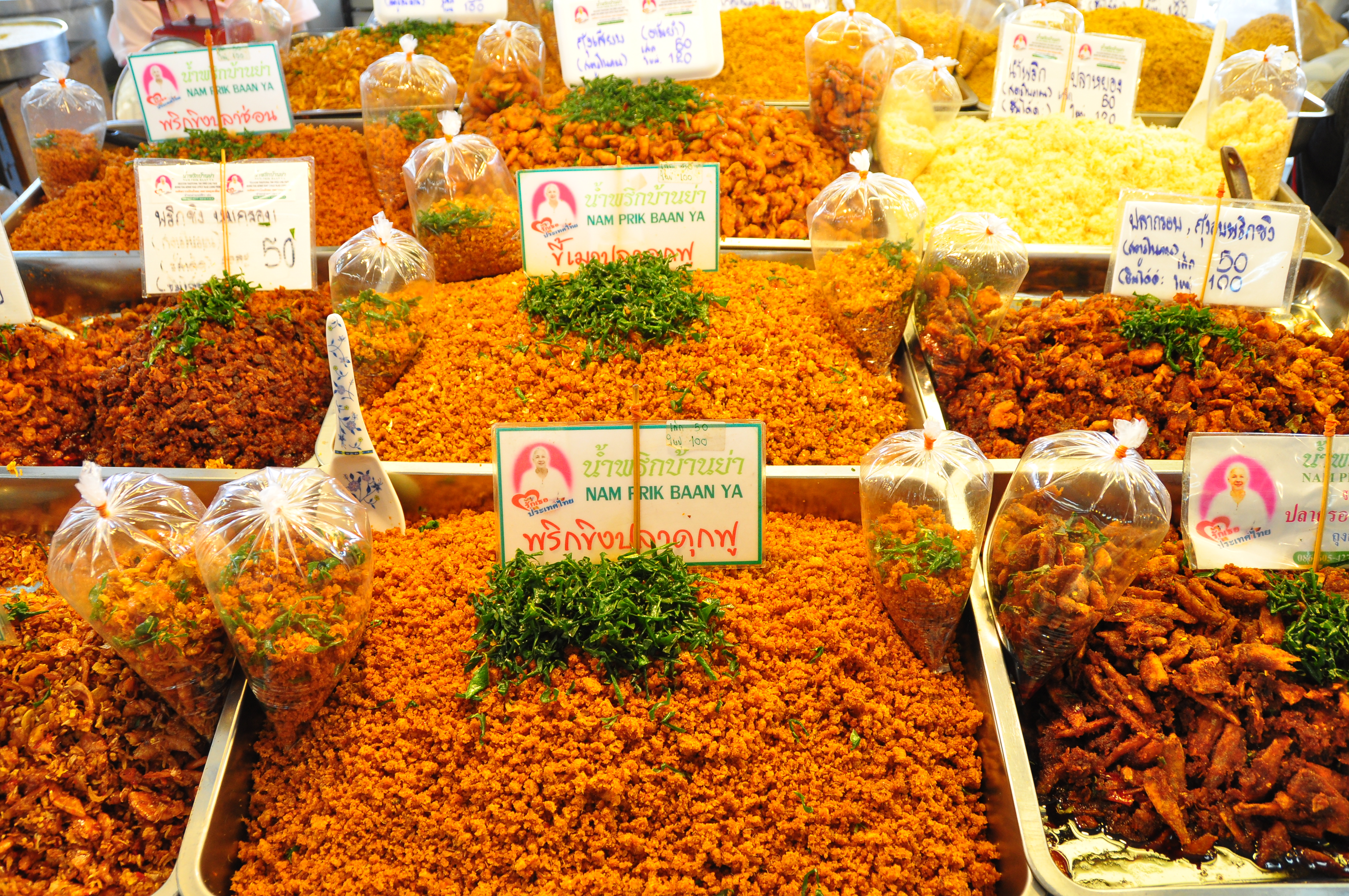
Nam prik at Aor Thor Kor

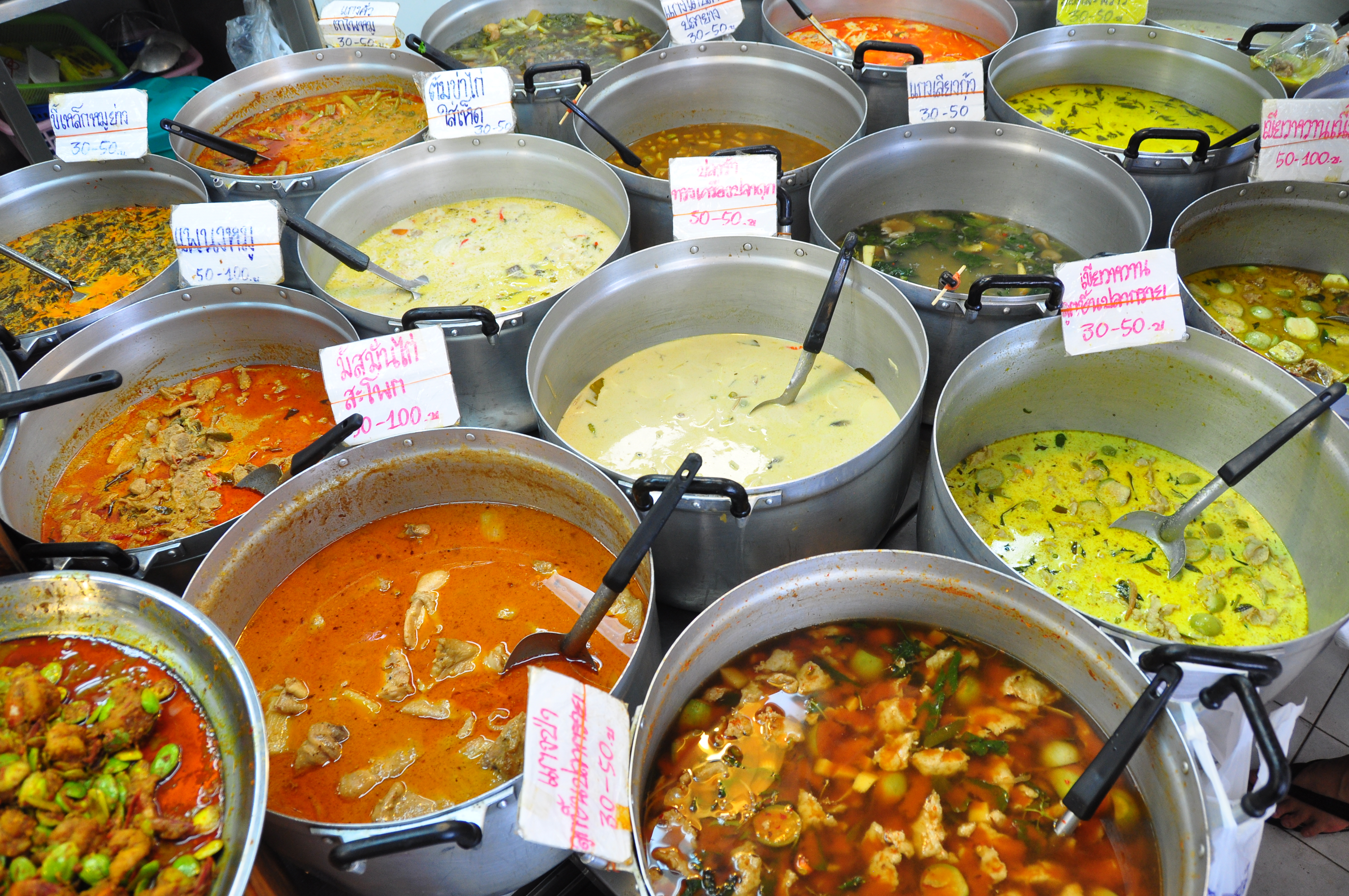
There is no “wet market” in Bangkok that comes close to “Aor Thor Kor” in terms of variety, quality, and cleanliness. This is probably why we brave the 40+-degree heat and washrag humidity to vie for the very best gaengs (curries) and pads (stir-fries) with scores of other helmet-haired matriarchs and their bag-laden drivers.

And it’s not just a place for stuffing your face and emptying your pockets. Markets are always the places I head for first when I travel. There is no better place to find out about a country than through its markets; no truer mirror to the aspirations of a people than their stomachs. Here at Aor Thor Kor (the Thai abbreviation for the market’s full name, the “Marketing Organization for Farmers Market”, or MOF), those hopes and aspirations come neatly wrapped in banana leaves, enclosed in pudgy plastic bags, garnished with a handful of deep-fried basil. 

But even in this nirvana of ready-made curries and coconutty sweets, there is a hierarchy — the creme de la creme. In this bewildering matrix of fried food and sifted spices, where to go? Below, the best of the best:

Just a fraction of Mae Malee's offerings

1. There is no gaeng (curry/soup) vendor better than Mae Malee Gaeng. In Bangkok, period. From the tried-and-true old favorites (green chicken and beef massaman curries) to regional specialties (gaeng thrai pla, or spicy Southern fish entrail stew, and the bitter, piquant stir-fried sator) to hard-to-find gems (like the veggie-heavy gaeng liang, meant for breast-feeding mothers) — Mae Malee has it all, a one-stop shop to covering every inch of your dinner table.

Mae Malee's steamed seafood curry

2. But it would be boring to live by Mae Malee alone. Sudjai Gai Yang is known across the country for is succulent grilled chicken — be it factory-raised or gai baan, referred to in English with the euphemism “traditional”, but better described as “free range” (of course, some Thais also refer to them as “scrawny”). There is no country that loves its poultry more.

Butterflied grilled chicken at Sudjai Gai Yang

 3. In a sea of nam prik (pounded pepper dip) vendors, Nawanporn nam prik gapi stands out (and a proper Thai doesn’t throw a dinner without some sort of nam prik). The namesake offering (shrimp paste pepper dip) is earthy, fresh, full of the deep bass note of flavor that leaves some in rhapsodies and others with a grimace. Funny how shrimp paste has become synonymous with Thai food; it was brought to Thailand centuries ago by the Chinese.

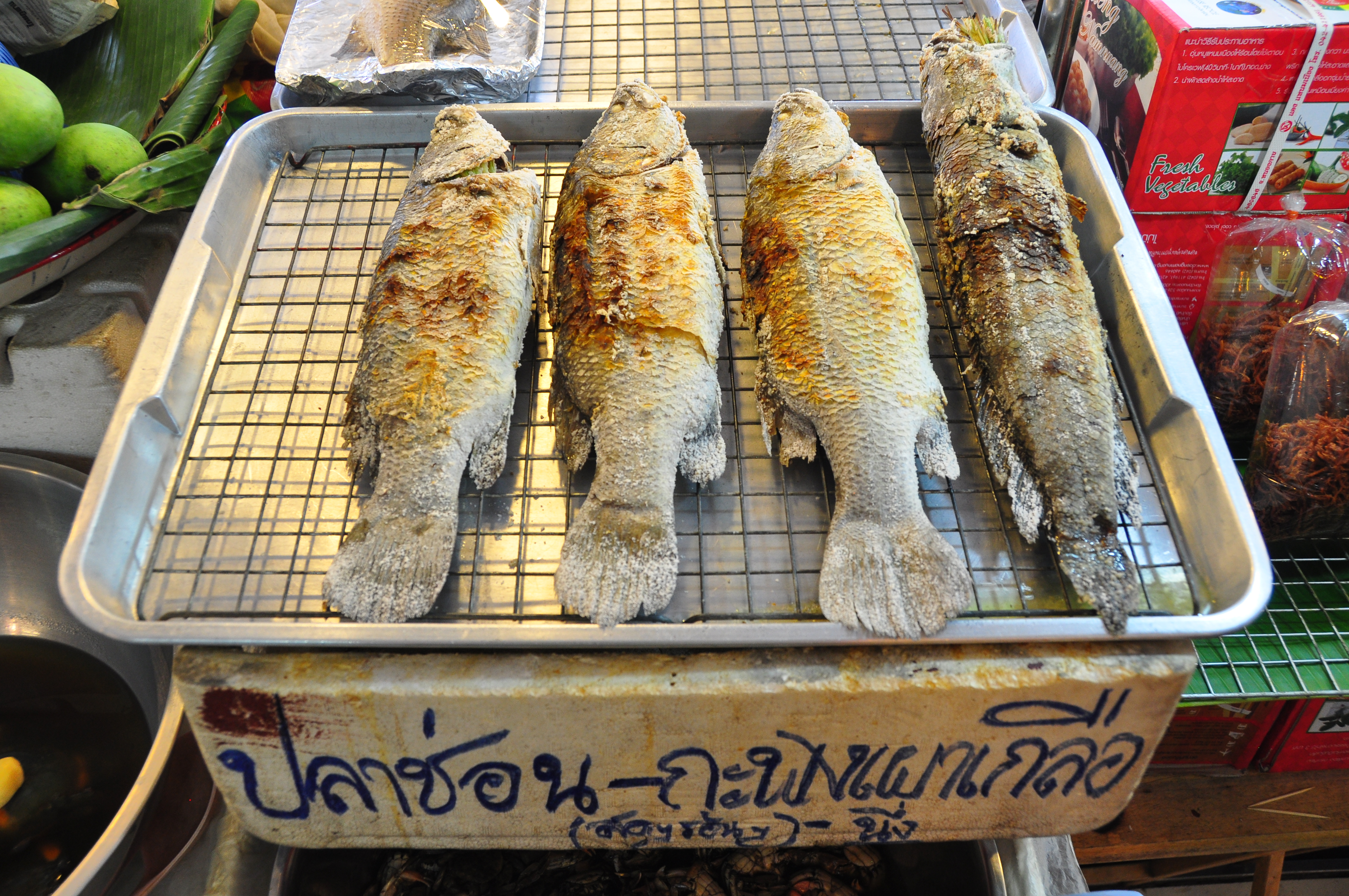
Grilled river fish, a perfect accompaniment to shrimp paste dip

4. Mae Prapaisri sells the best mango sticky rice in the market. Sure, it’s a well-loved treat known to anyone who has ever had a mouthful of pad thai, but there are circles within circles, differing degrees of excellence in an already excellent dish.  Here, the mango is always ripe and succulent, the rice glossy and firm, the coconut milk rich and robust.

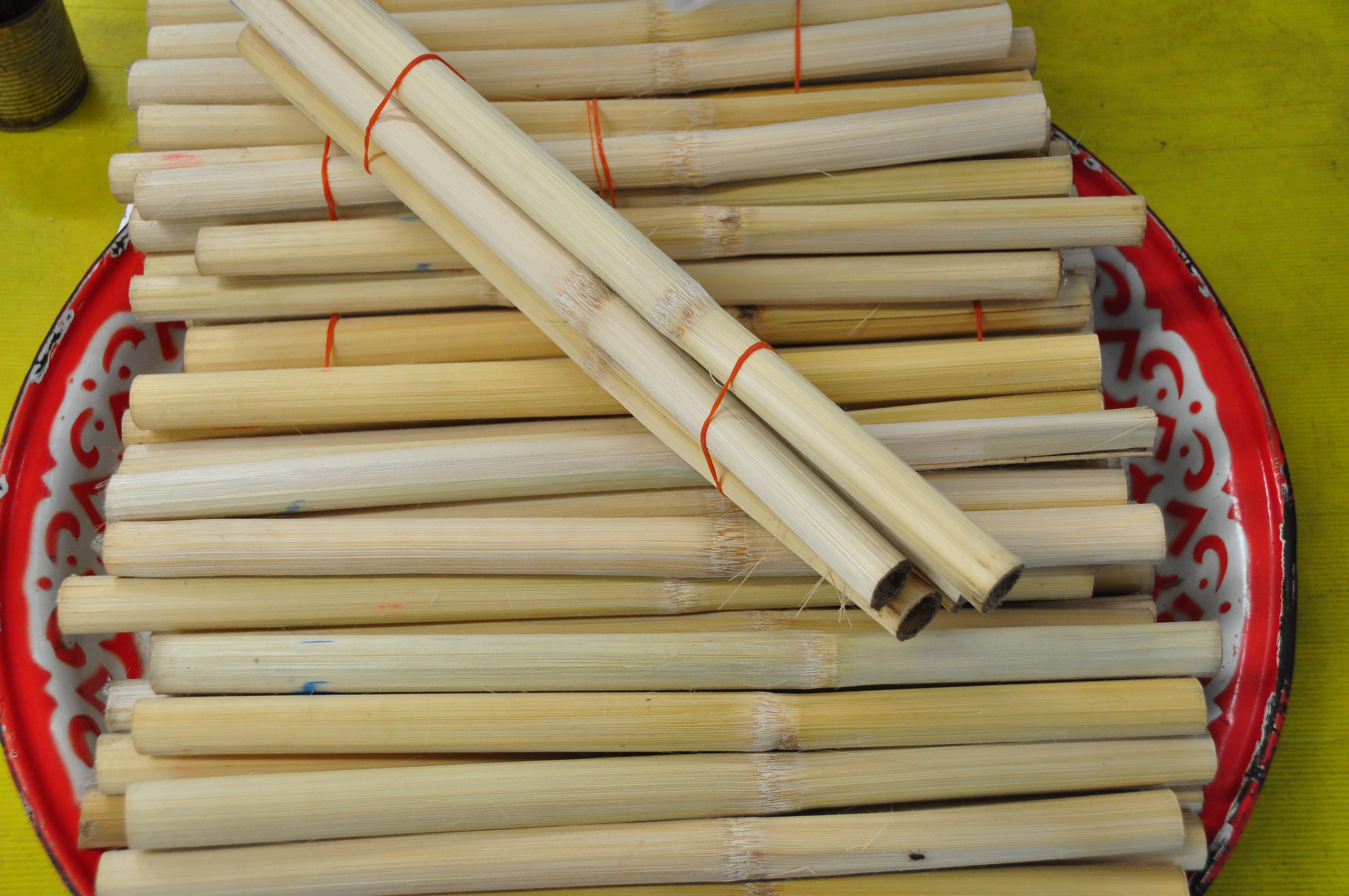
A different dessert known as khao lam -- sticky rice stuffed in bamboo

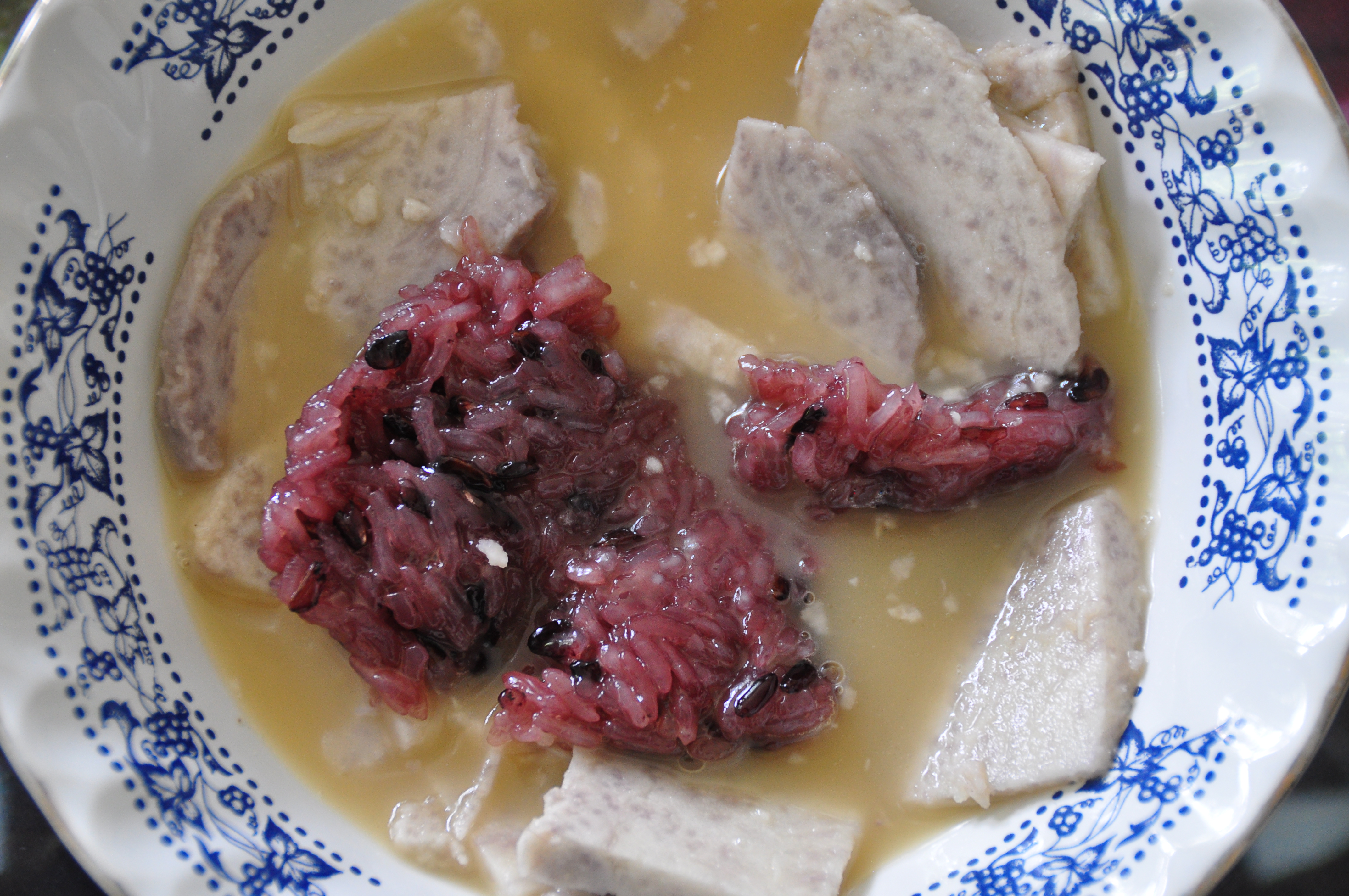
5. For the very best of “old-style” Thai eating, look no further than the end of a Thai meal, where the food becomes its richest and sweetest. And the richest, sweetest dessert vendor of all is Gao Pi Nong, purveyor of all that is drenched in coconut milk, fashioned into eggy golden threads, stuffed with coconut custard, or boiled in rice flour.

Gao Pi Nong's black sticky rice with taro in coconut milk

And that’s it. Check out Aor Thor Kor and sample these wares for yourselves. Or find your own favorites. You won’t be disappointed. (Open 6-20.00 daily. MRT: Kampaeng Phet, BTS: Mo Chit).

More Aor Thor Kor fare

(Photos by @SpecialKRB)

7 Comments

Filed under Asia, Bangkok, chicken, curries, dessert, food, food stalls, markets

A Tale of Two Noodle Stands

Pork egg noodles, yum-style, without broth


It’s a tale of two noodle stands.

Actually, long ago, Rungrueang (Sukhumvit 26) used to be one stand. The Chinese-Thai proprietor served up bowls of steaming egg or rice “tom yum” noodles accompanied by a spicy, tom yum-style broth, slivers of fish “meatball” and plenty of seasoned, minced pork (when the noodles were ordered hang, or dry, with tom yum seasonings, they were simply called “yum”). Customers flocked by the hundreds every day. The noodle stand became known as a popular lunch spot for work-rumpled desk jockeys and high-haired housewives in the Sukhumvit area. 

Then, as is known to happen, the original proprietor died. His two sons took over the noodle stand, which expanded. And, as is known to happen, they quarreled. The noodle stand split in two, co-existing side-by-side, observing an unspoken cold war. A wall eventually sprouted up between the two shops.

This detente is basically how things stand today. There are two Rungrueangs: one, the original, on the left side, a little smaller than its sibling and marked by the original red sign. Interestingly enough, the son in charge is said to have red shirt sympathies, so it is strangely fitting. Since it is known as the original, diners “in the know” appear to favor it, and it is consistently full.

On the right side, a little bigger than its brother, the “new” Rungrueang is announced by a yellow, handwritten sign (a recent addition). And guess what? Yes, this brother leans to the yellow side. The noodles are EXACTLY THE SAME (it is the father’s recipe, after all). And, maybe because of this, it is also consistently full.

So that is the story of Rungrueang. Which, it turns out, ends up being a political story. And a sort of metaphor for Thailand. Yes, all that, dumped into a pink plastic bowl, engulfed in a spicy lemongrass broth, and drizzled with chopped peanuts, the way a proper bowl of minced pork tom yum noodles should be served.

 (Picture by @SpecialKRB)

2 Comments

Filed under Asia, bamee, Bangkok, food, food stalls, noodles, pork, Thailand