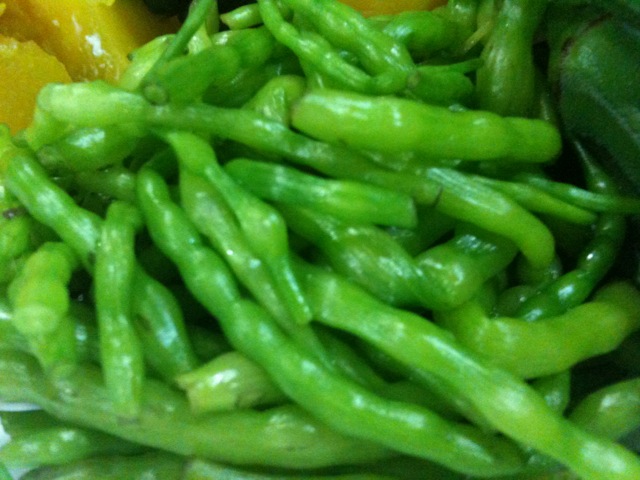
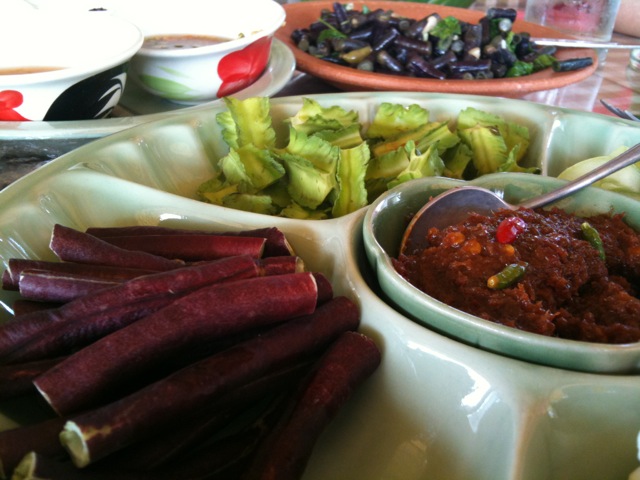
Pak ki hood, blanched and served alongside nam prik
Believe it or not, I am not going to write about kanom jeen nam ngiew or the Steelers today. I know, I know. I know this makes you sad. But I must branch out. Show all my brilliant colors. Spread my wings.
So instead, I will ramble on semi-incoherently about my childhood in the era of Rama VI, back when rickshaws ruled the North and people foraged in the jungle for food. My fascinating reminiscences include memories of being abandoned at the post office as my nanny chatted up her then-boyfriend, and being menaced by a homicidal goose tethered to a pole in the middle of her front yard. Did you know geese are thoroughly unpleasant creatures? Now you do.
I also remember my Aunt Priew, who lived right next door to my grandmother’s house — easily accessible from our yard once you managed to jump over a tiny hill of ferocious red ants. Somehow, I never really made the jump and was bitten every time I tried. Yet day after day would find me once again testing the anthill because my Aunt Priew is a tremendous cook, possibly the best cook of Northern Thai food in the kingdom. Roasted lin fa (sky tongue) beans, julienned and stir-fried with glass noodles or paired with a fatty raw larb; a touch of magorg, or water olive, added to a fiery nam prik num (roasted green chili dip) — my aunt is full of these little touches with the local produce that set her dishes apart from the rest. Now if I could just convince her to open a restaurant …
These are some of the Northern Thai dishes that are worth the long trek up to the tip of the country. They go just as well with khao suay (jasmine rice) as they do with khao niew (sticky rice). Try them for a real taste of Northern Thai food:
(Note: Please forgive the photos. They are a little … blurry. No, it wasn’t the wine.)
Gaeng om, Northern-style
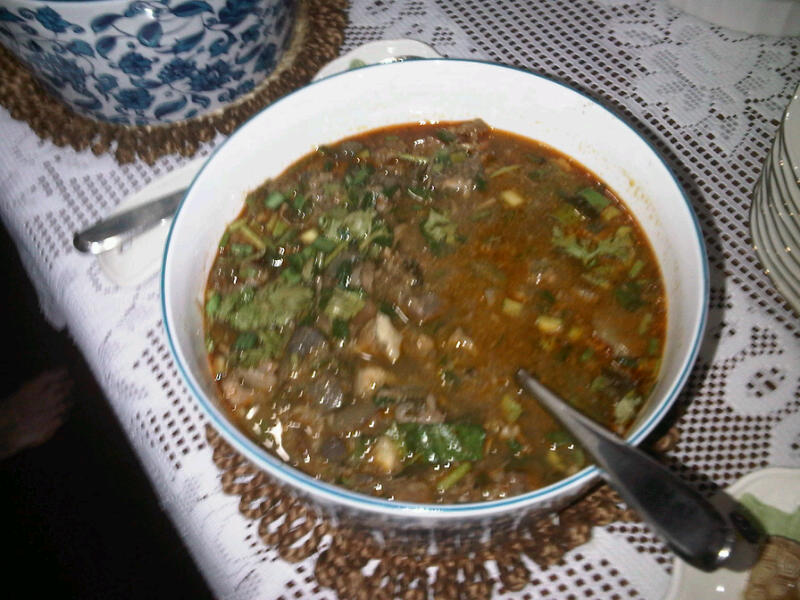
- Gaeng om, sort of
Unlike the light, prickly Isaan gaeng om, the Northern Thai version is — like much of the rest of Northern food — richer, meatier and fattier. The curry paste is that for a typical gaeng muang (Northern curry), with a couple of additions. There is lemongrass, galangal, dry chili, shrimp paste and garlic, plus pla sarak (kind of like pla salid, but bigger) and bakwan, which, if not Sichuan peppercorn, is something very similar, with the same tongue-numbing effects.
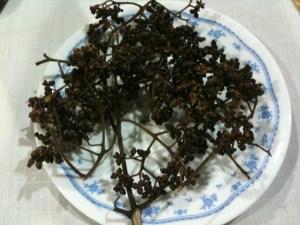
The tongue-numbing peppercorn bakwan
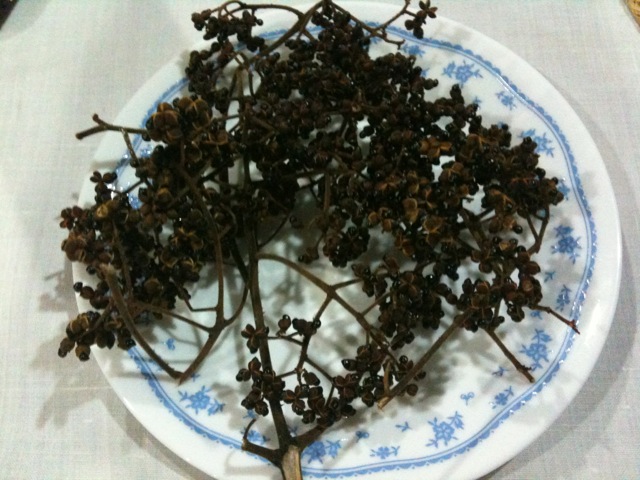
This paste is then fried in oil and augmented by fresh chilies, pork innards, bruised lemongrass and red shallot bulbs, and kaffir lime leaves and stewed, and then garnished with dill and coriander. It has a lingering meat taste that is very Northern.
Gaeng gadang

- Pork “jelly” with pork rinds
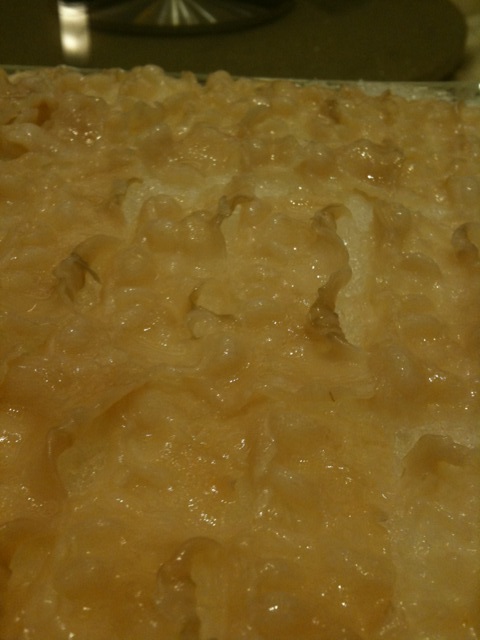
Some dishes seem like they were engineered by mistake. Puff pastry is one; this is another. It’s basically a gaeng muang focused on kaki (fatty pork leg) and/or moo sam chan (three-layer pork), left out in the cold. It’s a distinctly “cold season” dish because traditionally it was left out overnight to congeal; today, it is chilled in the refrigerator and served in slices like a terrine. Very unusual and very porky.
Saa pak
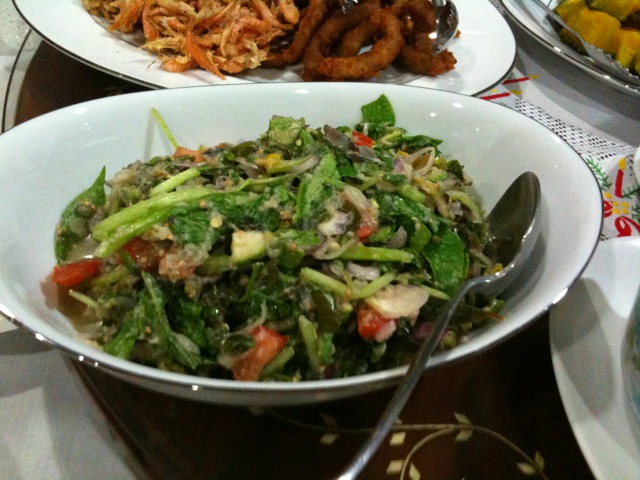
- Northern Thai “salad”, or saa pak
This is hands-down my favorite dish up North, but something that, aside from a few vendors in the Chiang Rai wet market, is very difficult to obtain. The reason could possibly be the 10+ types of local leaves (pak puen muang) required for a real saa pak (“spicy leaves”).
Greenery includes thinly sliced brinjals, young mango leaves, water olive leaves, pak pu ya (“grandfather-grandmother leaves,” a kind of edible blossom), plus sliced shallots and chopped fresh tomato. It is then tossed, like a chopped or Caesar salad, with flaked fish meat which has been grilled or boiled (with lemongrass and kaffir lime leaf to lose the fishiness), plus nam prik num (roasted green chili dip) and sliced water olive.
This is a dish I am going to try to recreate at home with plain old lettuce, onions, tomato and avocado. I think it could give me a little taste of home, even in the middle of Bangkok.





 Bangkok Glutton