Category Archives: restaurant

Two great food stalls

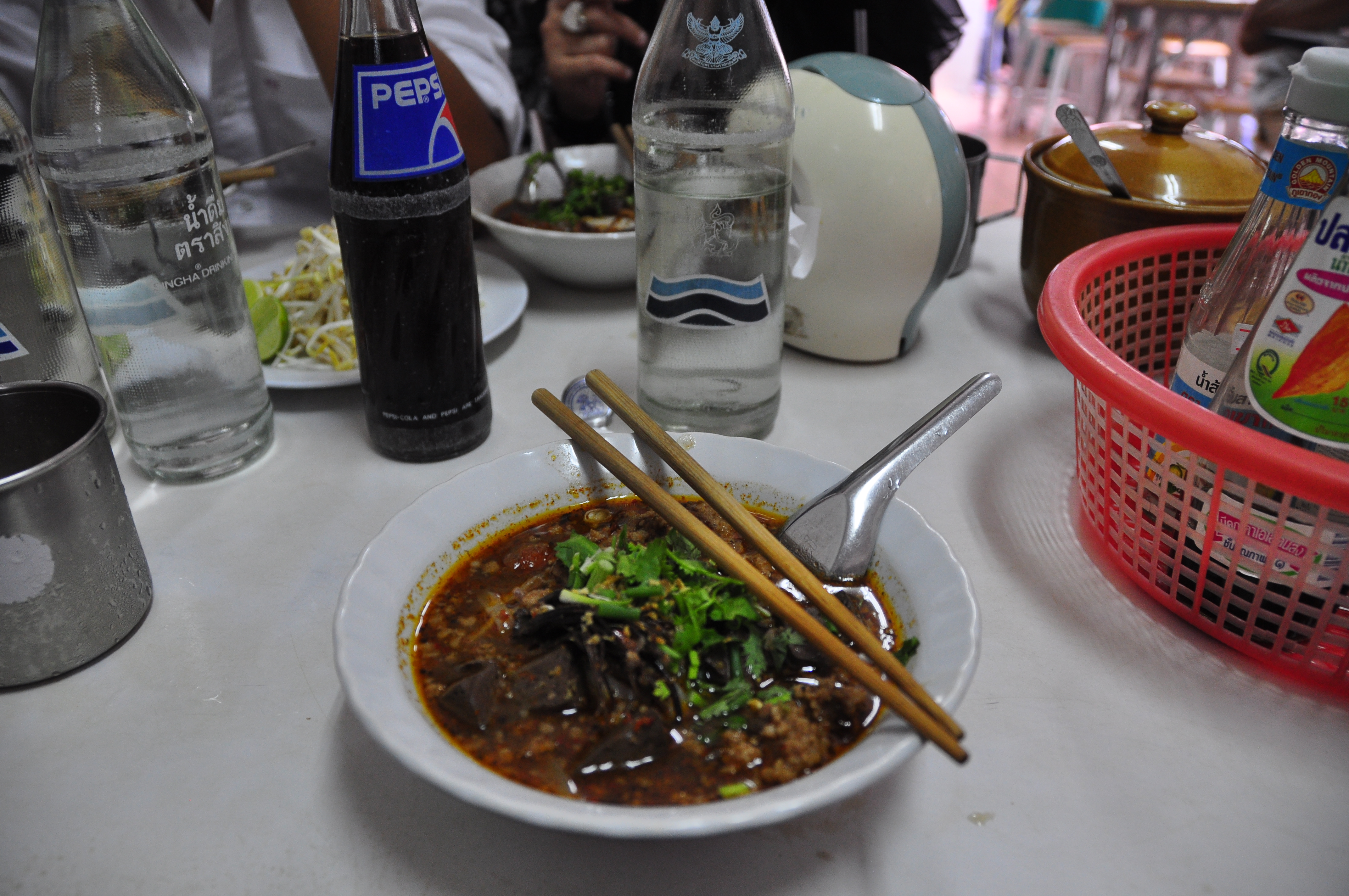
Beef noodles 'nam thok'-style at Nai Soi

There comes a time … when I actually have to talk about street food. Yes, I know. I know you actually want to hear about my day, and how my minders are making me eat cardboard for lunch, and how my life is a Jennifer Aniston movie if Jen put boot polish on her hair and gained 30 lbs. But I’m going to save all that good stuff for my widely anticipated TV movie screenplay for the Hallmark channel. All you get to read about are these two relatively undiscovered gems.

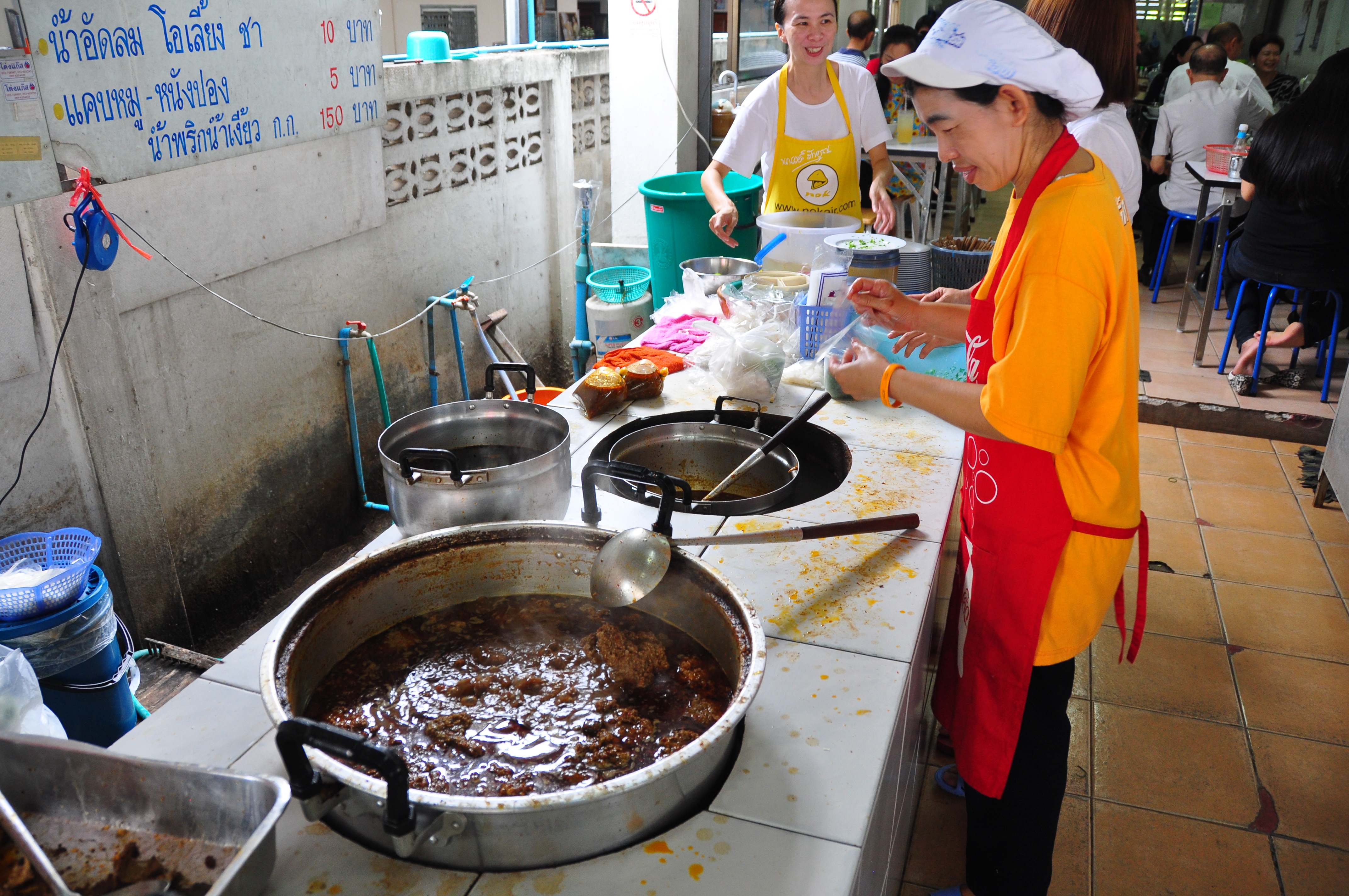
Emphasis on “relatively”. Because Nai Soi (100/2-3 T. Phra Arthit, 081-487-9359 or 086-982-9042) is well-known to any journalist who works for the Manager group or general traveler-in-the-know who makes Phra Arthit Road his or her base of operations. This Banglamphu standby is popular for its gorgeously amber-colored beef noodles — slightly chewy rice noodles bathed in a garnet-colored broth and tender, flimsy slices of freshly blanched beef. Unlike my other beef noodle favorite, Raan Anamai, the broth here is thickened with blood (known as nam thok, or “water falling”) and not crystal-clear; nonetheless, it doesn’t make it any less yummy.  OM NOM NOM NOM.
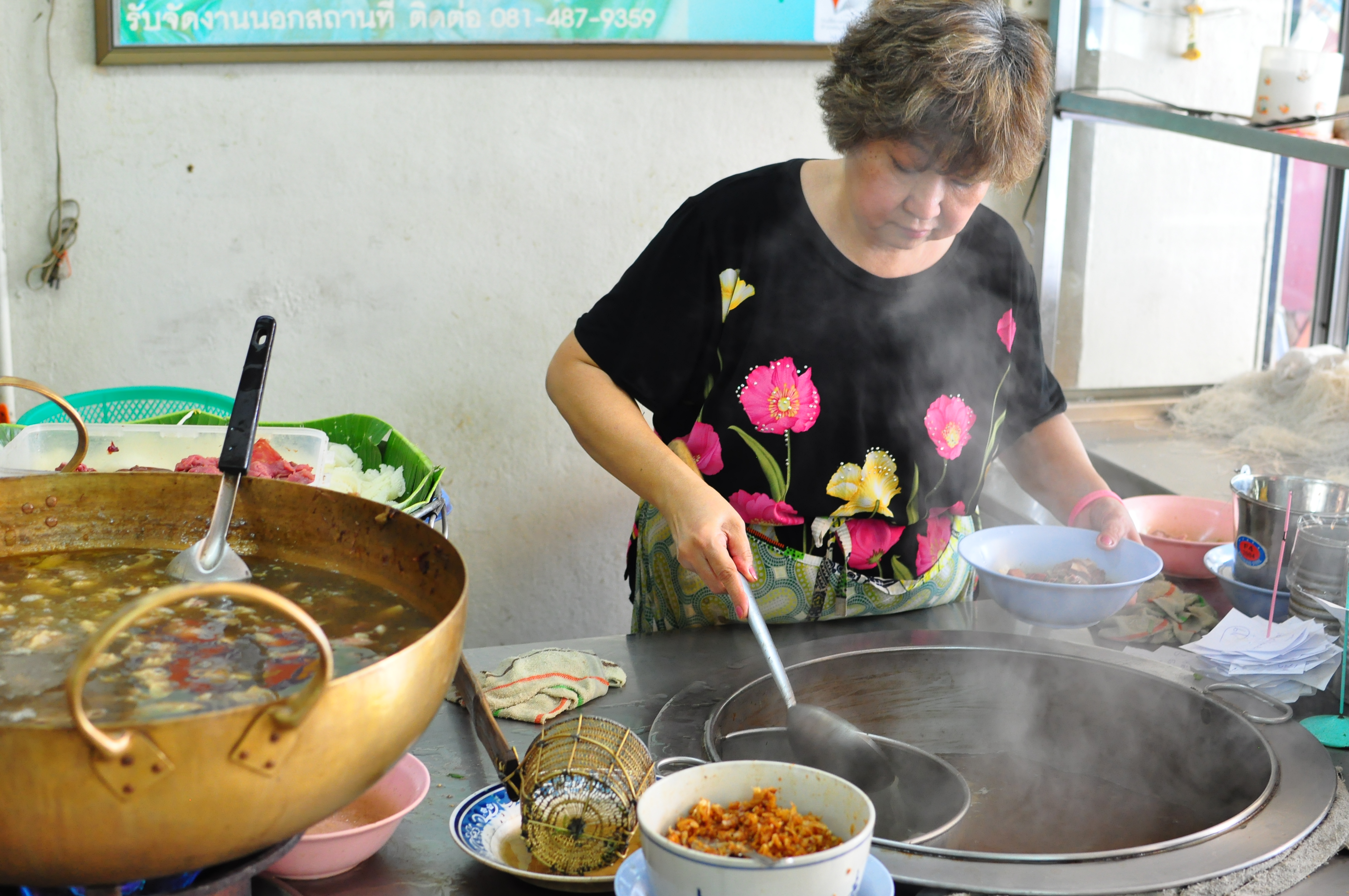
Making our beef noodles

Too bad I can’t eat there right now. Another place where I can’t eat is the incomparable Aisa Rot Dee (the beginning of Thanee Rd., 02-282-6378, 081-401-1326), purveyor of most things delicious and Thai-Muslim. Mounds of soft and fragrant yellow rice, perfumed with cumin, atop hunks of slightly charred barbecued chicken; bowls of aromatic beef noodles smelling slightly of star anise; comfortingly substantial oxtail chunks in a fiery broth; sweet-salty beef satay coated in coconut milk — the offerings here turn other Thai-Muslim eateries like the nearby Roti-Mataba into mere whispers of an afterthought. There is no way you would be able to leave this hole in the wall hungry.
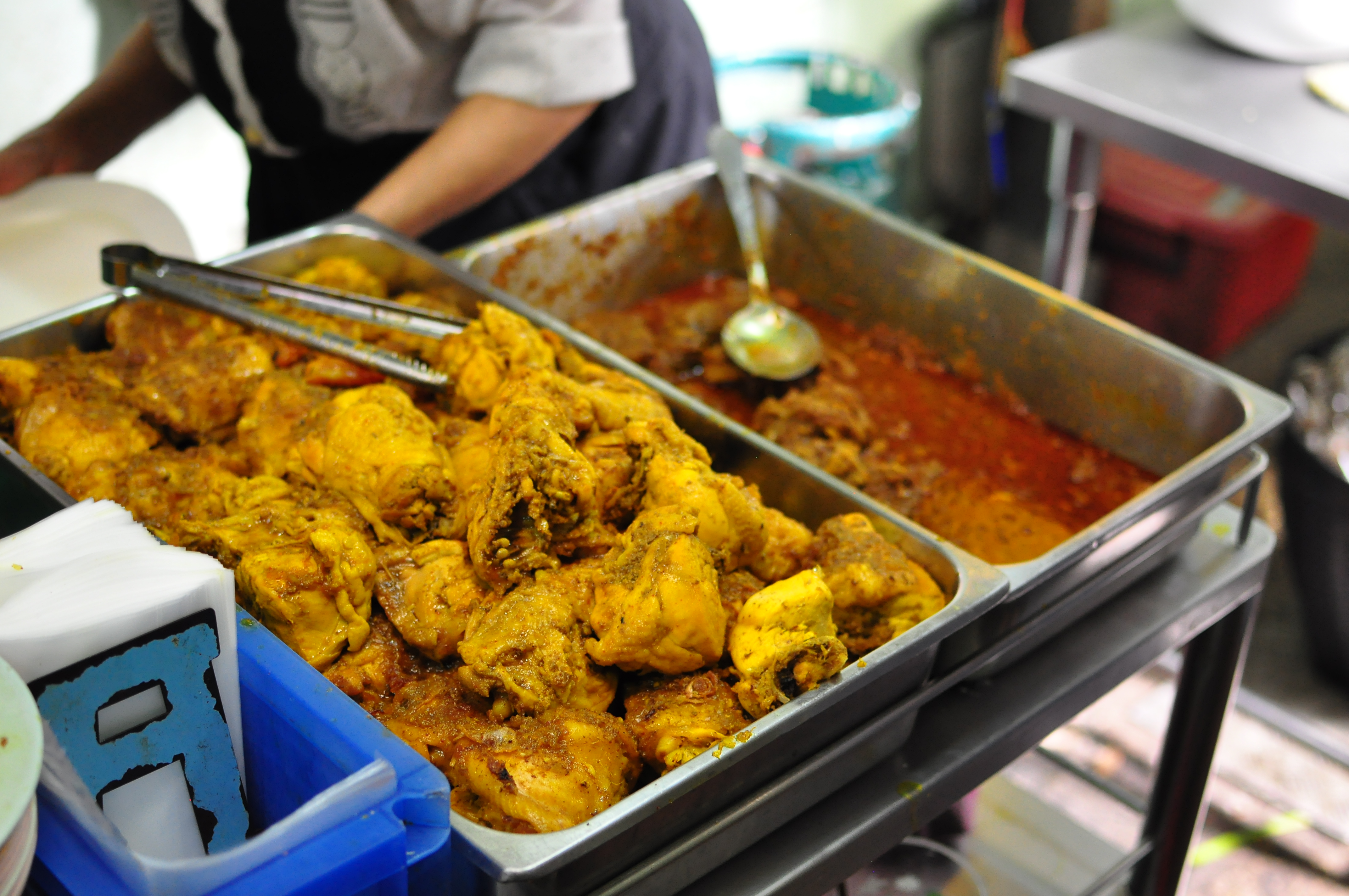
Thai-Muslim yellow chicken

And I mean “hole in the wall”. The only suggestion that there is a bustling “restaurant” somewhere behind all the touristy knick-knack shops hawking fishermen’s pants and flip-flops is a sign on the sidewalk — in Thai — reading “Aisa rot dee” (Aisa good taste). In the narrow alleyway behind the sign, two forbidding faces manning a beef noodle stand, and as you approach the darkness, the hint of more. After passing the khao mok gai and tripping over two or three people on the way, the darkness becomes the light, and the alleyway opens into a substantial open-air courtyard, tables, chairs — even waiters.

Aisa is a leap of faith for a hungry Indiana Jones-type searching out answers in a culinary maze. Don’t let the darkness fool you.

(Photos by @SpecialKRB)
1 Comment

Filed under Asia, Bangkok, beef, chicken, food, food stalls, noodles, restaurant, rice, Thai-Muslim, Thailand

So good, it will send you into labor

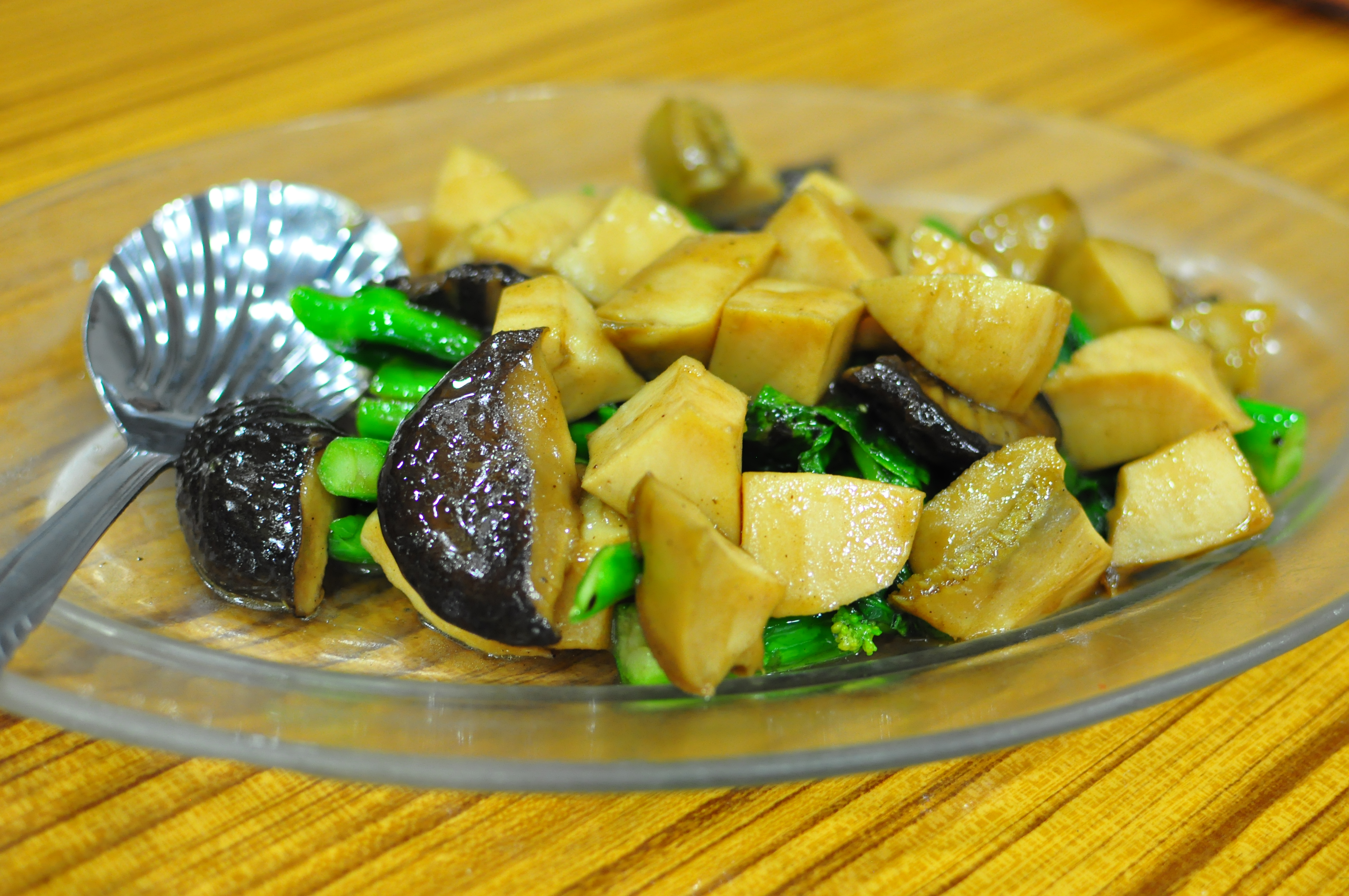
Nakorn Pochana's abalone and mushrooms (het hom) with Chinese kale

==Was strolling along Chinatown today when it hit me — I needed to make two corrections! The mushrooms in the abalone dish are called hed hom, or shiitake. They are NOT oyster mushrooms. Also, the Thai seafood restaurant I refer to near the end of the piece is called Sorntong Pochana, NOT Sorndaeng. Don’t know what I was thinking.== 

Picture this: we are close to Sam Yan market, at Nakorn Pochana (“Pochana” is a common Thai word to designate “restaurant”, particularly Thai-Chinese restaurants). Called “Nai Hai” by its unusually loyal regulars, Nakorn is generally regarded as one of Bangkok’s premier Thai-Chinese restaurants, alongside stalwarts like Pen on Chan Road and, once upon a time, Jay Ngor (where the quality has slipped as it expands). Like its Thai-Chinese peers, Nakorn specializes in stir-fried greens, deep-fried and steamed fish, and a smattering of well-loved fried noodle dishes — all showcasing the enormous contributions Thailand’s Chinese community has made to the country’s cuisine (noodles, the frying pan, and the steamer among them).

Where was I? Oh yes. A mass of flesh and hormones, inching ever closer to 80 kg and my tenth month as a pregnant person, I was stuffing my face with one of Nai Hai’s most well-known dishes: chunks of tender abalone, bulked up with juicy shiitake mushroom caps, a savory shellfish bounce with the slightly bitter backbone lent by shards of bright, brittle kale. My enjoyment of this dish was so intense my blood pressure shot up to stratospheric levels, a development that was initially blamed on the restaurant’s tea, then to a panic attack, and finally to the rapid onset of pre-eclampsia. I was unable (to my regret) to attend to a highly anticipated dessert of sugar-encrused taro, and was rushed to the hospital in time for 16 hours of labor-induced fun. My son was called “pow hu” (Thai for “abalone”) for weeks afterwards.

Needless to say, it took me a few months to get back to Nai Hai. But like all good things, it was worth the wait.

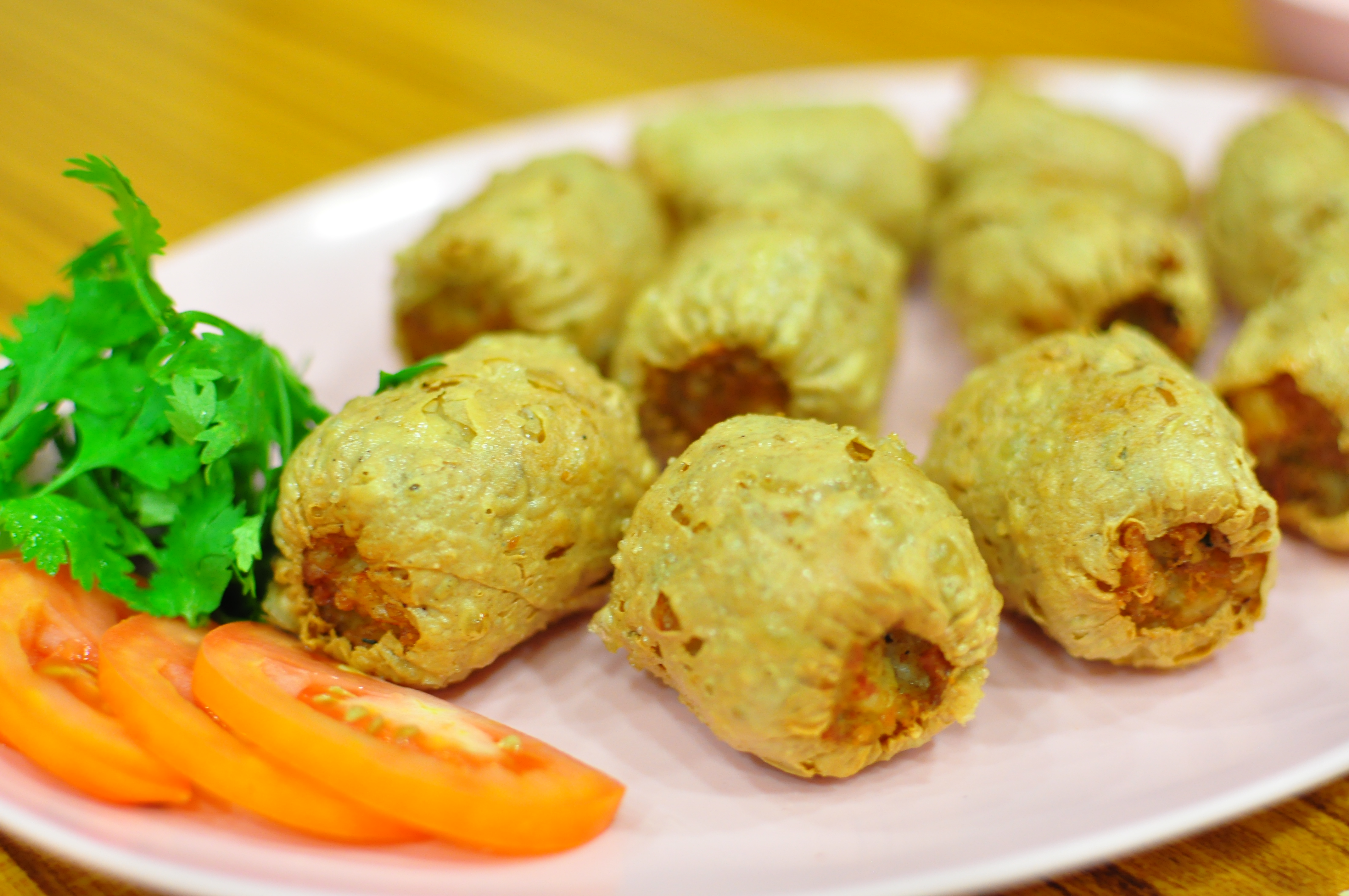
Hoy jaw, deep-fried crab dumplings

 Like an old friend, Nakorn’s hoy jaw (deep-fried crab dumplings, which differ from the shrimp variety, called hae gun) presents familiar flavors, but in a superlative fashion. A crinkly, crackly package of the sea, here it is never too greasy, not too heavy.

Like a classy party-goer who can hold her liquor, the rest of the menu shows similar restraint. Its gaengs (an all-encompassing word running the gamut from thick curries to clear soups) are never too obnoxious or obtrusive. Its extensive range of stir-fried greens — including, but nowhere near limited to garlic chives, pumpkin shoots, young spinach, broccoli sprouts and the ever-present morning glory — are always seasoned to perfection, and never oily (a recurring theme in lesser Thai-Chinese restaurants) or over-cooked to oblivion.

Garlic chives with pork liver

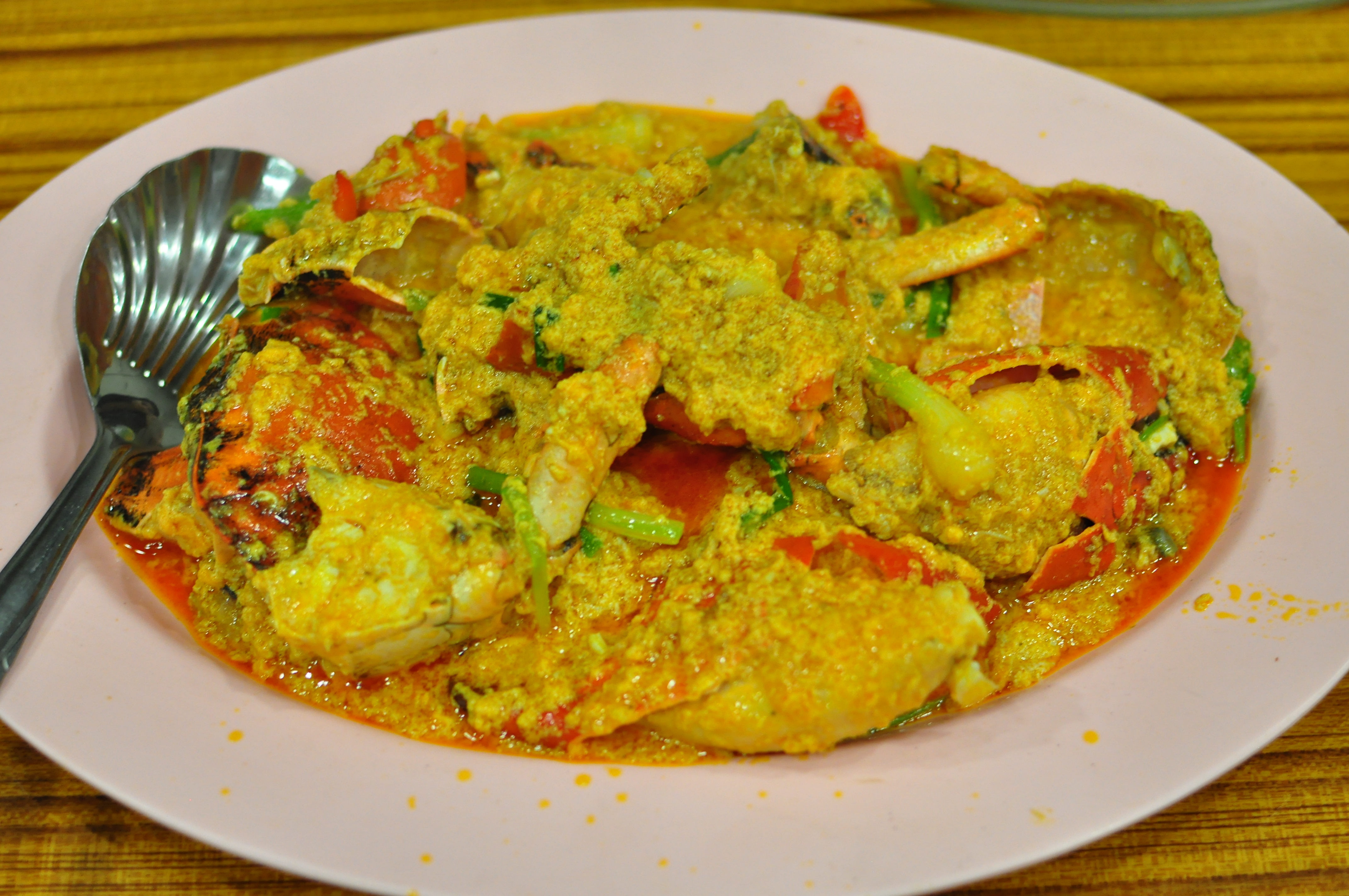
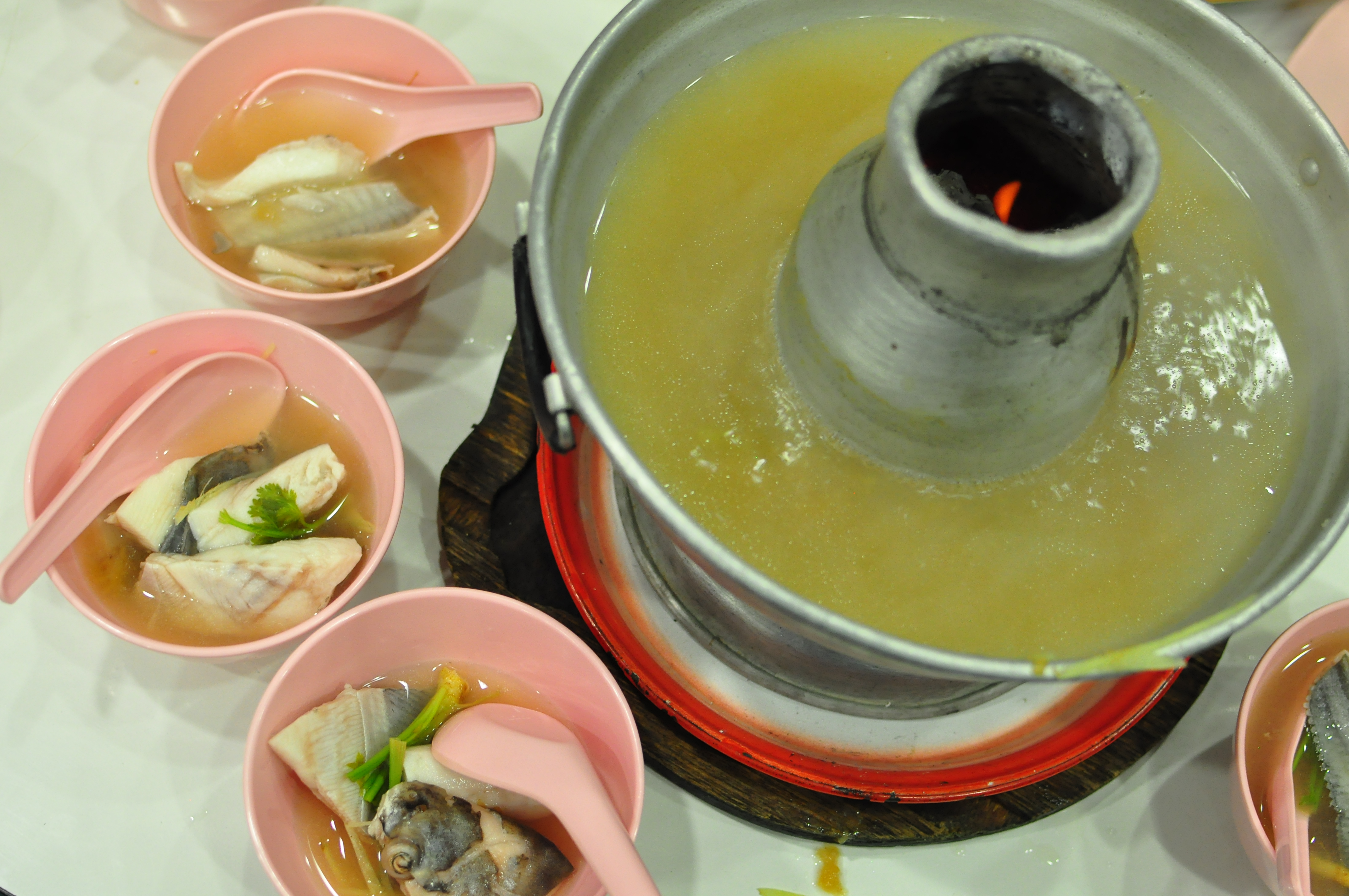
But the best part of Nakorn’s menu may be its seafood. This is not the fiery, in-your-face stuff of Bangkok’s well-known seafood purveyors (of which Sorntong Pochana on Rama IV is a good example; Somboon Seafood is better-known but a mere echo of a good restaurant). This is also more restrained, including the popular specials (steamed seabass with pickled plum) with the more esoteric (deep-fried split langoustines). The best, though, may be a dish beloved in Thai-Chinese restaurants across town: stir-fried cracked crab in curry, comparable (and almost as good) as the version at Pen.

Stir-fried curry crab

Best of all, it’s the little details that set Nakorn apart from the rest of the pack: the casual, convivial atmosphere, conducive to lots of shouting and (of course) grabbing; a loyal coterie of customers ranging from college students to middle-aged “khunying” types on their hair’s day off; the ability to take out excellent jok (Chinese-style rice porridge) for the next day’s breakfast just next door at Jok Sam Yan; and service that remembers the last time you came and expects to see you again.

 Nakorn Pochana (Sam Yan market, 02-214-2327, 02-215-1388, 02-215-4418)

"Tom som", or tart-spicy soup of pomfret

All photos by @SpecialKRB

1 Comment

Filed under Asia, Bangkok, fish, food, restaurant, seafood, Thai-Chinese, Thailand

Road trip up north, Part Deux

Before I lull you back to sleep with my blatherings on how I spent the past weekend, I wanted to show you what Northern food really should look like, thanks to @SpecialKRB’s great pics.

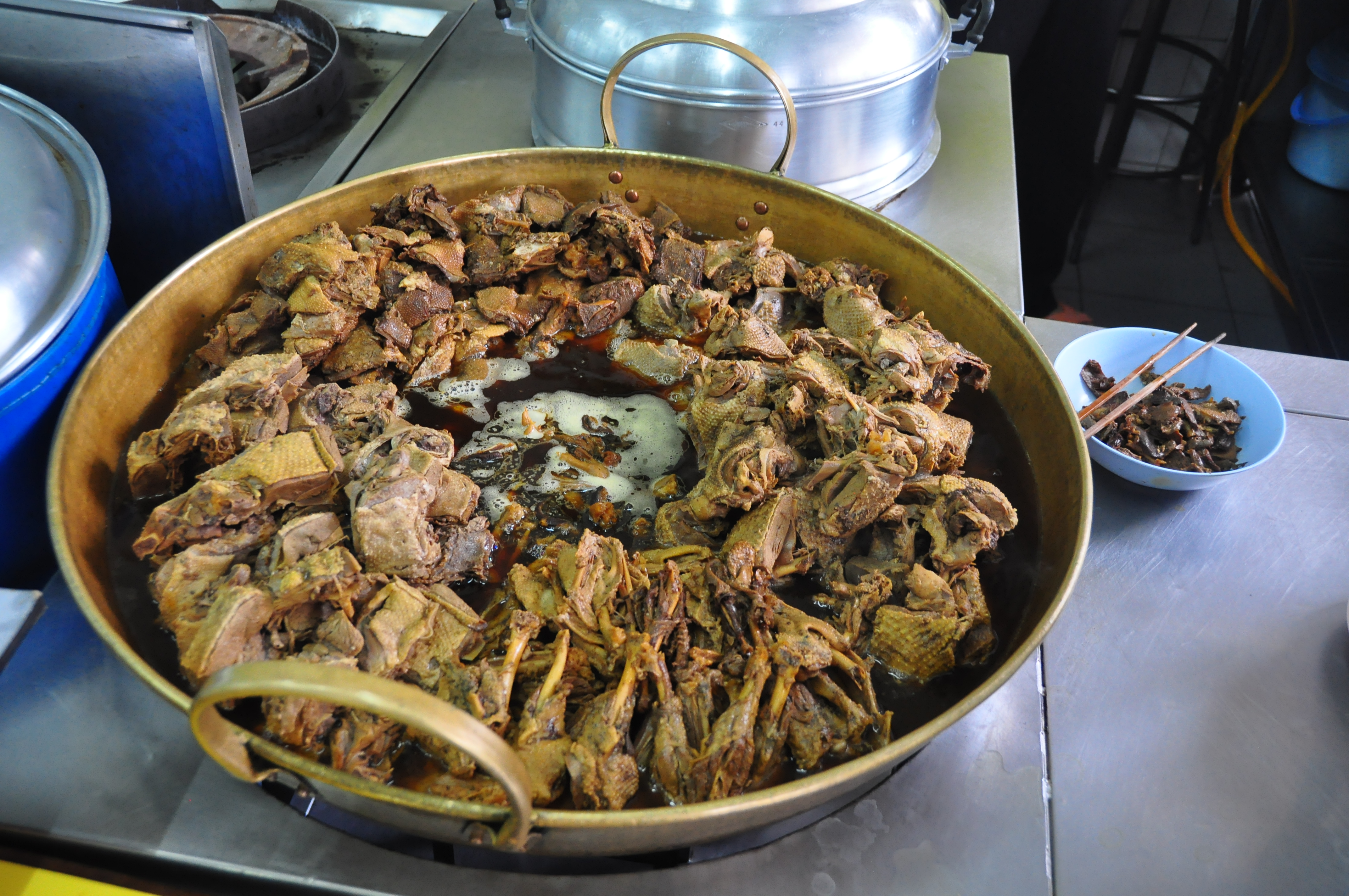
Goniew in Nakhon Sawan's stewed duck

Last of the khao soy at Khao Soy Islam in Lampang

Nam ngiew at the incomparable Pa Suk in Chiang Rai

Pa Suk's khao ganjin

Whenever I go up north, I always make sure that I have both khao soy and kanom jeen nam ngiew — they are like the bookends to Northern Thai food: one fatty and rich, the other dense and pungent. To my mind, Chiang Mai has the best khao soy (the stalls in Chiang Rai are far too bland), but the only place to have nam ngiew is Pa Suk in Chiang Rai, where it’s made properly, with few tomatoes and with plenty of chili.

Contemplating a vat of beef nam ngiew

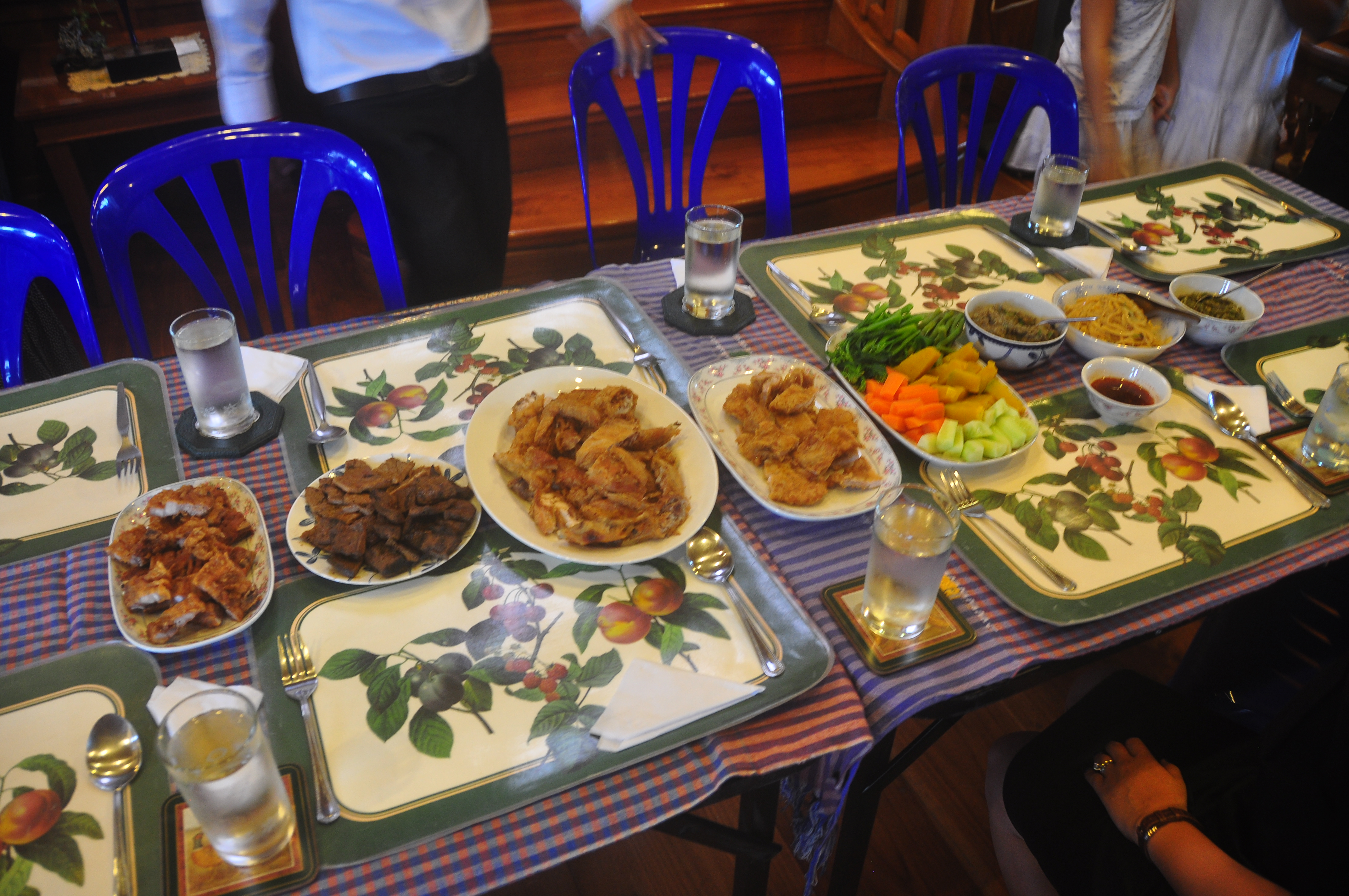
A trip home also isn’t the same without a gigantic breakfast of deep-fried pork, young crushed green chilies (nam prik num) with accompanying boiled veggies, saa pak made of a young fern available only during the rainy season, Northern Thai sausage (the famous sai oua), and macerated roasted eggplant, a Northern Thai version of baba ghanoush (the thum kanoon, or pounded young jackfruit, wasn’t available for some reason. And we had to actually steal the pork larb from the elders’ table). I love these dishes and actively seek them out whenever I am anywhere that claims to serve Northern Thai food.

Northern breakfast buffet

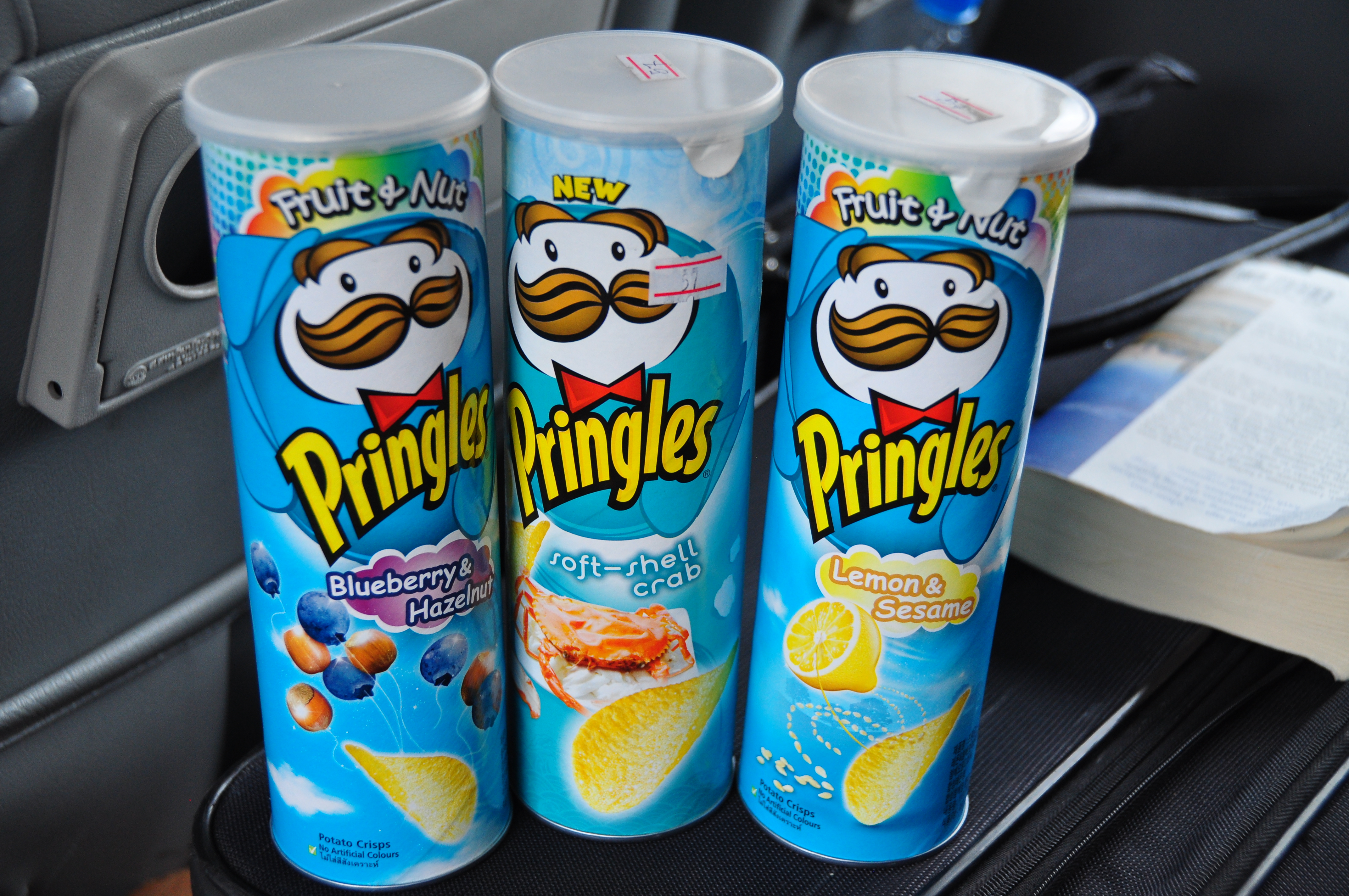
What we did not actively seek out, but what managed to find us, courtesy of a highway-side minimart: an appalling line of new-flavored Pringles chips that will set your hair on end. Tasting like a mix between bubble gum and room deodorizer, these chips (which are, no doubt, only available in Thailand) riff on the Thai fondness for the borderline between salty-sweet: lemon-sesame, blueberry-hazelnut, and most horrifying of all, softshell crab. It was the first, second, and third times, respectively, I was unable to finish a single potato chip.

In your darkest nightmares

A blow to the tastebuds to be sure, but we rebounded in Tak with a riverside trip to Kieng Thai, a lovely open-air restaurant popular with whisky-swilling local officials and famed for its clear — and authentic — spicy lemongrass soup, or thom yum (I’m no fan of coconut milk in the broth). Also devoured: tiny deep-fried Thai sardines, lightly poached fish with a lime-chili dipping sauce, a spicy-tart yum (salad) of mushrooms and raw fermented pork (naem), a whole river catfish and stir-fried morning glory with chilies.

Lunchtime in Tak

Leave a comment

Filed under Asia, Chiang Rai, food, food stalls, noodles, Northern Thailand, pork, restaurant, Thailand