Category Archives: Thailand

Attack of the Blahs

The blahiest blah that ever blahed

God, I hate the rainy season. You would think it would be a great relief after the endless stream of radioactivity passing for “sunshine” in Bangkok lately. Even worse, I’ve become THAT lady on the Skytrain, the one sweating into her just-showered hair who everyone wants to avoid. 

But no, the rains are no savior. They flood my driveway and ruin my mood. They are the “blahs”, in physical form. I don’t want to do anything. Of course, I am now busier than ever. 

All I want to do is hole up in my house, drink a barrel of wine, and cook. But sometimes I am compelled to venture outdoors to eat, even in this weather. And when the “blahs” hit the dinner table, then the day is ruined. Oh, the dramz.

You would think Charoenporn in Suan Luang market is safe as houses — in matters of the stomach, at least. Because it certainly doesn’t inspire that much confidence upon entering the shophouse. There is a mound  (actually it could be called in all fairness a “hill”) made entirely of garbage in the back of the room. This is supposed to be rubbish from the first Charoenporn in Chinatown, credited with being the first to serve pork satay in the entire kingdom and currently undergoing renovation. As temporary as it may be, the trash is stomach-churning, bringing to mind the crazed hoarders who go on “Oprah” and cry when someone tries to throw away their 20-year-old juicers.

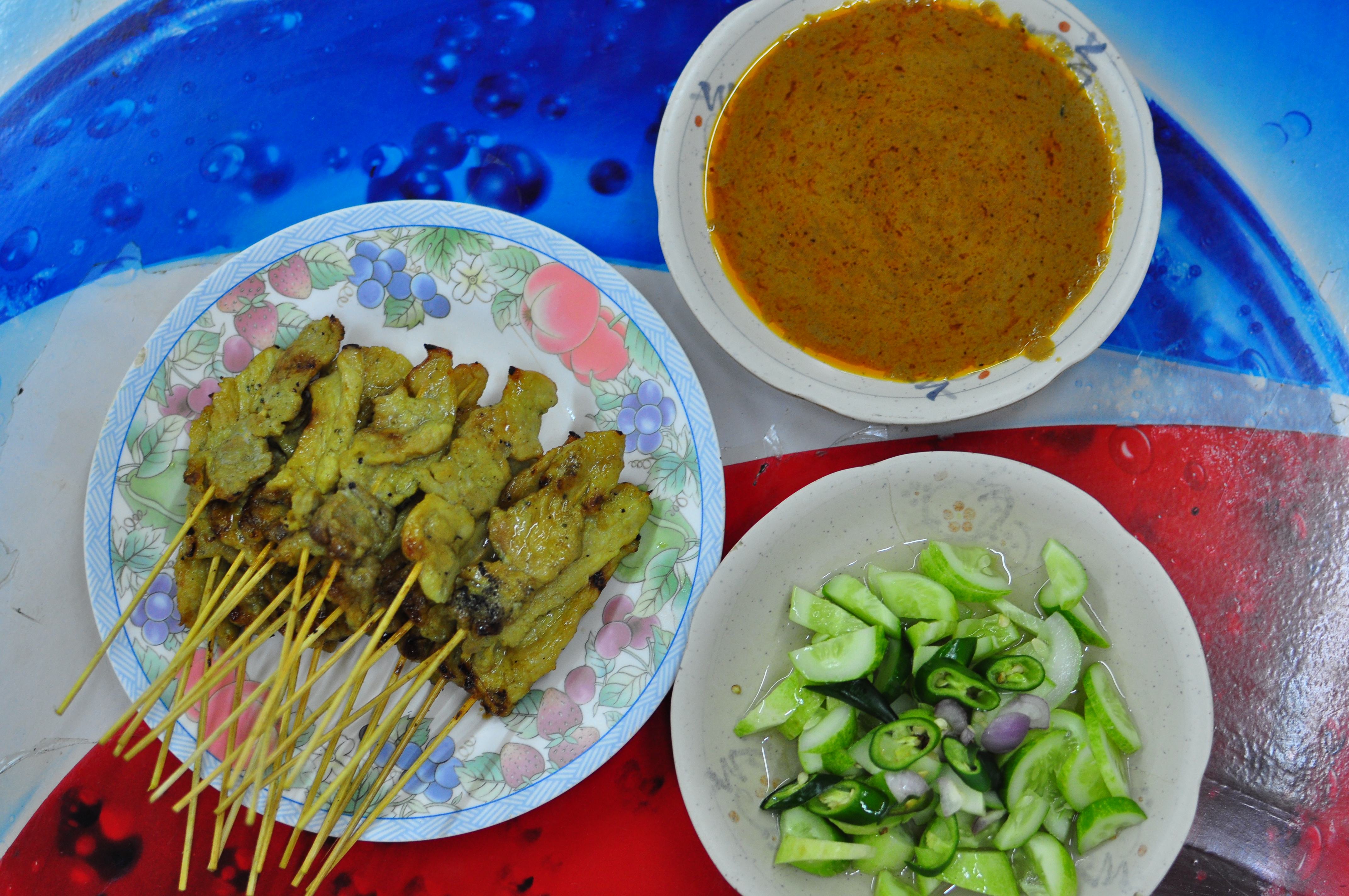
There is the famous satay, grilled the traditional way over an open flame and moistened with coconut milk as the edges of the flesh char on the skewer. It is as you would expect, delicious, especially with the green crunch of a sweet-tart cucumber-shallot salsa, creamy peanut sauce, and comforting hunk of freshly grilled white bread. Cheap and potentially filling (if you eat enough of it), it is the Thai equivalent of a Gray’s Papaya hot dog.
The good stuff

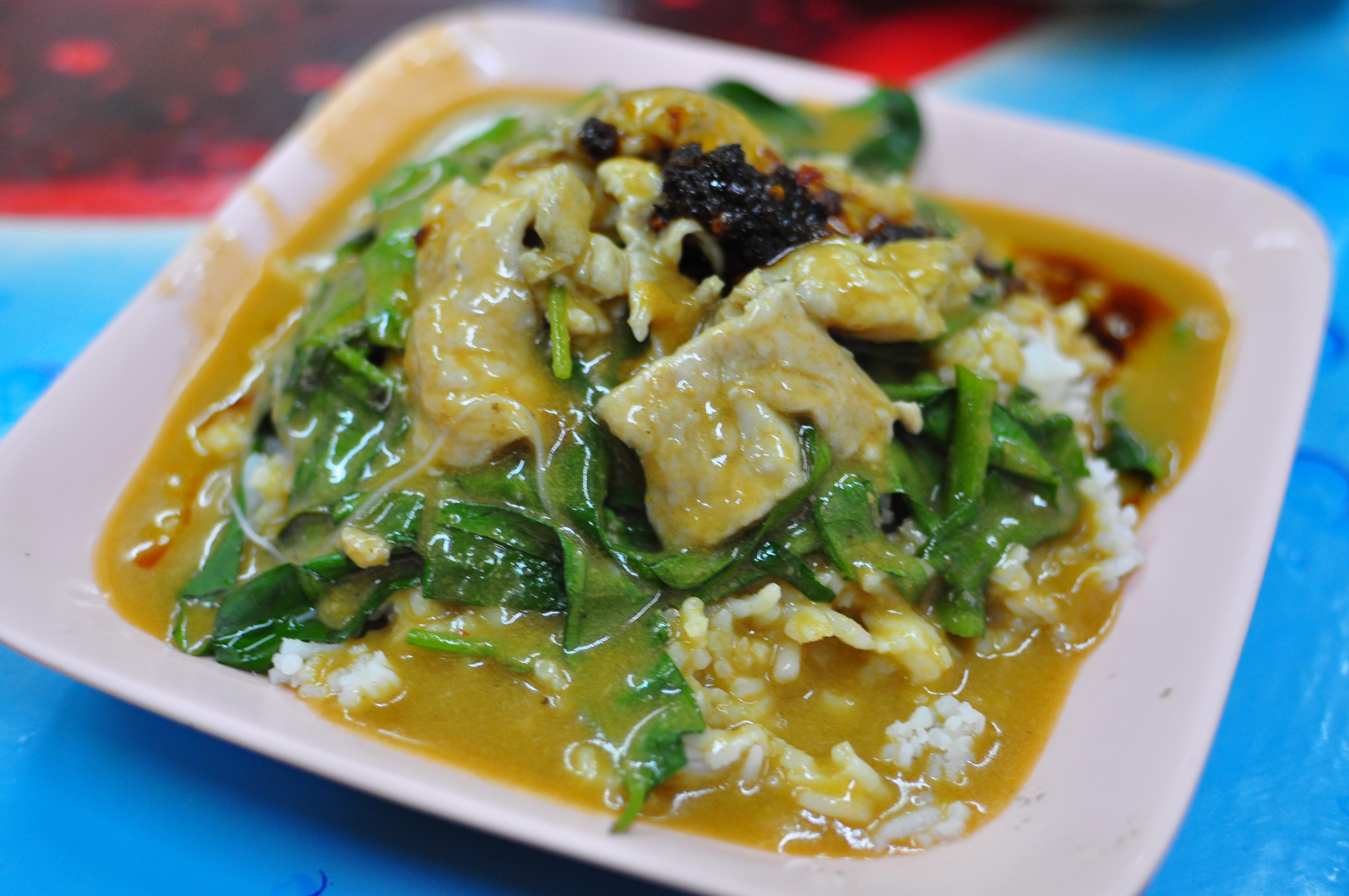
Oh, but then there’s the rest, and here is where I come to my confession. It’s something you already know: we all have our blind spots, our personal “Waterloos”, if you will. For Jeffrey Steingarten, I hear it’s Indian desserts; for Sarah Palin, it appears to be logic (yes, I know what some of you who know me might say — pot, meet kettle). For my daughter, it’s brushing her teeth. And for me — aside from my obvious logic, and hygiene, issues — it’s thrown-together slop scraped together from satay leftovers and boiled greens and slapped haphazardly over a bowl of rice or rice vermicelli noodles.

Yes, these appalling creations have names. Meet khao phraram (pork, peanut sauce and blanched morning glory poured over rice and topped with roasted chili paste) and sen mee phra rak (rice noodles saddled with the same thing). It is, we are told, an exceedingly rare dish. This suggests something special, when the actual meaning is that few other people would be suckered into eating this dish. It is rare for a reason.

I am being mean.  My “fellow diners” believe that the dish has its merits — a surprisingly oomphy mix of the starchy and sweet. They say go to Charoenporn for this dish, which is in danger of becoming extinct, and enjoy a taste of Old Siam. But as nostalgic as I get for old recipes, next time I’ll give this one a miss. Blame it on the rain.

(Photos by @SpecialKRB)
1 Comment

Filed under Asia, Bangkok, food, food stalls, noodles, pork, rice, Thailand

So good, it will send you into labor

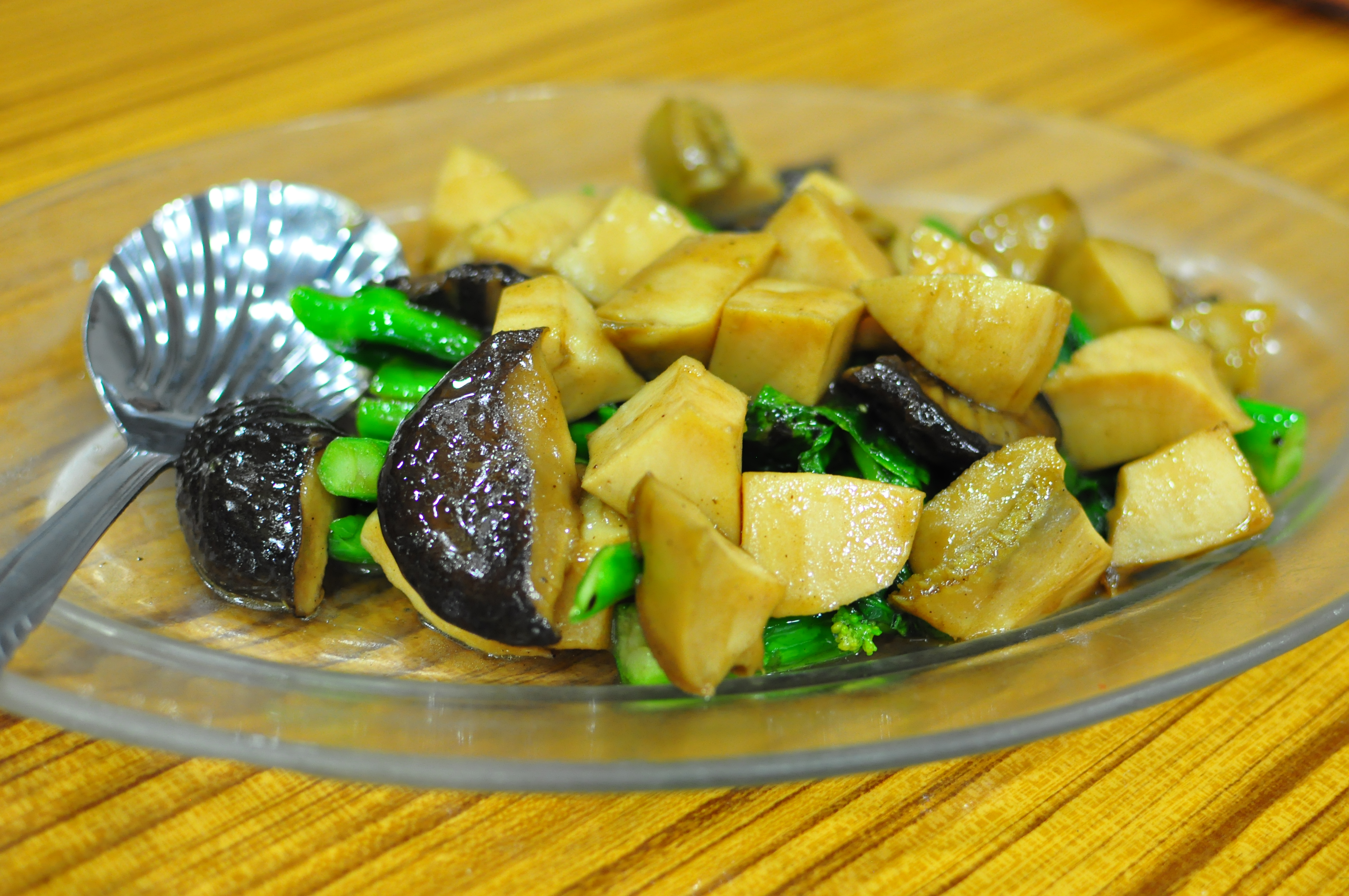
Nakorn Pochana's abalone and mushrooms (het hom) with Chinese kale

==Was strolling along Chinatown today when it hit me — I needed to make two corrections! The mushrooms in the abalone dish are called hed hom, or shiitake. They are NOT oyster mushrooms. Also, the Thai seafood restaurant I refer to near the end of the piece is called Sorntong Pochana, NOT Sorndaeng. Don’t know what I was thinking.== 

Picture this: we are close to Sam Yan market, at Nakorn Pochana (“Pochana” is a common Thai word to designate “restaurant”, particularly Thai-Chinese restaurants). Called “Nai Hai” by its unusually loyal regulars, Nakorn is generally regarded as one of Bangkok’s premier Thai-Chinese restaurants, alongside stalwarts like Pen on Chan Road and, once upon a time, Jay Ngor (where the quality has slipped as it expands). Like its Thai-Chinese peers, Nakorn specializes in stir-fried greens, deep-fried and steamed fish, and a smattering of well-loved fried noodle dishes — all showcasing the enormous contributions Thailand’s Chinese community has made to the country’s cuisine (noodles, the frying pan, and the steamer among them).

Where was I? Oh yes. A mass of flesh and hormones, inching ever closer to 80 kg and my tenth month as a pregnant person, I was stuffing my face with one of Nai Hai’s most well-known dishes: chunks of tender abalone, bulked up with juicy shiitake mushroom caps, a savory shellfish bounce with the slightly bitter backbone lent by shards of bright, brittle kale. My enjoyment of this dish was so intense my blood pressure shot up to stratospheric levels, a development that was initially blamed on the restaurant’s tea, then to a panic attack, and finally to the rapid onset of pre-eclampsia. I was unable (to my regret) to attend to a highly anticipated dessert of sugar-encrused taro, and was rushed to the hospital in time for 16 hours of labor-induced fun. My son was called “pow hu” (Thai for “abalone”) for weeks afterwards.

Needless to say, it took me a few months to get back to Nai Hai. But like all good things, it was worth the wait.

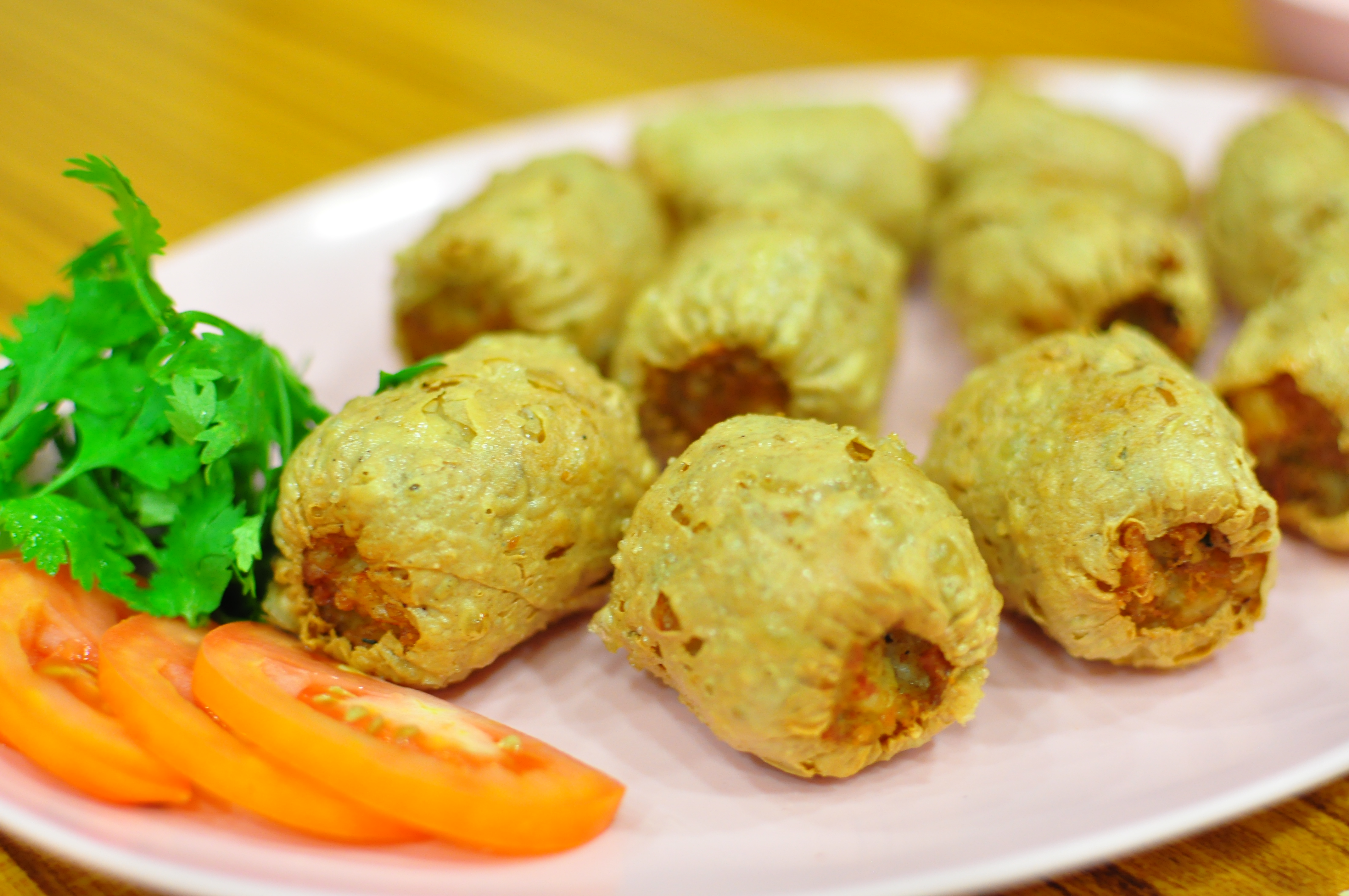
Hoy jaw, deep-fried crab dumplings

 Like an old friend, Nakorn’s hoy jaw (deep-fried crab dumplings, which differ from the shrimp variety, called hae gun) presents familiar flavors, but in a superlative fashion. A crinkly, crackly package of the sea, here it is never too greasy, not too heavy.

Like a classy party-goer who can hold her liquor, the rest of the menu shows similar restraint. Its gaengs (an all-encompassing word running the gamut from thick curries to clear soups) are never too obnoxious or obtrusive. Its extensive range of stir-fried greens — including, but nowhere near limited to garlic chives, pumpkin shoots, young spinach, broccoli sprouts and the ever-present morning glory — are always seasoned to perfection, and never oily (a recurring theme in lesser Thai-Chinese restaurants) or over-cooked to oblivion.

Garlic chives with pork liver

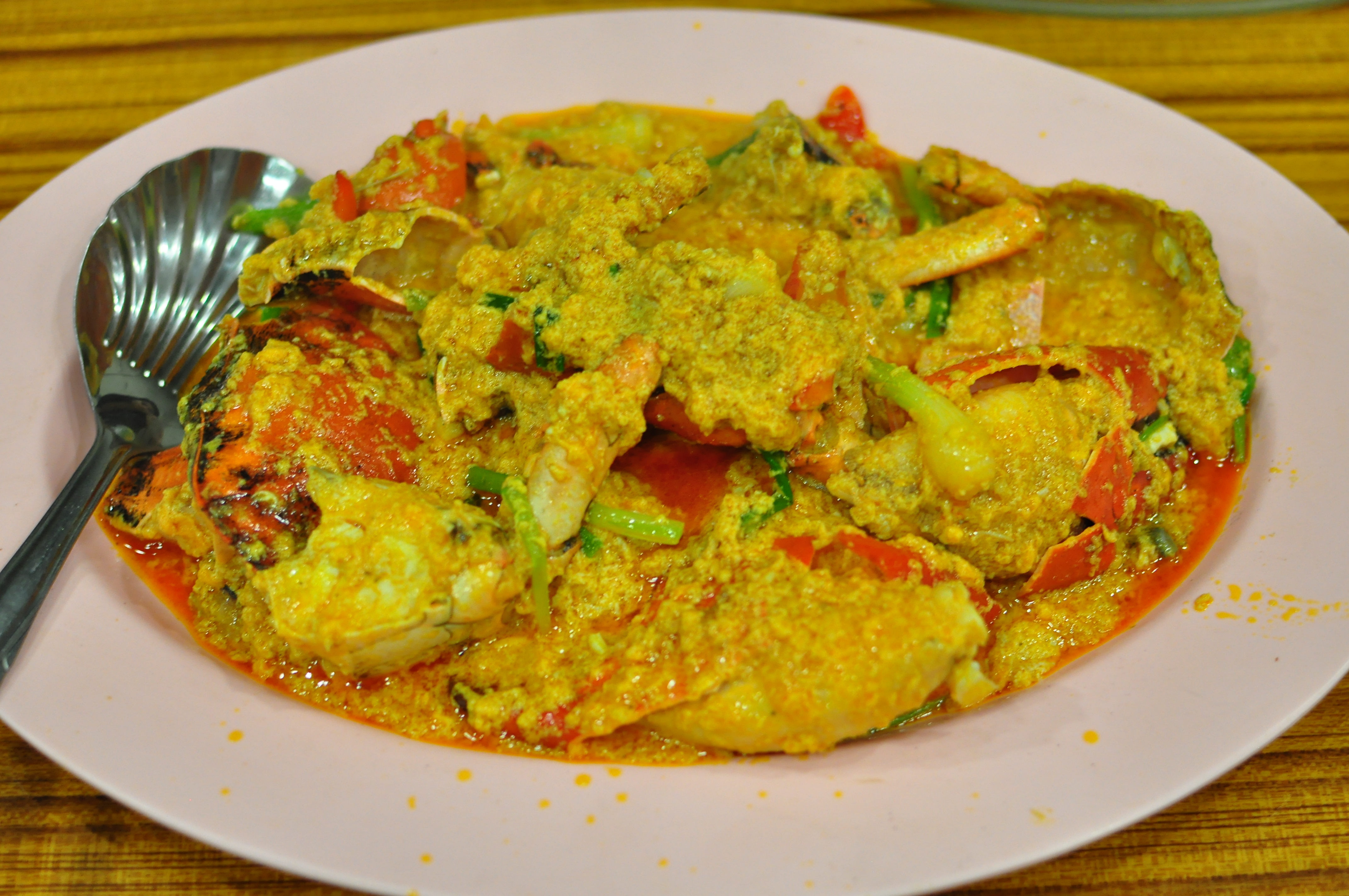
But the best part of Nakorn’s menu may be its seafood. This is not the fiery, in-your-face stuff of Bangkok’s well-known seafood purveyors (of which Sorntong Pochana on Rama IV is a good example; Somboon Seafood is better-known but a mere echo of a good restaurant). This is also more restrained, including the popular specials (steamed seabass with pickled plum) with the more esoteric (deep-fried split langoustines). The best, though, may be a dish beloved in Thai-Chinese restaurants across town: stir-fried cracked crab in curry, comparable (and almost as good) as the version at Pen.

Stir-fried curry crab

Best of all, it’s the little details that set Nakorn apart from the rest of the pack: the casual, convivial atmosphere, conducive to lots of shouting and (of course) grabbing; a loyal coterie of customers ranging from college students to middle-aged “khunying” types on their hair’s day off; the ability to take out excellent jok (Chinese-style rice porridge) for the next day’s breakfast just next door at Jok Sam Yan; and service that remembers the last time you came and expects to see you again.

 Nakorn Pochana (Sam Yan market, 02-214-2327, 02-215-1388, 02-215-4418)

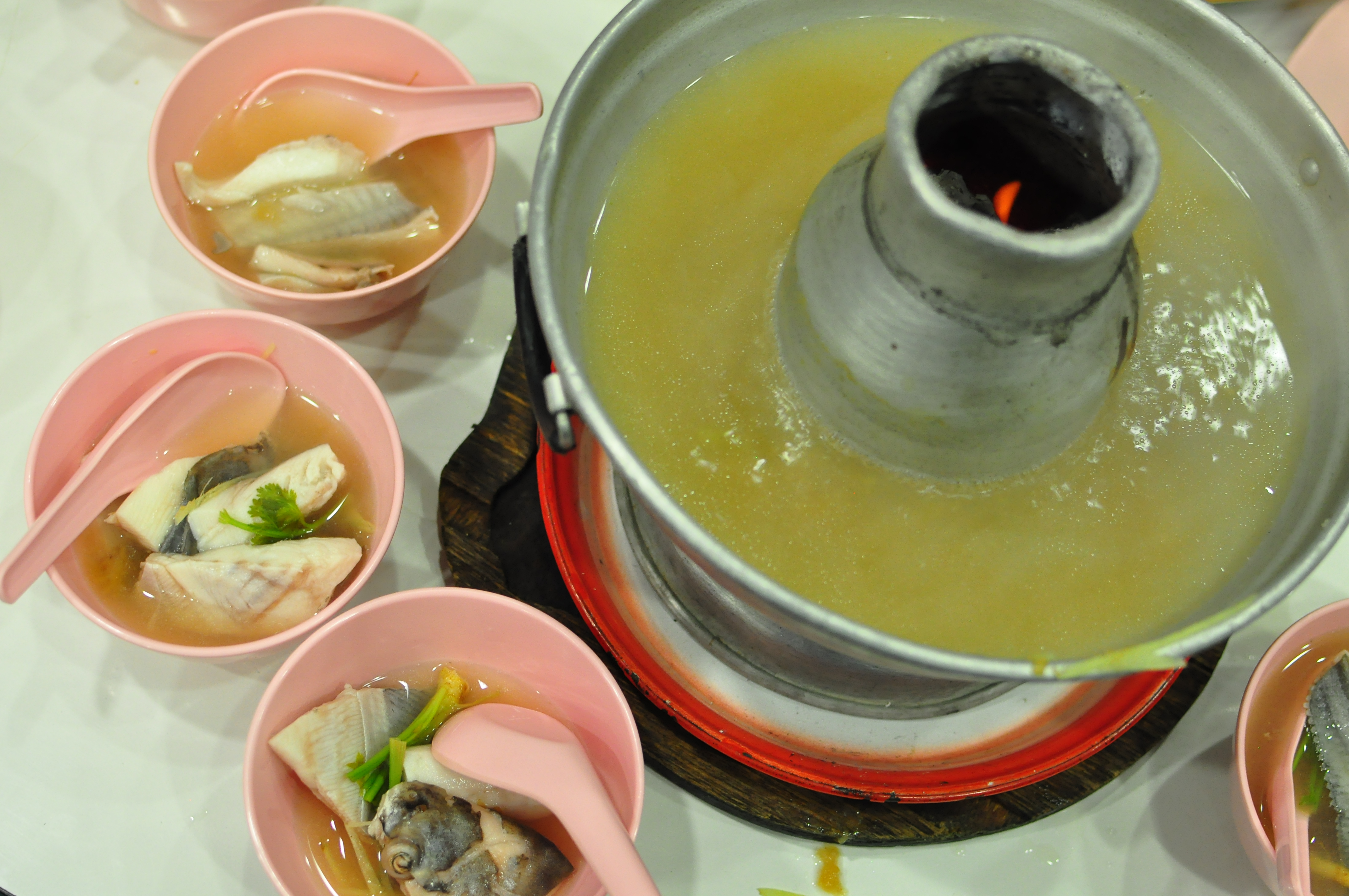
"Tom som", or tart-spicy soup of pomfret

All photos by @SpecialKRB

1 Comment

Filed under Asia, Bangkok, fish, food, restaurant, seafood, Thai-Chinese, Thailand

A Tale of Two Noodle Stands

Pork egg noodles, yum-style, without broth


It’s a tale of two noodle stands.

Actually, long ago, Rungrueang (Sukhumvit 26) used to be one stand. The Chinese-Thai proprietor served up bowls of steaming egg or rice “tom yum” noodles accompanied by a spicy, tom yum-style broth, slivers of fish “meatball” and plenty of seasoned, minced pork (when the noodles were ordered hang, or dry, with tom yum seasonings, they were simply called “yum”). Customers flocked by the hundreds every day. The noodle stand became known as a popular lunch spot for work-rumpled desk jockeys and high-haired housewives in the Sukhumvit area. 

Then, as is known to happen, the original proprietor died. His two sons took over the noodle stand, which expanded. And, as is known to happen, they quarreled. The noodle stand split in two, co-existing side-by-side, observing an unspoken cold war. A wall eventually sprouted up between the two shops.

This detente is basically how things stand today. There are two Rungrueangs: one, the original, on the left side, a little smaller than its sibling and marked by the original red sign. Interestingly enough, the son in charge is said to have red shirt sympathies, so it is strangely fitting. Since it is known as the original, diners “in the know” appear to favor it, and it is consistently full.

On the right side, a little bigger than its brother, the “new” Rungrueang is announced by a yellow, handwritten sign (a recent addition). And guess what? Yes, this brother leans to the yellow side. The noodles are EXACTLY THE SAME (it is the father’s recipe, after all). And, maybe because of this, it is also consistently full.

So that is the story of Rungrueang. Which, it turns out, ends up being a political story. And a sort of metaphor for Thailand. Yes, all that, dumped into a pink plastic bowl, engulfed in a spicy lemongrass broth, and drizzled with chopped peanuts, the way a proper bowl of minced pork tom yum noodles should be served.

 (Picture by @SpecialKRB)

2 Comments

Filed under Asia, bamee, Bangkok, food, food stalls, noodles, pork, Thailand