Glutton Abroad: Bongiorno Lampedusa

Tuna skewers and white mullet dusted with pistachio, garnish of the gods

Tuna skewers and white mullet dusted with pistachio, garnish of the gods

I have known The Italian for 22 years. During our freshman year at Bryn Mawr, she lived at the end of my hall in Pembroke West. Even then, she was an effortlessly chic little blond tornado, a glamorous chain smoker with an Italian-accented Stevie Nicks croak, a high-heeled aficionado of Valentino and Missoni at a time when I was still wearing red plaid pinafores from Talbots picked out by my mother.

So when the time came for The Italian’s 40th birthday party, I was on board. A shame it was at a place that the Italian embassy workers in Bangkok claimed didn’t exist. “Lampedusa?” they said. “No, that is not in Italy.”

We checked our birthday invitations again. “But it is Italian,” we said. “It’s an island that belongs to Italy.” But only a phone call from an actual Italian person would persuade them. Even then, they were skeptical. No one had ever heard of this little island before, including me.

It turns out Lampedusa is the southernmost part of Italy, a pebble skipping off the toe of the boot, landing somewhere between Tunisia and Sicily. The island spans nearly 8 miles, and is home to about 4,500 people, who speak “Lampedusan” — a mish-mash of Italian, French and Arabic that is incomprehensible to the regular outsider. The dry, rocky soil means vegetables can be hard to come by, as is most meat (although a herd of goats did live nearby, roaming the hills around our rented cottage in an area charmingly known as “the Bay of Death”). The only thing this place abounded in: seafood, and plenty of it.

While Lampedusans may be considered a breed apart, their cooking is purely Italian — Sicilian, to be exact. The mussels and clams that proliferate in the azure waters around the island are melded with scampi, garlic and tomatoes in a sauce for pasta. Sometimes, bits of tuna or red snapper are mixed with spaghetti and crowned in pistachio dust in the way a Roman would scatter grated Parmesan. Mullet and tuna are simply grilled, or, if it’s a fancy place, once again dusted with pistachio (and then grilled). Bits of octopus and/or scampi are marinated and served as a ceviche; rings of calamari are lightly breaded and deep-fried.

A photo of marinara sauce on the boat, blurred by the tossing waves

A photo of seafood marinara sauce on the boat, blurred by the tossing waves

As for the sweets, fuhgeddaboudit (I’m sorry. This is the last time I do that, I promise). There is a ton of gelato, of course (I am told the best “tests” of a gelato’s quality are the pistachio and banana flavors). There is Sicilian-style granite, or finely shaved ice (coffee is, inexplicably, the most popular flavor, it would seem). There are ice cream cakes mixing coffee, pistachio and strawberry flavors. So there are all these things, but only one thing matters to me, and that is cannoli: tubes of fried dough that are filled with a ricotta-augmented cream. They are super-sweet and occasionally delectable treats while eaten at a place like Veniero’s in the East Village; in Italy, they are the greatest things to have happened to the world since Michelangelo and da Vinci.
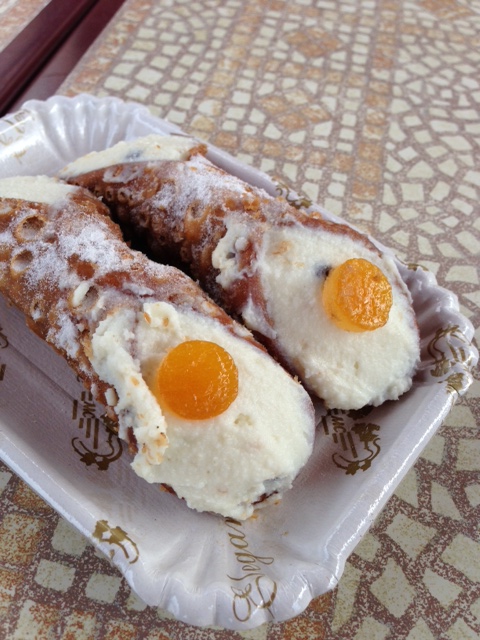
Sicilian-style cannoli at Pizzeria Dell'Amicizia

Sicilian-style cannoli at Pizzeria Dell’Amicizia

But all this fabulousness has a price, of course. Over the week, I hit a bit of a seafood wall — there is just too damn much fish. TOO MUCH FISH! Fish, everywhere, forever and ever, purple mountains of it, and fruited plains too. You see, Lampedusans love their seafood, especially their sgombro — a bonito-like fish of which they are inordinately proud that is eaten in everything including sandwiches, paired with capers and onions. Let me tell you how much they love their seafood: there are SEVERAL types of fish-based baby food. Mull(et) over that for a while.
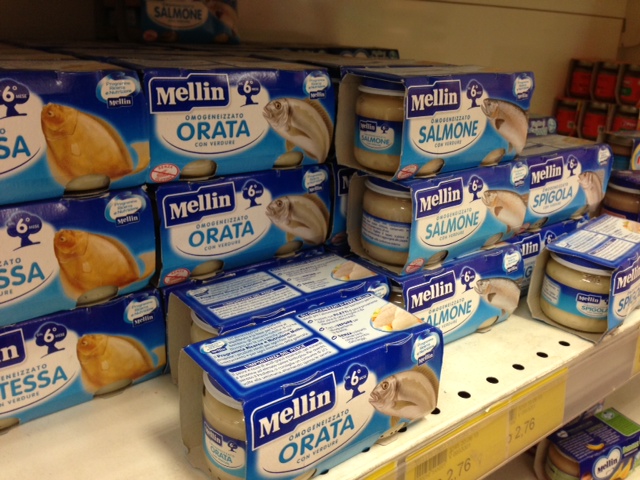
Fish baby food on the supermarket shelf

Fish baby food on the supermarket shelf

Meanwhile, if the water is a little rough, ships can’t cross over, and you are left with a few heads of wilting romaine lettuce, a couple of withered Sicilian cucumbers, and the disheartening sight of NOTHING at the meat counter:

Karen, in line for nothing

Karen, in line for nothing

At a low point, my husband and I stop at Gerry Fast Food, where we are told we can get a fix of some sweet, sweet, meat. What we get: boiled beef lung and tongue, spritzed with lemon juice and enclosed in a plain hamburger bun. We eat all of it. But we never want to go back to that ever again.


8 Comments

Filed under food, Italy, restaurant, seafood

Glutton Abroad: Still full, lah

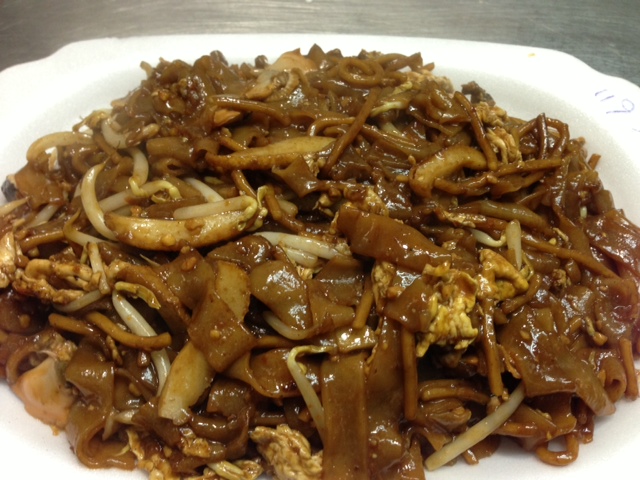
Stir-fried guay thiew at perennial street food favorite, Newton Food Centre

Stir-fried guay thiew at perennial street food favorite, Newton Food Centre

Singapore and Bangkok are often seen as flip sides of the same coin. Where Singapore is clean, orderly, and green, Bangkok is … not. What can you say? Both have their advocates: light vs dark, security vs chaos, angel vs devil. One will never be mistaken for the other, but there are more than a few similarities, the most prominent of which is a nearly debilitating obsession with food.

Yes, Singaporeans love their food. Like in Thailand, food forms the backdrop to every social interaction, is the insistent hum underlying almost every conversation. While you are eating, let’s discuss where we are eating next. Did you try this yet? We can shoehorn it in between that other place and the one down the road and, oh, that reminds me of the place across the street too. Let’s take a walk and look at other restaurants while we’re eating dinner. Why not? Also: I love this. I feel you on this, Singaporeans. I feel like you get me. Let’s be friends.

Bina and Poh Sun get me. This is why, minutes after we have settled into our hotel, they come to pick me up for dinner. They have a plan … for the entire weekend. No meal will go unattended, a lazy stroll down some sidewalk and a quick dart into the first fast food venue that beckons. That is not for us. Every meal is a learning experience, aka a chance to stuff my piehole with something different. Because — despite its relatively tiny size of 660 sq m — Singapore still contains multitudes. I would try to consume them all.

First stop: Newton Food Centre. We acknowledge that it is one of the island nation’s more touristed spots, but it is also one of the biggest, and the easiest way to jump into Singapore’s street food scene. All the favorites are represented: stir-fried noodles, birthed in volcanically hot woks with lashings of dark soy and chili sauces; satay, paired with fresh chunks of cucumber and oddly-comforting wedges of sticky rice; egg prata, a gossamer-thin slip of dough filled with egg and veggies; and roti John, a baguette stuffed with what you would find in a regular murtabak, accompanied by a sweet, neon-red chili sauce and a perfect fusion of Anglo and  Muslim influences.

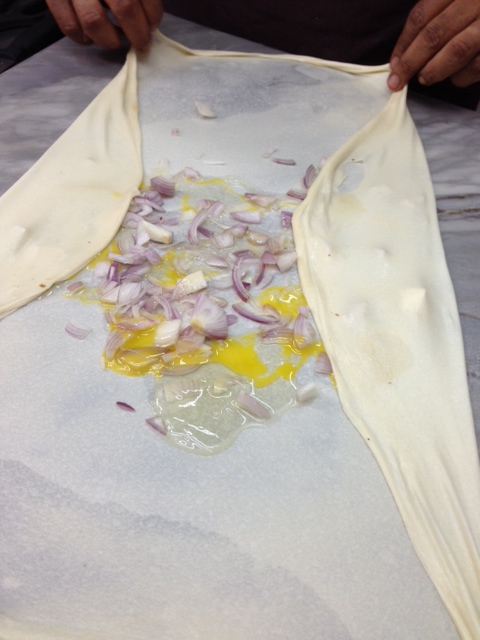
Prata in the process of being made at Al-Noor Biasa

Prata, mid-make, at Al-Noor Biasa

Of course, there are also “touts”: people who “help” newbie tourists — instantly recognizable by the dazed expressions on their(my) faces(face) — by suggesting tables and then plying them with laminated menus that promise delicious seafood. That seafood may very well be delicious, but buyer beware: the story of the tourist who paid S$800 for four prawns is something I still remember quite vividly.

But if touts are your biggest worry during your street food experience, there would seem to be very little for you to be concerned about. Street food in Singapore is a carefree, diverting experience, and one that is perfectly suited to Singapore. My opinion on the possibility of herding the cats that masquerade as Bangkok’s many food stalls (and their customers) into their own food centers, however, has not changed. Vendors here are perfectly happy forming their own little collectives — the more, the merrier the chance of encouraging more foot traffic. But to cut the spontaneity and autonomy out of the decision-making process would be to cut out all the fun — anathema to Thais. Of course, I could be wrong and railing against what may be an inevitable result of a city shedding its sordid, cluttered past and evolving with the help of a lot of money (see: Hong Kong). But to have to travel to a food center to get my street food (instead of, say, stepping out onto the corner and even at the edge of my driveway to find a stall has spontaneously sprouted somehow from the concrete) would make me sad.

Next stop: Katong. If Singapore is downtown LA, Katong is … oh forget it, I don’t know LA. Let’s say Singapore is Manhattan and Katong is Brooklyn. And in Katong is a wealth of great Malaysian and Peranakan (a mix of Chinese and Malay) places that provide great food at prices that are actually reasonable. At Glory Catering (www.glorycatering.com.sg), an array of stir-fries, curries and noodle dishes await the extremely hungry; particularly recommended are the brinjals (garlicky, peppery stir-fried eggplant) and the porpia (soft “egg” rolls stuffed with vegetables with a tart-sweet chili sauce, freshly made with every order). At House of Peranakan Cuisine (210 East Coast Road), the ayam buah kelua — chicken curried with stuffed Indonesian nuts that are also macerated and cooked into the sauce — may not be black enough to satisfy devoted Peranakan food lovers, but the long beans, stir-fried with bits of baby octopus, and meatballs are delicious enough to make up for it.

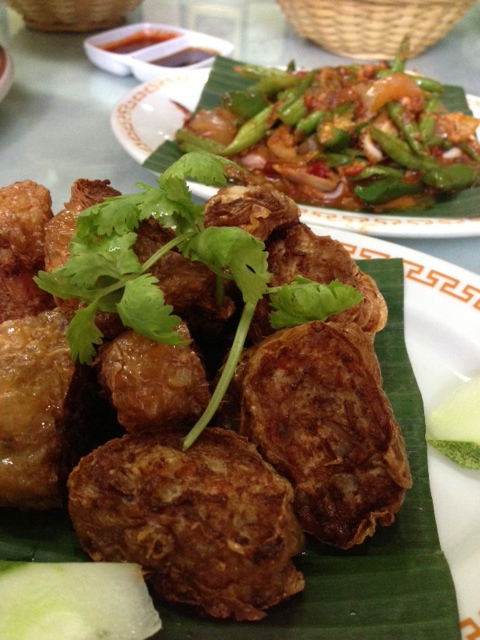
Meatballs and long beans at House of Peranakan Cuisine

Meatballs and long beans at House of Peranakan Cuisine

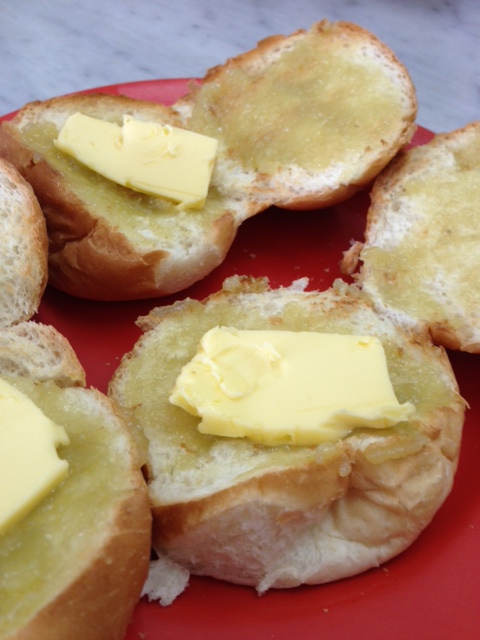
Possibly best of all are the hot buns, dripping in kaya (a mix of eggs, coconut milk, pandanus leaf extract and, of course, sugar) and baptized with an obscene square of butter at Chin Mee Chin Confectionery (204 East Coast Road). With a cup of sweet coffee and an egg boiled just enough to form a thin white skin over the yolk, this is enough for any lunch. Although the two other lunches before then were pretty good, too.

Buttered buns at Chin Mee Chin

Buttered buns at Chin Mee Chin

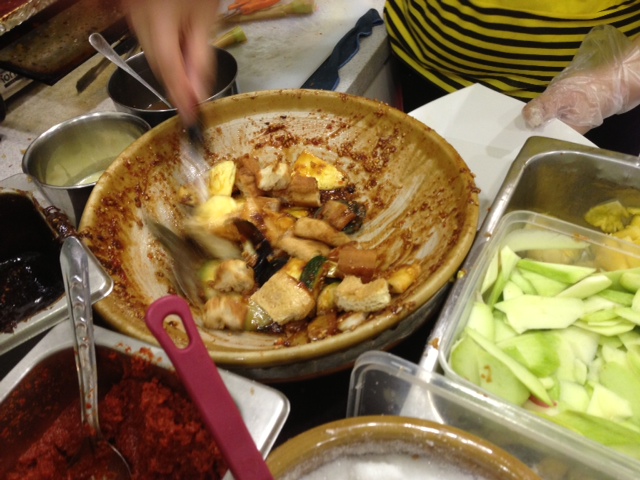
Third stop: Far East Plaza. Alongside all the aspiration that pervades much of Orchard Road is a humbler collection of downmarket shops and no-frills Asian eateries known as Far East Plaza, the Singaporean equivalent of Bangkok’s MBK. Amidst the sushi bars, Malay-style curry stands and yong tau fu (sort of DIY noodle shops featuring fresh veggies and your choice of protein) shops is William’s Rojak, the first purveyor of the Chinese-style salad made up of chunks of green mango, pineapple and rose apple tossed in a sauce of shrimp paste, chilies and pulverized peanuts and garnished with bits of torch ginger and patongko (Chinese-style flat fried bread). It reminds me of Thai-style som tum in that its main fanbase is predominantly female. The similarities pretty much stop there. There is also a Malay version hewing closer to the standard idea of a vegetable salad, as well as an Indian version that simply tosses out everything that is healthy about this dish and then fries it twice. I have yet to try those. But I doubt I’ll like them more than I like this.

The beginnings of a rojak

The beginnings of a rojak


Have I gotten into everything that I’ve tried in Singapore? Hell no. I have a reputation for laziness to maintain. Do I look forward to trying more on my next trip there? Of course I do. You’re on notice, Singapore.

9 Comments

Filed under Asia, food, Singapore, Thailand

What’s Cooking: Elvis Suki

_DSC8156

Scallops ready for the grill

(Photo by @karenblumberg)

Elvis Suki (Soi Yotse, Plabplachai Rd., 02-223-4979, open 17.00-23.00 daily) is one of my favorite places to take visitors from out of town. Its specialty — the Thai-style sukiyaki after which it is named — is an unglamorous but delicious goop of glass vermicelli, a blank canvas on which a yin-and-yang-likedrama is played out nightly: blanched seafood or meat versus the vibrant thrashings of a spicy-sweet-tart chili sauce, like the Meg underpinning a buoyant Jack.  That said, it’s still the Cleveland of street food dishes, solid but unlamented, probably a nice place to live but unlikely to haunt your dreams.

Their scallops, however, are another story. Other people make scallops like these: an unlikely pairing of scallops and a dab of pork, minced or otherwise, both doused liberally in a sweet, garlicky butter. Yet somehow no one can hold a candle to Elvis Suki’s version.  Maybe it’s the atmosphere? (no-nonsense open-air shophouse or, if you are fast enough, no-frills air-conditioned room?) Maybe it’s the people? (A mix of families and office workers). Or maybe it’s the service? (Probably not). In any case, few diners leave Elvis Suki without those scallops.


Elvis Suki’s grilled scallops with pork (makes 4)

What you’ll need:

–       4 large scallops

–       1 slice (about 60 g) pork neck

–       2 Tbs butter

–       2 large cloves garlic, finely minced

–       Salt and pepper (to taste)

–       Sugar

To make:

  1. Make garlic butter by mixing garlic with softened butter
  2. “Dry brine” pork by coating in salt for 15 minutes. Before using, pat dry.
  3. Clean scallops and place 1-inch-long piece of pork alongside scallop on the shell. Season both with salt and pepper.
  4. Dot with dollops of garlic butter and sprinkle both scallops and pork with ¼tsp of sugar.
  5. Grill or broil in oven for about 5 minutes, keeping a close eye so that the scallops do not burn.
  6. Take out and serve while hot.
The grilled scallops at Elvis Suki

The grilled scallops at Elvis Suki


3 Comments

Filed under Asia, Bangkok, food, food stalls, Thailand