This is not AI

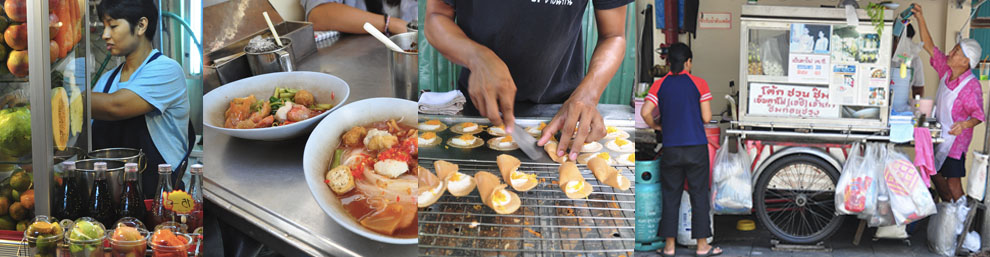
Flat egg noodles with fish meatballs, a type of bamee

I recently read that a telltale sign of something written by AI is the inclusion of em dashes and colons — essentially, the way that I write. I am pretty sure that people (person) who have been here a while would never accuse me of resorting to ChatGPT, but I still want to explain to you why I write the way I write.

I’m no musician (obviously), but words to me are the melody. Punctuation marks are the percussion. One of my favorite percussionists is Stewart Copeland of the Police, and I like him because he is always surprising you with something that he does, even if it’s on a fairly simple song like “Every Little Thing She Does is Magic” — a song I am fairly sure has been ruined by a romcom scene somewhere involving Nicole Kidman walking across the street or something.

But that is neither here nor there. I like my punctuation marks; I think they add texture. I hate commas that appear in the middle of a sentence that should be two sentences, that is just so irritating to me. I want to surprise … even if it’s not exactly right. If that’s how ChatGPT also wants to express itself, that’s out of my control. In fact, someone quite gleefully informed me a few months ago that ChatGPT can already write exactly like me, and that my services are no longer really needed. So there’s that.

But can ChatGPT do this transition? Meaning: there are the original and ChatGPT versions of food, too. In this case, I’m talking about noodles. Tom yum egg noodles, in fact.

Bamee in broth at Rungrueang (guess which one)

I’ve written about Rungrueang before. There was once one noodle shop, which eventually morphed into two competing (but related) rivals. For whatever reason, both my family and my husband’s family simply favored the right-hand side shop, for no reason other than force of habit. The assumption was that they were both working off of the same original recipe. This remained the assumption until I revisited a couple of weeks ago.

The left hand shop has expanded to across the street, soon after it was awarded a Michelin Bib Gourmand. For that reason, it is considered the “superior” noodle shop, though both are packed at lunchtime. All of the hallmarks of the Michelin Bib Gourmand stop are there: diners lugging suitcases on their way to/from the airport, tense queues full of gimlet-eyed customers, harried waitstaff. To make things easier, there are the dreaded laminated menus (something I used to dread, but which are now at all the street food shops I used to champion). They make ordering easier, it’s true. My husband and I both ordered the tom yum noodles ruammitr (with everything) in broth, and the pork meatballs in broth on the side.

There is a tendency in Thai food to “specialize” one’s own dish with one’s own particular seasonings. My father was a big tinkerer who loved to make his own sauces with whatever he found on the table. You’ll also see it in big Thai group tours to a Western country, where “nam prik”, chili powder and Maggi sauce are employed with impunity. As a result, I have a few (posh) friends who refuse to season their own Western dishes, since this type of flavor customization is such a Thai trait. I believe that noodle shops are the reason why Thais are so free with seasoning things to suit their own palates.

But the “right shop” noodles come already seasoned. I added some pickled chilies because I am stubborn and need to do something, but it wasn’t really needed. The noodles are already salty and a bit sweet. The reason for this, I imagine, is because so many non-Thais are eating there, and they do not have that ingrained desire to mess around with everything. These noodles are meant for them.

To be fair, my husband and I ordered the exact same thing at the right-hand shop: bamee tom yum nam and luk chin moo. There were already differences on the (also laminated) menu, with a couple more side dishes than at the other shop. When the broth arrived, it had the addition of lettuce leaves to make it sweeter, a sort of (now) old-fashioned flourish. And the noodles were definitely made with the Thai predilection for tinkering in mind. I added fish sauce, lime juice, pickled peppers, and a little sugar. I found it more delicious, if only because I felt like I had a part in making it myself. Isn’t that why all Thais do this to noodles?

Pork meatballs at the right-hand shop

So which one is the ChatGPT and which one is the original? I leave that up to you. Time changes all of us, and progress renders us all obsolete in one way or another. Happily for the Thai noodle vendor, the making of good guay thiew has yet to become fully automated. Until then, we should celebrate every bowl that finds its way to us, already seasoned or not.

2 Comments

Filed under Uncategorized

Glutton Abroad: Bless Georgia’s Heart

A platter of khinklish, local grilled fish and soup

Thai tours are not like other tours. First of all, one must make sure that there is rice available somewhere everyday, or people will complain about not feeling full. A tangent to the first one: you have to book every Chinese restaurant in the area, at least once a day. And a tangent to that one: you have to stop at least once at the local Thai restaurant favored by your embassy, because that is what the “Global Thai” and “Kitchen of the World” assistance programs are all about. And then a tangent to even that one: this Thai restaurant must have karaoke.

I was nervous about going on this trip, because it wasn’t just me, or even just me and my family. It was me, my parents, my in-laws, and 20 of their closest friends from Chulalongkorn University 10 million years ago. Several people walked with canes, and more than a handful had titanium hip or knee replacements (which, incidentally, did not keep them from getting strip-searched by airport security). Some had dietary restrictions (meaning they didn’t like unfamiliar food) and, like true Thais, had brought their own packets of Mama, chili dips and bottles of Maggi. They had many needs, and rightly so. But our intrepid Thai tour guide, Mod X (yes that was his name), and Georgia (the country, not the state) were more than up to this challenge.

But first, the obvious: how to sell Georgian cuisine to older Thai people? Mod X appeared intent on trying to make Georgian food as similar as possible to Thai food, which meant lots of fish at every meal, rice, and of course soup to go with that rice. He passed out bowls of his own chili dips (this would change every day, from nam prik narok, or flaked “hellfire” dry chili dip) to nam prik mangda, chili dip flavored with mangda bug extract) and his own bottles of Maggi, with the red top (made from beef extract) instead of the yellow one (made from soybeans). Knowing that breakfast is usually comfort food, he would wake up early every morning to make khao tom (rice porridge) with all the fixings brought from home, also schooling the local cooks on how to make Thai omelets. He even went so far as to bring in his own green papaya, making his own som tum in the courtyard of one restaurant in a plastic basin.

Mod X, working hard

There was also the requisite trip to the Thai restaurant (not once, but twice), in this case, aptly named Thai Curry.

Curry not pictured

But that cut down on a LOT of Georgian food. Eventually, after learning about our predilection for bread (and lots of wine), we were able to try what some people would term the “greatest hits” of Georgia. That meant khinklish, face-sized Georgian soup dumplings meant to be held by the stem (edible, but usually not cooked, and bad luck to eat) and bitten into, sipping the broth inside before enjoying the filling.

There was a mashed bean-filled pancake reminiscent of a quesadilla stuffed with refried beans, fresh out of the oven:

There were also pickles with every meal, which made me absolutely thrilled — I love sour pickles (sweet pickles are an abomination). One particular special pickle, apparently only available in the spring, was called jonjoli, similar to a caper berry and really delicious:

Pickles and a couple of beans for breakfast

But the most popular dish ended up being none other than khachapuri, in this case Adjarian-style, in which the hot bread serves as a (delicious) boat-shaped receptacle by which you can scramble your own eggs and cheese together (or if they don’t trust you to do this properly, baking the egg completely through).

This place didn’t trust us

There are many types of khachapuri, incidentally: Gurian is crescent-shaped and stuffed with cheese and hard-boiled eggs; Imeretian is round and filled with cheese; Megruli is round and has even more cheese; and Meskhetian is layered and flaky. I haven’t even touched on the bread-y things that are offshoots of khachapuri. Needless to say, I gained 3 kg.

But there were things that weren’t so popular. There was satsivi, a stew made with walnuts and usually chicken, but which in this case was replaced by an extremely bony grilled fish:

Tricky to eat

But what I loved even more than the food (is that possible?) is Tblisi itself — yes, even the people, who have a ways to go to reach Thai-style “smooth as silk” service (the service was so brusque that my mother came to the conclusion that they were anti-Asian). I did not get the same feeling, but think “Chinese servers in a Kowloon tea parlor who are sick of dealing with tourists”. An acquired taste, perhaps.

The cobblestoned streets in the Old Town wind in ways you wouldn’t expect past places full of people celebrating and laughing, or simply playing music. Down one street I could distinctly hear someone playing complicated-sounding classical music — a professional hired by the cafe, I assumed, but in reality just a patron who quickly retreated to his table when he finished (who puts a piano out on the street in front of their cafe for no reason?)

Further along we hit a park, where a circle of guitar players — not busking, not looking for attention — started singing songs and strumming. It’s very Los Lobos-meets-Eastern Europe, and my husband’s aunts, suitably inspired, began to dance in the street.

“How old are you, grandma?” One of the guitar players asked from behind the gate.

“I am 86,” said Aunt Tui, the most vocal of us all. “And she is 89,” she added, pointing to her sister.

“God bless you all,” he said before he started playing again and they continued dancing for a while, eliciting smiles from passersby and their dogs (a city is either a cat city or a dog city, and Tblisi is definitely for the dogs). We would have a lot of challenging stuff in store for us later on, but at least Georgia on that day blessed us, and we blessed it back.

Leave a comment

Filed under Uncategorized

Business, Thai-style

Mee krob at Panlom

(Note: Written before the season 3 finale of “White Lotus”)

Like many of you, I have been watching “White Lotus” season 3, which is set in Thailand, every time it appears on Mondays. I have enjoyed the memes around Parker Posey’s character, relived some ghastly three-woman travel trips of my own, and waited with bated breath for something to finally happen to both Gun Dad and Gary. But whenever poor old Gaitok and Mook appeared on my screen, I admit to feeling exasperation and maybe a little boredom. Why were they so one-note? In what way was “Lisa so pretty” *moon eyes moon eyes* a compelling plot line? Was Mike White afraid of pissing off Thai people with a more nuanced portrayal of two real-life people (a real consideration)? They — like many of the “locals” in travel shows featuring dashing Western types like Anthony Bourdain — threatened to be cardboard cutouts in their own story, once again, like many Thais in similar situations before them.

It wasn’t until I ended up scrolling Twitter (AGAIN) and came upon a discussion of the “White Lotus” season so far that I finally came close to understanding what the characters were all about. It was a general discussion about what was working and not working for various viewers, at varying levels of dumbness (yes to incest and feuding three-way friendships, meh on the Darth Vader dad killer plot line, always no to the boring old locals), when journalist Heidi N. Moore (I always like to give credit) started a thread with her own analysis of Gaitok and Mook. Like all of the other characters — Belinda with the payoff, Tim with jail, Rick with killing someone — Gaitok was in a moral dilemma. Would he advance in his career (and life) by subjugating his Buddhist non-harm beliefs and gain a “killer instinct”, quite literally, in order to become a bodyguard? He would get more money that way, and in Mook’s eyes, be more of a marriage prospect.

Let’s ignore the ridiculousness of this in real life (no one aspires to marry someone’s hired muscle, and if you really wanted to move up in Gaitok’s world, you’d work in hospitality) because the plot line is literally about using violence (physical or mental) to move up the capitalist ladder. And the more Western the boss, presumably the more money and stability you get. It’s colonization in another name. Tourism runs along similar lines, even if the bosses change from day to day.

I, as a person who occasionally gives overpriced food tours to foreign tourists and writes cookbooks aimed primarily at people who eat rice with a fork, finally understand this story. Apparently I, like many of my other fellow viewers, can spot and understand class struggle (season 1) and sexual and gender politics (season 2) but not life-altering moral dilemmas. That’s funny, but also kind of sad.

Many of us are familiar with the elusive vendor who shuts up shop when his goods run out, or the chef-owner of a small restaurant who desperately wants to keep her clientele small and select. American-style capitalism would dictate that these people expand, making more goods to feed increased demand, and hiring more people to help you when more customers stress you out. Eventually, you could buy out all of your competitors, make enough money to influence elections, and become Elon Musk. But alas, this doesn’t seem to be the Thai way. Thais traditionally don’t have that “killer instinct”. Instead, you would know what your limit is, and stick with that limit, at the expense of your wallet but to the benefit of the rest of your life. It’s what keeps vendors in their market stalls and their shophouses, selling enough chestnuts on the street to send their kids to university. There is no chestnut empire awaiting them. There is only retiring somewhere with a nice plot of land and a garden, occasionally meeting up for coffee with friends to trade amulets.

The elderly woman proprietor at Panlom (“Passing Breeze”) is one such retiree. She has opened up a tiny restaurant in an old Thai-style house that is attached to her son’s pie shop in a picturesque corner of Bangkok Noi, close to Bang Khan Non MRT stop. Reservations are essential, since there’s only one or two tables. You order your food beforehand, and the choices are dishes that she makes herself, from her own family recipes. In spite of the “hidden” nature of the restaurant, it’s neither “cool” nor exclusive. It’s not trendy, but at the same time it doesn’t aspire to serve “Royal Thai cuisine”. It’s just a lady sharing the recipes she grew up with.

So of course you would expect the kind of old-fashioned Central Thai food served on the tables of “good” families — the kind of food you’d find at Aksorn. There is mor hor and mangkorn karb kaew (a sticky paste of shrimp and pork atop a slice of fruit, in this case pineapple and orange, respectively). There’s also ready-made miang of pomelo with wild betel leaves and more of that sweet sticky paste.

As the food is presented course-style (normally a pet peeve, but there’s little space on the table for much else), you also get a “salad” of yum kamoy, which translates to “robber’s spicy salad” and is made of a mix of shrimp, chicken, surimi, and ground dried fish.

Then there’s of course, mee krob, an under-the-radar tricky dish to make, with citrusy hints of orange, comforting kai pullo, and khao kluk kapi, or rice mixed with shrimp paste and all of the usual accompaniments: green mango, chilies, shallots, egg, tiny shrimp, and sweet pork.

Then there’s the green curry, served with homemade roti and kanom jeen, cooked in a style described as “Indian”, but which I would describe as “good” (Bangkok curries have been getting too creamy, and, paradoxically, too green. I do not trust pistachio green curry. The color is also bad luck for me, born on a Friday, in accordance with Thai superstition).

The evening ended with som chun, accompanied by the correct and old-fashioned accompaniment of deep-fried shallot powder. I did not take a photo, because I was in the middle of a frankly disturbing work Zoom in which I ended up ranting about authenticity being a Western concept to a group of bewildered Thai people (sort of like the reception Fabian’s singing gets in this week’s episode!)

There were dishes that I didn’t get to order because, come on, no one has that kind of appetite. But Panlom also offers massaman curry (of course), khao tung na tang chao suan (rice crackers with a mild pork dip) and pla hang tang mo (watermelon dusted with dried fish powder, which here serves as dessert). If you are interested in trying any of these, I’d suggest making a reservation, since you’re unlikely to find any of these dishes in a subway station or food court near you anytime soon. There is real life to attend to, after all.

Kai pullo

3 Comments

Filed under Uncategorized