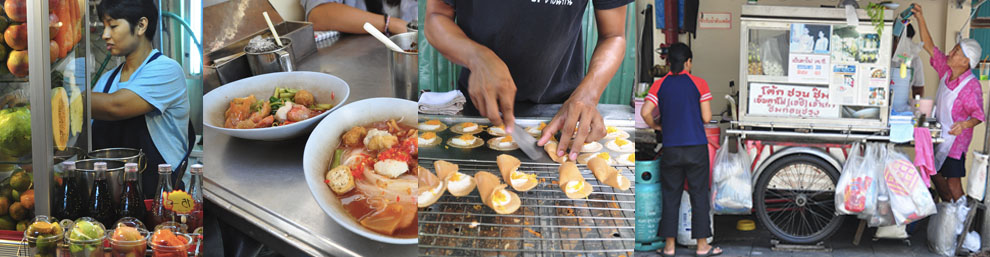
Sincere eats

tapioca

Crispy tapioca cracker with mieng kum sauce

(Note: If you think I can be bought with a bottle of Pinot Noir and some nice dinner conversation … you are right? Not a question. Dinner came courtesy of Haoma and Extrovert PR & Marketing.)

One of the best things about Anthony Bourdain was his refusal to be diplomatic. This really set him apart in the food world, where usually the best thing to do when you have nothing nice to say is to say nothing at all. But such was the force of his personality, his charisma, his barefaced intelligence, that people were willing to let him slide for it, even though he had the best job in the world and was therefore a worthy magnet of our jealousy and envy.

Karen sent me a list from insidehook.com detailing all the targets of his social media ire over the years. This includes the movie “Baby Driver” starring Ansel Elgort, whose face never fails to remind me of the guy who rolls his eyes when I complain that the music is on too loud at the cafe near my house. Also, the soundtrack is vastly overrated. So I agree with Bourdain, whose writing was always best — and he was a wonderful writer — when he was raging against something.

But I don’t always agree with him. Here, this list of the edible things he has insulted suggests that he was woefully misguided on matters like hot chicken (too spicy? lol) and Frito pie (which he compared to dog poo), but very much correct on club sandwiches (like Al Qaeda), Kobe sliders (Douche City), house-made ketchup (ditto), and unicorn frappuccinos (barfarama).

Here, my own list of culinary pet peeves would have to include:

  1. Dry ice. It makes me instantly suspicious of what is underneath all that haze that is obscuring it, like the sunglasses and huge visors that plastic surgery patients always wear after a procedure.
  2. The movie “The Hundred Foot Journey”. I know it’s not food per se. But every time I think of it I fly into a rage. The idea that a young Indian cook has to prostrate himself before some old French lady in order to become a proper chef still makes me want to throw a vat of dal over Lasse Hallstrom’s head even today. India has no long culinary history? That dates back to before the people who became French had ever heard of pots? Those were not questions.
  3. Cynicism. Sometimes it’s expected, like when McDonald’s tries to sell cold brew coffee. But sometimes it comes out of left field, in a restaurant where the chef is clearly capitalizing on his name, a bare-bones operation masquerading as something else, clearly designed to make the owners some money, finally, because it’s their time now and kids are expensive, yo. It’s the restaurant equivalent of Rod Stewart’s entire post-1977 career. Not as obvious as frozen pizzas, but not that far away, either. It’s an outpost in Las Vegas where the owner never visits.

So when I go to a restaurant like Haoma — which is not Chinese, but named after a sacred plant in the Zoroastrian religion brought to earth by divine birds — I am struck first by its naked sincerity. The brainchild of former Charcoal chef Deepanker Khosla, Haoma labels itself as an “urban farm”, where the herbs that perfume your dishes and cocktails are grown in profusion in the garden in front of you, and the fish available for your dinner is plucked straight from a barrel next to your window.

cauliflower

The current veggie main course of roasted cauliflower and long beans in a curry cream with crispy Job’s tears

You don’t have to worry about not understanding what each dish is, because someone, even Chef Deepanker himself, will be there to stare earnestly into your eyes as he explains exactly what went into your food. No worries if you rudely take photos of your food as he speaks — he’ll wait for you to finish. It’s this kind of obvious care that permeates every bit of the experience; it’s not a marketing gimmick, it’s not a trendy ploy.

After leaving Charcoal, Chef Deepanker said he took a food truck around the country, attempting to make sustainable food with as little waste as possible. After a few months, a friend told him it was time to go back to fine dining. Haoma, set deep into the residential wilds of Sukhumvit 31, was the result. Chef Deepanker, who lives next door, hopes to eventually harvest the root vegetables in his own garden and incorporate them into Haoma’s menu. Helping him in the kitchen is sous-chef Tarun Bhatia, christened “San Pellegrino Young Chef of 2017” by the powers that be at Asia’s Top 50.

The garden is already pretty extensive, providing the sorrel for the caramelized milk bread or the Job’s tears for the bread. The grouper with lettuce cream is the restaurant’s first 0-km dish, featuring ingredients plucked from its own grounds. It could seem precious until you remember how people have gotten sick from eating contaminated spinach or Romaine lettuce, how fish are disappearing from the water, and how pigs and cows are killed, and then you think, This might be how we will have to eat from now on. Purposefully and with an eye to the future, like the ascetic monks in the Zen temple who eat every grain of rice.

meringue

Meringue with passionfruit

And then you remember how uncool it is to be so sincere, and go back to listing all the stuff that you hate.


1 Comment

Filed under Uncategorized

Lost Youth

There was a time when you would catch a glimpse of someone in passing via car mirror or window and think, “Who’s that?” but in a good way that made you want to look at them again. The shocking realization that the reflection was yours was a nice feeling.

But there comes a time when the sudden reflection is shocking in a bad way, like the realization that you’ve signed onto an expensive dinner where you are starving, there are only three courses to be served and that one of them will be chicken. You catch a reflection of yourself while riding on a motorcycle taxi where the mirrors are angled in just that way to showcase the growing dumpling underneath your chin and the impressive bags under your eyes. The thought that springs to mind is not “Who’s that?” Instead it is “Oh shit.”

This is the theme of what is commonly known as “middle age.” The Starks have the direwolf and the house words “Winter is Coming.” If “middle age” had a house sigil and words, it would be a bathroom scale, placed inside an hourglass, the number creeping inexorably higher as the sand accumulates on top, the words OH SHIT lettered neatly underneath. OH SHIT indeed.

I used to judge people who posted very old photos of themselves in their lost youths, but now I am one of them. My friend Trude, who should work for the IRS or FBI, ferreted out this old video after I mentioned that my first commercial involved Vaseline lotion and a floating umbrella over my head. And lo and behold, here it is….


That was the year I was 24, and the golden age of me, oblivious of the hourglass and inevitable shifting of the sands. Just like Bangkok’s street food, poised on the threshold from which there will be no return. (Oh, the lengths I will go to just to post an old commercial! Sad!)

I recently spoke with Vallop Suwandee, the architect of the street food cleanup in Bangkok, who was quite candid about how much of it was precipitated by the complaints of real estate developers anxious about their property values. Ultimately, he was aiming for the Singapore model, but added that sub-sois — like Convent Road and even Ari — would be left alone. Next on the chopping block: Klong Toey, which is interesting, given that vendor protests have roiled the market before.

All the while, Chinatown (the birthplace of Thai street food) and Khao Sarn Road (home of mediocre pad thai and cold fried egg rolls) are said to be left untouched because of their reputations as a tourist draw. But once the subway stop to Chinatown opens up, who is to say that property values won’t change, and the temptation to “clean up” take root? BMA officials are currently positioning the street food drama as a struggle between agricultural workers using street food as a way to make extra money in the city after the harvest season, like toddlers setting up lemonade stands on their front lawns. Meanwhile, upright, tax-paying Bangkokians simply want to be able to walk on their sidewalks. But simple observation would suggest that this is not completely true. Bangkokians are also making street food, year-round, and eating it to survive.

Jek Pui (25 Charoen Krung, 19 Soi Mangkorn, 02-222-5229) is a textbook example of the Bangkok boogeyman, the vendor blithely clogging up the sidewalk. This curry rice vendor, which sells from a cart placed at the corner of Charoen Krung and Mangkorn Roads on the edge of Chinatown, forgoes tables in favor of more plastic red stools in order to seat more people at a time. Because of this, it has earned the nickname of “Musical Chairs Curry”.

curry

What’s on offer at 2.30: green curry with fish meatballs, green curry with chicken, mild pork curry 

But it’s been around for 70 years, set up by the grandfather, who immigrated to Thailand from China and made his way by selling curries from a bamboo pole. When his daughter turned 13, she, too, helped sell her father’s curries, walking the streets for so long she eventually developed a hump in her back.

ama

In the kitchen

Today, “Jay Chia” does the bulk of the cooking, but the business is run by her children. The cart-and-stools setup started over 20 years ago, for which they have obtained full permits from the government. The specialty of the house, however, remains the one that Jek Pui (aka “Uncle Chubby”) toted around all those years ago: gaeng garii moo, or mild Chinese-style pork curry, topped with a healthy sprinkle of sliced, deep-fried gun chieng, or Chinese-style sweet sausage.


pork

As with all things in the waning days of their golden age, it is best to sample this street food as soon as possible, for as long as it is available. Who knows when the next time you accidentally find yourself in Chinatown will be, scouring the streets for a bite to eat that does not come from Starbucks, KFC or a tourist restaurant? OH SHIT indeed.

2 Comments

Filed under Uncategorized

Jungle Rock

fried

Signature dish: deep-fried frog legs at Kohkiew Racha Gob Tod

People frequently ask me about what I do when I get sick from eating street food. I almost always say that I’ve gotten sick from hotel buffets, but not really from street food (although the sickest I’ve ever been was when I was hospitalized in Oyster Bay from a wonky hamburger in midtown Manhattan. RIP, my beloved red Birkenstocks).

I can’t say I haven’t ever been sick from Thai street food, but surprisingly enough, it doesn’t happen very often. When I do, I just sit it out like I do everything else (my anxiety, Trump’s presidency, this world). If I do get sick from Thai food, it’s usually because it’s too damn spicy and my worn-out old digestive system just can’t handle it anymore.

So when I head into the jungle along the Burmese border south of Bangkok, it’s a real battle for my stomach, because everything on the table has been jungle-fied: made hot and tasty, the way the people here like it, with plenty of garlic and local herbs and about a gallon of chilies so hot they make your ears ring. Do you know the dish they call “jungle curry” (gang pa)? The tangle of meat and Thai eggplants of assorted sizes and roots and leaves that you’ve never seen before, spicy with a metallic tang and completely unmitigated by any hint of coconut milk or palm sugar? Think that, but for everything, with only heaping spoonfuls of white rice to give you comfort.

Not surprisingly, I got sick. It sucked, but it was a welcome reprieve from the mosquitoes, the jumping spiders that scuttled into my bedroom once I opened the door, and the dodgy Wifi, which only really worked once you climbed on top of an abandoned water tower to get a good signal.

giphy

Leo=my stomach, bear=Thai jungle food

It wasn’t really the jungle. It was Suan Phung, a town in Ratchaburi province that just recently got its own traffic light. Mind you, Suan Phung has loads of attractions for intrepid nature lovers (not me): waterfalls galore, a hot springs, an animal park/petting zoo, arduous hikes through the forest. In the early mornings and after the rain, the hills are cloaked in scattered patches of thick fog, which is truly beautiful. The border with Myanmar is just a short drive away, so locals claim that the soldiers on the Myanmar side like to amble over into Thailand on most mornings for a better cup of coffee.

But of course none of these things has the ability to distract like a good few plates of food can. At German Sausages Suanpeung (#315 Moo 3, 087-995-1119) you get a superior view of the surrounding mountains while chomping on German-style pork bits cooked over an open griddle with freshly-halved white buns, buttered and charred on the edges. Try to go early to Krua Karieng Restaurant (196 Moo 1, 032-395-166), or you will have to wait two hours for a serving of their superior gang pa. Best of all, we arrived at the tail end of forest mushroom (hed kon) season, so we had them every which way: blanched in spicy salads, boiled in tom yum soups, stir-fried with garlic.

But you’ve got to hand it to Kohkiew (Saen To, Tha Maka, Kanchanaburi, 081-986-6578), situated on the edge of town on the way back to Bangkok. Few restaurants consistently pack their tables with the promise of a platterful of deep-fried frog, smothered under an avalanche of deep-fried garlic and hot enough to burn the roof off your mouth. People frequently compare frog meat to chicken, but the only way in which it’s similar is in its white-meat blandness. The texture — chewy, smooth, slightly impervious to the flavor of anything around it — puts it in its own special category. Thais like to call it “gai na”, or “chicken of the rice paddy”. I would like to call it “delicious under the most specific of circumstances aka only at Kohkiew.”

ginger

Frog meat stir-fried with ginger

Leave a comment

Filed under Uncategorized