Good luck, babe

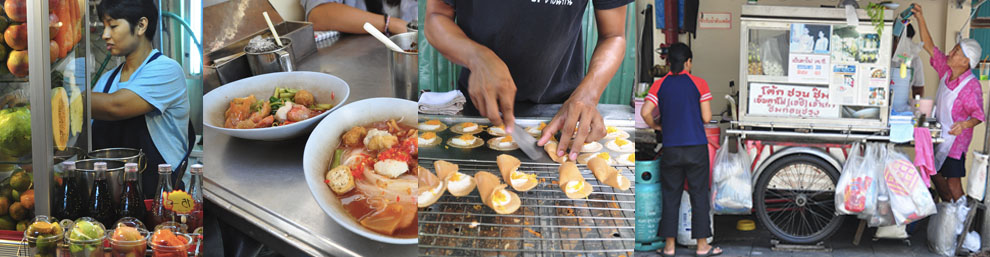
Khao piek sen, at Khao Piek Sen in Udon Thani

Just got back from Isan again. What happened while I was away? HAHAHAHAHAHHA.

If you, like me, were disappointed by the outcome of an election that feels like 5 years ago, I think we are all due to learn something from our differently-minded “friends”. That lesson is: focus on your own shit. If you feel exhausted or burned out, take care of yourself. Live to fight another day. I’ve been living in Thailand for longer than Timothee Chalamet has been alive. I’m “a’ight”, as the 30-40-year-old kids say. Concepts of thoughts and prayers.

Of course, a big part of my self-care always involves food. Increasingly that food, for me, can be found in every nook and cranny of Isan, somewhere off of a highway and tucked into a mountain hamlet or lurking behind a morning market, unheralded and unsung but always serving food packed with enough chilies to blow the part of my brain that thinks about elections away.

Road trips are always the best way, for me, to explore Isan, especially since everything is 2-4 hours away. A perfect stop for lunch/brunch: Kanom Jeen Pradok Baan Krung Yod, where, obviously, the ever-popular fermented rice noodle take center stage, accompanied by a battery of curries that includes my personal favorite, their “gang gai” (chicken curry), bulked up with yummy cubes of chicken blood. Mindful that we were in Korat (Nakhon Ratchasima), we also ordered “tum Korat” (som tum with peanuts and pla rah, a fusion of Central and Isan styles) and “pad mee Korat” (fried noodles with pork and lots of chili powder).

Just a note to point out something that I’ve noticed since working on a “spicy snack” project with a company that I signed an NDA for: if I order som tum in my broke-ass bad Thai accent, I get bland som tum, even if I assure them that I can take the heat. This has happened to me at Emporium Food Court, where I asked for 5 “met” (chilies) and got something for children (other people: why are you ordering som tum at Emporium Food Court), at Som Tum Nong Rejoice (granted, I was with a German person), and now in Korat. This wasn’t a problem when I was new to Thailand, but now that my tastebuds are as leathery and worn-out as any old Thai person’s, it’s becoming an issue. Have a look at the som tum ordered by my sister-in-law Wikki:

Real tum Korat

Now look at what I get when I order.

There is a difference, right? I’m not hallucinating? This is nothing to me! I feel like Mark Wiens!

That night, we ended up in Khon Kaen, where we were lucky enough to score a table at Kaen, arguably the fanciest place in town. Chefs Paisarn and Jib turn out thoughtful Thai dishes with purely local ingredients, and I am always looking forward to trying out what I missed last time. That night, we tried their take on “mee krob” (finished table side), a mind-blowing “thom saap” (Issn-style spicy soup) flavored with pickled plum, and a beautiful pomelo salad paired with calamari and the requisite wild betel leaves.

Mee krob

After a quick pit stop in Udon Thani for breakfast and an overnight in Nam Nao, we ended in Chiang Khan, a lovely Mekong riverside town that was featured in the best edition of Lonely Planet (for Isan coverage) a few years ago. From there, we could explore everything around us: the soaring peaks of Phu Kradung, the cutesy shops of Kaeng Khut Khu, and, repeatedly, the damn walking street in downtown Chiang Khan. This is where I finally got to challenge my spice threshold (it’s like going to the gym, doncha know).

Awesome duck kaprao at Raan Guaythiew Ped Thun near Phu Kradung

We raided the morning market multiple times for some seriously kick-ass pork rinds that we could snack on with whatever chili dip we found, and saw that the locals obviously shared my yen for spicier things:

“Especially spicy” curry paste on the left

And that my love for som tum pu pla rah (som tum with pickled crabs and fermented fish sauce) would be well-matched:


But, alas: with all of the chilies I was housing, well, you can imagine how my next few days were. I picked up some activated charcoal tablets at the 7-11 (where there is a whole section of my-tummy-hurts medicine) and took it easy on my last day. This was lucky for me, because we discovered a morning/lunch vendor serving “khao poon” (the Laotian version of kanom jeen) in “nam jaew” (clear broth) with lots of special pork bits (intestine, heart, lungs, liver, kidney) that were seriously delicious after a judicious squeeze of lime and, um, more mashed chilies.

Namesake dish at Khao Pun Nam Jaew in Chiang Khan

God help me, because I couldn’t help myself — I added a heaping spoonful of that mashed Karen chili to my bowl. We’ve got to get our thrills where we can, I guess. Please send me your thoughts and prayers.

3 Comments

Filed under Uncategorized

The deliciousness of mixing and matching

A mieng kum “bite” at Krua Supanniga in Khon Kaen

I’m late to the game, but I remember the very brief, cotton ball-sized splashes that erupted after Barack Obama and Tim Walz released their “summer playlists” on Spotify. While Obama’s was, as always, suspiciously hip, Walz’s felt more real, especially since most of the songs, like an Adam Sandler playlist, were firmly ensconced in the 70s and 80s (also: Steely Dan? Unexpected).

In the spirit of Tim Walz’s playlist, I wanted to release a list of the songs that I’ve been listening to this rainy season, as it (hopefully!) winds down to a close. I have only forgotten my umbrella once this year, at Yogatique (don’t take it, it’s mine), so here’s to my lowest lost-umbrella count in the past decade!

  1. “Red Eye” – War on Drugs: I still listen to this song. It’s still one of my favorite songs.
  2. “Shake Some Action” – Flamin’ Groovies: I am meh on the original version. I like the other version that I can only find on Detroit Pirate Radio’s YouTube for some reason.
  3. “Vampiro” – French Police: I discovered this song by accident, which explains why it’s relatively new (and by new I mean 2021).
  4. “Love Song” – Sara Bareilles: This song has personal significance to me. Not explaining further.
  5. “You Only Live Once” – The Strokes: I discovered this song via my sister.
  6. “Apple” – Charli xcx: Same.
  7. “Kid Charlemagne” – Steely Dan: See I’m just like Tim Walz! Also, this song is hilarious.
  8. “Save it for Later” – The Beat: I also listen to this song all the time. Still one of my favorites.
  9. “Ghost Town” – The Specials: Self-explanatory?
  10. “A Thousand Miles” – Vanessa Carlton: Yes, I rewatched “White Chicks” recently. What about it?

As you can see, this list is a big mix of elderly-Gen-X-born-during-Nixon’s-presidency energy, plus I-listened-to-a-lot-of-New-Order-in-the-80s, with a soupçon of “I’m-trying-to-be-with-it-and-have-some-rizz” flair (yes I know that’s not how you use rizz). It’s a bit of this-and-that, seemingly strange and disparate elements, all mixed up together in one playlist for when I’m on public transportation and someone looks like they might want to ask me a question.

Not surprisingly, I love to mix and match with my food, too. There’s a whole genre of Thai food known as “mieng”, which involves, yes, mixing and matching different available ingredients to create your own little edible leaf “cup” of deliciousness. The most famous type of “mieng”, arguably, is “mieng kum”, always attributed to Princess Dhara Dhevi while ignoring the fact that it’s nothing like what the original dish would have been — a wrap featuring fermented tea leaves, and VERY MUCH an acquired taste. Frequently you will find mieng kum in markets and in restaurants already made up, but honestly, isn’t all the fun in making one up yourself?

There’s also a whole sub-section of “mieng” which bears no relation, flavor-profile-wise, to the “royal Thai”-ness of mieng kum with its sticky sweet sauce. It’s “mieng” [insert whatever ingredient here], where [name your protein] is mixed with other things like diced lime, ginger, peanuts and chilies and wrapped in leaves of some persuasion to be drizzled in either “jaew” (a spicy Isan sauce for meat) or seafood dipping sauce (for, er, seafood) or both. It’s like a “choose your own adventure”, but for every bite. It’s my absolute favorite thing to eat right now. Do I want more chilies or less? Do I want to include dried shrimp? Do I want to try to use every sauce currently languishing in my refrigerator? It’s your call!

Mieng Thai mackerel

Restaurants, particularly hotpot ones in Isan, offer pages and pages of “mieng” options including grilled pork collar and salt-encrusted grilled tilapia. But my favorite go-to meal is possibly the easiest of all of these: it’s canned sardines, but I am not picky — I’ll even do canned tuna. I eat this every week at least once, but I love it so much that I never take a proper picture before I start in on it. Honestly, with all the ingredients spread out in front of me when I’m hungry, it makes me feel positively giddy with all the possible combinations. It becomes even easier if you buy your own Thai seafood sauce instead of making your own!

So here, in the spirit of generosity, is our recipe for “mieng pla tuna”, but you can easily substitute this with any canned fish that you have on hand. Get mixing and matching!

Mieng Pla Tuna

Serves 4-6                Prep/cook time 5-10 minutes 

  • 2 cans of tuna, packed in water, drained
  • 1-5 jinda or chee fah chilies, de-seeded and sliced finely
  • 1 shallot or ½ small red onion, chopped
  • 1 tablespoon of ginger, julienned or cubed
  • 1 tablespoon of roasted peanuts
  • 1 green onion, sliced finely
  • Handful of white rice noodles (optional)
  • Cilantro leaves for garnish
  • Lettuce leaves, washed, for wrapping

Seafood dipping sauce:

10- 15 small bird’s eye chilies (vary depending on your desired spice level)
5 cloves garlic, peeled
2 coriander (cilantro) root
3 tablespoons fish sauce
3 tablespoons lime juice
2 tablespoons sugar, preferably palm sugar

Grind the chilies, garlic and coriander root in a mortar. Once pulverized into a paste, add the fish sauce, lime juice and sugar, and keep blending until it forms a sauce-like consistency. 

Mix first six ingredients in a bowl and set aside. In another bowl, mix ingredients for your dressing, taste, and adjust accordingly (everyone has different tastes when it comes to this). Once you’re happy with the dressing, add it to your tuna and mix together. Taste and adjust seasoning as you like.

Serve immediately with lettuce leaves on the side and cilantro leaves on top, and a serving spoon on the side. When you’re ready to eat, simply take a spoonful of tuna, place it on a lettuce leaf (or half a lettuce leaf, if they are big), wrap it up with your ingredients and a dollop of sauce and enjoy.

2 Comments

Filed under Uncategorized

Coming together in Samui

Thumee the cat watching clams grilling

Our two-day masterclass with Chef Ying at Somrom Space on Samui started inauspiciously, to say the least. Having taken a taxi from our hotel, we found ourselves — driver included — stumped on where exactly the cooking space was located. Having turned down a dirt road, we were faced with a sharply steep slope that our intrepid driver, replete with Burmese-style sunscreen and enormous sun visor, had serious reservations about driving down, but did so anyway.

What turned into a slight patter of rain turned into an all-out downpour. Trapped on a muddy dirt road at the bottom of a hill, our little white Honda became inundated with mud. Before long, its wheels were stuck in like Moo Deng in her mother’s food bowl. By the time we had finally reached Ying on the phone, we were trying to push our car backwards out of a big, juicy hole as the wheels spattered mud onto our pants.

Needless to say, we extricated ourselves, just as I was getting nightmare visions of having to buy this woman a new Honda. We even found our way to Ying, whose place was just beyond the muddy road, right on the main road. We were greeted by a platterful of ingredients that we would be using that day, some lovely pandan-scented water, and the baleful glares of three improbably fluffy cats. It ended up being a great start to two days and seven new (to us) dishes.

Now, those of you who know me, know that I’m not really much of a cook. That is because I am incredibly lazy. I like to throw things into the oven as my main method of providing food for a crowd. Sometimes I will make pasta.

Thai food is not the kind of cuisine meant for that kind of cook. When done correctly (as Ying does), it’s painstaking, laborious, and detailed. You don’t just throw a bunch of torn-up makrut lime leaves into a stewing pot, willy-nilly; you select the best ones (not too old and green, and not too young and yellow), remove their spines, and then throw them willy-nilly into your soup. You don’t just dump coconut milk and curry paste together; you break your coconut cream, making sure it looks like a white doily before adding your paste (needless to say, this paste is hand-pounded) to mix carefully before adding the thinner coconut milk later on. Clams are opened and their meat pried out for use, but not the raggedy ones that are torn at the edges. Ying is as exacting as any 3-Michelin-starred chef.

We started with a yum of local Samuian seaweed (rai kor), crunchy and salty like samphire. This would be blanched and added to slices of fresh fish cured with lime juice, then mixed with quality shrimp paste and not one, but two local green leaves (tree basil and sea paracress (bai sab suea)), both of which resemble each other and almost every other leaf hanging from a tree in Thailand (I am not a tree person). The leaves added a nice bitter counterpoint to the deep, earthy flavors of the seaweed, fish and shrimp paste. Needless to say, we thought it was a hit, and I even mustered up enough courage to try a hand at my own (too much lime juice).

We then made a Southern Thai-Muslim-style chili dip (nam chup) made of flaked fresh coconut toasted until it turns a deep, later-stage-Donald-Trump-at-a-rally dark chestnut (greesae). Greesae is an ingredient that we encountered before with Mon on Koh Lanta where it was used to add a subtly sweet, nutty flavor to curries. The truth is that you can find this in many dishes throughout the South, where it usually ends up as a supporting player to other ingredients, but rarely takes center stage.

The greesae is mixed with dried chilies, garlic, shallots and more shrimp paste, deep-fried in oil before they are pounded (a Malay technique). The result in salty, fatty, sour and slightly sweet-and-spicy, a combo that Ying says is perfectly offset by fresh produce like guava, sator and Thai eggplants as well as something bold and meaty like prawns grilled with turmeric, garlic and peppercorns.

We finished with a Southern Thai-Muslim curry called “gang dtomae“, which boasts many different variations throughout the South. Even so, it’s a disappearing dish, pushed aside in favor of more “glamorous” dishes like massaman and penang. This is a mistake, because this dish — particularly Ying’s version — is a revelation for me personally. Not only did I get over my fear of cracking coconut cream (look, everyone has to start somewhere) but I also got to stuff my face with the result: unctuous and rich like butter chicken but so much better, festooned with a fat tranche of giant trevally, okra, and curry leaves from Ying’s garden. I am ashamed to say I do not have a good photo of this dish, because I ate it all, coupled with rice steamed over a charcoal brazier in an earthenware pot as the flames were fanned by hand (because of course).

The next day, we did not get lost, and there weren’t even any sudden downpours. We got to work washing our hoy klang (blood cockles) with the leftover dried remnants of yesterday’s rice, putting new meaning into the phrase “leaving nothing to waste”. From the coconut trees in the yard Ying cut some fronds and we fashioned skewers out of the frond’s spines. Then we made a marinade out of coriander seeds, dried red chilies, ginger, shallots, garlic, salt and brandy (it was Thai Regency brand and no, I didn’t drink from the bottle) before lightly blanching the cockles, threading them on the skewers and coating them in the sauce. After marinating for a couple of hours, they were grilled in the yard as Thumee the cat watched nearby, jealously.

We then did a local variation on the soup “tom som” using toddy palm vinegar and honey from Songkhla province. Although toddy palm is an ingredient very much associated with Petchburi, it can be found throughout the southern half of the kingdom, likely brought via migrating elephants who pooped half-digested toddy palms everywhere they went, fertilizing the land as they traveled.

I’ve always thought of “tom som” as a sweeter version of “tom yum“, but Ying says it’s closer to “tom kloang”, a positively ancient soup flavored with tamarind juice and leaves that some argue predates tom yum. Here, it features the very Chinese addition of vinegar alongside tamarind, as well as honey instead of palm sugar. There’s also plenty of turmeric (this is the South, after all), which turns the broth and fish a lovely golden color.

We then moved onto a dish that I’d been eyeing since the beginning of this year, the reason why I contacted Ying in the first place. It’s called “pad lorgor” (“lorgor” is the Southern Thai word for papaya) and I can’t really explain exactly what made me so eager to learn how to make it (so that I could eat it). It features half-ripe papaya, glass noodles (“sen nohm“) and pork belly; the mix seemed so incongruous when I first saw it (kind of like cleaning out the refrigerator) that I had to taste all of those things together.

All of which is to say, it is utterly delicious. There are also wood ear mushrooms and garlic, palm sugar, dark soy sauce, fish sauce and ground black pepper, and it’s typically served at big events like funerals or house warmings alongside water buffalo curry (which we did not learn how to do).

Finally, we ended our class with another soup that Ying learned only last year while shopping for ingredients at her local market, where many of the vendors are Thai-Muslim. They taught her their version of “tom yum”, made with dried chilies, shallots and garlic that are deep-fried in coconut oil before they are pounded into a paste. The soup also includes greesae and holy basil, plus what you’d expect from tom yum (lemongrass, galangal, makrut lime leaves, chilies, lime juice, fish sauce). The featured protein was a super-fresh barracuda that Ying had found in the market only that morning. The result knocked our socks off in more ways than one: big on dried chilies and holy basil, sour and salty, with a spicy kick. I called it “assertive”, but Ying preferred “fiery” because “assertive” sounded like Jane Fonda playing a put-upon secretary in the movie “9 to 5”.

All in all, we had a really great time at Somrom Space, if only because our efforts immediately yielded the chance to try all of these incredible dishes. If you are interested (and I mean really interested) in Southern Thai food, I’d suggest you find your way to Samui as well.

Leave a comment

Filed under Uncategorized