Doing research for a guide book can be back-breaking and uncomfortable work. I, an out-of-shape 50-year-old woman, have had to comport myself like a 20-year-old marathon trail runner on countless treks up rickety wooden staircases, through forests generously larded with poisonous snakes, and on the edge of sandstone cliffs in pelting rain. I have had more stomach issues than I could have thought possible as a food writer specializing in street food. And I narrowly missed swallowing several hairy caterpillars suspended from trees as my driver pelted up a mountain road. I have, I feel, been through it.
But it’s not all sweat and caterpillars. There’s an upside to this kind of work, especially when it comes to matters of the table. I (again, a 50-year-old woman) got to sample my very first moo kata (Thai-style pork BBQ) at my friend Aarya’s house in Loei, supervised by her incredibly generous and warm-hearted mother. I sampled various types of “Isaan eau de vie” (a creative euphemism for lao khao, or moonshine) at Kaen, and got to witness Chef Num’s creative reimagining of Isaan cuisine at Samuay & Sons. And I was able to enjoy a vast multi-course lunch at Krua Supanniga by Khunyai Somsie — for free, because we ended up being owner Khun Eh’s guest without realizing it!

The Khon Kaen restaurant, set next to Khun Eh’s family residence, is considered the flagship eatery of the chain of successful Supanniga restaurants scattered across Bangkok. And honestly, there could be no better setting for a restaurant (or a home, really). The entrance is lined with leafy trees decked out in white supanniga blossoms, the dining room itself incorporating a showcase of traditional Thai silk woven in nearby Chonnabot. Inspired by, obviously, Khunyai Somsie’s cooking prowess, the menu incorporates elements of Khunyai Somsie’s hometown, the eastern Thai town of Trat, melded with the Isaan influences of her adopted city of Khon Kaen. The result is, dare we say, a winning fusion that has struck a chord with dinners: the crab curry with chaplu leaves, the pork stewed with chamuang leaves, and the pu jah, or blended crabmeat and pork served in crab shells are now considered popular standards, if not particularly Isaan.
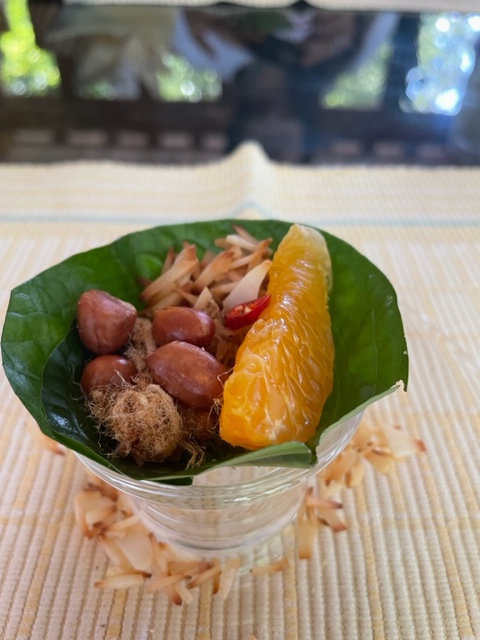
In Khon Kaen, the menu is more eager to lean into Isaan influences and local ingredients, as illustrated by the restaurant’s fairly luxury-sized tasting menu (9-10 courses, though honestly, I think we might have pleaded for less food at the end, as our digestive systems aren’t what they used to be *insert grandma emoji here*). Everyone had their particular favorites, and mine was the fermented Mon-style rice noodle (kanom jeen) topped with a relish of tiny local river prawns and colored with local dragonfruit rinds (brilliant considering all of the dragonfruit farms in Isaan there are).

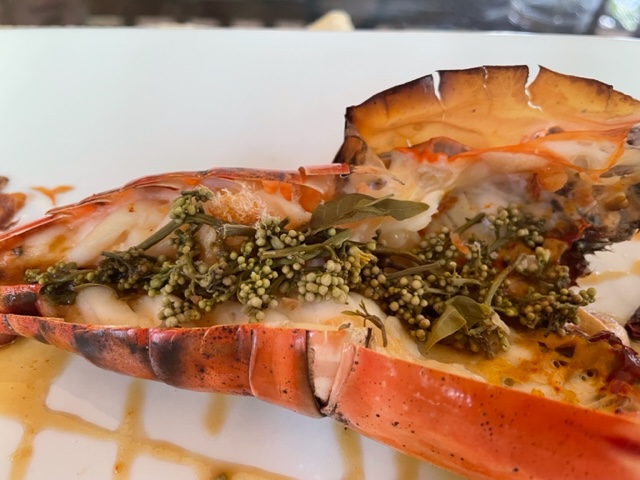
Another standout featuring local seafood was the grilled river prawn plucked from nearby Ubolrat Dam, topped with local sadao, or neem leaves, which made for a great foil against the sweet fish sauce beneath. It’s a dish that my mother typically serves with grilled catfish, but really the river prawn is a better option and I can’t believe we hadn’t tried this earlier.
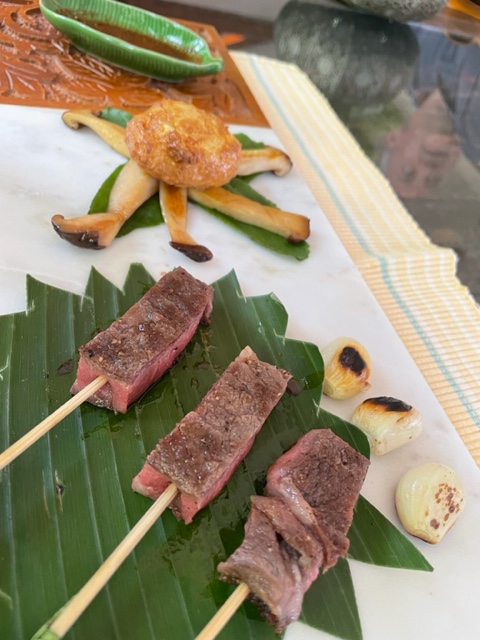
Stephane’s favorite course was the skewer of grilled wagyu beef from a nearby ranch — really, while Sakol Nakhon has been considered *the* place for Thai beef for a while, Khon Kaen’s beef farmers are really catching up (check out Arunsupa Farm if you have the chance).
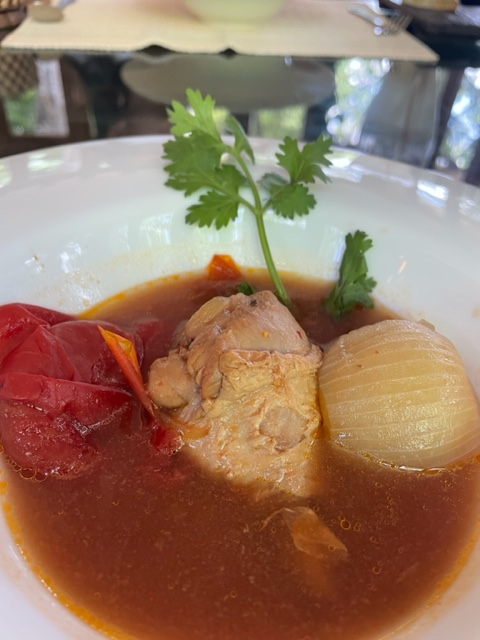
Aarya’s favorite course was something of an anomaly: a simple chicken stew, frequently served at the owners’ family table when the grandfather went out hunting. Comforting and warm, the dish reminded me of something I’d also have for lunch with my husband’s grandmother; pleasingly retro but not fitting into what people would usually think to see on Thai tables, a post-WWII “fusion” that you might get at a cookshop.
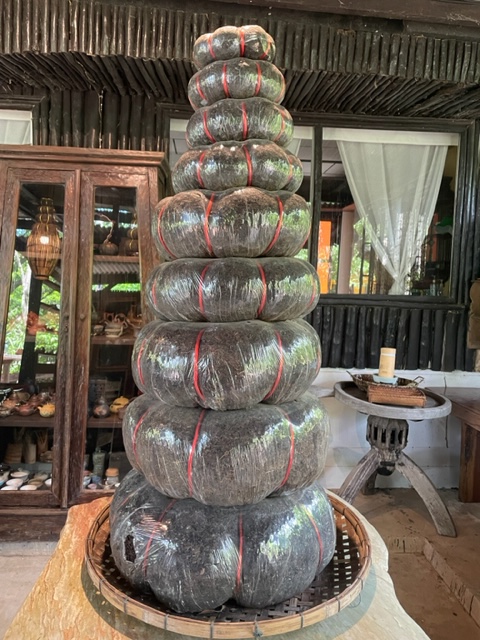
After dessert, we got to go to the Laoraowirodge family home for Chinese tea. Unlike in the West, the Chinese only steep their tea for a couple of minutes, believing that infusing the water for too long can turn it toxic.
We then got to tour the meditation retreat, on the grounds across from the garden. Here, people come for courses of up to 11 days … and the whole thing is free. If you think I was tempted to check myself in then and there, well reader, you were correct.
But a deadline looms, and then another country unfortunately beckons. I’ll have to wait a few more months to get my head back on straight.
 Bangkok Glutton
Lovely–and funny too. Your trademark!
❤️