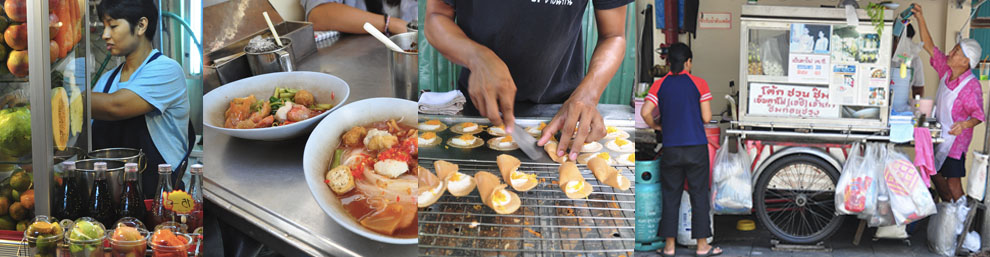
In spite of all of the guides I’ve published about traversing the length and breadth of Thailand for good street food, I’d never been to Songkhla, a province set like a cap over the three southernmost Thai provinces of Pattani, Narathiwat and Yala. Formerly known as “Singora” or “Lion City”, Songkhla was once the “jewel in the crown” of a former Malay kingdom before coming under Thai control in the 18th century, where it (obviously) has remained ever since.
Thanks to its serene location connecting Malaysia to Siam, conveniently situated next to the Gulf of Thailand, Songkhla always enjoyed a role as a trading hub. This made it ideal as a base for entrepreneurial Fujian and Guangdong Chinese families, one of whom rose to political and business prominence as the Na Songkhla family, serving as governor for eight generations until 1901. Today, their former home serves as the Songkhla National Museum.
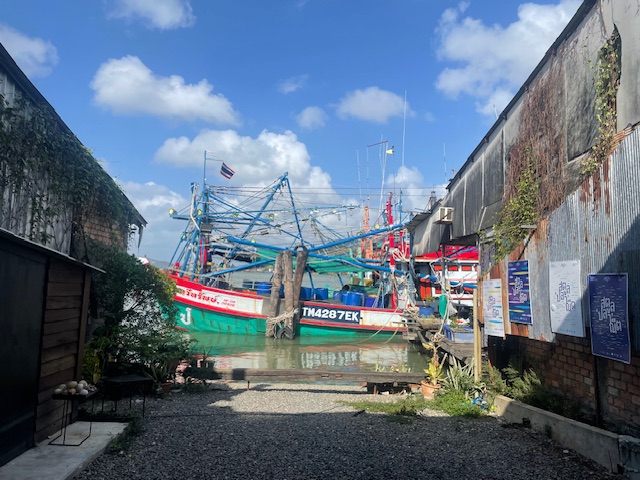
I was aware of all of this, and had even been told of how charming Songkhla’s Old Town is by numerous people. Yet nothing prepared me for exactly how picturesque and idyllic it was until I set foot in town after an hours-long delayed flight on AirAsia and a failed attempt to get a fried chicken lunch near Hat Yai airport (Songkhla does not have its own airport). What this means is that I was hungry, and in a bad mood, and still I was charmed by this town with its photogenic alleyways, interesting street art, innumerable cafes, and obviously, wonderful food.
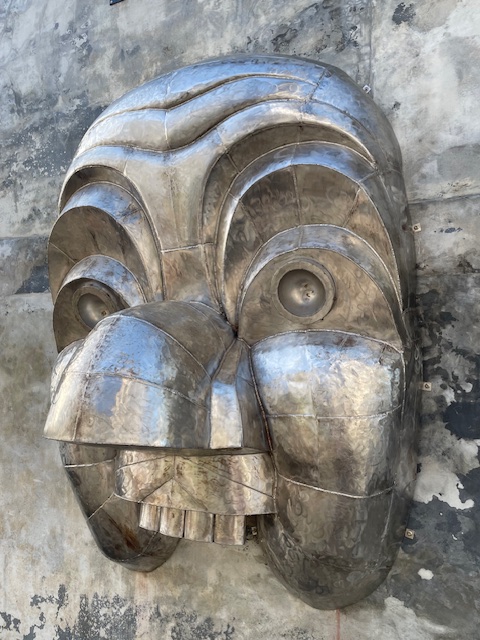
Part of what makes the Old Town so idyllic is the marked absence of Starbucks, McDonald’s, or even a 7-11 (that’s left to the rest of town, where most people live). There’s only a Cafe Amazon (how are they everywhere?), tucked away on a shady side street across from a local sweets shop, as darkened and hushed in atmosphere as a hidden library. Another thing? It feels relatively undiscovered, populated by a few wandering Malaysians, a couple of touristing Thais like us, and a handful of Western tourists that you can get to know over the course of your 2- or 3-day trip (periodically bumping into the guy from the cafe this morning, the couple from the wine bar last night, the family from the hotel lobby, you get the picture). It’s quiet enough here to be almost unnerving, and even the youngsters taking photos for their social media are unobtrusive, as if they had been schooled in the airport on how to behave.
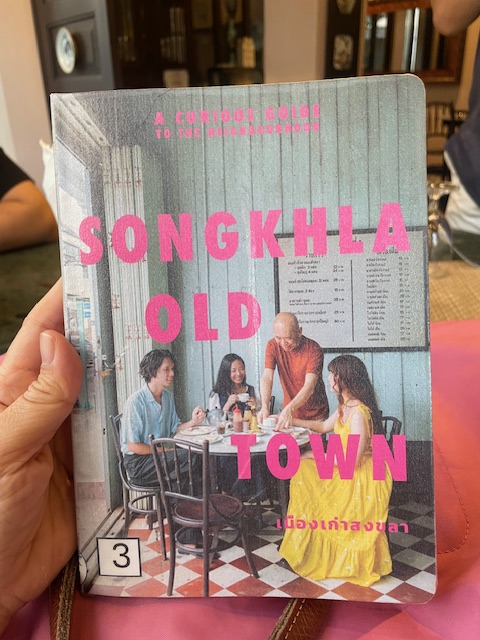
Displayed in almost every business in the Old Town is a useful book promoting the eateries and shops of Songkhla, through which we discovered local delicacies like “yum kai krob Songkhla”, a spicy salad of steamed egg yolks with herbs; “guaythiew hang moo” or “pig’s tail noodles”, seasoned with palm sugar and vinegar; and “khao man gang gai”, a Southern Thai-style nasi lemak combining the twin delights of coconut rice and chicken curry.
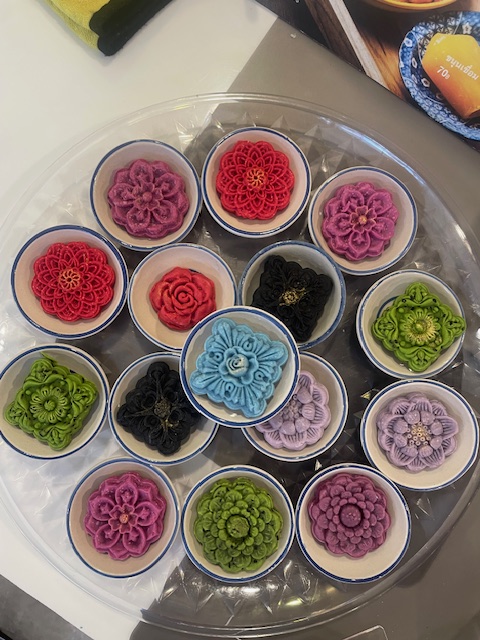
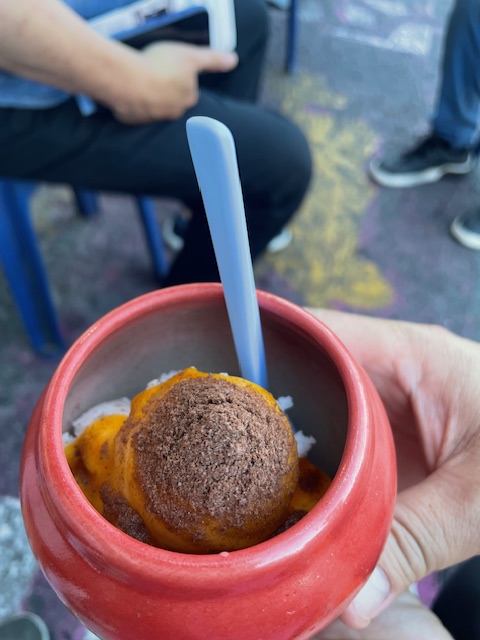
Alas, we didn’t have the time to try these delicacies (I know). What we do have time for is one of Songkhla’s most famous snacks: a quick “sundae” of house-made ice cream topped with egg yolk and a spoonful of Ovaltine powder from I Tim Ong (also famous for its fish meatballs).
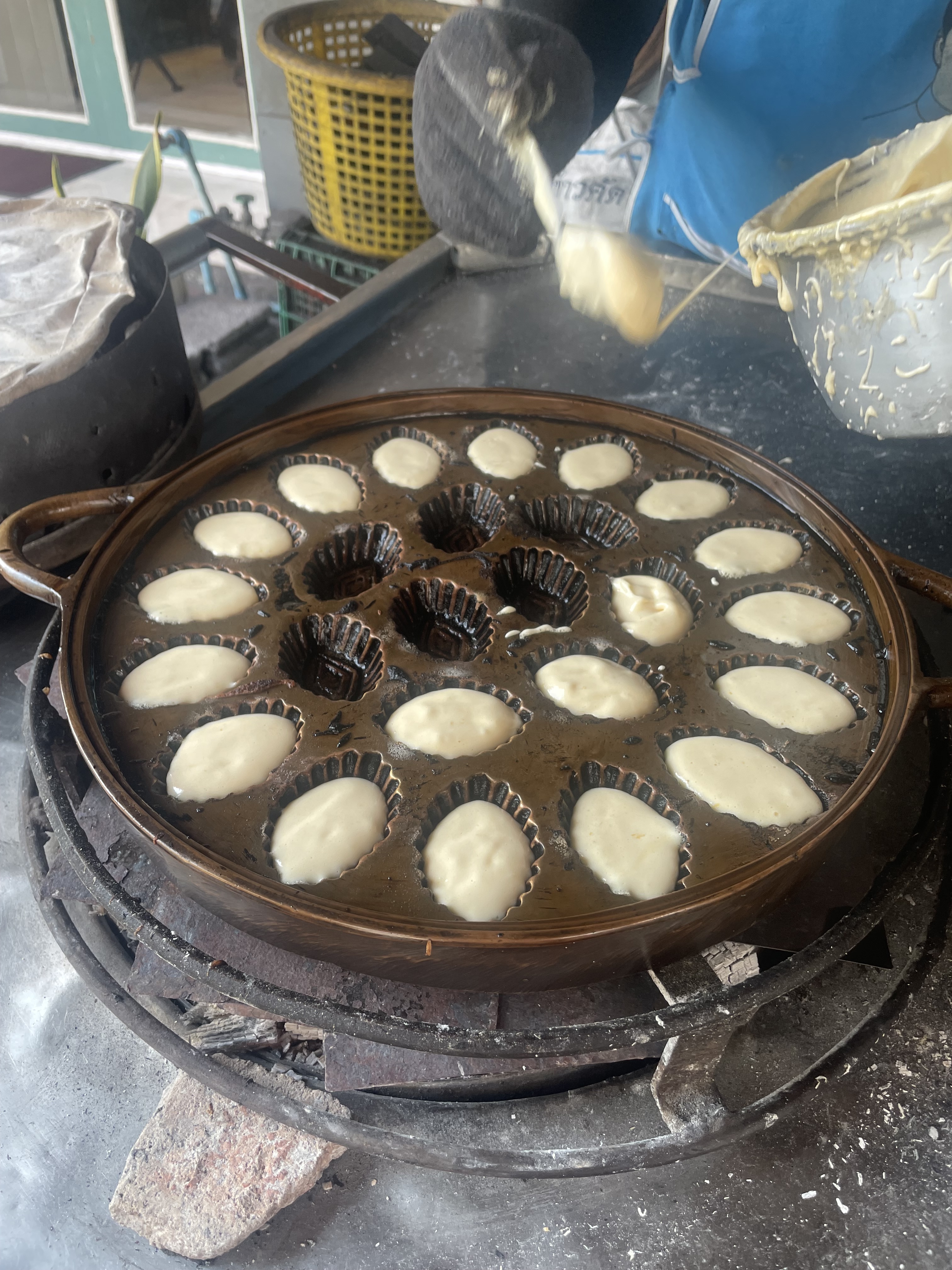
There’s also the famous “kanom kai” made by Pa Mon (there are a lot of famous things to eat here), Thailand’s answer to Proust’s madeleine.
But the culinary peak of our trip was Tae Hiang Aew, recommended by my friend Nat and the inspiration behind the “Old Town Songkhla” guide (much like how Jay Fai was originally the inspiration for my first street food guide in 2010). Said to have been a must-try for all visiting dignitaries to Songkhla, this surprisingly humble open-air shophouse restaurant specializes in honest, straightforward Thai-Chinese cuisine, without contemporary bells and whistles like mountains of chilies or rivers of oyster sauce.
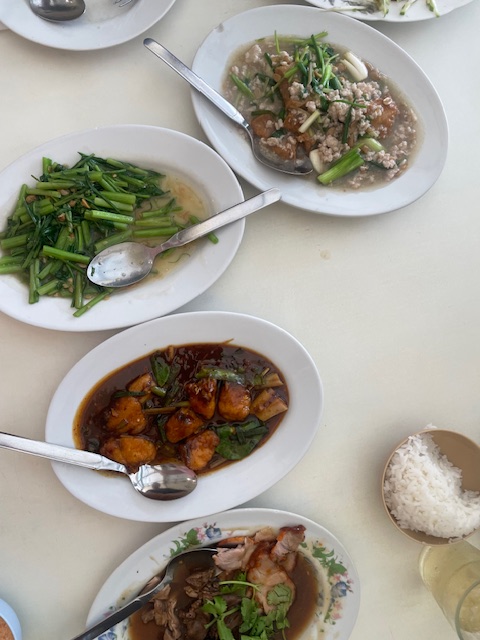
According to the Songkhla guide, there are five dishes that regulars always order here. The first is a delicious yum of “mamuang bao”, an egg-sized green mango native to Southern Thailand that is studded with little umami bombs like strips of dried squid and dried shrimp powder (on the side for us, because my husband is allergic). There’s a “dry tom yum” of deep-fried seabass with tons of lime leaves, lemongrass, galangal and roasted chili paste. A dry “pullo” (Chinese-style five-spice stew) of duck snuggled against red barbecued pork. Tofu “song krueng” (“fully dressed”), slathered in a cornstarch-thickened minced pork sauce larded with scallions and ginger. And either deep-fried whole fish or our choice, stir-fried morning glory, not smothered in chilies but simply cooked with garlic and a fermented brown bean sauce, simple and secure in its flavors, a genuine taste of mid-20th century Thai-Chinese cooking.
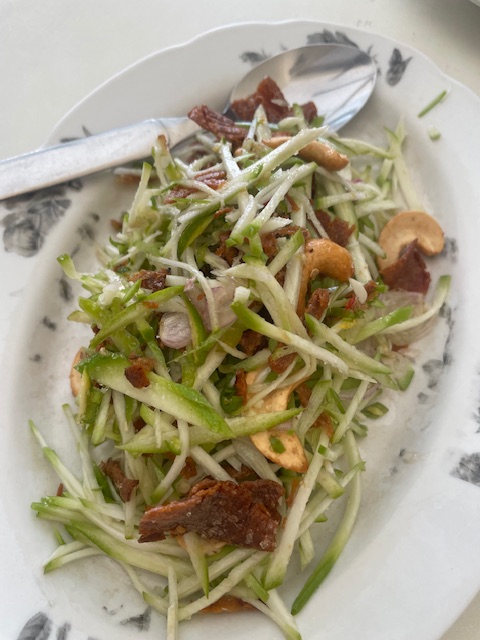
This is when you can tell that the chef in the kitchen has taken a few orbits around the block; it’s a type of cooking that is disappearing, slowly, as tastes and palates evolve. It doesn’t rely on anything — not on teasing the eye with beautiful arrangements or the tongue with sensational flavors. It’s the type of food you’d find at a place like Hi Nakorn Pochana , known for its seafood but actually excelling in its large variety of stir-fried greens: simply served with garlic, allowing the flavor of the vegetables to shine through. This is not to say that cooking today is worse or inferior; it’s just changed, just as we all change over time.
Thankfully, Songkhla seems to be one of those places that doesn’t change as much, at least for now. Maybe this is why I’m so drawn to it. I’ve located my new house, which appears to be inhabited, next to a lovely alleyway with a view over the lake (I will not tell you where this is because I don’t want you to take it, but if you’ve been to Songkhla you probably already know). I will just bide my time until it becomes available (or not, because maybe it’s not meant to be). So don’t worry, you won’t have to forward my mail just yet. But you’ll find me there again, by hook or by crook, someday. Hopefully I’ll get to try everything else that I missed the first time around.
 Bangkok Glutton
You sold me with the cookies
Yay