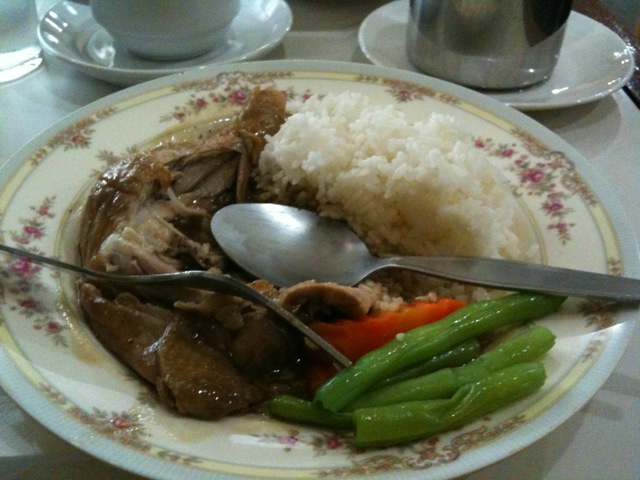
Chicken stew at Lertros
The four of you who read this blog may have noticed I’m not writing as often as I used to. The answer: I’m busy watching television. It’s called “having priorities”. Give me a break, mom, dad, @SpecialKRB and Mrs. Silverman! Haha, just kidding. My mom doesn’t read my blog.
But now that StarWorld is showing a rerun of “Britain’s Next Top Model”, I find I have the time to talk about my new favorite rediscovery. I’ve been rereading David Burton’s “The Raj at Table” and have been struck all over again about how historical events seep, unwittingly, into a country’s culture and cuisine. A silver lining from the British Raj: the ingrained sense of “superiority” that went with England’s colonization of India resulted in “English” food created from Indian ingredients that ended up an entirely new cuisine.
Not surprisingly (sorry Britons, I love Welsh rarebit as much as the next guy, but…), that culinary influence did not really go both ways. The English way of cooking had little impact on the Indians. But the ingredients they managed to transplant to their adopted country had tons: cabbage, lettuce, tomatoes (referred to as “love apples”), green beans, avocados and corn. Without the West’s potatoes, the Indians would not have come up with aloo gobi; without spinach, no saag paneer.
All the same, a lot of English food got more “Indianized”, and an entirely new Anglo-Indian fusion resulted, the most famous dishes of which are probably kedgeree (a rice porridge featuring smoked fish like Finnan haddock, which is why many mistook this dish for Scottish) and mulligatawny soup (what cynics called the “remnants of yesterday’s curry” in liquid form).
But there were other, no less noble, creations: country captain (chili- and turmeric-infused chicken); corned beef bhurta (borne out of the scarcity of beef in Hindu India); sweet potato chapatis; a”Madras Club Pudding” (using mostly dried fruit instead of the more expensive sugar for sweetness); and a “Sandhurst Curry” served in the officers’ mess alongside sliced bananas and shredded coconut. Many of these dishes, in some form or other, trickled their way through English cuisine, lending a touch of the tropical to the stoic roasts and hearty puddings of the north.
But I’m rambling. Again. I love these old-style dishes and have vowed to recreate them for my long-suffering friends and family (who have already had to put up with any number of “retro American” dinners of “perfection salad” and tuna tetrazzini) because they are perfect snapshots of an interesting point in time, irresistible to this girl who majored in Indian history (because I loved the food. Yes, really.)
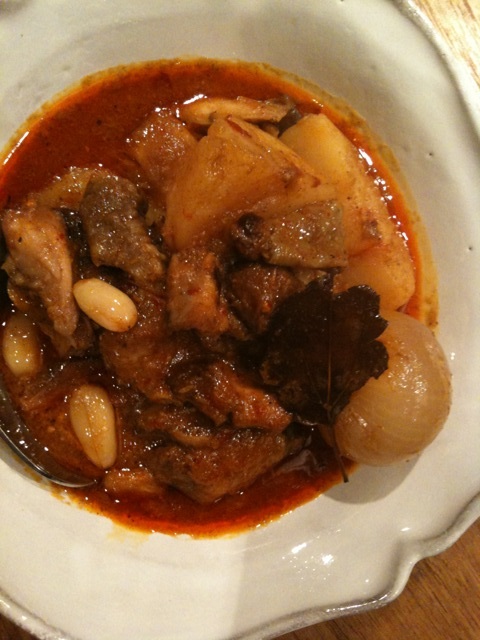
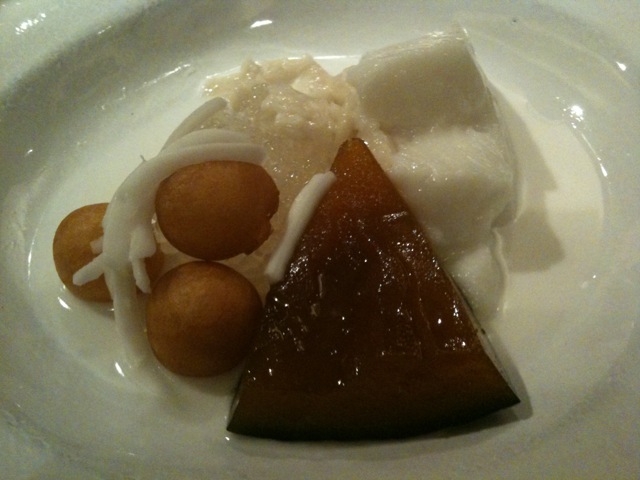
Which is why I love going to Lertros Alacarte (74 74/1 Silom Soi 4, 02-234-3754). Its old-school diner ambiance — sort of like where the two old guys in “the Muppets” would hang out if they were to live in Thailand — is totally my style, and some of its food specials — a fusion of Thai-Chinese and Western — are becoming increasingly hard to find elsewhere.
Like the Indianized Anglo-cuisine of the British Raj, the story of this food (Chinese-style curries, chicken and tongue “stews”, minces and pork pate, or moo yaw) is primarily a political one. According to Chef McDang (yes, he has basically taught me all I know about non-Northern Thai food), King Rama IV sought to entertain the various Western officials at his court by serving “Western” food. He used chefs who learned to cook in the employ of British officials; these chefs were almost always Chinese. The result: Western ingredients cooked with Chinese techniques.
So for one of the oldest forms of Thai-Western fusion out there, look no further than Lertros. And if you see Statler and Waldorf, steer clear.


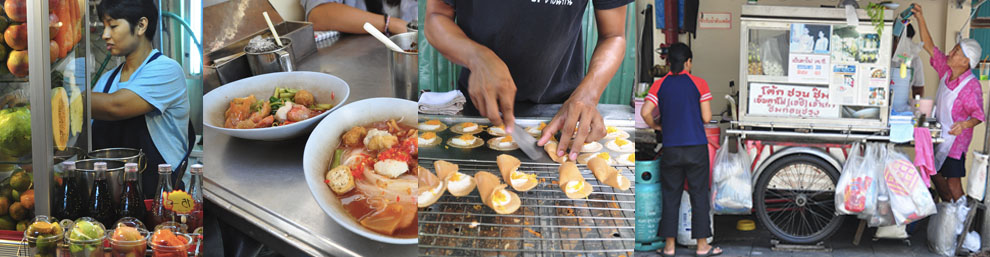
 Bangkok Glutton