Category Archives: food

Just Delish

Something different: naem tod

It will probably not surprise you when I tell you I think Bangkok street food is the best in the world. It’s not just the flavors or the “above-the-title” dishes: the pad thai, the som tum, the I’m-gonna-kill-you spices or soothing coconut cream. It’s the sheer breadth of it, the mind-boggling variety — from soups and salads to grilled hunks of meat to curries to porridges to desserts and everything in between; even the formats change, from shophouses to mobile vendors to cafeteria-like khao gub gaeng (curry rice) to aharn tham sung (made-to-order). There is so much variety that sometimes people argue over whether something is even actually “street food” or not. Having been to a few countries over the past few year, I can tell you that this is a great luxury, to get to argue over what category So-and-So place actually falls into. Thailand is very blessed, food-wise.

To me, naem tod is an example of the awesomeness of Thai street food: a recent discovery that I now can’t help seeing everywhere I go. Naem, the beloved sour fermented sausage originating from both the North and Northeastern regions of the country. Usually made from a mix of pork, crunchy piggy bits like cartilage or skin, chilies, garlic and a bit of sticky rice, naem is wrapped up and “cooked” by leaving it to ferment for a few days, lending the meat its characteristic tang (for the record, my mother’s favorite naem maker is “Naem Anchan” in Chiang Mai).

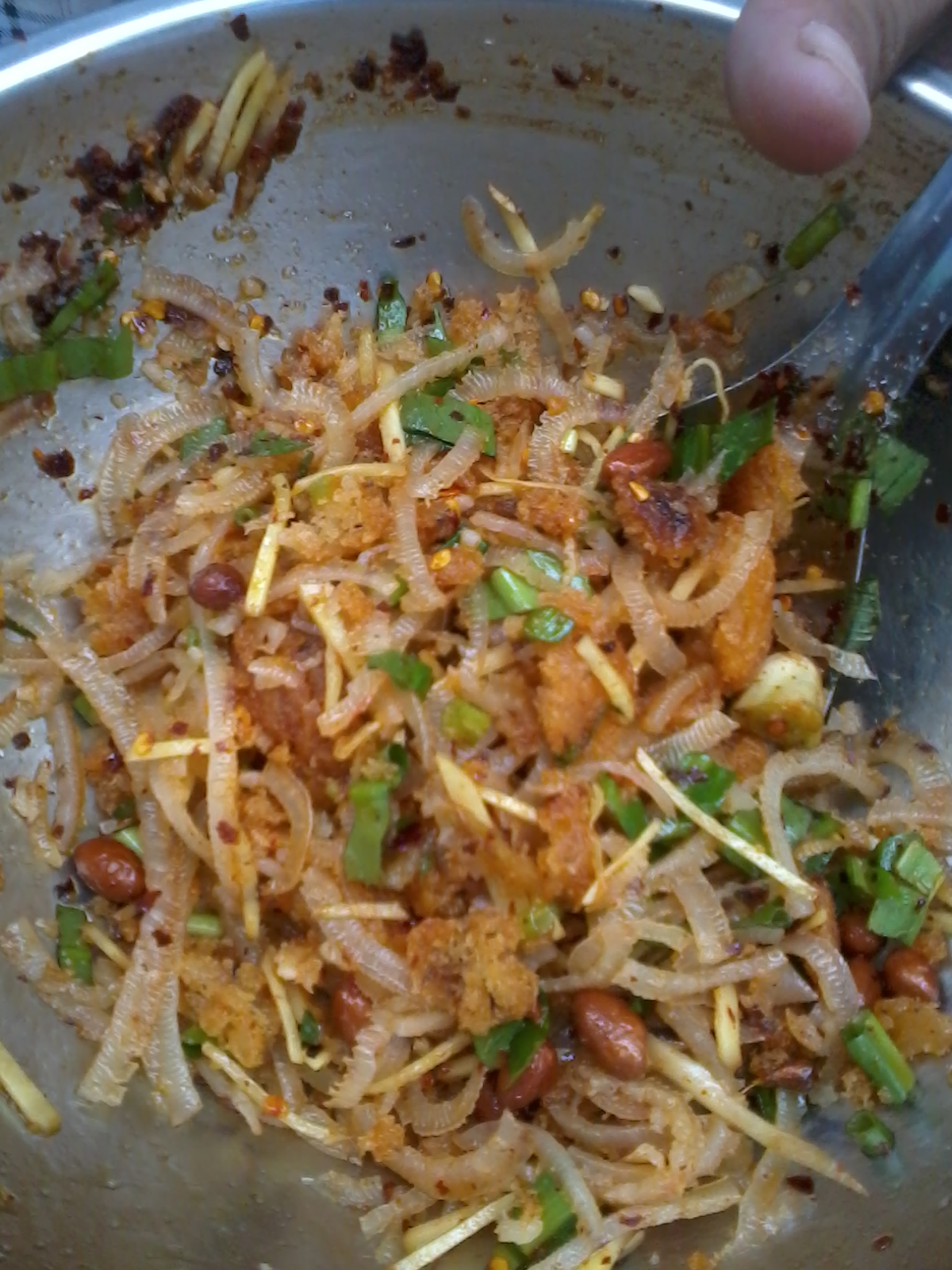
Thais like to make sure everything is presented in its own special way, and naem is no different. The “proper” way to serve it — the best way to offset its acidity and slightly gummy texture — is with whole fresh bird’s eye chilies, fresh ginger, bits of rind-on lime,  slivered shallots, roasted peanuts and fresh cabbage. What naem tod does is to basically combine the shredded sour sausage (or, in some vendors’ cases, pork skin or cartilage) with its accompaniments, chopped salad-style, and top it with Northeastern Thai-inspired “croutons”: shredded bits of deep-fried sticky rice. The ensuing salad is then tossed lightly in a spicy yum-like dressing (a mix of fish sauce, lime juice, chilies and sugar).

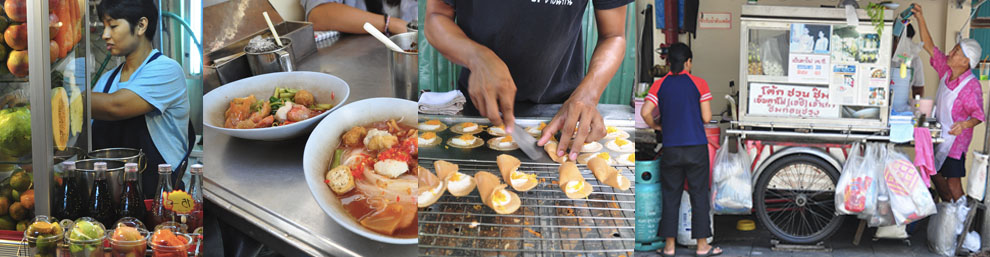
Naem tod vendors can be spotted by the glimpse of croquette-like deep-fried sticky rice balls they usually place on their carts — these vendors are almost always ambulatory. The fixings that go with naem are also included, alongside “fresh” veggies like the aforementioned cabbage, sawtooth coriander and/or betel leaves. As for the name, well, the naem is occasionally wrapped in the sticky rice and deep-fried, which I think is ingenious. But sometimes it’s just shredded, or there is an approximation of it via just using the crunchy pig bits, and that’s ok, because the flavors and textures are all still there: fiery hot and tart, mitigated by some crunch and a bit of bounce.

The vendor I photographed here is in front of the Kasikornbank near Sukhumvit 33; he is on Sukhumvit 23 in the afternoons. There is another one at the entrance to the shortcut to the Polo Club from Rama IV Road, next to the Esso gas station by the muay Thai stadium there. My favorite, though, is at the entrance to Petchburi Soi 14.
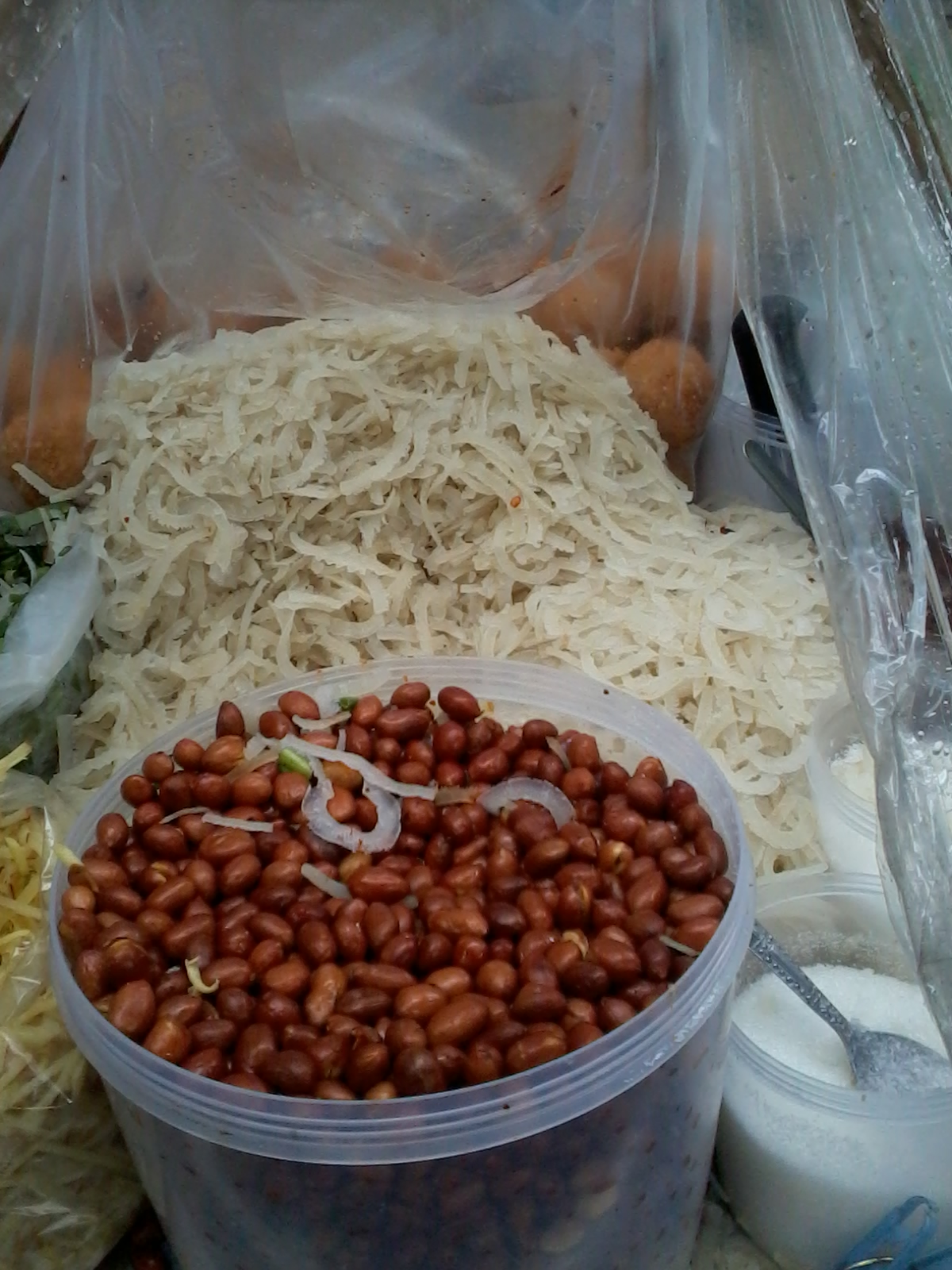
The naem tod vendor’s typical wares

 

10 Comments

Filed under Asia, Bangkok, food, food stalls, Isaan, pork, Thailand

Glutton Abroad: Nepalese Wonderland

Puppets for sale in Patan

Psychics and Dionne Warwick aside, it is impossible for most of us to tell the future. But handy signals do exist to tell us what may happen if you continue with your foolish ways. People call these “warning signs”, which come with varying levels of urgency. For example, a restaurant that is empty on a Friday night at 7pm = buyer beware. On the other hand, a guy who compares himself in any way to Don Draper = run, don’t walk, in the opposite direction.

A tour guide who cannot believe you are taking her particular tour = somewhere in between the two extremes on the “warning sign” spectrum. To be fair, when I look back on my overland trip through Tibet into Nepal, I can’t believe I took it either. There were restaurants with indiscriminate brown smears on the floors and walls, where people hawked on the floor and the dishes appeared indistinguishable from one another. There were the numerous road checks along the way, and the thin air. And finally, there were the filthiest rest stops I have ever seen, where a smear of feces and a pile of used maxi pads appeared to be the de riguer decorative devices needed to pull every door-less toilet cubicle together (eventually, we would give up and go out in the open, searching for whatever shelter we could amid the shrubbery and rocks).

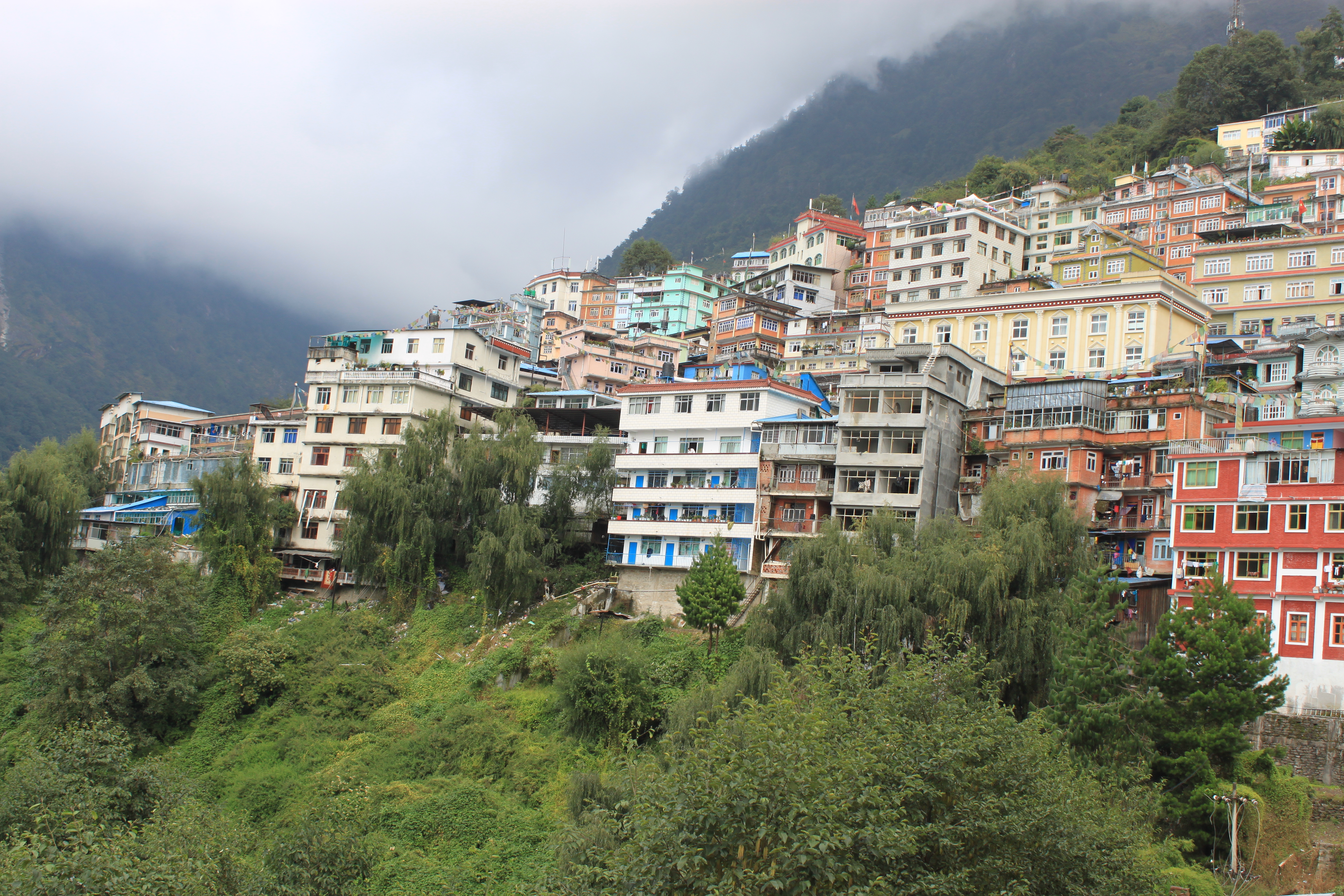
So it may not actually be true that Nepal is a wonderful wonderland, full of My Little Pony dust and butterfly wings and Ryan Gosling’s tears. It seemed that way to me, though. After passing through the southern Tibetan border (where we were temporarily abandoned by our tour guide, who did not know he would be needed to check us through) and crossing a heavily-guarded bridge into Nepal, everything seemed different: the air getting thicker and more oxygenated as we descended down into the Kathmandu valley, the surroundings more lush and green, the soldiers at the checkpoints (something Tibet and Nepal had in common) more handsome.

 Near the Nepal-Tibet border

Nepal is an interesting country, perched on the northeastern border of India but serving as a de facto “buffer zone” between both India and China. The birthplace of Buddha, Nepal is now made up of more than 3,900 villages scattered across three zones: the flatlands, the middle hills, and the high mountains. Although only 20 percent of the country is “lowlands”, half of the people live there. And Kathmandu, home to 2 million people, is considered the “center of everything”.

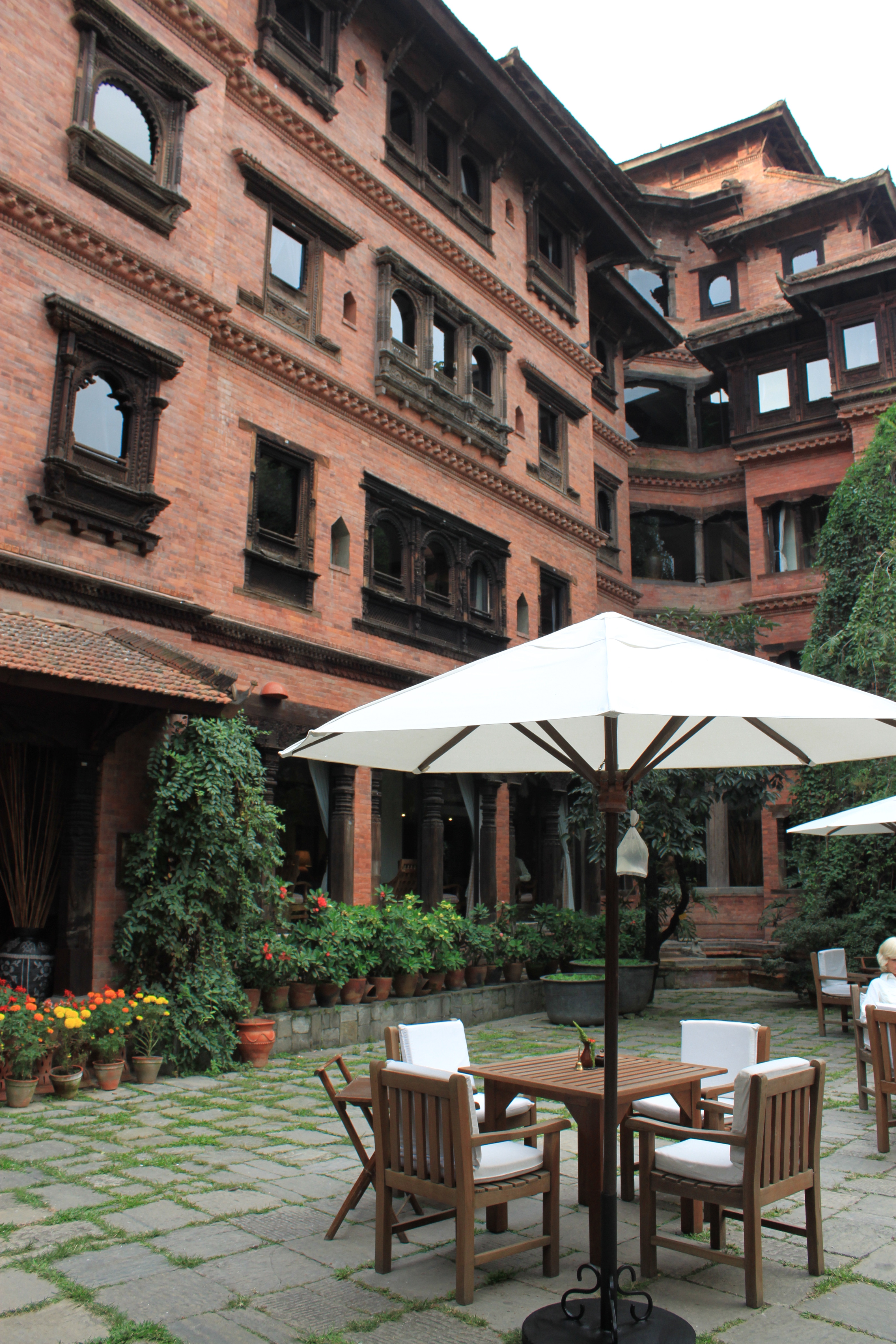
When we finally make our way into the bottom of the valley, guarded over by a gigantic statue of Shiva the Destroyer, I am ready to weep. The altitude is a mere 1,300 m above sea level — practically Bangkok (for the record, between 2-15 sq m above sea level). I will not have to see another plate of yak for … well, as long as I want to. And we are headed to Dwarika’s Hotel (http://www.dwarikas.com), a luxury abode featuring centuries-old Nepali artifacts and a far cry from the decrepit, stained hotels on the western Chinese frontier.

Dwarika’s courtyard

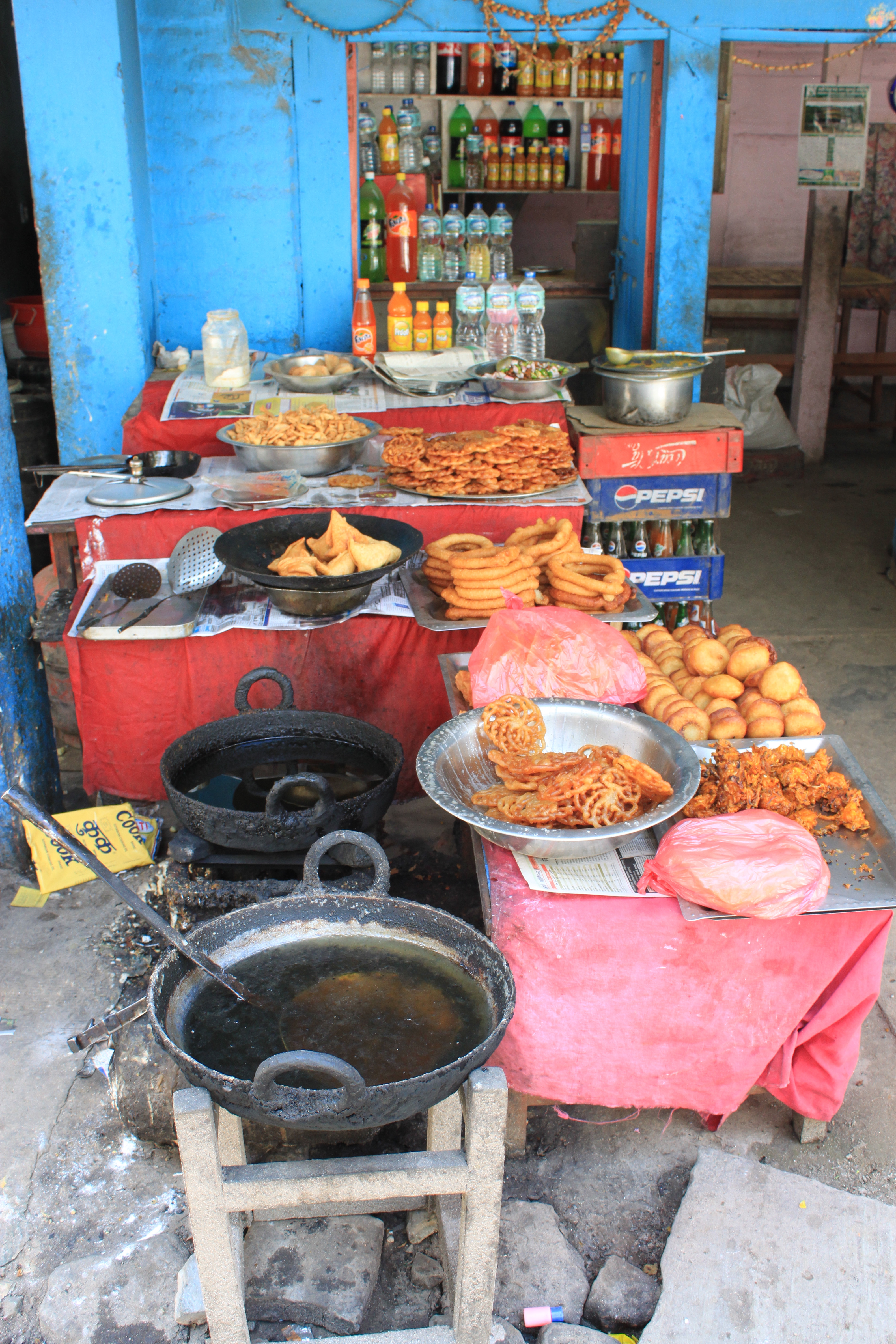
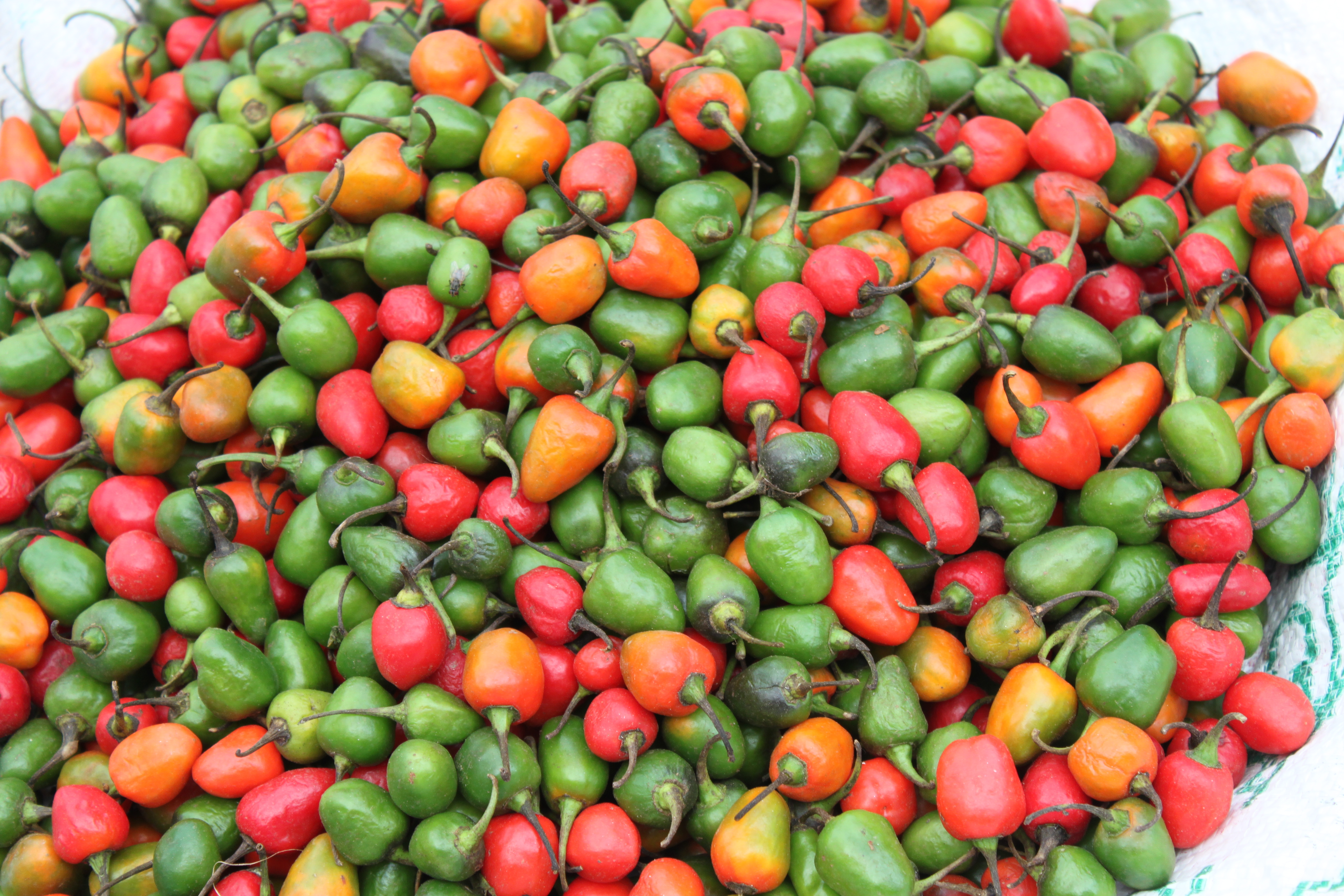
But the thing that most brought a smile was the chance to stuff some different food into my gullet. For a week, it had been stir-fried greens, tofu and the occasional yak dish; we were to trade these dishes in for dal (a lentil stew), spicy pickled chilies, and biryani (meat cooked beneath a mound of rice). On the streets, fried things predominate: triangular samosas, dumplings and what Thais call sai gai (chicken innards), or pretzel-shaped dough deep-fried in a fragrant saffron syrup. There are also carts featuring an exuberance of nuts and puffed rice, over which a tart-spicy sauce and chili powder are slathered. And of course, there are the omnipresent apple, banana and pomegranate carts, everywhere.

Nepalese fritter stand

Even if it was only for a few days, I was glad I got to see Nepal — its fertile, hilly beauty, its friendly people, its exuberance and color. That’s not to say everything was the wonderland it seemed when I first saw it; Kathmandu’s traffic jams are Bangkok-worthy, and the Thamel district is reminiscent of Khao Sarn Road, but, uh, not as nice (make of that what you will). It was an interesting flip side to our Tibet experience: both gorgeous in different respects, both memorable in ways that you wouldn’t expect.

Fat chilies for sale


9 Comments

Filed under Asia, food, food stalls, Nepal

Glutton Abroad: 7 days in Tibet

View from a mountaintop

The deal was this: a 24-hour train ride from Xining to Lhasa — where we were the only non-Chinese tourists on board — followed by a short stay in Lhasa and a car ride winding through the Himalayan mountains, skirting Base Camp and on into the Kathmandu Valley. It sounded OK on paper, exciting even — who wouldn’t want to see the “roof of the world”? How hard could a train and car ride be, right?

Let’s put it this way. On this trip, I was seriously, perilously, unbelievably close to actually losing weight. Tibet’s high altitude — up to a little over 5,000 m above sea level in some parts of our drive, marking its plateau as the world’s highest region — means every move, every utterance, everything that requires any sort of effort must be mentally weighed and assessed: how necessary is this action? Is it worth giving up some of my oxygen? This most essential of calculations permeates everything: appetite wanes as digestive activity tapers to a bare minimum, and pins and needles tickle your extremities and face as your body concentrates on feeding oxygen to your heart and brain. Some people are afflicted by sleeplessness due to the lack of oxygen (best advice: stay in your bed until morning. Really). Others have problems with gas or constipation, or its complete opposite. Whatever weak point you have, the thin air will attack it (for the record, mine is my pitiful lung capacity). Better than any physical examination, the altitude pinpoints your body’s frailties with unbending cruelty.

The high altitude and the toll it takes on the land may explain the Tibetan diet: yak, yak and more yak. This most sacred of animals in Tibet feeds, clothes and shelters the Tibetan people, warms their houses, sometimes drives their ploughs. Obviously, no part is left to waste. Its hooves are boiled with a “special sauce”. Its lungs and intestines are sautéed with fresh green chilies. Its stomach is curried; its tongue cooked with saffron. And its surprisingly sweet meat is frequently stir-fried with highland barley — known as tsampa, the staple grain of the region — cooked in a succession of hot pots, tucked into momos (Himalayan dumplings), stewed with potatoes, mixed into thukpa or soup noodles, or increasingly, shaped into patties for burgers or grilled as steaks.

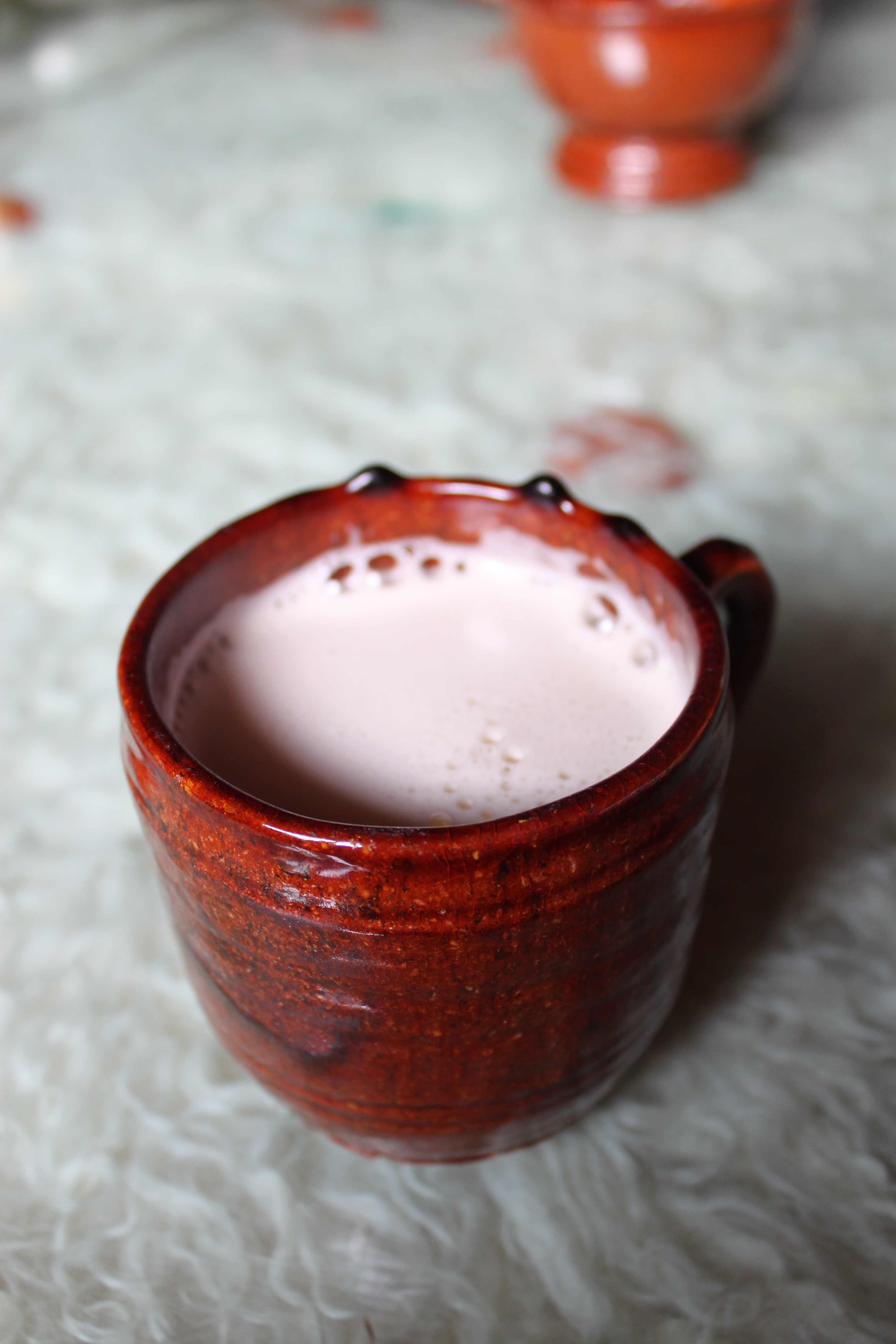
A Tibetan favorite: yak butter tea

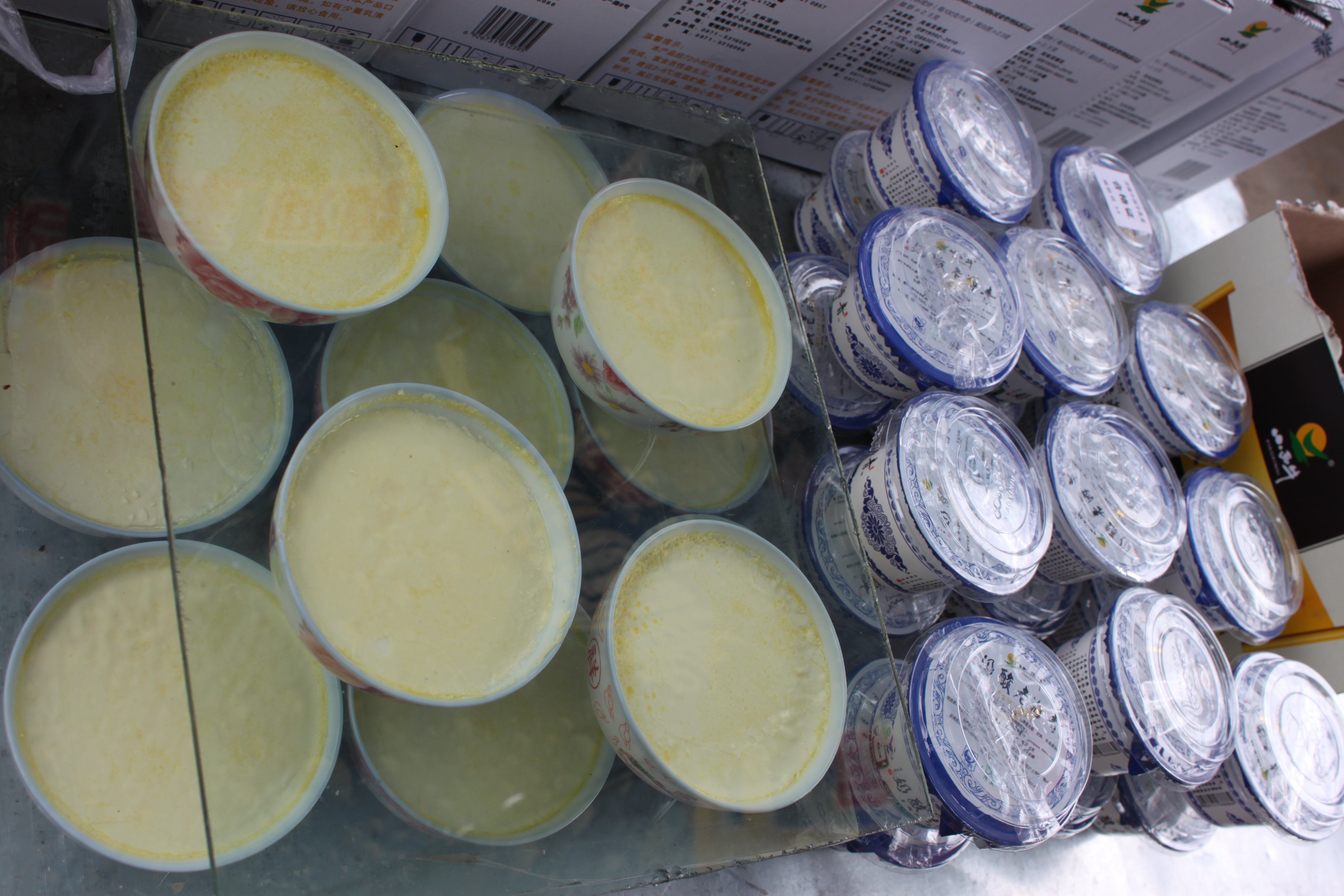
That’s not to mention the street food: a profusion of skewered meats on the grill with flatbread, most popularly lamb daubed with a chili sauce; bowls of yak yogurt, known as shwe or sunnai; and, most popularly, carts of steamed or roasted sweet and yellow potatoes and corn, or fresh apples or apricots — Tibet is full of this stuff, making its street food possibly the healthiest in the world. What Tibet is not full of: rice, which is hard to grow in high altitudes, and fish, which the people largely avoid eating, alongside dog, horse and pig.

Yak yogurt for sale on the street

Tibet is not all meat and root vegetables. There is also its strong “barley wine”, ranging from 6 percent to 71 percent alcohol. Alas, yours truly did not partake: the altitude was too high to risk my fragile sense of equilibrium for a temporary — if novel — buzz, and our ever-present tour guides frowned upon it (likely because they would have to clean up our mess afterwards).

Tibetan “pretzels”, or khapsey

Some old “Tibet hands” claim that Tibet has become completely Sinocized in the past few years, losing everything that marks it as unique as Beijing strengthens its hold on the country. I say that is not the case, yet. Yes, it is impossible to ignore the all-encompassing military presence, especially in the capital, Lhasa (it is also verboten to take photographs of military, police, or any state buildings). Military or police checkpoints are set up every few kilometers on the roads; security checks are necessary to get into the main market area surrounding Jokhang temple, where soldiers carrying automatic weapons mill around, mingling with children playing on the sidewalks.

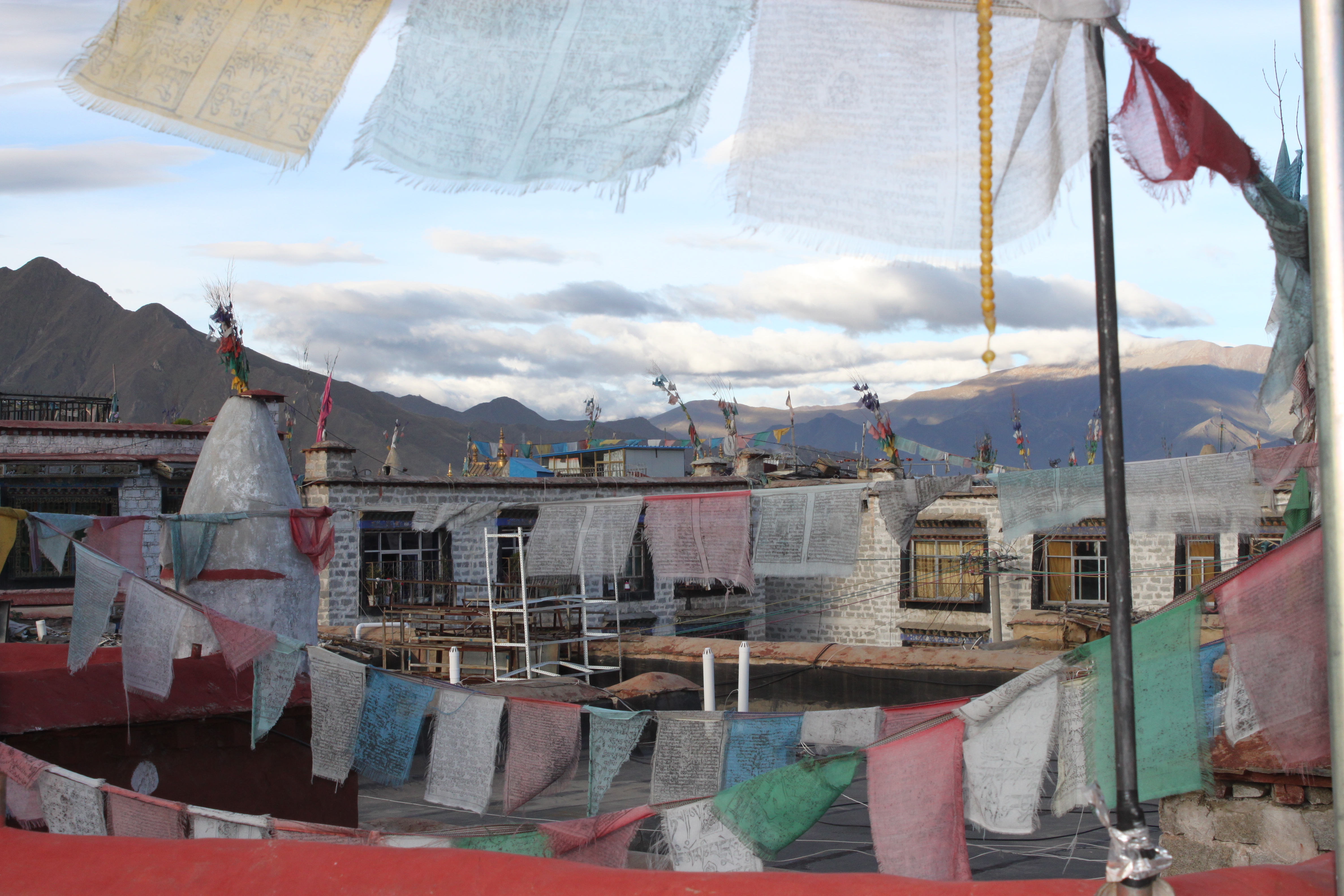
Despite it all, religion remains a mainstay of Tibetan life. At 7:30 in the morning, the Lhasa city center surges with people, some clutching hand-held prayer wheels in their right hands, prayer beads shaking in their left. All brave bag and body searches at checkpoints in order to rush to Jokhang (always approaching from a clockwise direction) to prostrate themselves before Tibet’s first, and probably holiest, temple.

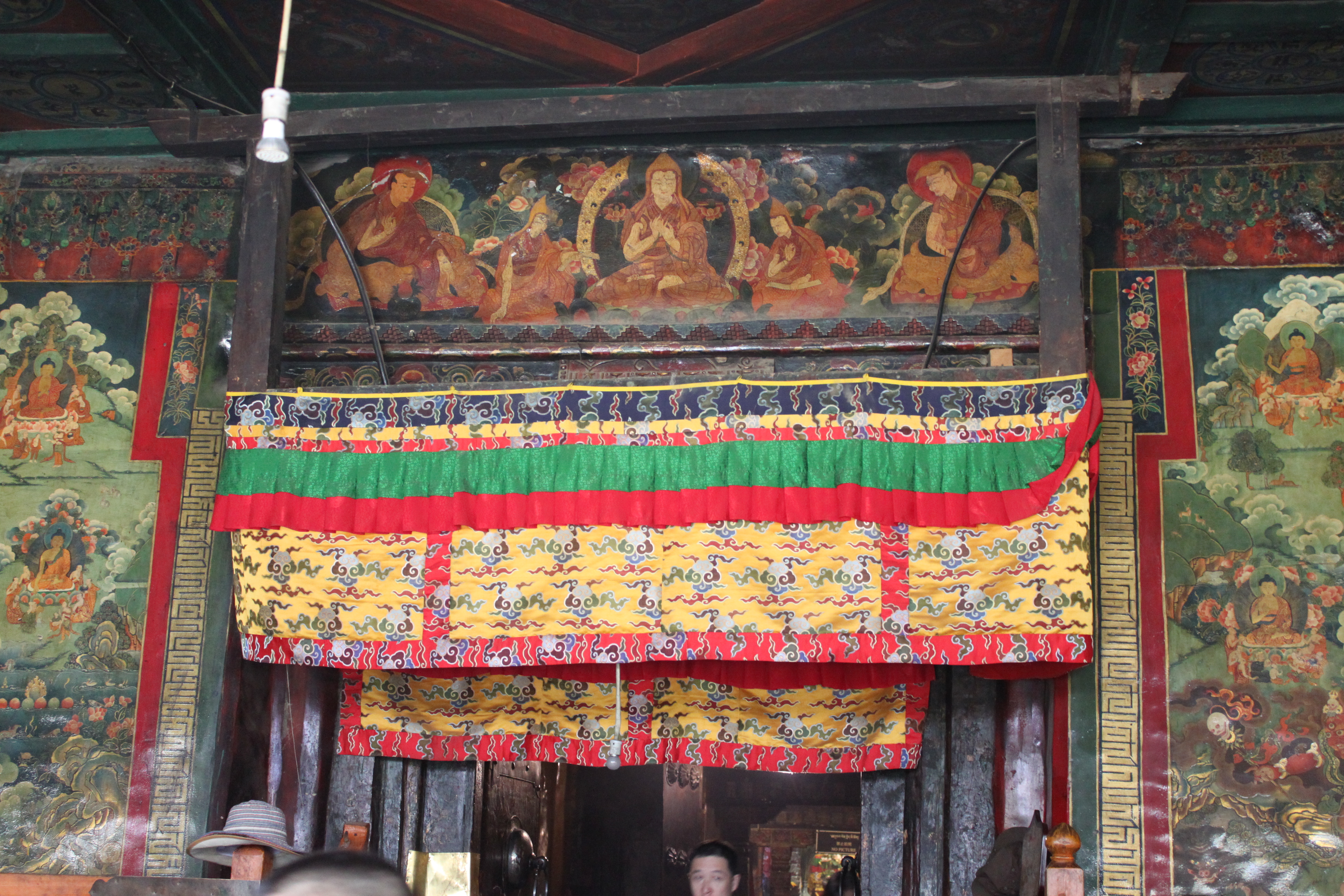
Inside Jokhang monastery

High altitude, yak and all, Tibet is worth it. I have rarely encountered people who are warmer, kinder or more hospitable than Tibetans, or a more stunning countryside, or a more intriguing  culture. However, criteria for entering Tibet have recently tightened: now only groups of at least five people with the same nationality are allowed. In the future, access may be restricted further. Final verdict: go while you can.

Leave a comment

Filed under Asia, food, food stalls, Tibet