Category Archives: food

So here goes

Jay Maew's giant pomfret with pickled plums

People sometimes ask me where I like to eat. I suspect this is so they do not have to worry about bumping into me somewhere. I’ve been asked this enough times that I have decided to write down a handy little list, detailing the places I make a serious effort to go to again and again.

You may notice there is a pattern. As I get older (I am 75), I get more set in my ways. You will never, ever catch me in a place with throbbing music, or packed with people, or outfitted with beds instead of chairs, unless Anthony Bourdain is there, in an outfit made out of sun-dried beef. I will try my very best to avoid a place that describes itself as fusion, unless it is something like Eskimo-Mongolian, because — well, who wouldn’t want to see that? I also steer clear of theme restaurants, unless they involve ninjas, or pirates. Or, uh, knights and jousting. Never mind. Just scratch what I said about theme restaurants.

1. Jay Maew
Just off of the highway in Samut Songkhram on the way to Hua Hin, this Thai seafood place is … about to close, because the owners want to retire and enjoy their lives. This is a shame (although I am all for the owners wanting to enjoy their lives), because their gaeng som is easily the best within 100 km of Bangkok. Also delicious giant pomfret, stewed with pickled plums or steamed with soy sauce and ginger; grilled crab, thick with eggs; freshwater shrimp, heads oozing, lightly blistered. Try not to miss it!

Before going over Mae Nam Tha Jeen, stick to left, go under bridge, U-turn, make first left, and it’s on your left hand side.
034-713-911

2. Jay Fai
Let me tell you a story about Jay Fai. I wrote a book about street food stalls, and although the bill at Jay Fai falls quite outrageously beyond the price limit of 100 baht per meal, I included it, because her cooking is incredibly delicious, more so once you find out she is self-taught.

Well, she didn’t like being included in a book with the pad thai guy down the street and the assorted noodle vendors here and there on the sidewalk. Her food is “on another level”, she said. Well, I can’t say I disagree with that. “Dry” thom yum (spicy lemongrass soup), festooned with prawns as big as a child’s hand; double-fried lard na, thick flat noodles paired with skinny yellow ones, topped with a flavorful seafood gravy; or, my favorite, a Japanese-inspired omelette stuffed with gigantic hunks of crab — this place is the first place I think of when someone I like wants to eat great Thai food.

Jay Fai's crabmeat omelette

327 Mahachai Rd.
02-223-9384

3. Chesa
People are sometimes confused when I say this Swiss restaurant is my favorite Western restaurant in Bangkok. Who knew raclette could be so alluring? How could fondue be such a draw?

Truthfully, although I love cheese, raclette and fondue aren’t big draws to me either. Yet I come to Chesa every chance I get because nearly every item on its menu is well-cooked. I like that the chef includes seasonal menus — focusing on, say, white asparagus in late spring, chanterelles in the fall. I like the brisk, efficient service. I like that they don’t mind substitutions. I even like that it’s slightly fusty and quiet. Best of all, I love that this is a restaurant that does not shy away from offal — veal kidneys in a mustard sauce, liver with rosti, breaded fried sweetbreads, these guys have it all.

Kidneys with brussels sprouts

5 Sukhumvit Soi 20
02-261-6650

4. Soul Food Mahanakorn
Every time I mention Soul Food Mahanakorn to anyone, I am invariably told one of a several things: 1. that it is their local; 2. that they have had the party for their book/exhibition/film/album there; 3. that they had a very interesting conversation about (insert something here) with the owner; and 4. to try the lamb grapao/Burmese-style stewed pork belly/spicy eggplant salad/excellent cocktails.

The point being, everyone loves this place. What started out as being a trendy new place with promise has turned into something that people genuinely love to go to, again and again. Everyone has picked out their favorite dish on the menu (mine is the Hat Yai fried chicken); everyone has had some sort of party there (including me); everyone has had an interesting conversation with Jarrett (boo, Eagles). This is because it is very easy to do all of these things, thanks to a smart menu, a convivial, homey atmosphere, and Jarrett’s genuinely warm personality. You feel like he could be your best friend: we could watch movies together, and do each other’s hair, and he could listen to me blather on about “Game of Thrones” for hours on end … right? Jarrett? Hey, where are you going?

56/10 Sukhumvit Soi 55
02-714-7708

5. Bamee Slow
I travel more than I should, and this is the first place I always try to go to once I get home. I love bamee kai — I am a fool for eggs, and a boiled egg, cooked just enough so the yolk runs all over a silky, fragrant handful of egg noodles accented with red pork and fried garlic, is probably my idea of an edible heaven. Best/worst of all, the wait can take up to 25 minutes, ramping up the anticipation for your first bowl (I immediately order two, broth separate, to avoid unnecessary drama) that much more. It’s the very best street food, the slow kind.


Entrance to Ekamai Soi 19 (after 8pm)

14 Comments

Filed under Asia, bamee, Bangkok, curries, fish, food, food stalls, noodles, restaurant, seafood, Thailand

What’s Cooking: Larb Dib

When I order steak tartare at French restaurants, I am invariably told by a worried waiter that the dish I have just asked for is raw. Do I want to rethink my order a little bit?

Raw is, in fact, what I’m looking for. There is that feeling of being an animal, of tearing into something in its “natural” state, untouched by flame, uncivilized. I don’t think I’m the only one. Thanks to the rise of the Japanese sushi bar, tartare of some form — beef, tuna or salmon — is a fixture of pretty much any Western restaurant across the globe: studded with avocado, dusted with pink peppercorns, or, if you are particularly unlucky, bulked up with ketchup.

Since tartare is pretty much ubiquitous, other types of restaurants have had less trouble serving raw meat to diners previously considered “too skittish” for such savage fare. Nadimo’s features a “raw kibbee” dish that is made up of minced lamb cut with bulgur wheat and accompanied by a garlicky puree. It’s unusual and surprisingly delicious, an example of how good raw meat can be.

Raw kibbee at Nadimo's

Thai food boasts its own raw dishes — in this case, larb dib nuea, or “raw minced beef salad”. Its nature changes depending on the region; in Isaan, it’s tart and fresh, leavened with ground rice grains and lots of pak chee farang, the sawtooth-edged leaf reminiscent of soap. In the North, it’s something brusque and brawny, with lots of dried chili, a hint of pork blood and a shrimp paste-based sauce. The Northern Thai one is the version I’m trying today.

Larb Dip (for 4 people)

– 400 grams good-quality raw beef, hand-chopped (I chose a Thai-French tenderloin from Villa Sukhumvit 33)
– 100 grams thin beef tripe, sliced and boiled

– 8 Tablespoons fried garlic
– 1/2 stem lemongrass, sliced and fried
– 4 Tablespoons thinly sliced shallots
– 4 Tablespoons shredded coriander
– 2 teaspoons vegetable oil
– 1/2 cup pork blood (optional)
– 1 teaspoon pork bile (optional)

For larb muang paste
– 25 pieces grilled dried chilies
– 10 cloves grilled garlic
– 15 cloves grilled shallots
– 1 piece grilled galangal
– 1 Tablespoon shrimp paste, wrapped in foil and grilled
– 1/2 stem lemongrass, finely sliced
– 1 Tablespoon roasted makwaen, or a northern Thai peppercorn (I could not find it on short notice, so I substituted Sichuan peppercorns, roasted and ground)

Directions:
1. After having grilled most larb paste ingredients on an oven on full whack, pound into a paste with mortar and pestle alongside lemongrass and roasted makwaen or other substitute.

2. Mix beef and tripe with larb paste mix. If using pork blood and bile, add now.

3. This is optional, but you can cook your larb dib bleu by adding vegetable oil and giving the meat a few stirs with a wooden spoon. Otherwise, you can leave the lovely deep ruby color by leaving it completely raw.

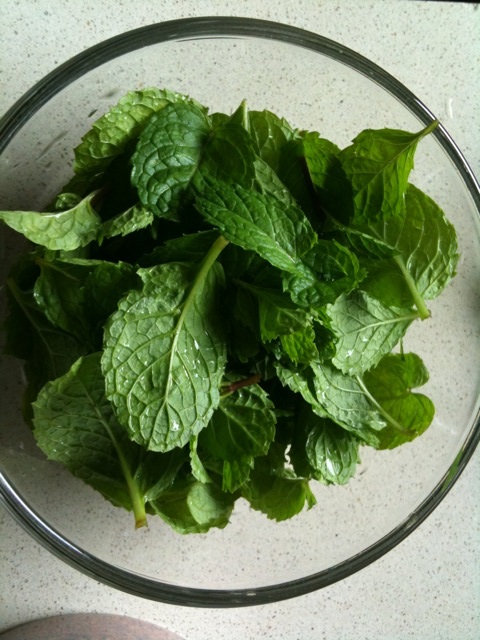
4. Season with salt and fish sauce to your taste. Top with sliced shallots, fried garlic, fried sliced lemongrass and shredded coriander. I also topped mine with lots of mint, even though it’s more Isaan and less muang (Northern), simply because it’s one of the few things we have managed to grow in our garden! Look at these beauties (I know it just looks like regular mint to you):

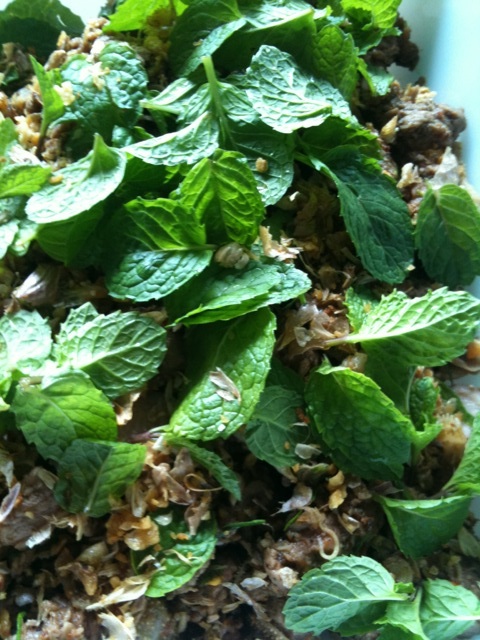
My finished larb looked like this:

My raw beef larb

5. Serve accompanied by sturdy lettuce leaves, cucumber slices, blanched green beans, boiled pumpkin and any other fresh vegetable you may fancy or have lurking somewhere in your refrigerator. Don’t forget the sticky rice.

13 Comments

Filed under Asia, Bangkok, beef, cooking, food, Northern Thailand, recipe, Thailand

Glutton Abroad: Bali H’ai

The island of Moorea

Paradise is in the eye of the beholder, it’s true, but if there is any place that conjures up “South Pacific”-style images of tropical splendor, it’s French Polynesia. Maybe that’s why, post-snorkeling tour outside a hut in Taha’a, we are being treated to yet another rendition of “There is Nothing Like a Dame” by a group of middle-aged men waist-deep in the surf. They aren’t bad, but the waitstaff are rolling their eyes. They hear this song frequently, it would seem.

I am too busy grappling with my own problems to be taking in the show. On my plate are a buttered piece of white bread, an indifferently grilled hunk of tuna, a glob of mayonnaise-and-potato salad, heavy on the mayo, and an unpeeled banana. This is lunch, a meal I once loved and looked forward to. Now mealtimes are a chore, an opportunity to demonstrate my repertoire of socially awkward gaffes to strangers, where I must parade around in “country club casual” in order to get fed.

This trip has, in a sense, unmanned me. Where I once commanded legions of dishes, sowing destruction on restaurant tables near and far with my trusty fork and knife, striking fear into the hearts of servers everywhere, I now … I just am not up to it. Jewel-like rounds of poisson cru, diced and mixed with coconut milk, freshly steamed mahi-mahi, paired with slivers of lime, splinters of just-cracked fresh coconut, skin attached — I should be into this. But just as the tropical splendor about us is relatively untouched and left in its natural state, so, apparently, goes the local cuisine — steam, boil, mash, grill. Season with lime and/or coconut juice. Repeat.

Getting my grump on makes no sense, I know. Tahiti, Moorea, Bora Bora, et al — this loose collection of mountainous islands must have looked like paradise on earth for the first settlers to reach their shores: Southeast Asians traveling via boat from Malaysia and Indonesia. No snakes could live in the dense jungly undergrowth, islands boasted a mix of fresh and seawater seafood, and the volcanic soil proved readily able to support any assortment of plants: chestnut, almond, banana, papaya, vanilla, pineapple.

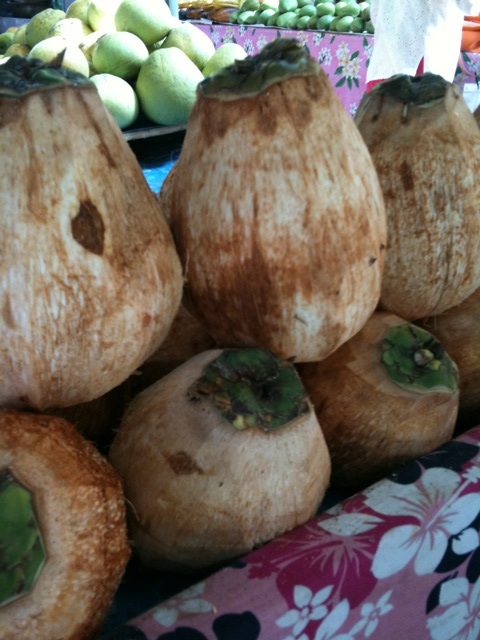
Coconuts in Pape'ete

They steamed taro in underground pits and blanched the leaves like spinach. They ate coconut flesh and used its milk as seasoning. And then there was breadfruit. Known in Thailand as sake, it was a valued part of the local diet, but instead of being thinly sliced and boiled in syrup or used to adorn curries (as in Thailand), the Polynesians boiled and mashed it with coconut milk, or simply roasted it. And the fish — grilled with lime, there was nothing easier or better.

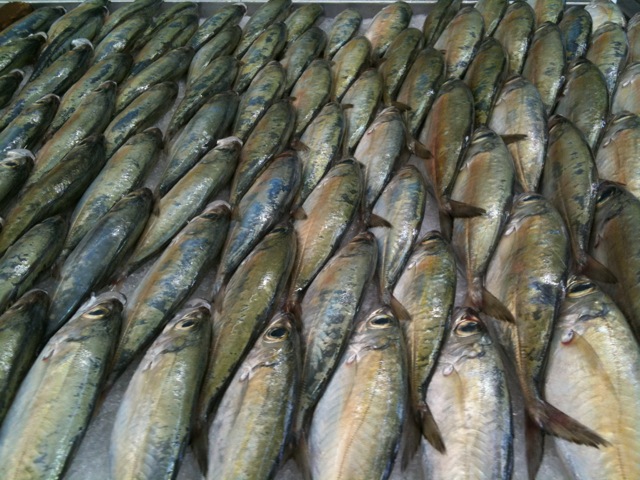
Sardines for sale at the local market

Unless, that is, you had it every day, in a sterile setting like the basement of the local town hall, a work event with acquaintances you barely know, your watch reminding you that life is slowly passing you by, but you are trapped, stuck in a prison on water, not able to do anything but take a deep breath and eat. That is what being on a cruise ship for 12 days is like for me. Every place is open to you — for 4 or 5 hours, within a carefully constructed tourist environment. Then it’s back to a ghostly existence, flittering neither here nor there, with food meant to appeal to everyone but moving no one. I realize then that eating something prepared by locals, discovered on one’s own, is travel, at least to me, and an untasted land is an uncolonized one. The frustration drives me batty.

I do better on my own. I escape, for a day, on Moorea, running like a fugitive with my octogenarian aunt from a “free” van meant to hustle us into one of those black pearl shops ubiquitous on the islands. We rent a bug rider, a noisy golf cart equipped with 4×4-type wheels. The locals ignore us, used to the buzzy spectacle, but the other tourists gape, and I realize we must look funny, a tall, slim elderly lady and a fat Asian one, folded inside a go-cart meant for a child.

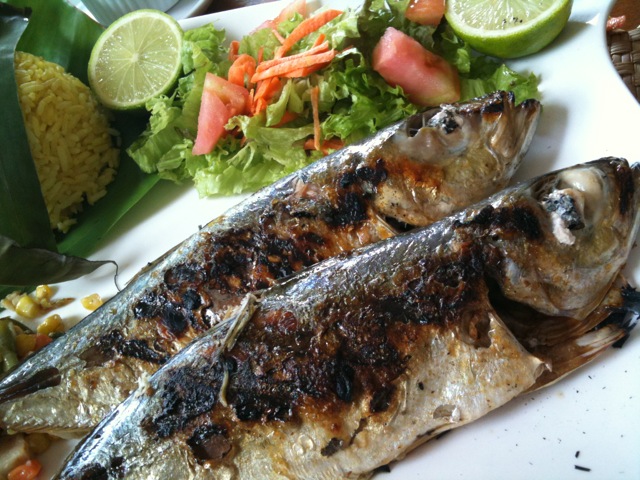
Our reward is this: a sleepy little restaurant tucked into Pao Pao Bay, a blackboard proclaiming specials like moules frites and mahi-mahi with vanilla and run by a sweaty French man with a walrus moustache. Maybe it’s because we have escaped our excursion tour overlords for the day; maybe it’s because it’s just the two of us and we know each other; maybe it’s because we’re on land. But it’s the best meal we’ve had our whole trip — grilled orare, or sardines, lightly charred, reminding me of Thai platu, with a side of yellow rice smelling of coconut.

Orare at Restaurant Martinez

11 Comments

Filed under fish, food, markets, restaurant, seafood