Category Archives: seafood

So good, it will send you into labor

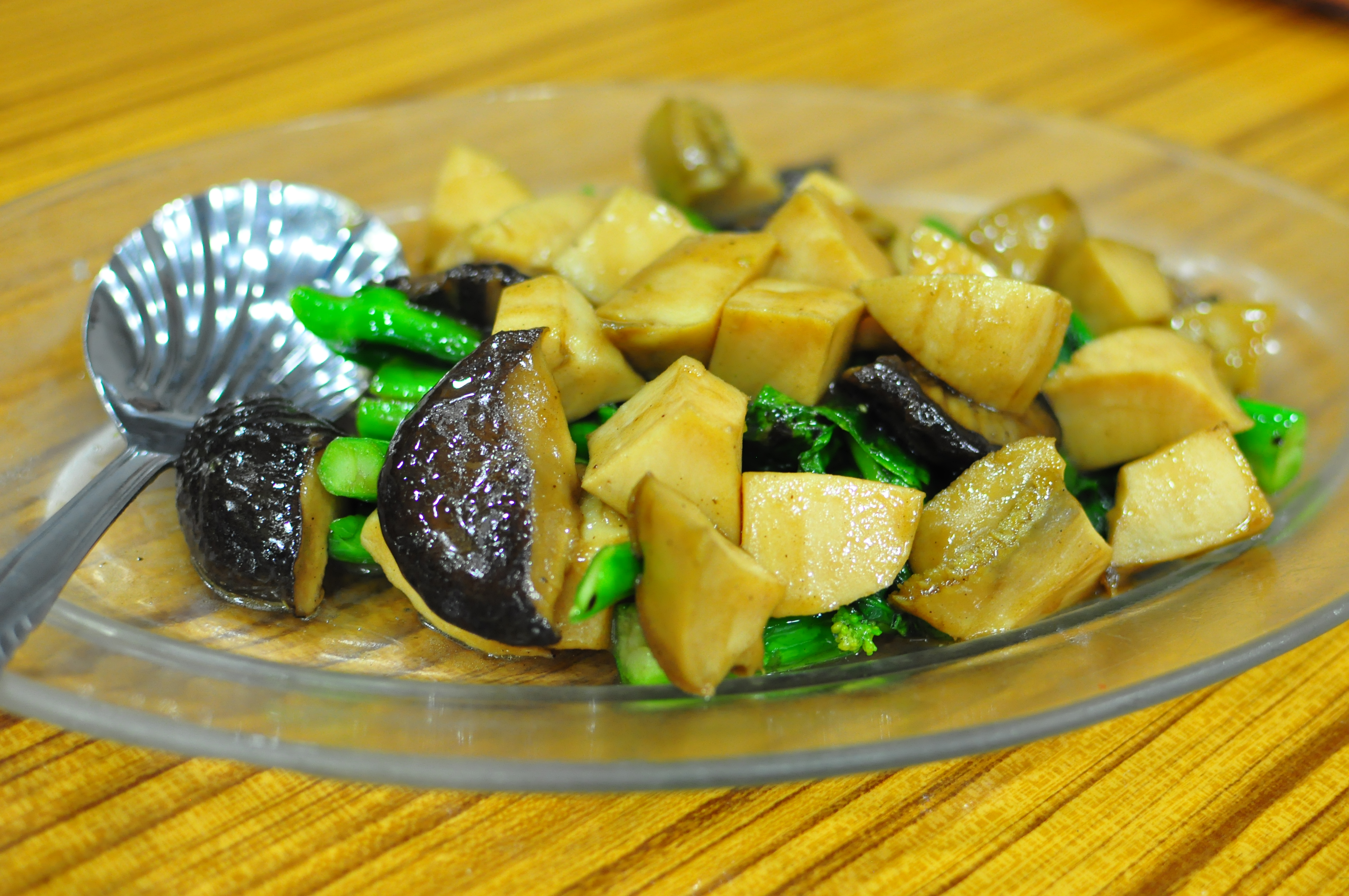
Nakorn Pochana's abalone and mushrooms (het hom) with Chinese kale

==Was strolling along Chinatown today when it hit me — I needed to make two corrections! The mushrooms in the abalone dish are called hed hom, or shiitake. They are NOT oyster mushrooms. Also, the Thai seafood restaurant I refer to near the end of the piece is called Sorntong Pochana, NOT Sorndaeng. Don’t know what I was thinking.== 

Picture this: we are close to Sam Yan market, at Nakorn Pochana (“Pochana” is a common Thai word to designate “restaurant”, particularly Thai-Chinese restaurants). Called “Nai Hai” by its unusually loyal regulars, Nakorn is generally regarded as one of Bangkok’s premier Thai-Chinese restaurants, alongside stalwarts like Pen on Chan Road and, once upon a time, Jay Ngor (where the quality has slipped as it expands). Like its Thai-Chinese peers, Nakorn specializes in stir-fried greens, deep-fried and steamed fish, and a smattering of well-loved fried noodle dishes — all showcasing the enormous contributions Thailand’s Chinese community has made to the country’s cuisine (noodles, the frying pan, and the steamer among them).

Where was I? Oh yes. A mass of flesh and hormones, inching ever closer to 80 kg and my tenth month as a pregnant person, I was stuffing my face with one of Nai Hai’s most well-known dishes: chunks of tender abalone, bulked up with juicy shiitake mushroom caps, a savory shellfish bounce with the slightly bitter backbone lent by shards of bright, brittle kale. My enjoyment of this dish was so intense my blood pressure shot up to stratospheric levels, a development that was initially blamed on the restaurant’s tea, then to a panic attack, and finally to the rapid onset of pre-eclampsia. I was unable (to my regret) to attend to a highly anticipated dessert of sugar-encrused taro, and was rushed to the hospital in time for 16 hours of labor-induced fun. My son was called “pow hu” (Thai for “abalone”) for weeks afterwards.

Needless to say, it took me a few months to get back to Nai Hai. But like all good things, it was worth the wait.
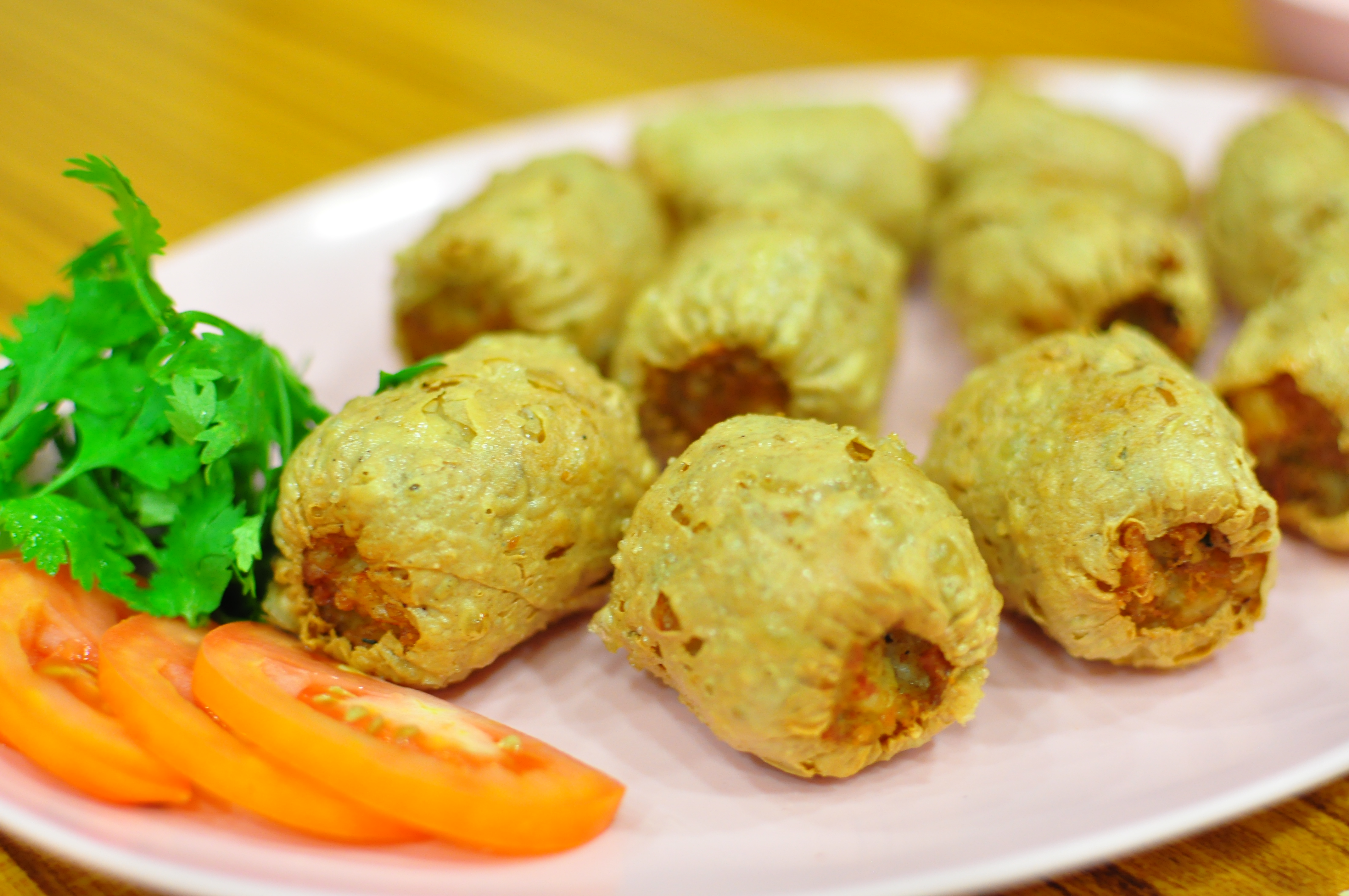
Hoy jaw, deep-fried crab dumplings

 Like an old friend, Nakorn’s hoy jaw (deep-fried crab dumplings, which differ from the shrimp variety, called hae gun) presents familiar flavors, but in a superlative fashion. A crinkly, crackly package of the sea, here it is never too greasy, not too heavy.

Like a classy party-goer who can hold her liquor, the rest of the menu shows similar restraint. Its gaengs (an all-encompassing word running the gamut from thick curries to clear soups) are never too obnoxious or obtrusive. Its extensive range of stir-fried greens — including, but nowhere near limited to garlic chives, pumpkin shoots, young spinach, broccoli sprouts and the ever-present morning glory — are always seasoned to perfection, and never oily (a recurring theme in lesser Thai-Chinese restaurants) or over-cooked to oblivion.

Garlic chives with pork liver

But the best part of Nakorn’s menu may be its seafood. This is not the fiery, in-your-face stuff of Bangkok’s well-known seafood purveyors (of which Sorntong Pochana on Rama IV is a good example; Somboon Seafood is better-known but a mere echo of a good restaurant). This is also more restrained, including the popular specials (steamed seabass with pickled plum) with the more esoteric (deep-fried split langoustines). The best, though, may be a dish beloved in Thai-Chinese restaurants across town: stir-fried cracked crab in curry, comparable (and almost as good) as the version at Pen.
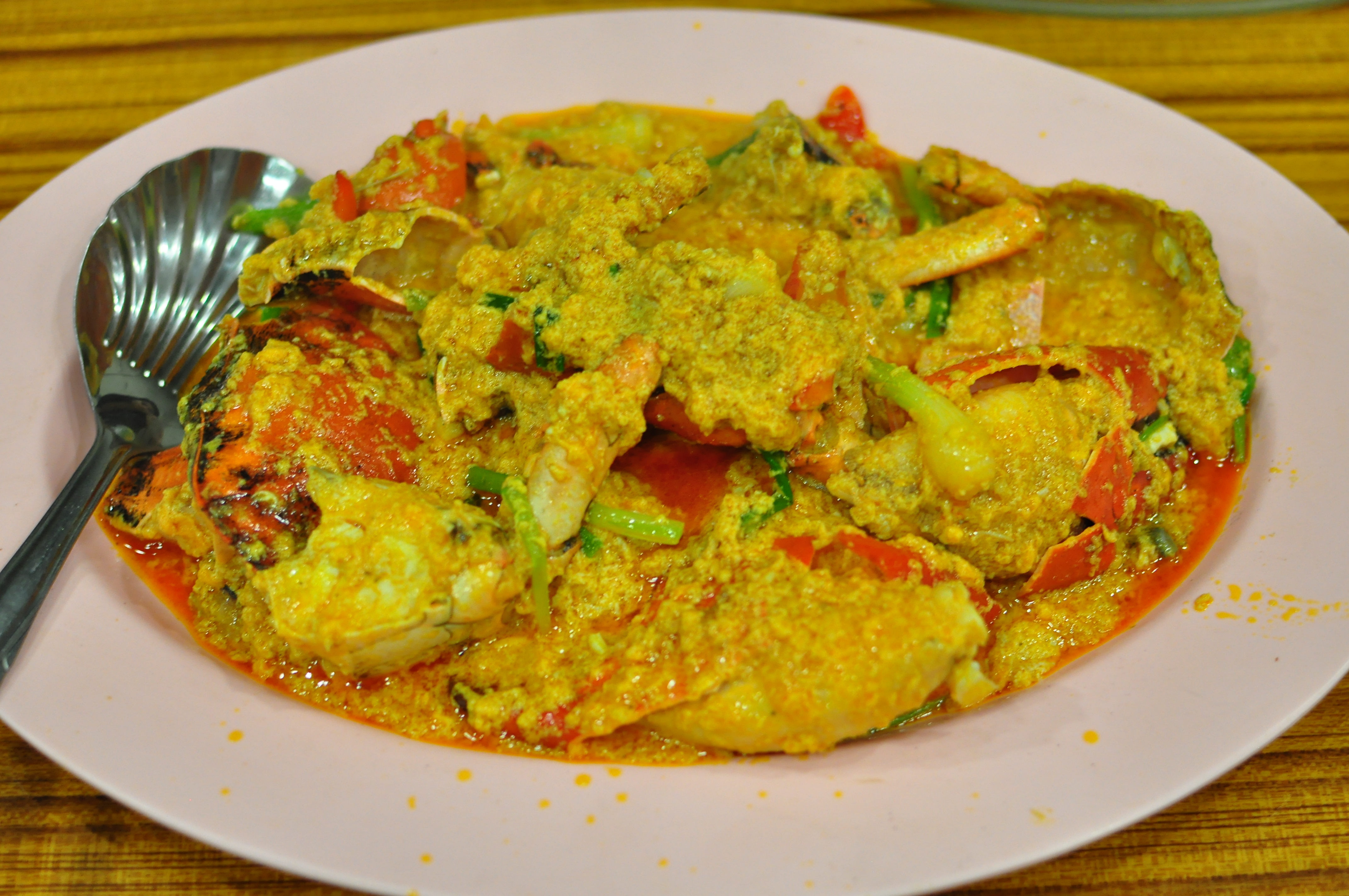
Stir-fried curry crab

Best of all, it’s the little details that set Nakorn apart from the rest of the pack: the casual, convivial atmosphere, conducive to lots of shouting and (of course) grabbing; a loyal coterie of customers ranging from college students to middle-aged “khunying” types on their hair’s day off; the ability to take out excellent jok (Chinese-style rice porridge) for the next day’s breakfast just next door at Jok Sam Yan; and service that remembers the last time you came and expects to see you again.

 Nakorn Pochana (Sam Yan market, 02-214-2327, 02-215-1388, 02-215-4418)
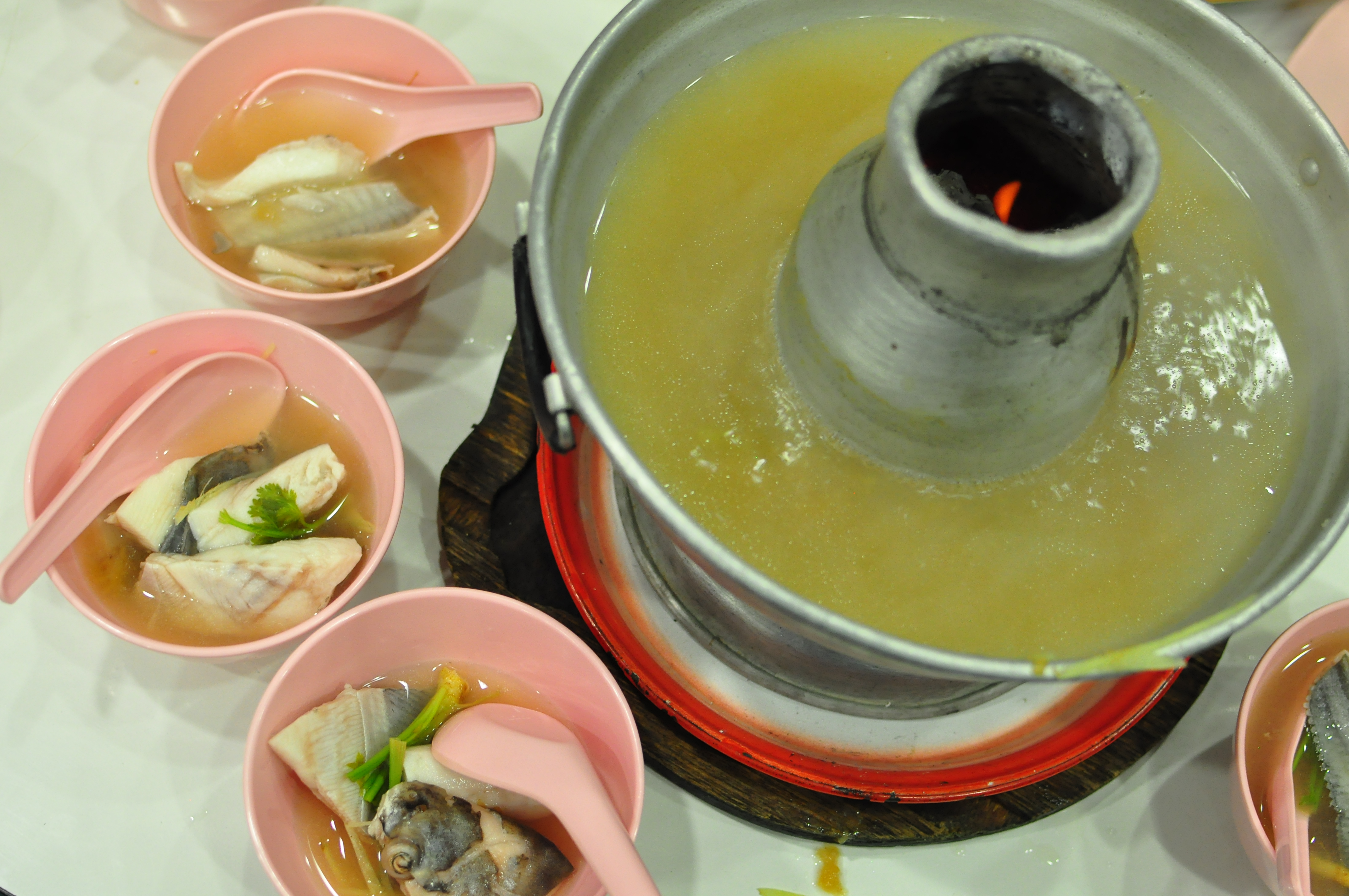
"Tom som", or tart-spicy soup of pomfret

All photos by @SpecialKRB
1 Comment

Filed under Asia, Bangkok, fish, food, restaurant, seafood, Thai-Chinese, Thailand

The Bitter Person’s Yen Ta Fo

Pretty fly for a bitter guy

What is that saying again? When a door closes, a window cracks ever-so-slightly open? Oh, that’s not it? Maybe not in your case …

It’s the end of the summer holidays for me, and how better to mark this than a week full of (tearful) good-byes, (headache-inducing) family dramas, a panic-stricken rush to meet a (self-imposed but unbreakable) deadline, and a handful of (missed) career opportunities? Yay, this week! Frankly, it’s enough to send me rushing off to my kinesiologist. But not before I write this post. Because at least I. Have. This. Blog. Yes.

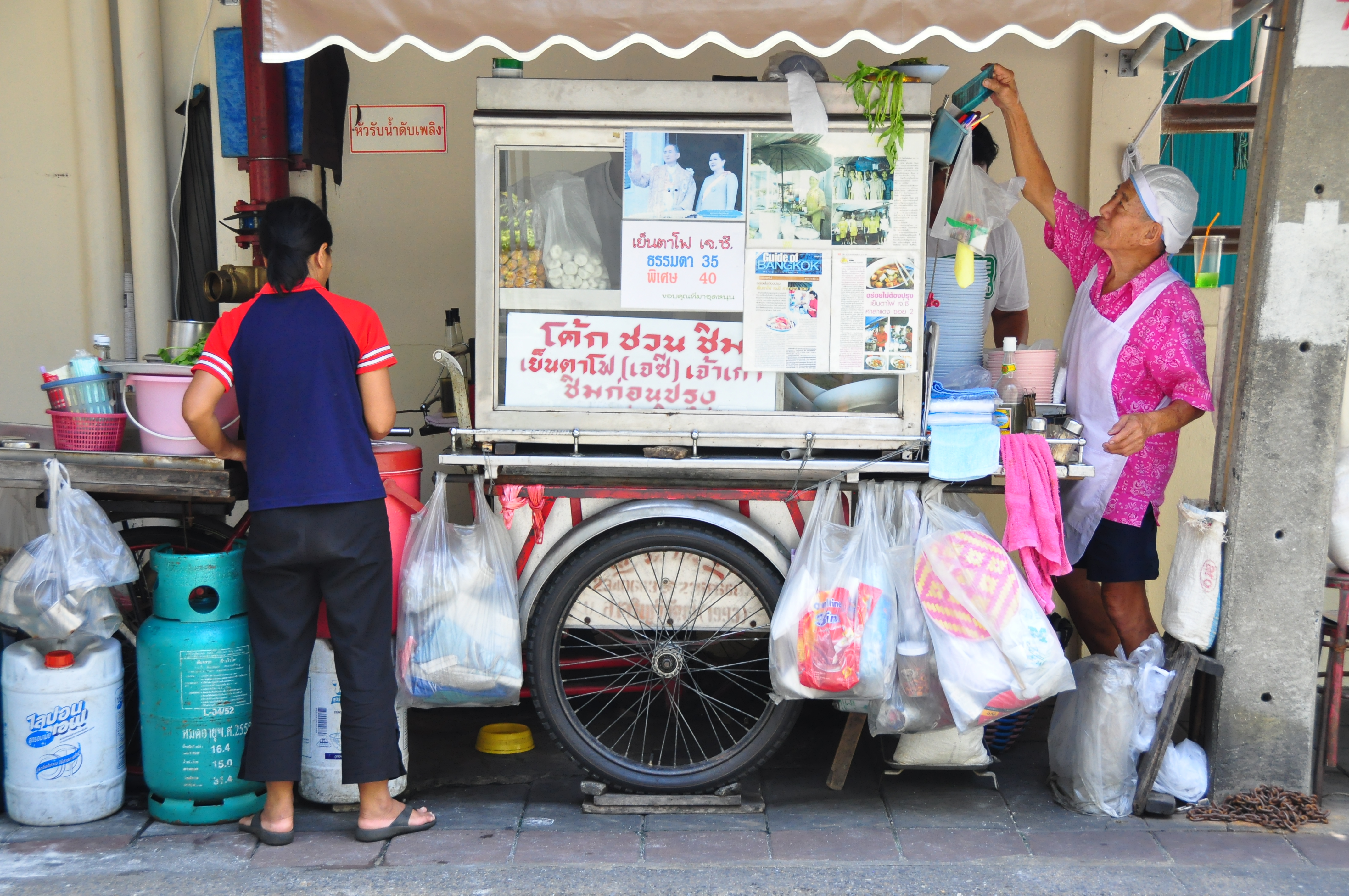
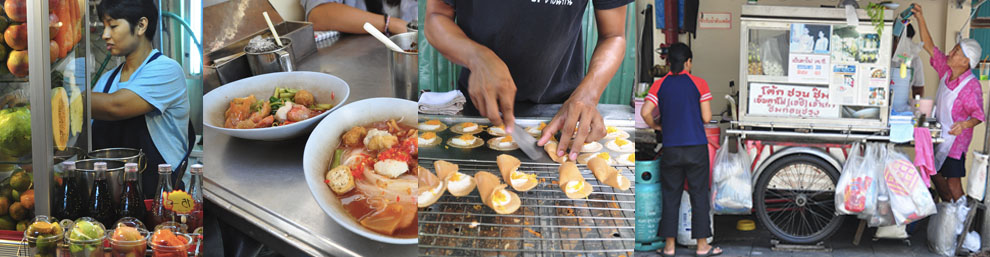
Maybe this is what the Noodle Nazi is thinking. What, you don’t know the Noodle Nazi? That’s what locals call him, naming him after the “Soup Nazi” from that Seinfeld episode (and whose restaurant was a few blocks away from my apartment in New York, when I lived there, eons ago). Here in Bangkok, there is a man hatched from the Soup Nazi’s own formidable mold, who runs a yen ta fo cart on most days on Saladaeng Soi 2. The shop/cart: JC Yen Ta Fo. The man: I don’t know. Hence the name “Noodle Nazi”.

Maybe his mother keeps pestering him about his daily schedule, and his editors aren’t interested in his story ideas. Maybe all his friends live abroad and he only gets to see them once a year. Maybe his snotty emails about Thai restaurants in five-star hotels are always being misinterpreted. And maybe he can’t find his kinesiologist’s number. In any case, when you meet up with him, you better know your order: sen mee or sen lek? With broth or without? And tell him fast, because there is a whole big backlog of customers waiting and the lunch hour rush is just around the corner, damnit!

Last time we were there, we were chastised for eating an order that did not rightfully belong to us (okay, maybe we deserved that one). But Noodle Nazi’s words earned the eternal enmity of my mother, who has become his sworn enemy and will never set foot on Saladaeng Soi 2 forevermore. As for me, well, I keep going back for the same old abuse. It’s eerily similar to being a freelance journalist. I am glad to fulfill this role for him. Because at least. He. Has. This. Noodle. Cart.

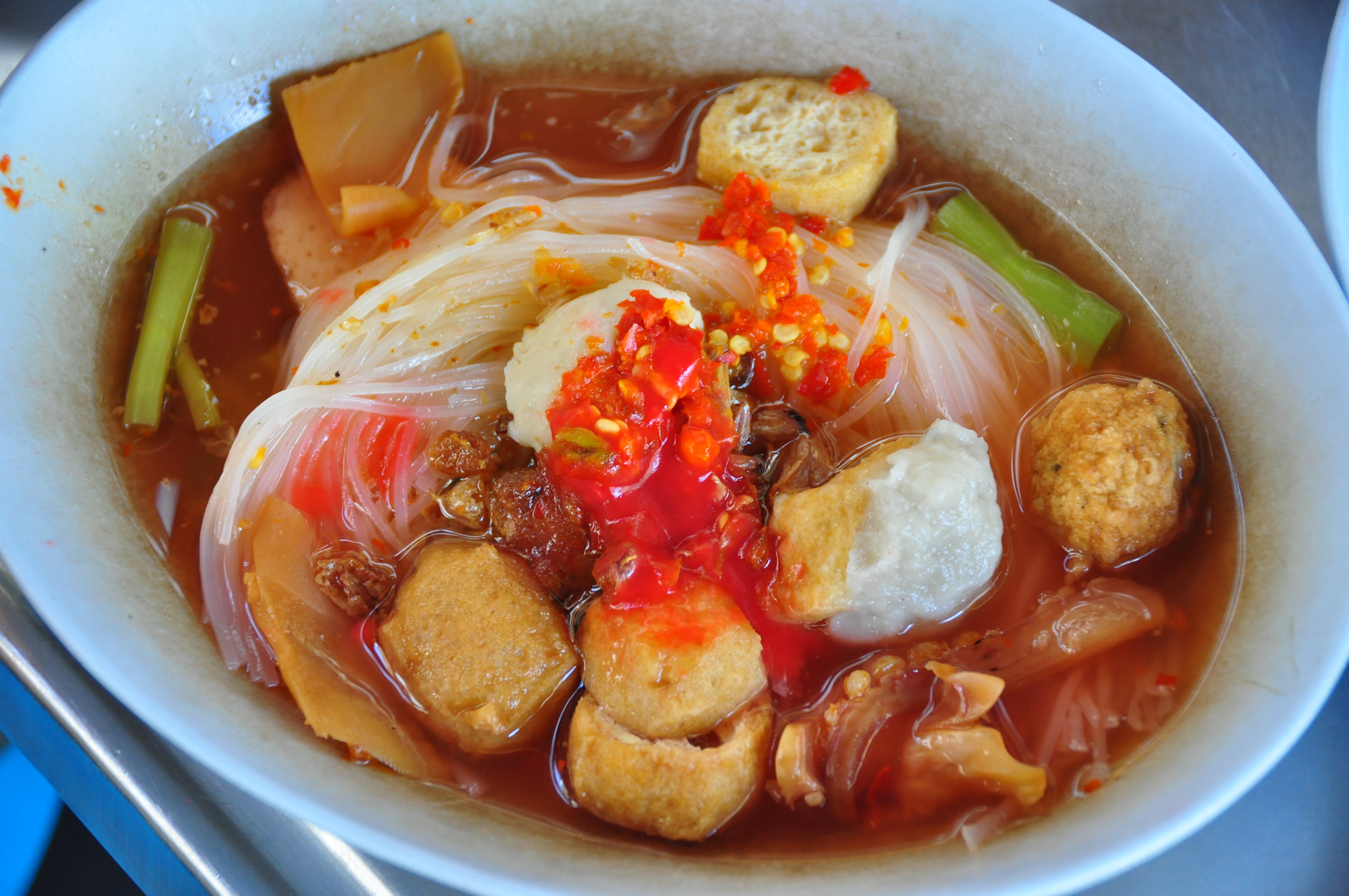
JC Yen Ta Fo, purveyor of excellent pink seafood noodles

The noodles themselves? Well, they may play a role in my going back as well. A bewitching mix of light soy sauce, lime juice, palm sugar and salted soybean paste, chunks of fried tofu, blanched morning glory, fish meatball and the occasional squid tentacle: what’s not to love when it comes to pink seafood noodles? And these come in perfect proportions, in every bowl! Always something to aspire to!

The excellence of these noodles inspires hope. Hope to keep on, keeping on. Hope to continue being me. While I lack the expertise to open my own noodle cart (unless there is demand for a spaghetti bolognese cart anytime soon), I can continue to set my fingers to this keyboard and type utter nonsense, railing against the insipid food served at Thai restaurants in five-star hotels, waiting for that window to crack open a little bit more.

(Pictures by @SpecialKRB)

8 Comments

Filed under Asia, Bangkok, food, food stalls, noodles, seafood, Thailand

Down South

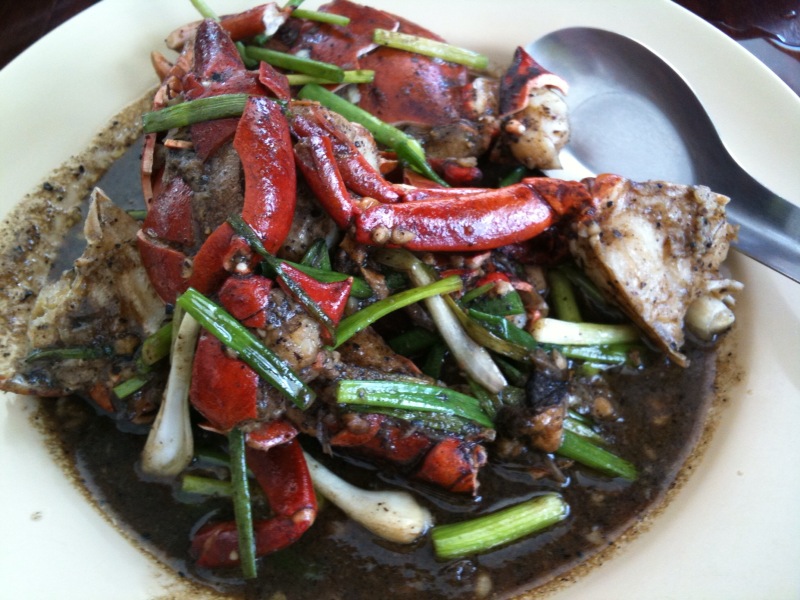
Stir-fried crab in black pepper sauce at the restaurant it's named for, "Pu Dum" (Black Crab)

As a native Northern Thai, I like to think that everything up north is gracious and everyone there good-looking. But I have to say, right now I am smitten with the South: its weather, its beatific scenery, its beaches, its food. Especially the food.

Heading southbound by car from Bangkok to Phuket offers a great perspective on what Thailand has to offer. Even better, you get to stop at reststops that feature some truly outstanding food courts, offering some of the most underrated food in the country. Now, it’s true I try to avoid most food courts in Bangkok (except for the ones at MBK and at Bangkok Hospital, which are excellent) because — let’s face it — better renditions of these dishes can be found elsewhere, we know about these places, and we have the time to go to them.

Boiling oxtails for oxtail soup, a southern food court standby

Food courts by the highway in the provinces are another story. I love how they offer dishes that are basically a culinary Cliff’s Notes of what you would be enjoying in that region, were you to stop there — a “greatest hits” of each area, food-wise. In the south, a lot of those hits mirror the region’s large Muslim Thai population and are deliciously “exotic” and Other (note the widespread absence of pork. In fact, if you see pork, chances are you’ve stumbled onto a community of Chinese, who settled down south in the 19th century). A great case in point: 

Chicken "mataba" with sweet cucumber salsa

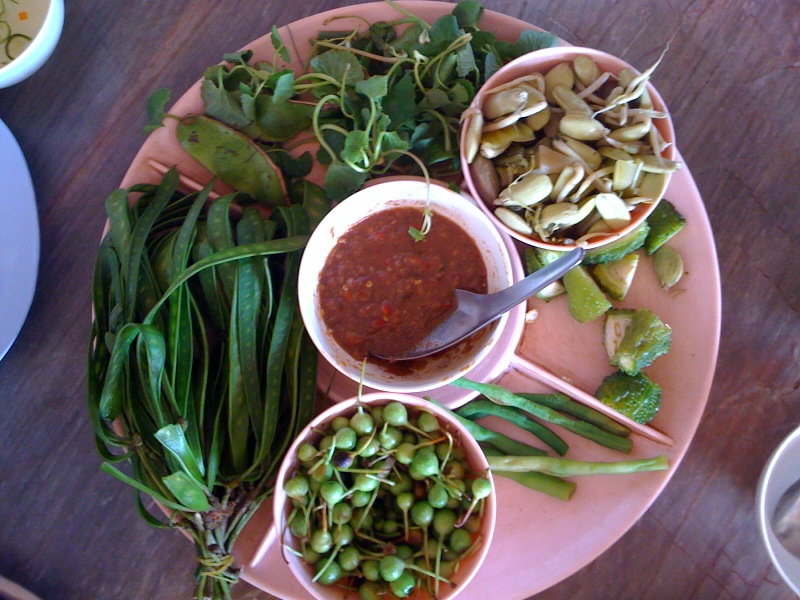
Take the mataba, a sort of stuffed crepe with minced vegetables and chicken or beef, served with a sweet shallot and cucumber relish (achad). It’s savory, sweet and starchy, cut with the fresh, crunchy snap of the relish, a great snack on the go. Another thing I love about food courts in the south are the free (!) pepper dips provided at every table, which are served alongside some of the more exotic vegetables and leaves I have ever seen. I love travelling to the south of Thailand because every time I go, I encounter some new and unusual green that I have never tried before. On this trip: a nam prik gapi (shrimp paste pepper dip) accompanied by the likes of an asparagus-like long bean, tannic baby eggplants to counteract the spicy dip, and sator, the peppery, bitter legume (which is in season right now).

Shrimp paste dip with vegetables

Another current culinary obsession: highway-side food vendors. Notwithstanding how people manage to slow down enough to patronize any of these stalls, I love seeing the wide variety of things on sale depending on where you are in Thailand (and where you are in the season) — around Hua Hin, it might be limes and coconuts; in northeastern Isaan, probably grilled chicken and sticky rice; up north, you might encounter freshly pressed sugarcane juice. Even in parts of the south, you will find huge stainless steel steamers stuffed with steamed pork-filled dumplings (salapao) or steamed shrimp dumplings (kanom jeeb) for sale, more testament to the large Chinese communities here.

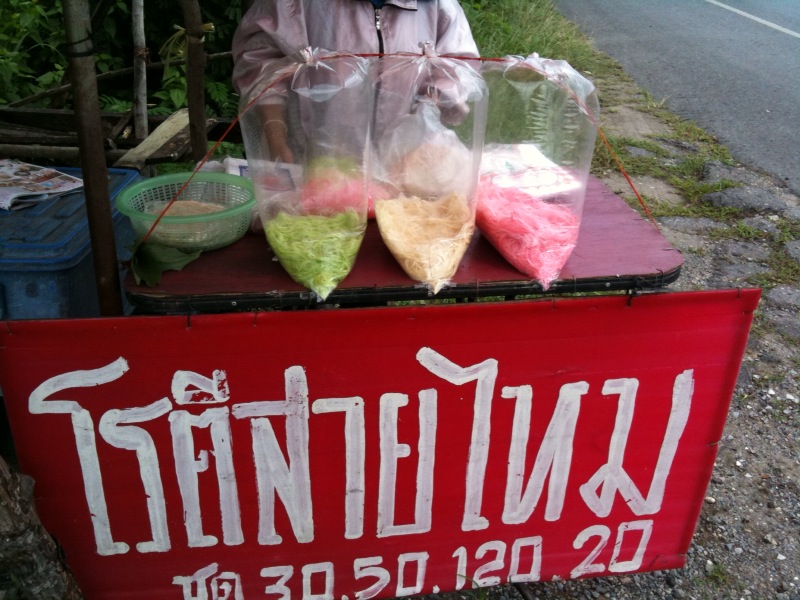
What you’ll also get is called roti sai mai — imagine a tortilla stuffed with cotton candy, and you’ve got a good approximation of what I’m talking about. It’s a popular southern streetside snack, and is chock-full of the double comforts of sugar and starch, all in one.

A typical highway vendor selling roti

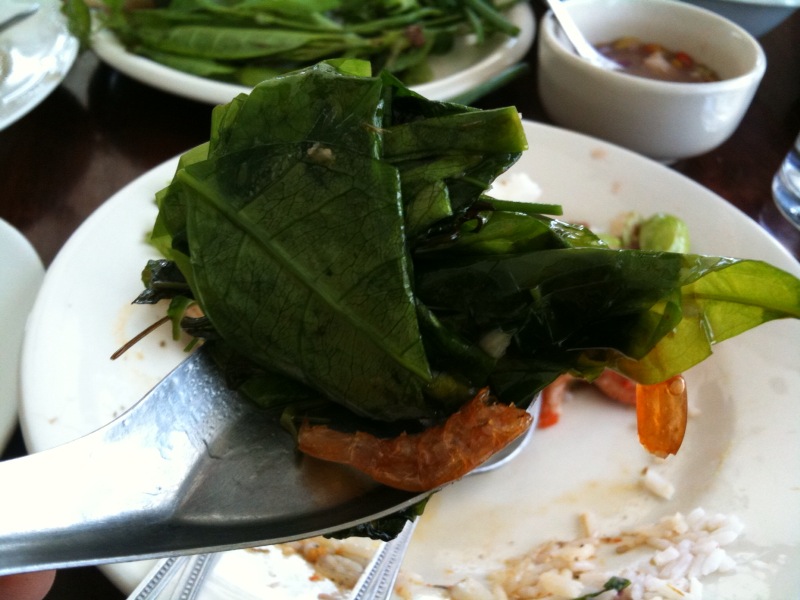
But the best southern Thai food, for me, is all about the seafood. Homebound again through a torrential downpour, we stopped at Phang Nga for some good food-lovin’ at Pu Dum (Black Crab), ordering its namesake, a barely cooked cracked fresh crab smothered in a black peppercorn sauce; a handful of deep-fried Thai smelts; freshly steamed hor mok (steamed fish curry); stir-fried sator with shrimp and chilies; a piquant sour soup with coconut shoots and the plump midsection of a serpent head fish; and best of all, sauteed bai lieng (the leaves of a local tree, stir-fried with dried shrimp), a new discovery. It was delicious.

Stir-fried leaves with dried shrimp

Leave a comment

Filed under Asia, food, food stalls, restaurant, seafood, Southern Thailand, Thailand