Category Archives: Thailand

Take a Big Bite out of Bangkok

This is waiting for you from Pigwit.

Once in a blue moon, the planets align and good things come to those who wait and I can’t find another well-used cliche t0 convey that this doesn’t happen very often. “This” being the semi-annual gathering known as “Big Bite Bangkok”, where awesome vendors from all over the city (and me) meet up to sell every manner of delicious foodstuffs, all with the aim of charity and promoting excellent, local small-scale producers.

Local producer of delicious breads, Urban Pantry

So on Sunday July 15, we will all convene from 11am-2pm and stuff ourselves silly with waffles, sandwiches, salads, stir-fries and beer. We will forget silly stuff about how we had to use a site called “Cliche Finder” to write this post and may have also used this headline before and isn’t that a bad omen of where we are as a writer right now? (And that we refer to ourselves as “we”?) We will delight in the fact that we are helping out a worthwhile charity (In Search of Sanuk, check it out) while doing totally selfish things like wresting the last bagel from the table before Dwight gets to it first. We will do all these things, and hopefully the weather will cooperate, because this event will be awesome and the weather should respect that.  Work out for us, weather! For once!

Hmmm? Where was I? Oh yes, talking about a great event for charity!

What: Big Bite Bangkok July

Who: Great vendors like Bo.lan, BKK Bagel Bakery, Urban Pantry, Chu, Adams Organic, Vietnamese & More, Birds in a Row, Pigwit, Radiance and Manno.

Where: Parking lot, Maduzi hotel

When: Sunday, July 15, 11am-2pm

Please come join us!

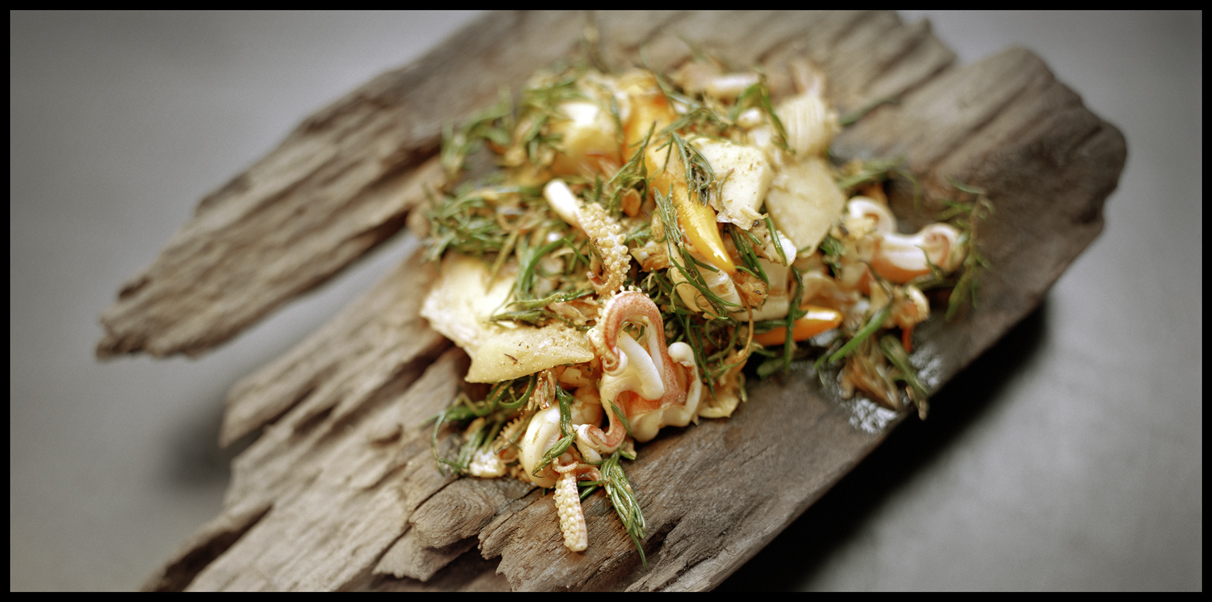
Stir-fried squid from Bo.lan


2 Comments

Filed under Asia, Bangkok, charity, food, markets, Thailand

Glutton Abroad: I dream of African barbecue

Nyama choma with all the fixings, at Governors’ Private Camp

Do you remember the song “Africa” by Toto? If you are of a certain age, of course you do. Picture this: it’s 1907, and we’re listening to Toto at my apartment in Haverford (please don’t ask why). I get into a deeply heated argument with Brian Minier over the lyric “Kilimanjaro rises like a leopress above the Serengeti”. Note the spelling? It’s obviously a female leopard (although the lyric is ridiculous, obviously. In what way would a mountain “rise”? Do female leopards “rise”?) He insists the band is referring to a female leper. Really, Brian? Really?

So when I see Kilimanjaro, looking a bit like melting vanilla sundae, out the window of my ridiculously tiny Cessna (the safari version of the shuttle bus), that lyric gets stuck in my head, and I get indignant all over again.  I mean, who would differentiate between male and female lepers anyway? But, as usual, I digress. Because, while most people go on safari and want to see blah blah leopards blah blah rare rhinos blah blah lions nom-nomming on something, I am on the hunt for something else. I want to be the one nom-nomming on something. I am looking for nyama choma.

“Nyama choma” is basically a cooking term referring to grilled meat — frequently goat, but also beef, pork, mutton, what have you. As is the case with grilled meat of any persuasion, nyama choma is delicious — as seen by the numerous stalls selling it roadside. But for some reason, people don’t seem to believe you want to eat African food. Typical menu offerings at these lodges are “fresh-out-of-the-bush” concoctions like beef carpaccio, roasted pumpkin soup, and grilled fish with Hollandaise sauce. Nice stuff, but some people want to experience new countries through their stomachs, too.

The folks at Singita Sasakwa (www.singita.com), where I first stay, are kind enough to indulge a few requests. One, suggested by my friend James, is “masala fries” — a perfect colonial fusion of Anglo-Indian influences. They are like junk food, they are so good: crispy fries, meaty within, coated with a tangy, salty spice coating of masala and dusted with a bit of parsley. There is no reason why this shouldn’t be in every vending machine in every corner of the globe. I have to figure out how to make these at home.

Masala fries at Singita Sasakwa

They also indulge us with an “African tasting menu” that includes some things I’ve never seen: ugali, maize cooked into a solid mass that resembles glue, meant to serve as the backdrop for everything else; mchicha, a Tanzanian curry of spinach and peanuts; mishkaki, skewered, impossibly tender beef; maharage ya nazi, kidney beans stewed with coconut cream; “coconut rice”, cooked a la risotto, but with coconut milk instead of broth; and a sort of kachumbari that they appear to call chachandu, a tomato-chili relish served alongside grilled tilapia. Of course, it blows everyone away. Why is there not more of this?

At Governors’ Private Camp in Kenya (www.governorscamp.com), we get more English-y stuff the first night — chicken fillet in mushroom gravy and an impossibly tall tower of fluffy mashed potatoes that I cannot help but eat all of — but Patrick and Frank, our stewards, are more than happy and even a little tickled to accommodate a request for nyama choma. The next day they outdo themselves, grilling up strips of beef slathered in a parsley-and-onion speckled kachumbari.

Kachumbari, or tomato-and-chili relish

They also serve up heaping spoonfuls of sukuma wiki, a Kenyan staple dish that literally means “to push the week” and comprises braised, shredded greens studded with bits of tomato, cooked until it falls apart and finished with a bit of cream. Although I’ve had some indifferent versions of this dish, the one here is made with lots of love, “the traditional way”, Patrick tells us.

Traditional sukuma wiki

The next few days are a blur: githeri, a stew of kidney beans and corn, sweet and filling; matoke, made from stewed plaintains in a sweetened tomato-and-onion sauce; mandazi, crispy, giving dough “dumplings”, slightly sweetened, reminiscent of the Thai patongko. Our camp manager Colin tells us that South Africans eat a version of mandazi that is stuffed with mince, another smart Anglo-African fusion dish. If I ever go to South Africa, I am trying that immediately.

But I miss home. I rediscover chilies. Although they are a bit bigger and not as spicy as the prik ki nu (bird’s eye chilies) back home, I remember that it was the Portuguese who were supposed to have brought chilies to Thailand, and that these suckers were probably the ones they brought. So in a way, I have a bit of home at every meal, sprinkled on my fried eggs or tucked into my curries. Enough to tide me over until I get back.

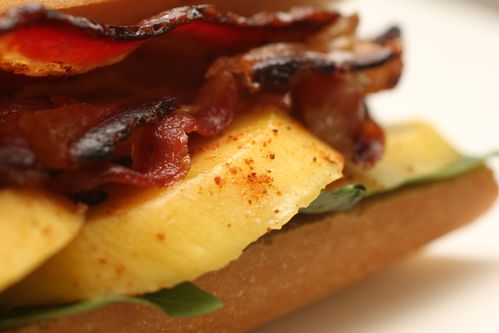
Breakfast
15 Comments

Filed under beef, food, Kenya, Portuguese, Thailand

Breakfast in Hua Hin

Congealed pig’s blood in soup — a common Thai breakfast dish

It doesn’t happen very often, maybe, but it might — somehow, for no reason at all, you wake up at 6 in the morning with an empty stomach, having picked at a watermelon salad at the neighboring hotel the night before. You are starving. You need food, pronto.

Luckily, Hua Hin has it all covered. This once-sleepy seaside town — the traditional weekend getaway of time-pressed Bangkokians everywhere — may be an amateur when it comes to approximating any sort of nightlife, but is everything a morning person with a love of food could possibly want. By 6, it’s already buzzing: steam rising from curry-filled pots; dough rolled out for the morning’s first patongko (Chinese fried bread) order; monks out strolling the market, bowls in hand.

When I get to Pa Choung (4/3 Amnuaysin Rd., 082-212-4490, open 6-noon), she is in the middle of making merit. On the hob: a fiery gaeng som full of little shrimp and dok kae (what I’ve seen referred to on some menus as cowslip blossoms), pad ped moo pa (stir-fried curried wild boar), dried and butterflied fish, sun-dried beef, deep-fried pork cutlets and a green curry full of slivered bamboo shoots.

Green curry and deep-fried pork: breakfast of champions

This isn’t all of it. She says she is finished making all of the food at 8. But it’s usually gone by 8:30. I’m happy with the smattering of curries already there.

But while Pa Choung is a one-woman curry-making machine, Raan Kafae Jek Pia (intersection of Naebkehardt and Dechanuchit Roads, open 6:30-1:30pm) is clearly Breakfast Central for the entire town. Every table is occupied, and on nearly every tabletop is a mug of sludge-like kafae boran (old-fashioned coffee), flavored with a layer of condensed milk. But this is not the main attraction. Instead, it’s the collection of stalls that service Kafae Jek Pia’s customers: jok moo (Chinese-style rice porridge with minced pork); khao thom pla (rice porridge with fish); guaythiew (noodles in soup); and, most intriguing of all, gow low lued moo (pig’s blood in soup), traditionally served for breakfast here, in a country not really known for its breakfast foods.

Cubes of pig’s blood blanched in broth

Pig’s blood cubes are taken from a chilled bowl and blanched in boiling broth for a few minutes. They are then added to slices of pork, blanched Thai watercress, some Thai celery for freshness, and a dash of deep-fried garlic for bitterness and punch. There are bits of innards too: intestine and liver and slices of heart. It’s a one-stop shop for piggy flavor. Sometimes, if you pair it with a plain bowl of rice, you can drop some of that in there too, or take a spoonful and dunk it, watching the grains soak in the broth, a bite at a time. It’s the best antidote to thinking too much that, well, I can think of. What else is breakfast for, if not that brief reprieve before the start of the day?


7 Comments

Filed under Asia, food, food stalls, Hua Hin, pork, rice, Thailand