Category Archives: Thailand

Hamburger heaven

The Thaiger burger with bacon

The Thaiger burger with bacon

When I just moved to Bangkok, a guy called me up. I was still new to the whys and hows of life here and was still bewildered by things like who wais who if you look the same age. So this guy called me up, and after what seemed like hours of talking about his hair, when he casually said I should “come over to his house and make him a sandwich”, I thought WOW GUYS IN BANGKOK DON’T MESS AROUND.

It turns out this fool probably really did want me to come over to his house and smoosh two slices of Wonder bread around a piece of baloney. Because since then I’ve learned that there is this weird thing about guys and their sandwiches. Let me put it another way: What is it about guys and sandwiches? I don’t get it. It’s not like it’s hard to do. Any idiot with two hands should be able to figure it out. Yet the fetishization of sandwiches not only lingers, but has grown, to zit-on-picture-day-like proportions. Case in point: the lady who was challenged by her boyfriend to make him 300 sandwiches before he proposed. You know what I’m talking about. Just in case you don’t, you can check out this link here: http://300sandwiches.com. Smart. So smart. This woman will get a cookbook deal and will be played by someone like Amy Adams in the upcoming movie. And all because her boyfriend is a doofus who can’t make his own sandwiches.

So I don’t get sandwiches in general, but I do understand hamburgers. This is a big thing for me. I can maybe say that, besides Buffalo wings, this is possibly THE thing. It’s because I live in Bangkok, where correctly-rendered versions of either of these dishes are about as rare as a talking unicorn made of ice cream. Too often, “Buffalo” wings mean deep-fried chicken wings slathered in a honey-barbecue sauce. Once, I ordered Buffalo wings at a hamburger place (these two dishes often go together under the rubric of “American shit no one else will eat”), only to be presented with a dry tangle of limbs that resembled an evil vulture’s nest. They told me the Buffalo wings were “spicy Thai wings”. WHY DON’T YOU CALL THEM SPICY THAI WINGS?

Hamburgers are similarly mistreated here. I think it is because Thais — and possibly Asians in general — misunderstand what the point of a hamburger is. A hamburger is about the meat — the beef, to be specific. It’s about having a great big slab of beef, fully grained, charred and juicy, subtly mitigated by a fluffy bun and maybe some crunchy green crap on top. A hamburger is supposed to taste like MEAT. But Thais, possibly because there aren’t as many beef eaters as in other countries, don’t really believe this. They want a patty that has everything but the kitchen sink in it — onions, garlic, carrots, whatever — in a round of something that has been minced and pounded until it resembles a fine meat frisbee. It’s the Mosburger approach to hamburgers, and it is ruining all the burgers in this town. I don’t care how many Japanese people you get to eat it.

It comes as no surprise, then, that Daniel Thaiger draws a line of hungry hamburger-lovers even before they open at around 6pm. Recent LA transplants Mark and Honey run their hamburger business out of a white food truck parked at the far end of Sukhumvit Soi 38, on the right side of the road on even-numbered days, and on the left side on odd. Like all good street food, the menu is simple and straight to the point: burgers, tasting of meat and smoke fresh from the grill, with bacon and/or cheese, wrapped in a soft bun and a wax paper sleeve that doesn’t quite keep you from looking like a big slob as you’re eating. And yes, there are pork versions too. But come quickly, because these folks often sell out by 8.30pm.

18 Comments

Filed under Asia, Bangkok, food, food stalls, Thailand

What’s Cooking: Yum

A "three-way" yum of shrimp, pork and dried fish at Polo

A “three-way” yum of shrimp, pork and dried fish at Polo

I’ve been away, so I haven’t had as much Thai food as I’d like. Although the world is full of what I’m sure are great Thai restaurants that venture beyond the sour-sweet stir-fries and chicken with cashew nuts that we all know and will perversely miss some day, I have a general rule about not eating Thai food when I’m out of the country. It is usually — not always, but a lot of the time — a pale shadow of what I’d get at home. Since I live at home, why don’t I just get it there?

But I find that the thing I miss most when I’m away is the spicy-sour-sweet melange of what-have-you called, fittingly, “yum”. It’s room temperature and chopped, perfectly made to eat in greedy mouthfuls with a spoon — the bigger, the better, hopefully alone so that you don’t have to share. It’s made up of things that might not tantalize on their own, like tiny dried fish or julienned banana blossoms or blanched Chinese kale stems or even chopped lemongrass bulbs. Its variations are infinite, but the overall effect of the dish is the same: a bit of spice, a lot of tart, some fish sauce, some sugar. Some heft in the form of a smoky grilled eggplant, or lightly cooked shrimp. Something light and refreshing, like lettuce. And always some texture, some crunch. It’s the very definition of something that is better than the sum of its parts.

The sky is the limit when it comes to thinking up yum salads of your own, so it’s probably not surprising that many families have their own favorite yum recipes. My husband’s family is no different. When they get together, you can be sure to find a big vat of beef green curry (gaeng kiew waan nuea), some fermented rice noodles (kanom keen), a bit of roti, and, in a nod to the Japanophile tendencies of modern-day Bangkok, some pickled ginger. Also on the table is a big brimming bowl of yum soon sen, a “salad” of glass vermicelli that is a far cry from the anemic glass vermicelli salads I have had anywhere else. With its mix of palm sugar and coconut milk and tamarind juice, this salad recalls more of the luxurious sweetness of a good mee Siam you’d find on the southern Thai border, and less of the cartoonish “hot ‘n spicy” of a package of Mama tom yum noodles. It’s sort of like eating garlic bread for the first time again.

Obviously, I lack the self-discipline to stop and take a photo of this dish, so you will have to be content with a photo from Karen, taken at the beginning of a family banquet when everyone was being too polite to be the first to tuck in:

_DSC8021

Yum woon sen in the earthenware bowl in the middle, surrounded by everything else anyone could think of on that day

 (Photo by Karen Blumberg)

I have to admit, I had a bit of trouble securing this recipe from my husband’s aunt. These things aren’t easy to come by. So if there’s something that might be missing, or some cooking step that someone may have forgotten to mention, well … don’t look at me. I’m just the messenger.

Yum Woon Sen

Ingredients:

–       500 g woon sen (glass vermicelli)

–       1 kg shrimp, cleaned

–       shredded kaffir lime leaves (for garnish)

–       1 L coconut milk

–       1 kg shallots

–       25 g dried chilies

–       150 g tamarind juice

–       5 Tbs fish sauce

–       150 g palm sugar

–       unscented cooking oil (for stir-frying)


To make:


  1. Soak glass vermicelli in water for half an hour.
  2. Mince and then stir-fry shrimp until pink, let rest.
  3. Slice and fry shallots until opaque.
  4. Split coconut milk into two portions, the add palm sugar, fish sauce, and tamarind juice (juice only). Mix, and heat until boiling, stirring occasionally. Set aside.
  5. With the remaining coconut milk, “stir-fry” glass vermicelli that has been drained. Add other coconut milk. Add shallots, leaving some for garnish. Add chilies, sliced roughly. Stir-fry until dry. Scatter julienned kaffir lime leaves and remaining shallots over the top as garnish.


11 Comments

Filed under Asia, Bangkok, food, noodles, Thailand

Glutton Abroad: Still full, lah

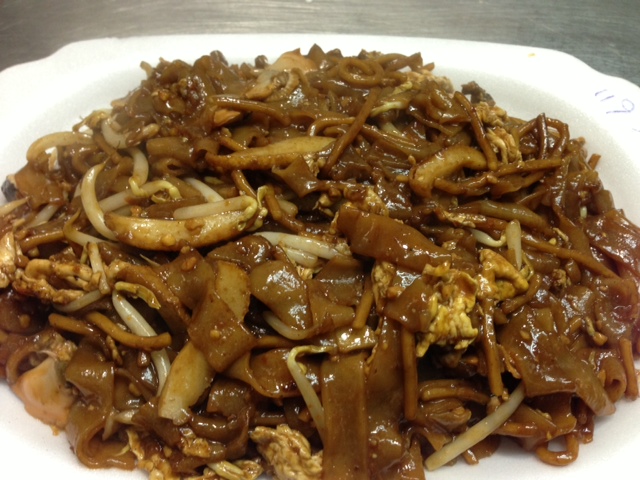
Stir-fried guay thiew at perennial street food favorite, Newton Food Centre

Stir-fried guay thiew at perennial street food favorite, Newton Food Centre

Singapore and Bangkok are often seen as flip sides of the same coin. Where Singapore is clean, orderly, and green, Bangkok is … not. What can you say? Both have their advocates: light vs dark, security vs chaos, angel vs devil. One will never be mistaken for the other, but there are more than a few similarities, the most prominent of which is a nearly debilitating obsession with food.

Yes, Singaporeans love their food. Like in Thailand, food forms the backdrop to every social interaction, is the insistent hum underlying almost every conversation. While you are eating, let’s discuss where we are eating next. Did you try this yet? We can shoehorn it in between that other place and the one down the road and, oh, that reminds me of the place across the street too. Let’s take a walk and look at other restaurants while we’re eating dinner. Why not? Also: I love this. I feel you on this, Singaporeans. I feel like you get me. Let’s be friends.

Bina and Poh Sun get me. This is why, minutes after we have settled into our hotel, they come to pick me up for dinner. They have a plan … for the entire weekend. No meal will go unattended, a lazy stroll down some sidewalk and a quick dart into the first fast food venue that beckons. That is not for us. Every meal is a learning experience, aka a chance to stuff my piehole with something different. Because — despite its relatively tiny size of 660 sq m — Singapore still contains multitudes. I would try to consume them all.

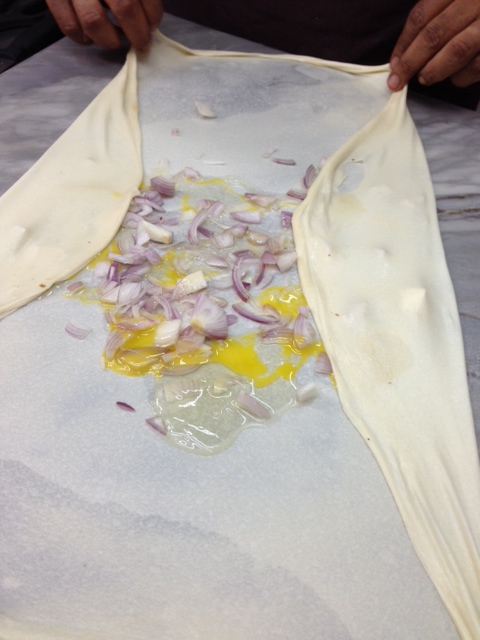
First stop: Newton Food Centre. We acknowledge that it is one of the island nation’s more touristed spots, but it is also one of the biggest, and the easiest way to jump into Singapore’s street food scene. All the favorites are represented: stir-fried noodles, birthed in volcanically hot woks with lashings of dark soy and chili sauces; satay, paired with fresh chunks of cucumber and oddly-comforting wedges of sticky rice; egg prata, a gossamer-thin slip of dough filled with egg and veggies; and roti John, a baguette stuffed with what you would find in a regular murtabak, accompanied by a sweet, neon-red chili sauce and a perfect fusion of Anglo and  Muslim influences.

Prata in the process of being made at Al-Noor Biasa

Prata, mid-make, at Al-Noor Biasa

Of course, there are also “touts”: people who “help” newbie tourists — instantly recognizable by the dazed expressions on their(my) faces(face) — by suggesting tables and then plying them with laminated menus that promise delicious seafood. That seafood may very well be delicious, but buyer beware: the story of the tourist who paid S$800 for four prawns is something I still remember quite vividly.

But if touts are your biggest worry during your street food experience, there would seem to be very little for you to be concerned about. Street food in Singapore is a carefree, diverting experience, and one that is perfectly suited to Singapore. My opinion on the possibility of herding the cats that masquerade as Bangkok’s many food stalls (and their customers) into their own food centers, however, has not changed. Vendors here are perfectly happy forming their own little collectives — the more, the merrier the chance of encouraging more foot traffic. But to cut the spontaneity and autonomy out of the decision-making process would be to cut out all the fun — anathema to Thais. Of course, I could be wrong and railing against what may be an inevitable result of a city shedding its sordid, cluttered past and evolving with the help of a lot of money (see: Hong Kong). But to have to travel to a food center to get my street food (instead of, say, stepping out onto the corner and even at the edge of my driveway to find a stall has spontaneously sprouted somehow from the concrete) would make me sad.

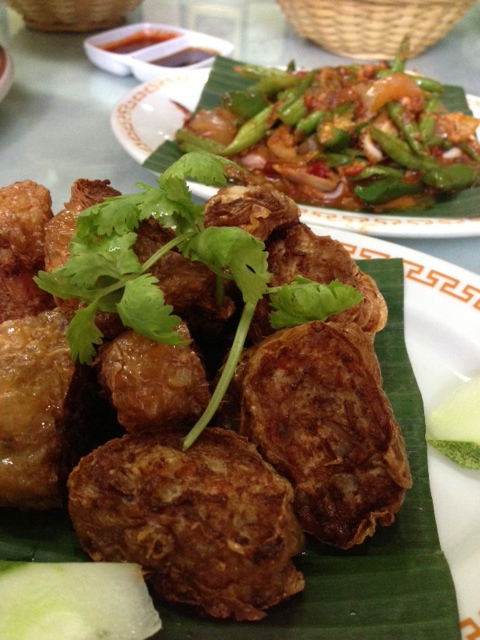
Next stop: Katong. If Singapore is downtown LA, Katong is … oh forget it, I don’t know LA. Let’s say Singapore is Manhattan and Katong is Brooklyn. And in Katong is a wealth of great Malaysian and Peranakan (a mix of Chinese and Malay) places that provide great food at prices that are actually reasonable. At Glory Catering (www.glorycatering.com.sg), an array of stir-fries, curries and noodle dishes await the extremely hungry; particularly recommended are the brinjals (garlicky, peppery stir-fried eggplant) and the porpia (soft “egg” rolls stuffed with vegetables with a tart-sweet chili sauce, freshly made with every order). At House of Peranakan Cuisine (210 East Coast Road), the ayam buah kelua — chicken curried with stuffed Indonesian nuts that are also macerated and cooked into the sauce — may not be black enough to satisfy devoted Peranakan food lovers, but the long beans, stir-fried with bits of baby octopus, and meatballs are delicious enough to make up for it.

Meatballs and long beans at House of Peranakan Cuisine

Meatballs and long beans at House of Peranakan Cuisine

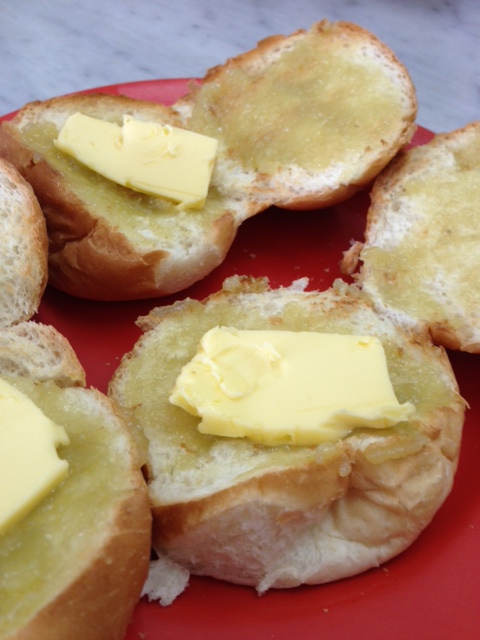
Possibly best of all are the hot buns, dripping in kaya (a mix of eggs, coconut milk, pandanus leaf extract and, of course, sugar) and baptized with an obscene square of butter at Chin Mee Chin Confectionery (204 East Coast Road). With a cup of sweet coffee and an egg boiled just enough to form a thin white skin over the yolk, this is enough for any lunch. Although the two other lunches before then were pretty good, too.

Buttered buns at Chin Mee Chin

Buttered buns at Chin Mee Chin

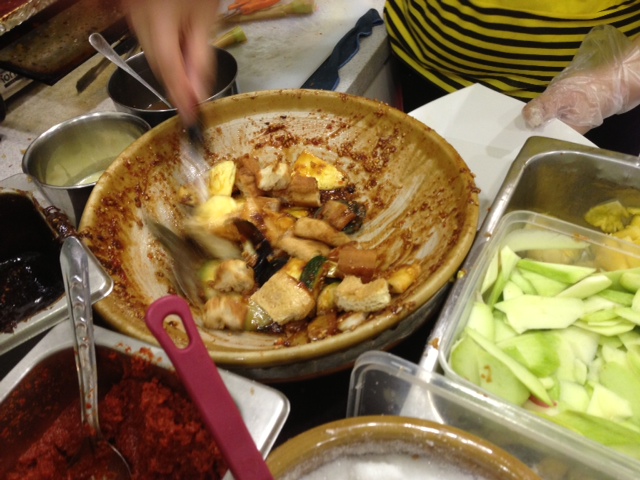
Third stop: Far East Plaza. Alongside all the aspiration that pervades much of Orchard Road is a humbler collection of downmarket shops and no-frills Asian eateries known as Far East Plaza, the Singaporean equivalent of Bangkok’s MBK. Amidst the sushi bars, Malay-style curry stands and yong tau fu (sort of DIY noodle shops featuring fresh veggies and your choice of protein) shops is William’s Rojak, the first purveyor of the Chinese-style salad made up of chunks of green mango, pineapple and rose apple tossed in a sauce of shrimp paste, chilies and pulverized peanuts and garnished with bits of torch ginger and patongko (Chinese-style flat fried bread). It reminds me of Thai-style som tum in that its main fanbase is predominantly female. The similarities pretty much stop there. There is also a Malay version hewing closer to the standard idea of a vegetable salad, as well as an Indian version that simply tosses out everything that is healthy about this dish and then fries it twice. I have yet to try those. But I doubt I’ll like them more than I like this.

The beginnings of a rojak

The beginnings of a rojak


Have I gotten into everything that I’ve tried in Singapore? Hell no. I have a reputation for laziness to maintain. Do I look forward to trying more on my next trip there? Of course I do. You’re on notice, Singapore.

9 Comments

Filed under Asia, food, Singapore, Thailand