Sukhothai, -ish

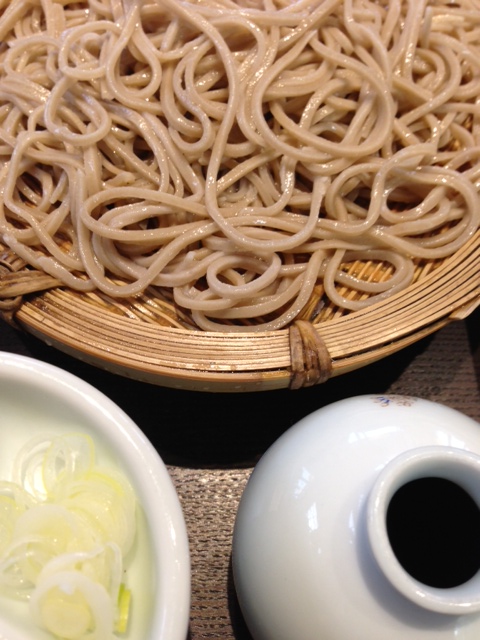
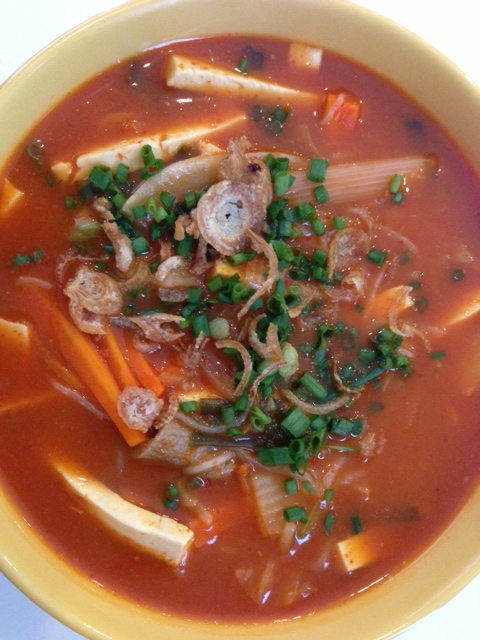
A bowl of Sukhothai noodles at Baan Kru Eiw

Do you ever find yourself in that situation where you recognize somebody across the room whom you haven’t seen for a while? What if they recognize you, too? What if you both sit, paralyzed, unsure of who is to get up and make that first stab at conversation? And if you lose this internal wrestling match and you do get up, what if you see that undeniable flash of resignation flit across his face, that “Oh crap, now I have to talk to this person I haven’t spoken to since my wedding in 2007” look? What if you catch that person desperately attempting to hide from you as your eyes lock onto his ear, trying to avoid the upcoming “Oh crap I said I’d call you back five years ago” conversation by suddenly becoming fascinated by the septuagenarian cashier near the entrance, the telltale hand coming up to shield his precious face from your gaze?

I admit it. I have nearly been run over by a bus in my haste to avoid an ex in San Francisco. So I know what it’s like to run away from someone like a bar of soap and stick of deodorant when faced with the likes of Johnny Depp in Full Hobo Mode.  But you can’t run away from me, Sukhothai. I admit, you nearly succeeded, what with my preoccupation with the north, and then Isaan, and that brief flirtation with Phuket over the summer. But there was no way I was not going to knock over every vendor in the city in my search for the best Sukhothai noodles — an ingenious dish that combines a Chinese base (rice noodles) with Thai seasonings (lime, fish sauce, chilies, palm sugar), topped with a signature flourish of julienned green beans.

Sukhothai likes its food sweet, and is fond of its coconut milk. This is why Sukhothai can be considered more of a central Thai city, and less northern Thai. Sukhothai noodles — usually built upon sen lek, or thin white rice noodles —  contain no coconut milk, but epitomize all the great things that characterize Sukhothai’s food: sweetness tempered by a bit of spice, a fondness for the pig in whatever iteration, and generous use of the region’s famously gorgeous cut lime. There is crunch from the blanched beans, crushed peanuts and tiny crumbs of pork crackling; there is a pork-bone broth flavored with tamarind juice and thick with slices of tender boiled pork. It’s hard to not like this particular hometown specialty.

The best place to have it may not be a street food stall. Instead, it’s a “comfort food”-style restaurant, what a diner would be like if it existed in Thailand. It’s called Baan Kru Eiw (www.bankrueiw-restaurant.com), located in downtown Sukhothai(ish) and named after the teacher who opened this restaurant out of her home a little over a decade ago. Teacher Eiw ran this restaurant in her spare time because she loves cooking and wanted to showcase Sukhothai specialties. That means you get other local favorites like naem nueng, a Vietnamese-derived do-it-yourself noodle dish featuring steamed pork “pate”, and gluey chuem, or boiled bananas in sugar syrup. Last but not least, there is pad Thai — a no-brainer for every Sukhothai noodle vendor in the city, since Sukhothai noodles are basically pad Thai in soup noodle form, with the same seasonings if not always the same protein (the pad Thai here usually involves pork instead of seafood). Kru Eiw wraps her stir-fried noodles up in a thin envelope of egg and crowns the result with a scattering of coriander leaves, with a side of bean sprouts, banana blossom and garlic chives (and of course, a cut of that big, juicy Sukhothai lime) to mop up any grease (Thais are very concerned about kwam lien, or greasiness in their food). At Kru Eiw, there is little grease to worry about. But if you see someone you recognize across the room, you’re on your own.

Kru Eiw’s pad Thai

3 Comments

Filed under Asia, food, noodles, pork, restaurant, Sukhothai, Thai-Chinese, Thailand

Breakfast at Uncle Mustache’s

Khao piek at Lung Nuad in Udon Thani

The holiday season is fast approaching, and with it — fingers crossed — the end of the “research period” (aka eating my weight in street food) for my book. Isaan is now firmly in the rearview mirror, and Sukhothai awaits. And Bangkok … well, that’s still around, too, stubbornly defying all my efforts to check it off my “to do” list.

Amid all the som tum, grilled chicken, and crunchalicious deep-fried morsels of tilapia wrapped in betel leaves and garnished with bits of lime, chili and ginger was a special stall in the middle of the disarmingly clean “Tessaban 1” market in downtown Udon Thani. Across from a stand selling out-of-this-world yummy Isaan sausage, moo yaw (a Vietnamese-style pork “pate”) and Chinese sausage was a mustachioed slim man with an Asian Jack Sparrow look to him. On offer: khao piek, which translates to “wet rice” but actually refers to giem ee (fat, short rice noodles) served in the liquid leftover from cooking rice (hence its glutinous, opaque quality) and crowned with a slice of moo yaw and a brief shower of chopped green onion. This is the ultimate in comfort food: nursery-like, tasting and smelling of chicken, yet still springy and gummy in all the right places.

The vendor, Lung Nuad (which translates to “Uncle Mustache”), also serves gaeng sen (glass vermicelli in a pork bone-based broth thick with bits of pig). Both bowls cost 20-30 baht, depending on the size, and can be seasoned with fish sauce, white pepper, chili oil, sugar, chili-flecked vinegar, or chili powder. Mornings only, and perfect for when the kai kata (egg in a pan) vendor nearby is just too busy to see to your breakfast needs.

Uncle Mustache at his station

8 Comments

Filed under Asia, food, food stalls, Isaan, noodles, Thailand, Udon Thani

Pretty in its own way

Guay jab at Sukhumvit Soi 38

Growing up in a small Pennsylvania town 15 minutes from the Ohio border had its good points and bad points. Good points: a safe place where you could build forts in the woods and ride bikes with your friends all day long; living a short walk away from the school and park; great Italian-American food, Indian food, and Middle-Eastern food. Bad points: I was Asian. Not the only Asian, mind you — I was the Asian Girl. My friend KK who was also in my grade was the Asian Boy. Classmates would come up to me (and probably him) from time to time to ask “Why don’t you go out with KK? It would be SOOO perfect” like the world had rained for 40 days and nights and they were in charge of building some sort of Noah’s Ark with Asian people.

This sounds small, but it wasn’t. I was never a viable person that anyone in their right mind would ever consider going out with (and by “going out”, as this was 7th grade, I mean asking your mom to drive you to the Christmas dance in the junior high cafeteria while I wear a Talbots dress borrowed from my mom). I would never get to wear my “boyfriend’s” football jersey on Fridays before the game. I would never get to go to high school parties on the weekends. (I did, however, get to watch a lot of foreign films over sleepovers and play a lot of Dungeons & Dragons, things that have actually helped me a bit later on in life).

I used to be sad that I wasn’t an Erin or an Amy or, best of all, a Jennifer. Instead, I was a Chawadee (aka Dog Chow aka Chow Time aka Choo Choo aka Chewbacca). But later, as I grew older, friends would tell me I was “pretty in my own way”. That could be bad, like “you are pretty in a way that no one recognizes”, but it could also be good, like “you are uniquely you”. Looking back, I choose to read it in the good way. I am me.

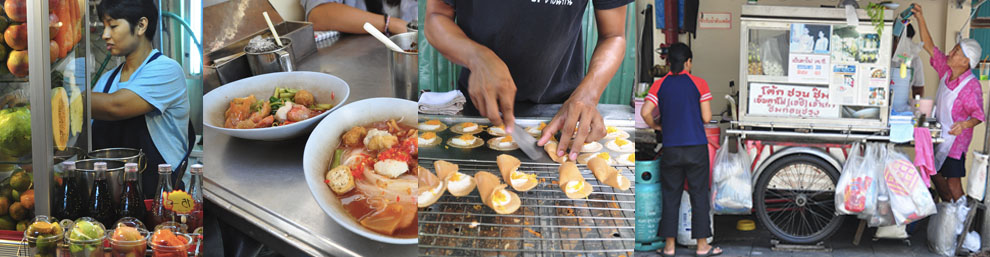
Guay jab — that Thai-Chinese street food dish featuring curled-up flat rice noodles, random bits of pork and either a thick soy sauce gravy (nam khon) or clear soup (nam sai) — might be considered “pretty in its own way”. It’s the least glamorous of all the noodle soups: the silky, savory voluptuousness of a bamee (egg noodles), the easy-to-eat immediacy of a guay thiew moo (pork noodles), the eager-to-please popularity of a guay thiew tom yum (noodles in spicy lemongrass broth). By comparison, guay jab is too challenging, too hefty, too porky — bits of lung, intestine and pig skin mingling with tenderly poached slivers of meat, noodles and, in the case of the thick broth, half a boiled egg. There is no mitigating flourish of lettuce, no handful of palate-cleansing greens. It’s Piggy with a capital P. What are you gonna do about it?

There are people who see guay jab for what it is — a celebration of the pig — and like it in their own ways. For the thick-bodied version, look no further than the stand on Sukhumvit Soi 38, the first stall on the left as you enter. Those who like it more in the Chinese style should go to Yaowaraj Road, where the clear, peppery version awaits at Guay Jab Oun Pochana. Either way you like it, you can’t go wrong.

10 Comments

Filed under Asia, Bangkok, food, food stalls, noodles, pork, Thai-Chinese, Thailand