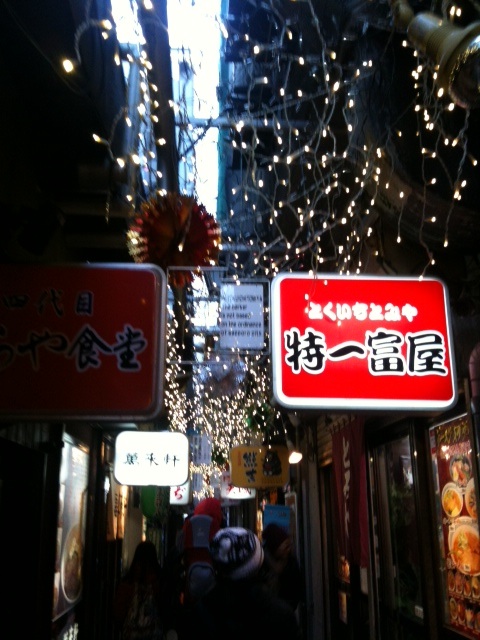
Turning Japanese

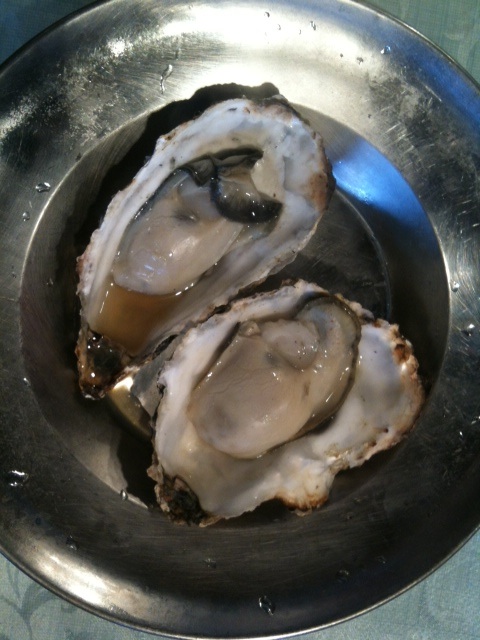
Otaru street food: grilled oysters

My friend Karen, while in college, once sang this golden oldie by The Vapors while waiting in line at the college cafeteria. A person nearby (who was not Asian, btw) told her she was offended by the song. This one anecdote tells you a lot about Bryn Mawr College. But very little about Japan.

Since I too can look up things on Wikipedia, I discovered that “Turning Japanese” is actually a song about youthful alienation and becoming something you didn’t expect. Well, if that is the case, many of us are Japanese. And intrinsic to this image of being “Japanese” is the idea — not too far removed from reality in Tokyo, at least — of a life perpetually on the go, snatching sustenance, T. Rex-like, any way one can, greedily and quickly.

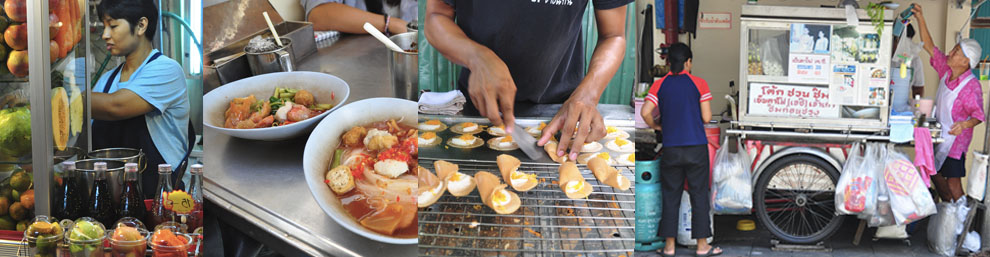
That’s the instinct that coaxed ramen from China into Japan. But it’s not the only Japanese “street food” out there. Unlike Thai street food, which is, quite literally, food enjoyed or at least purchased while on the street, a lot of Japanese street food hews closer to the Western idea: portable food that you can eat while walking (Thais hate to eat while moving. Don’t know why, but that’s the way it is).

A good snapshot of this type of Japanese street food can be had on the 200 meter-or-so walk up to Sensoji Temple in the Asakusa district of Tokyo. This walk melds the everything from the expected taiyaki (baked sea bream-shaped cakes stuffed with red bean paste) and senbei (freshly-made rice crackers, often wrapped in nori seaweed) to handfuls of surprising delights like lacquered, grilled chunks of sweet potato and aisumonaka, which are basically ice cream sandwiches. Yum!

Kibidango-mochi are grilled rice cakes dipped in a sweet sesame powder; as with everything that is served on the skewer, you are meant to eat it right there and return the skewer, which kind of ruins my whole point about this type of Japanese street food. Oh well! There is manju (steamed Chinese-style buns stuffed with savory fillings like minced pork) and agemanju (fried buns), in this case usually stuffed with something sweet and for that reason, infinitely more popular — the most popular stand boasts every type of filling from pumpkin to green tea to cherry.

Nothing, however, touches my favorite, the bizarrely-named wazatokowashi, deep-fried, light, fluffy dough cooked in front of your eyes and bearing an elusively salty flavor reminiscent of Cheetos. There is nothing better than Cheetos.
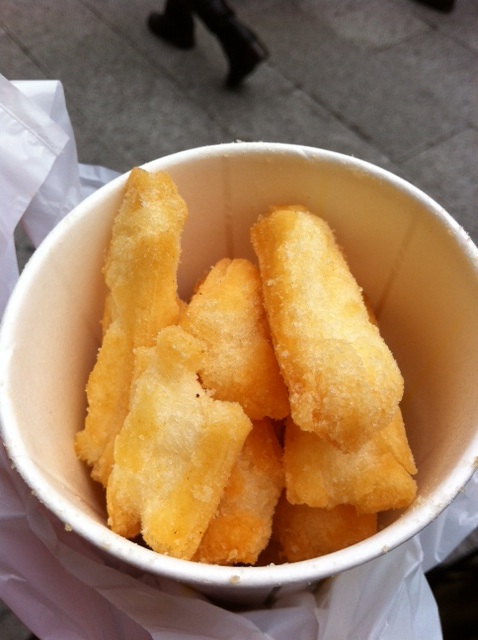
The best thing ever

Hokkaido has its own kind of street food. A good city to sample it is Otaru which, while seen as “too commercial” by my Japanese friends, is at least charming, tourist-friendly and has these mini-stands set up by smart seafood wholesalers catering to people who simply can’t wait until they get home for a taste of the Japanese ocean. The grills are inside, just past the doorway, fronted by tables where diners cluster like hobos over chopsticks and bottles of soy sauce.

For your street food consideration

Yes — not only is that hulking big sea snail thingie (sazae) available, but so are scallops grilled with miso, giant sea crab legs, clams and oysters, cooked in their own juices. It is good, and it is cheap. A shame that it is also freezing.

An unlikely street food that has almost completely obliterated its humble origins is a food that everyone knows and associates with fine dining: sushi. Believe it or not, it started out as a street food in Edo (basically ancient Tokyo), where fresh fish is in abundance and easy to obtain. Today, Edo-style sushi basically refers to nigiri, but not the big ol’ slabs of fish flesh that are so trendy in a lot of sushi bars abroad. What makes sushi such a great experience in Otaru is that it has taken a cue from Sapporo’s numerous ramen alleys and created its own “Sushiya Dori”, a street lined almost completely with sushi bars. Heaven on earth or what?

Otaru omakase (chef's choice) platter

One thing you might find at your sushi bar (but is definitely not a street food): shirako, which I’m told means “white children”. My friend Yukari first introduced it to me when I moved to Tokyo, but waited until I finished my bowl of creamy, cloudy glob drenched in ponzu to tell me what it was. Some other Japanese people (who work in tourism PR, go figure!) then tried to tell me it was not what it was, but guys, I know how to Google. It’s the sperm sacs of male cod. See, it’s hard to pull a fast one on me (if I have an Internet connection).

Luckily, it tastes much better than human sperm. Sorry, humans! Better luck next time.

Better than you think

6 Comments

Filed under Asia, fish, food, food stalls, Japan, Japanese, restaurant, seafood

Working for it: Sapporo

Smart people avoid generalizations, but I’ll just go ahead and wade on in there. Japan is a country of serious foodies. And it’s not just about the massive clusters of fine restaurants — Japanese, French, Czech, what have you — that lurk, barnacle-like, in every other basement or third floor in every big city in the country. It’s the Japanese commitment to all levels of food: the telltale chairs that stand outside popular eateries that don’t take reservations; the astronomically priced produce, swaddled like newborn babies in the supermarket; the long queues snaking through the department store basement, stacked with gourmets awaiting the next great fresh cream cake.

Sure, there is the strange-smelling beef bowl at Yoshinoya, cheap conveyor belt sushi and the bizarre affection for KFC for the holidays — but for every one of those things, there is the dazzling aging-beef display at the Tokyo Mitsukoshi, four different kinds of obscure Kentucky bourbons on sale, and mammoth albino strawberries the size of a child’s fist. Food in Japan is like Manolo Blahniks to a Carrie Bradshaw: aspirational. As with all aspirations, you have to work for it. This stuff doesn’t come cheap. And if it does, it doesn’t come easy.

Hokkaido in February for me is a whole different brand of Working For It. I don’t take to chilly temperatures; here, it’s -12 degrees Celsius in the daytime. The sky periodically drizzles snow — so much snow, in fact, that the sides of the roads loom skyscraper-like above the pedestrians, threatening avalanche at any moment.  Food, any kind of food, requires trekking out in that weather in your most unattractive snow boots, a balaclava shoved over your head to keep your nose from falling off your face.

But in Sapporo, there is plenty to make up for it. Big vats of nabe — DIY stews bristling with the freshest seafood or gently cooked slices of meat, studded with cubes of tofu and enoki mushrooms and crackly greens that somehow end up soft and sweet. One of the easiest kinds of nabe to obtain here is one featuring kani — snow, hairy or king crab, which hails from the region and is a genuine treat.

Crab and co., ready for the nabe pot

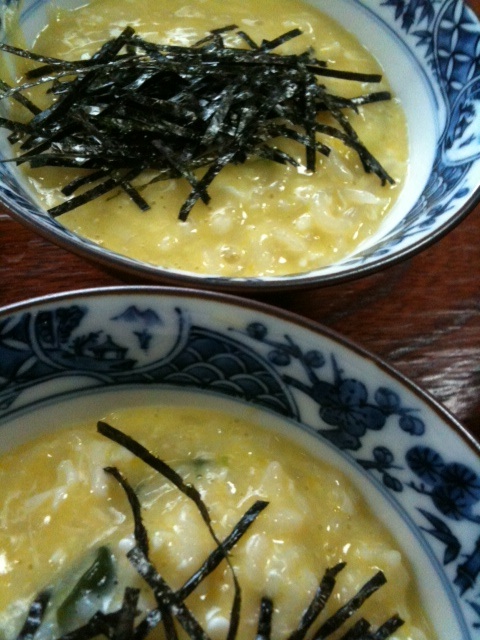
Restaurants specializing in crab — marked by a giant crab above the entrance — are scattered all over Japan, but the one we found in Sapporo, chosen solely on its proximity to the train station, was luckily also delicious: Kani Honke, which claims to be the first in Japan to focus solely on the mightily yummy crustacean. The many course menus are pretty epic: crab served as sashimi, in sushi, atop grated mountain yam, in stew, simply steamed, and finally, butter-roasted and grilled atop a hot stone. Best of all, the leftover broth from the nabe is eventually added to rice and reduced until a thick, sweet congee is formed — the best possible way to end a delicious crab menu.

Kani Honke's crab congee

Crab is not the only thing Hokkaido is famous for. Sapporo is also the lucky, lucky home to not one, not two, but THREE “ramen alleys” — small walking streets lined by all manner of ramen shops, which offer, in Sapporo at least, the ultimate street (or alley-side) food: quick, warming, filling and relatively cheap. You can get your very interesting ramen history here, but if you are like me and think clicking is far too onerous a task, I will attempt to summarize: ramen is delicious. Just kidding. Adapted from a Chinese noodle dish in the early 20th century, Japanese ramen has since branched out into basically three main types — the tonkotsu, or pork bone-based cloudy broth of Kyushu, the clear soy sauce-based broth populated with thick noodles, and the miso-based broth of Sapporo. We visited the original “Ramen Yokocho” (Ramen Alley) and found it charming, with just about any type of ramen on offer.

Inside Ramen Alley

Of course, we were there for the miso ramen, and so opted for a shop featuring a relatively basic menu of miso, soy sauce, salt, tonkotsu, spicy, extra pork or butter (with a miso base) ramen. You can probably guess which one I went for:

A bowl of butter ramen

It turns out I’ve found a new love. Few things are better than that extra-creamy Hokkaido butter. I will be searching for it in all the Japanese supermarkets I can think of in Bangkok.


12 Comments

Filed under Asia, fish, food, food stalls, Japan, Japanese, noodles, restaurant, rice porridge

Noshing in Nan

For years, sleepy Nan was sheltered from the rest of the country by a string of richly forested mountains that kept the northern Thai village relatively isolated. Maybe that is why the “Nan-style” Northern food bears a different imprint from that of the rest of the “spine” running down Thailand, punctuated by Lampang, Chiang Mai and Chiang Rai. With more Lao influence, less traces of a Burmese presence, Nan cuisine still boasts the earthy, bitter undertow characterizing much northern Thai food, but more stripped-down — think Peter Luger instead of, like, Gramercy Tavern.

An example of this might be the down-at-heel open-air shack lining the street off of Kha Luang Road named Pu Som Jiao Gow (take the right at the three-way intersection at the end of Kha Luang Rd., 50 m to the left after the turn; 080-674-1658, 054-750-486), which boasts a menu that is heavy on jaew (dipping sauce), various types of thom (boiled soup), grilled meaty bits and, because we are a-truckin’ along with the times that are a-changin’, various items stir-fried with oyster sauce.

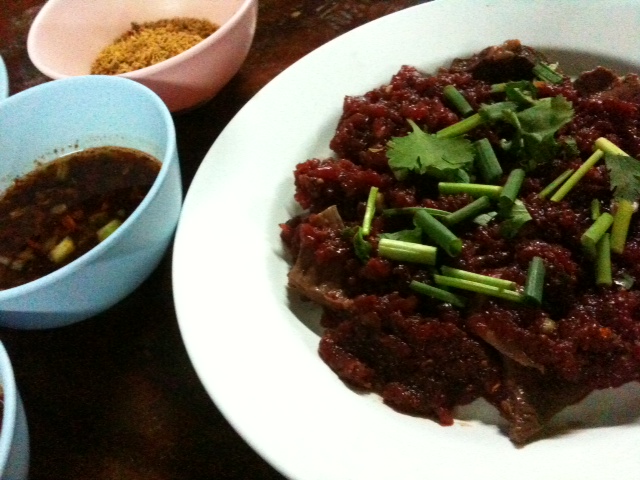
Raw beef larb with bile

Another popular dish type on the menu: various raw meat salads such as larb kom (translated as “bitter larb”, pictured above, made so with the addition of nam dee, or bile) and saa nuea (“beef salad”. Confusingly, saa here refers only to meat instead of vegetables). In addition to jaew, Pu Som serves an additional dipping sauce called kom, liberally flavored with bile and reminiscent of liquid air freshener. There is also raw pork salad, which, to be honest, is the menu item I greeted with alarm; everyone has a line, and that one there is mine. No raw pork, thanks (unless it is guaranteed to be delicious, like naem. I have standards!)

The menu is also heavy on the thom (boiled meats in soup), all appearing to be a variation on the famed Isaan standby thom saeb (spicy, tart soup), but with varying degrees of spiciness. There is thom kom (there is never too much bile) and, if you’re a great big scaredy-cat, thom om (which is what I ordered and still very spicy), free of the freshness and dill you see in Isaan but also without the satisfyingly deep flavor of a gaeng you might find in the rest of the north.

Thom om

And then there is awful. Oh, I mean offal! I usually like it, especially liver (here grilled and dressed in a yum-like sauce — yes, I’m talking about thub waan) and tongue (here referred to as lin yang, thin slices of beef tongue grilled). But I must admit, I have never had the pleasure of encountering a plateful of pigs’ lungs until this trip, where they are steamed and referred to as maam nung, resembling something a bit like boudin noir but spongy, with the slightest hint of springiness, tasting so gamey as to recall the deepest, glow-in-the-dark depths of the sea: the stuff you find in the opened crab shell, the dead man’s fingers and the like. That is maam nung. I managed two pieces.

It was one of the more adventurous meals I’d had in a while, made more so by having a giant bottle of Chang Beer to myself  (honestly, is there really no other size?) and having to navigate a crowded street crossing (watch out for that bicycle!) on the way home. In a few days, I look forward to returning to Japan, where my biggest challenge will be to keep myself from breaking a bone out on the ski slopes. Nihon ni ikoo!

Steamed lungs

9 Comments

Filed under Asia, Bangkok, food, Isaan, Northern Thailand, restaurant, Thailand