What’s Cooking: Chilled Tomato “Som Tum”

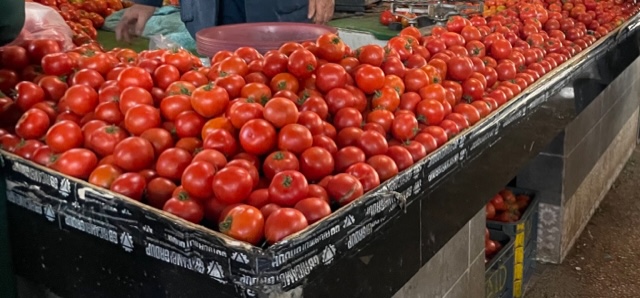
Tomatoes in the market in Morocco

Drawn in at first by the hyper-perfectionism of the ASMR Youtube channels of Honeyjubu and Hamimommy, I have since migrated to the picture-perfect videos of Kimi, whose life in the South Korean countryside makes me want to set up shop somewhere in Loei with a dog, two cats, and my talent for killing all plant life. I, too, want to sit in a clear stream in the summer heat, enjoying fresh peaches and steamed ears of corn that I’ve grown and picked myself. I, too, want to keep soybean paste and kimchi in big ceramic vats out back of my house, and melt snow in big metal bowls in order to feed my houseplants, because water from the sky is superior to all other water in this setting. I want to spend my autumn mornings with a bunch of other people making kimchi out of cabbages and radishes and mustard greens (again, that I’ve grown myself). Alas, I am where I can usually be found: on my couch in my living room in Bangkok, watching TV.

One dish that I’ve really been taken by — especially as we’re officially in the dog days of summer — is the chilled tomato “pickle” that Koreans make to use up all the excess tomatoes that they have on hand. I decided to try my hand at a Thai-ified version of that dish, keeping the skins on because I am deeply lazy and bruising the tomatoes with a mortar and pestle, som tum-style.

I have to note that Thai people won’t consider this a som tum and more of a yum because there’s no dried chilies, fermented anchovy juice or dried shrimp, etc in the sauce. I say to them that they are being narrow in their definition of som tum, and that all you need is the “tum” action of the mortar and pestle, but this is the kind of Thai culinary minutiae that is sooo boring for outsiders to witness. When someone starts railing about the spelling of “larb” I just want to jump out the window; it’s the Thai inside-baseball version of being Colin Robinson the energy vampire in “What We Do in the Shadows”. No one cares! Thank you for coming to my TED talk.

Chilled tomato somtum (Serves 1 or 2 with other dishes)

-3 ripe tomatoes, skin on or off, cut into quarters or in halves depending on size

-1/4 of an onion, diced

-handful of fresh coriander/cilantro leaves, roughly chopped

-1-3 fresh chilies, depending on your spice preference, bruised and chopped

-1 Tbsp fish sauce

-Juice of 1 lime

-1 tsp white sugar

In a mortar and pestle (or a mixing bowl with a potato masher), bruise tomatoes until their skins are split and some of the juice is in the mortar/bowl. Add onions, chilies, fish sauce, lime juice and sugar and taste seasoning. Adjust if necessary. Add cilantro leaves, mix and chill in refrigerator for up to 1 day.
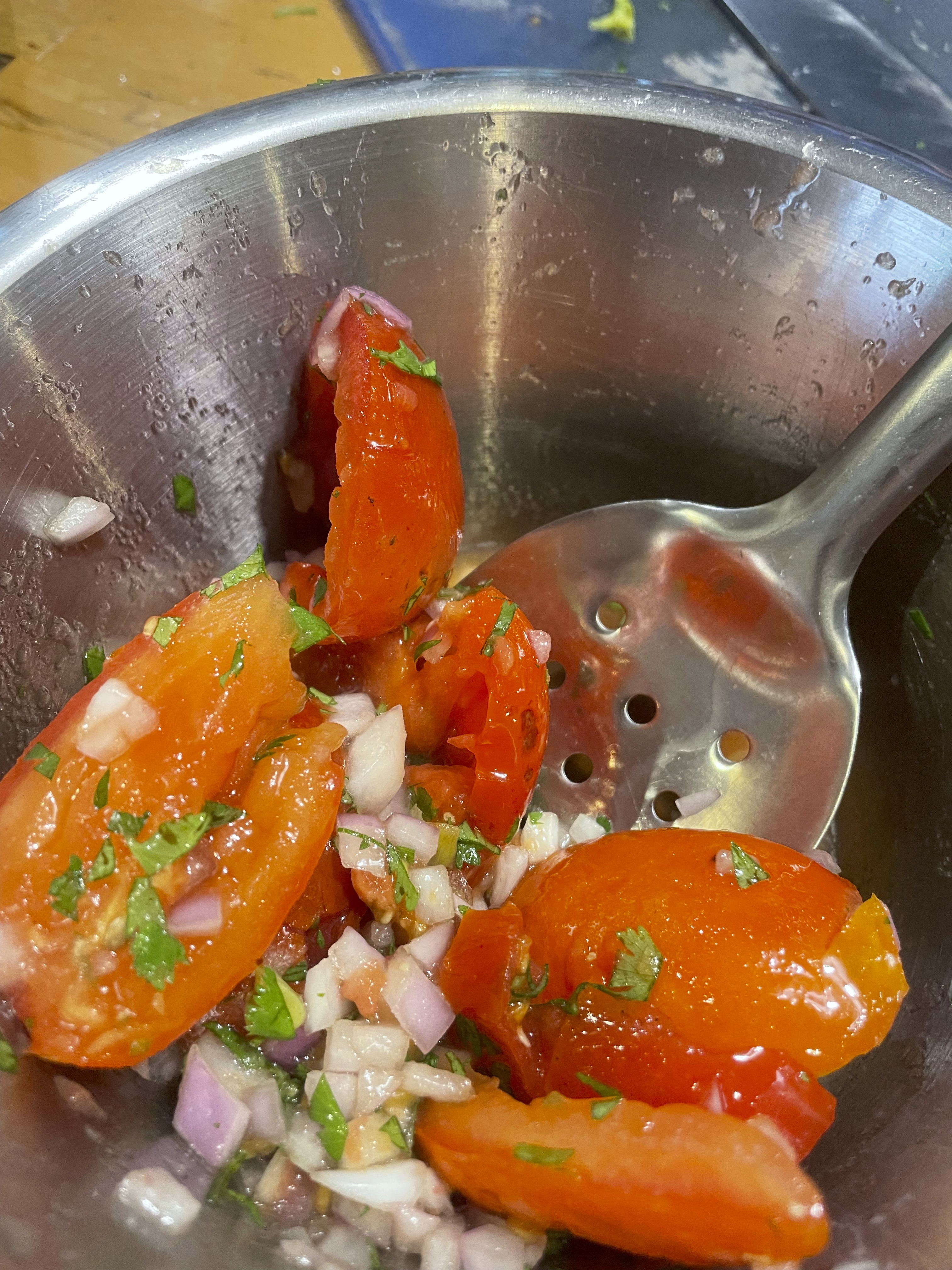
I tried to mash these tomatoes in a mixing bowl with a potato masher even though I have a mortar and pestle

5 Comments

Filed under Uncategorized

Isaan Spice

The spiciest som tum in Bangkok?

It’s only been a few weeks since I left Isaan, but I’m never far from an order of freshly pounded som tum (green papaya salad). So when a production team foolishly hired me as a fixer, I was jazzed to be sent — nay, ordered — to check out what was purported to be the purveyor of the spiciest som tum in Bangkok.

I feel like som tum (and, really, all of Isaan food) kind of gets a bad rap. People rave about the flavors and the inventiveness of the cuisine, but no one ever considers the technique. The fact is, like with pretty much every popular dish in the world, not everyone can make a successful som tum. Like a good wok cook, you need swift hands, a deft palate, a fearlessness around heat (but the chili splatter kind), and patience. In other words, you need technique.

But people think of som tum as just another salad, probably because of its less-than-ideal translation to English: green papaya salad. The fact is that, aside from the fact that it should be made a la minute, this dish has less in common with a salad than a stirfry: the flavors must be melded, and it doesn’t even have to be made out of green papaya. It can be made out of anything.

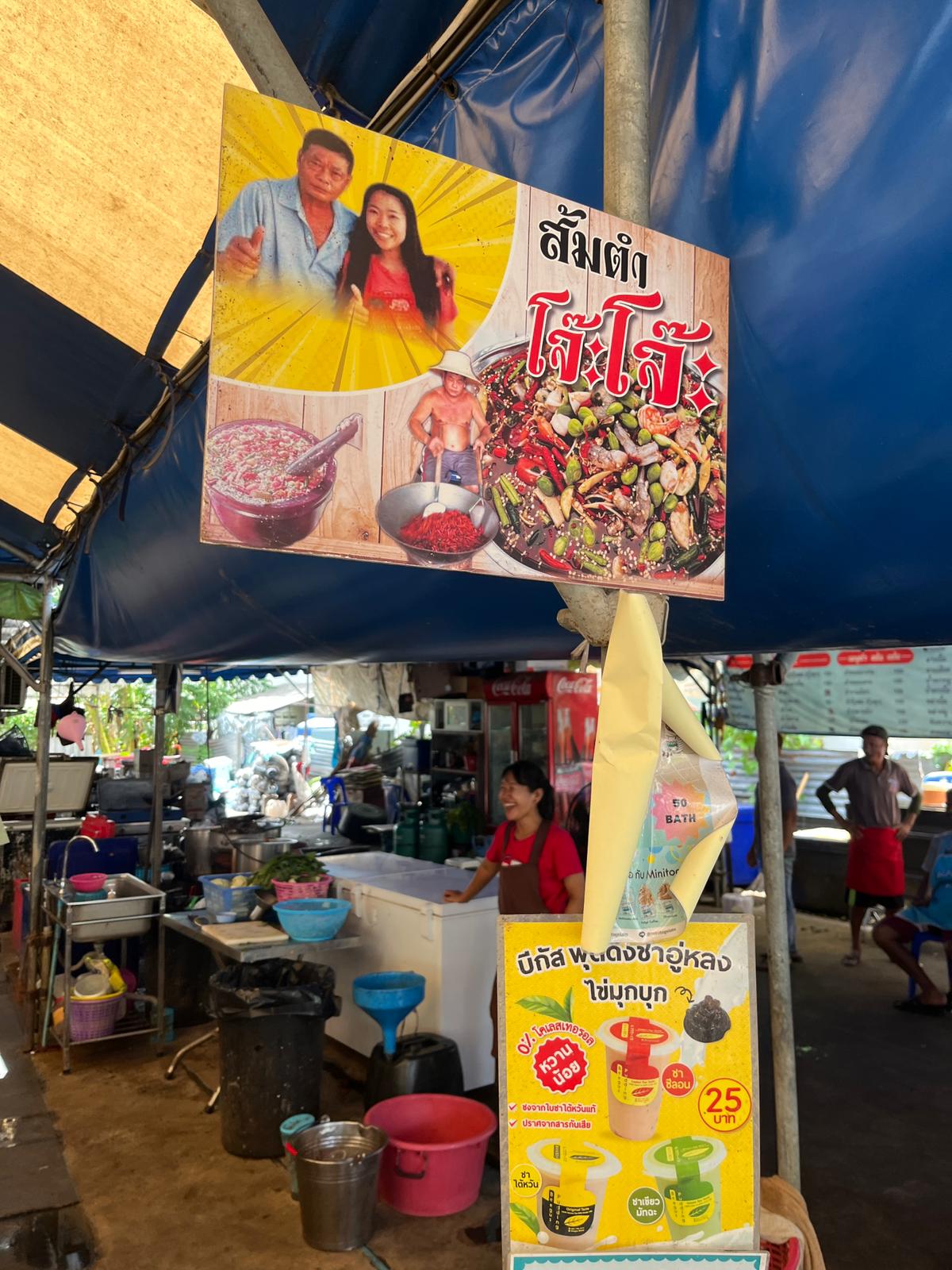
At Som Tum Nong Rejoice (aka Som Tum Jo Jo or Som Tum Nong Rejoice Jo Jo), the restaurant goes through maybe 50 kg of chilies a day. There’s a reason for that: almost everything in this restaurant, aside from the grilled pork and chicken wings, is liberally, even extravagantly, dripping in chilies. Never mind that chilies were an imported ingredient back in the 1600s when the Portuguese hit Siamese shores, and that the real local spice is peppercorns (prik Thai), just like everywhere else in Southeast Asia. Today, Thais have taken to chilies like their entire identities depend on it, rendering Thai cuisine spicy beyond what people remember from only a couple of decades ago, even in Isaan.

The sign at the restaurant

(Photo by Karen Blumberg)

Like chefs with their omelet pans and their woks, good som tum cooks have favorite mortars and pestles that they cherish like children, typically made of a scented fruit wood like tamarind or mango (the mortars, not the children). The longer a set is used, the more valuable it becomes. Nong Rejoice is no different, with its enormous mortar and a specially made pestle resembling a blunt-nosed headhunter’s spear. That mortar is special, reserved specifically for the “dressing” of restaurant’s most popular dish: a mash-mash somtum of green papaya strands, raw shrimp, fermented rice noodles, blood cockles, and bamboo shoots. Although the rule is typically that you make the sauce with the salad in the same mortar, Nong Rejoice is confident enough that the som tum will sell that they make it in advance. Like many other places, the sauce incorporates fermented anchovy juice (pla rah); unlike many others, it mixes dried chilies with the fresh to max the spice level.

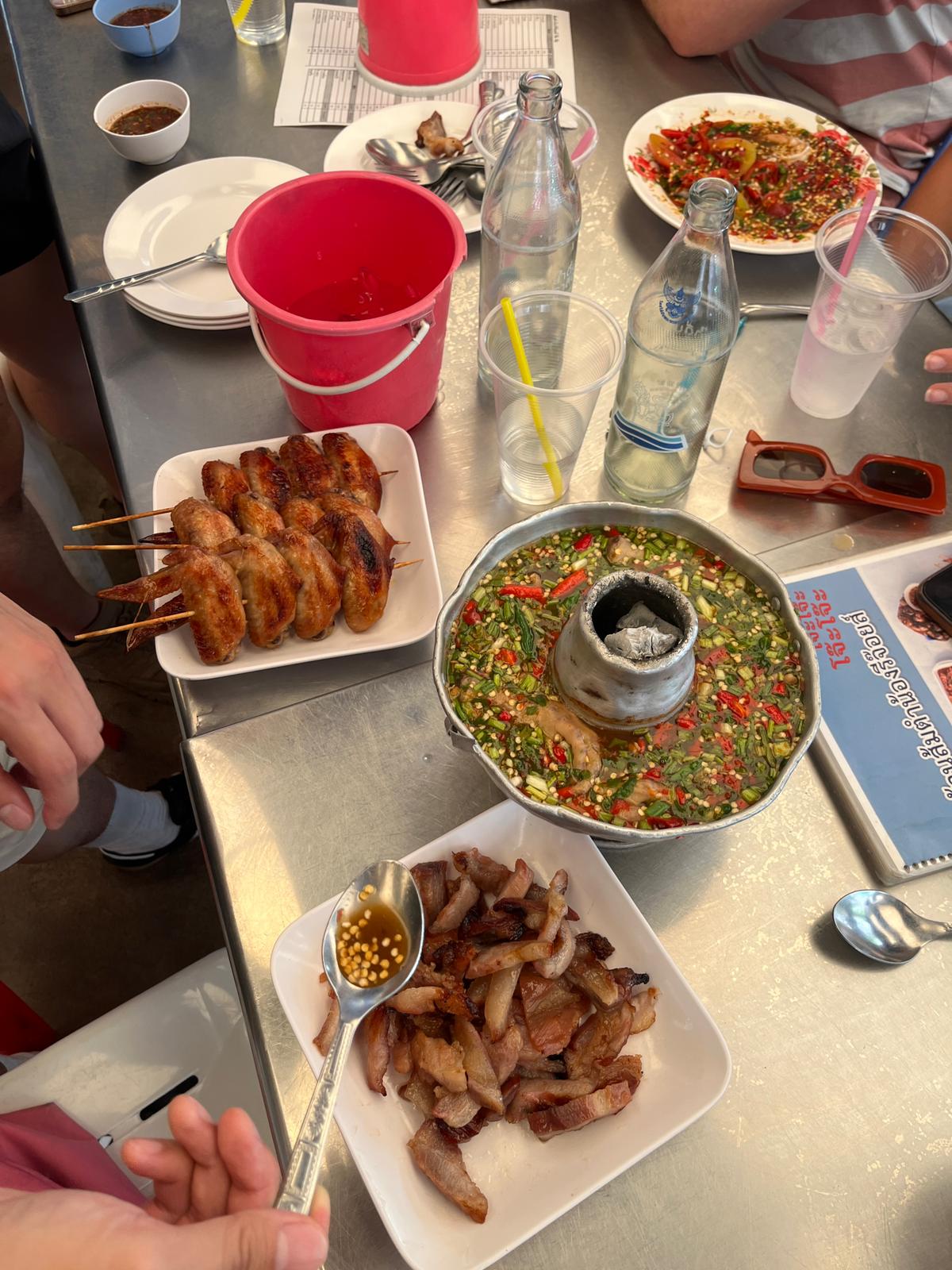
It would seem impossible for someone like me to eat, a mere dilettante in the world of spice, but I managed and didn’t even get sick (unlike the case with my dancing shrimp adventure on the banks of the Mekong). That might be because the dressing also includes equal measures of white sugar, palm sugar and sugar syrup to counteract the extreme spiciness of the chilies. Is it the spiciest? I have to admit, I might have tried spicier up in the Northeast. It is really spicy, though. Another discovery: the gai super, an exorbitantly chili-laced stew of chicken feet and one of my dad’s favorite dishes.

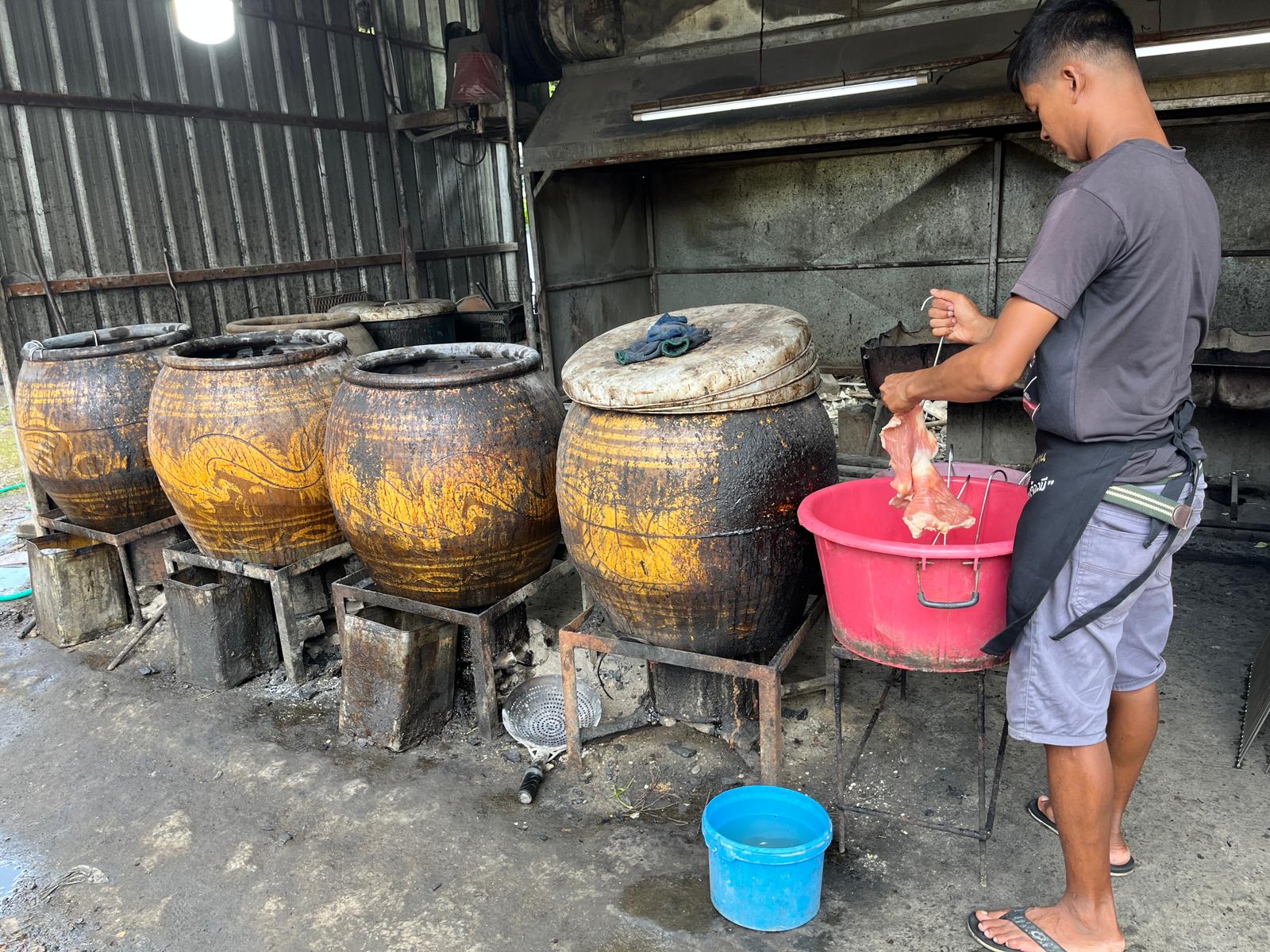
As for the grilled pork collar and chicken wings, they were absolutely delicious, juicy and perfectly grilled. They were also sweet, but instead of irritating me, I understood it as necessary when paired with the volcanic-level fire of the soups and salads. An added bonus was discovering that the grilled meats were cooked, char siu-style, by hanging them in makeshift ovens made from Thai water vessels.

Not pretty, but delicious

I have to say, don’t expect pristine Jay Fai-level cleanliness (or even Wattanapanich-level cleanliness) at Nong Rejoice. This place is as “down home” as it gets in Bangkok, replete with flies and less-than-ideal kitchen conditions. That said, why would you be eating Thai street food if you are precious about your surroundings? There’s a wide cushion for squalor in that kind of realm, no? Strap your foodie blinders on and go for the spice, go for the endorphin rush, go for the sensation. It’s the most Thai thing you could possibly do nowadays.

5 Comments

Filed under Uncategorized

A Khon Kaen retreat

An introductory bite at Krua Supanniga by Khunyai Somsie

Doing research for a guide book can be back-breaking and uncomfortable work. I, an out-of-shape 50-year-old woman, have had to comport myself like a 20-year-old marathon trail runner on countless treks up rickety wooden staircases, through forests generously larded with poisonous snakes, and on the edge of sandstone cliffs in pelting rain. I have had more stomach issues than I could have thought possible as a food writer specializing in street food. And I narrowly missed swallowing several hairy caterpillars suspended from trees as my driver pelted up a mountain road. I have, I feel, been through it.

But it’s not all sweat and caterpillars. There’s an upside to this kind of work, especially when it comes to matters of the table. I (again, a 50-year-old woman) got to sample my very first moo kata (Thai-style pork BBQ) at my friend Aarya’s house in Loei, supervised by her incredibly generous and warm-hearted mother. I sampled various types of “Isaan eau de vie” (a creative euphemism for lao khao, or moonshine) at Kaen, and got to witness Chef Num’s creative reimagining of Isaan cuisine at Samuay & Sons. And I was able to enjoy a vast multi-course lunch at Krua Supanniga by Khunyai Somsie — for free, because we ended up being owner Khun Eh’s guest without realizing it!

A salad of naem, or fermented pork sausage

The Khon Kaen restaurant, set next to Khun Eh’s family residence, is considered the flagship eatery of the chain of successful Supanniga restaurants scattered across Bangkok. And honestly, there could be no better setting for a restaurant (or a home, really). The entrance is lined with leafy trees decked out in white supanniga blossoms, the dining room itself incorporating a showcase of traditional Thai silk woven in nearby Chonnabot. Inspired by, obviously, Khunyai Somsie’s cooking prowess, the menu incorporates elements of Khunyai Somsie’s hometown, the eastern Thai town of Trat, melded with the Isaan influences of her adopted city of Khon Kaen. The result is, dare we say, a winning fusion that has struck a chord with dinners: the crab curry with chaplu leaves, the pork stewed with chamuang leaves, and the pu jah, or blended crabmeat and pork served in crab shells are now considered popular standards, if not particularly Isaan.

In Khon Kaen, the menu is more eager to lean into Isaan influences and local ingredients, as illustrated by the restaurant’s fairly luxury-sized tasting menu (9-10 courses, though honestly, I think we might have pleaded for less food at the end, as our digestive systems aren’t what they used to be *insert grandma emoji here*). Everyone had their particular favorites, and mine was the fermented Mon-style rice noodle (kanom jeen) topped with a relish of tiny local river prawns and colored with local dragonfruit rinds (brilliant considering all of the dragonfruit farms in Isaan there are).

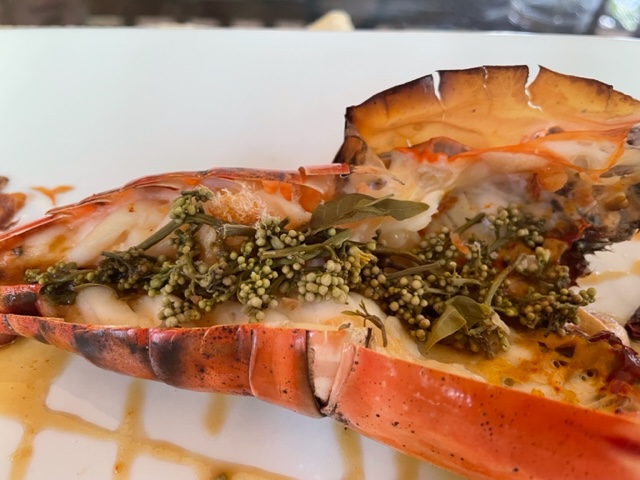
Another standout featuring local seafood was the grilled river prawn plucked from nearby Ubolrat Dam, topped with local sadao, or neem leaves, which made for a great foil against the sweet fish sauce beneath. It’s a dish that my mother typically serves with grilled catfish, but really the river prawn is a better option and I can’t believe we hadn’t tried this earlier.

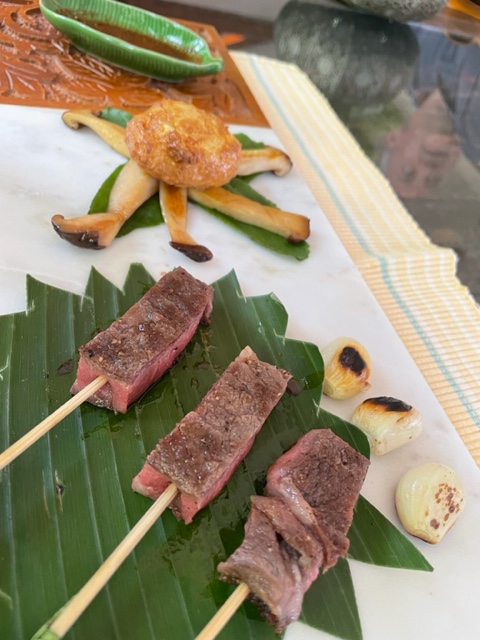
Stephane’s favorite course was the skewer of grilled wagyu beef from a nearby ranch — really, while Sakol Nakhon has been considered *the* place for Thai beef for a while, Khon Kaen’s beef farmers are really catching up (check out Arunsupa Farm if you have the chance).

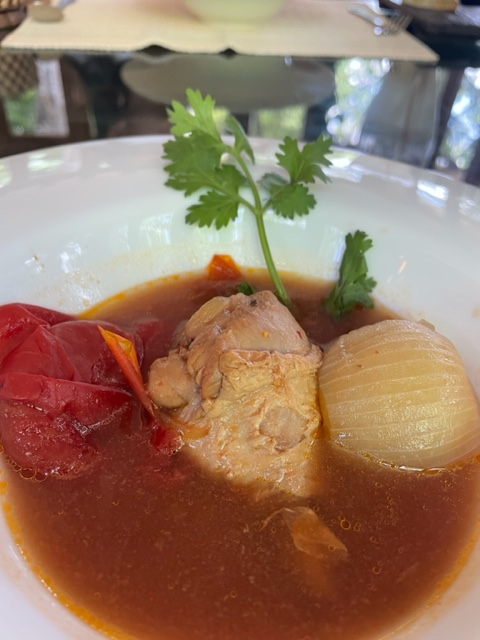
Aarya’s favorite course was something of an anomaly: a simple chicken stew, frequently served at the owners’ family table when the grandfather went out hunting. Comforting and warm, the dish reminded me of something I’d also have for lunch with my husband’s grandmother; pleasingly retro but not fitting into what people would usually think to see on Thai tables, a post-WWII “fusion” that you might get at a cookshop.

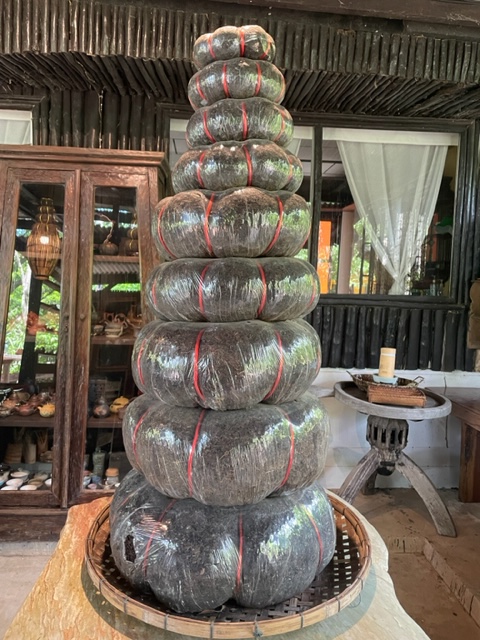
After dessert, we got to go to the Laoraowirodge family home for Chinese tea. Unlike in the West, the Chinese only steep their tea for a couple of minutes, believing that infusing the water for too long can turn it toxic.

A mountain of tea leaves

We then got to tour the meditation retreat, on the grounds across from the garden. Here, people come for courses of up to 11 days … and the whole thing is free. If you think I was tempted to check myself in then and there, well reader, you were correct.

But a deadline looms, and then another country unfortunately beckons. I’ll have to wait a few more months to get my head back on straight.

2 Comments

Filed under Uncategorized