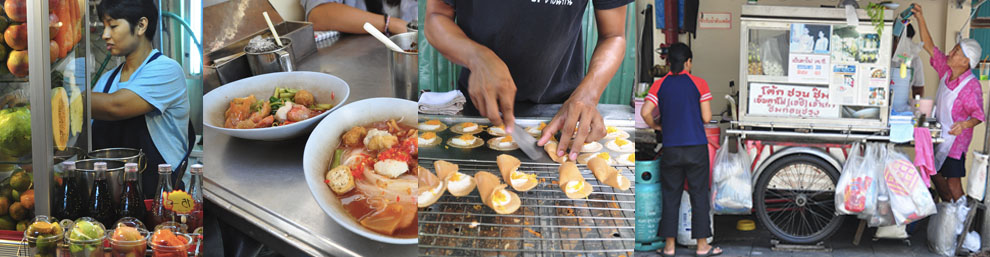
I recently learned that the famous egg noodle vendor featured in last year’s season of “Street Food” on Netflix has closed down, maybe permanently, due to a spinal injury suffered by one of the cooks. It is a shame, but the vendors had been attempting — several times — to retire for a while now. So, enjoy your retirement, guys. I hope your back is better now.
Perhaps because bamee, or egg noodles, have been on my mind lately, I’ve been especially susceptible to suggestions that we stop at various famous bamee spots whenever we go on a road trip. Thailand has been pretty good at fighting COVID-19, but as with many other spots, it has not completely stamped it out yet, so I am still wary of getting on a plane. On recent trips to Chiang Mai and Phuket, we ended up traveling by car, which was tedious, yes, but also afforded plenty of opportunities to get our bamee on.
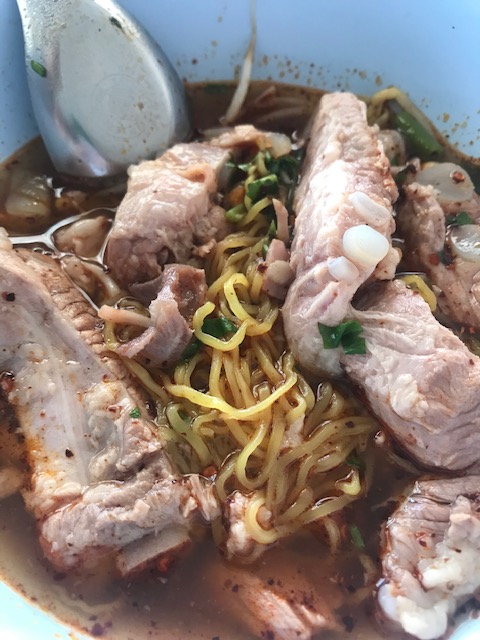
The first spot we tried was in Kamphang Phet on the way back to Bangkok from up North, called Cha Kang Rao Noodle (Ratchadamnern 1, 055-712-446). Here, egg noodles flavored with tom yum (spicy lemongrass) seasonings are the name of the game, and luckily for me, they are my personal favorite when it comes to bamee. The noodles are house-made, silky-smooth and substantially hefty, reminiscent of Japanese noodles. They float in a spicy-salty-sweet broth peppered with chili flakes, minced pork and plenty of chiffonaded coriander leaves which normally annoys me (those coriander leaves get gray and lifeless so quickly in hot broth) but added a great aroma to the dish.

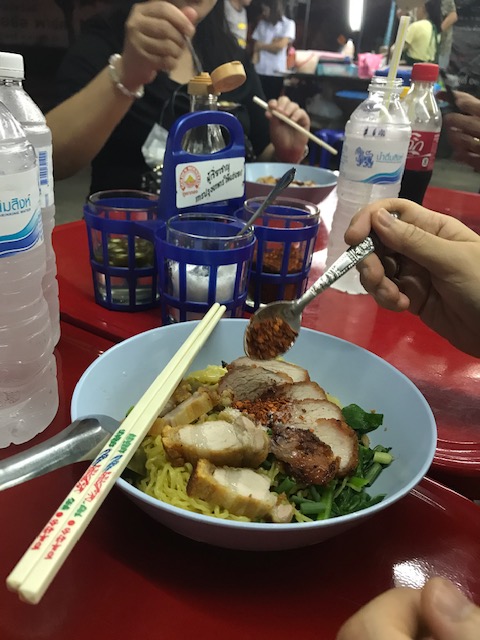
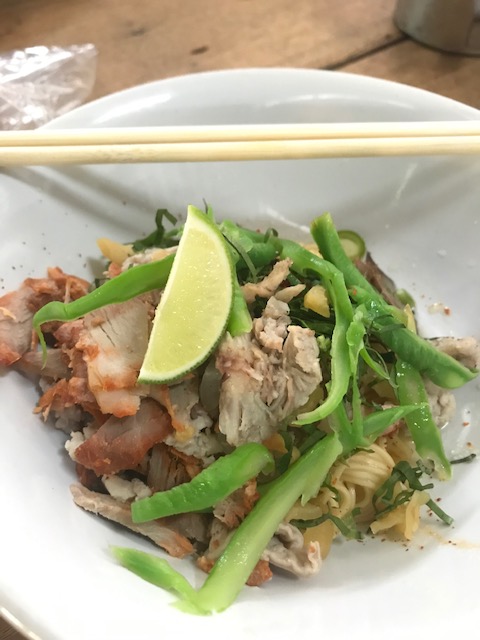
As for me personally, well, it’s too damn hot. And when it gets too damn hot, I order my noodles broth-free, hang, or dry. Those broth-free noodles don’t come flavor-free, however. There’s plenty of pork, both barbecued and stewed, accompanied by the julienned green beans you see all over bowls in Sukhothai and a fresh glistening wedge of lime, famous in this area.
You have your choice of the egg noodles and/or the hand-tucked dumplings, plus thin (sen lek) or fat (sen yai) noodles, but if you go to the trouble of gettng here, why wouldn’t you have the homemade egg noodles, right? Each bowl is available at the kingly sum of 30 baht.
That’s not to say the South doesn’t boast great tom yum noodles either. I have to say, though, the regional differences really show. Whereas the North is more mannered, with silky lovely noodles and a shower of blanched greens, the South seems to be fully out there, shaking its moneymaker for all to see.
What I mean when I say that is, Tha Pi Sut Noodle in Wang Mai (283/1 Moo 9, Petchkasem Rd., Wang Mai, Chumphon, 080-873-2874) is Patti LaBelle belting “Stir It Up” at the top of her lungs right in your face.
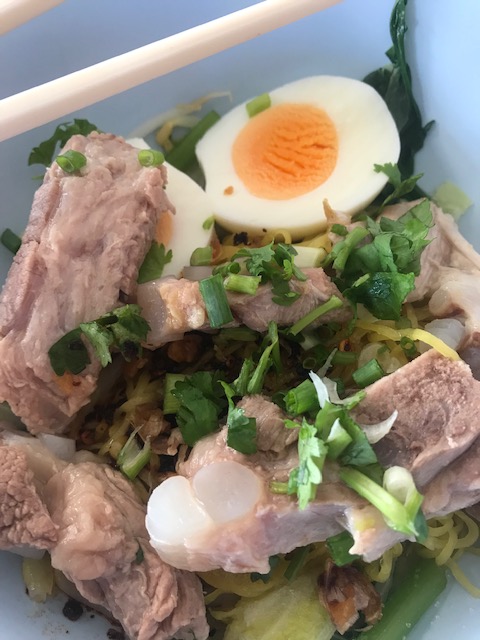
There’s a dizzying range of choice here, starting with the protein: crunchy pork tendon, seafood (shrimp and squid), “mixed” seafood (shrimp, squid and fish), minced pork with meatballs, or “mixed” (everything). The broth can be tom yum or clear (the choice here is obvious), as well as how much broth: dry, with broth, or nam kluk klick, which means half-full. There is a reason why half-full is an option and it is because a full bowl of this broth is simply Too Much: so much umami, sweetness and spice battling it out that it feels like Kill Bill in your mouth. Brothy noodles lovers should go with nam kluk klick; the ridiculous sounds that one must make while ordering it are worth the fleeting embarrassment.

 Bangkok Glutton