Let’s Eat

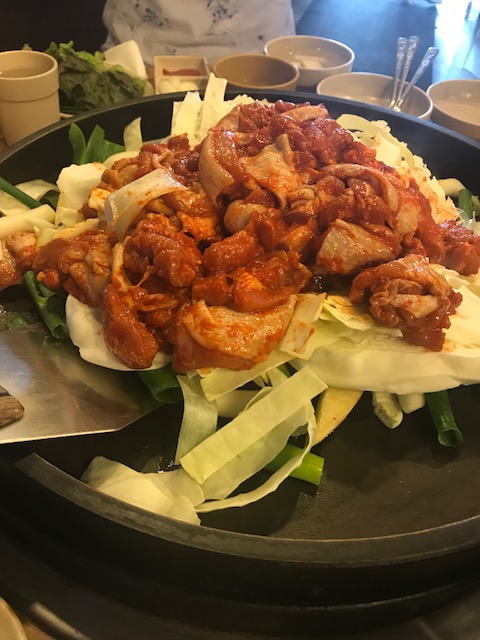
dakgalbi

Dak galbi the way Soo-kyung would have had it

Something was going on in my life, and it was becoming a problem. So much of a problem, in fact, that my husband and friend would have intervened, if not for the fact that there are only two seasons of it. I am referring, of course, to the South Korean drama (?) “Let’s Eat”, which is ostensibly about a sad pathetic young divorcee named Soo-kyung (season 1), but is really about Korean food. You see, she loves food (specifically Korean food, this is important), but she is so sad and pathetic that she has few friends to eat with. In her quest for finding food partners, she ends up meeting friends and even eventually getting a love life. Oh, and busting an evil serial killer and helping to fix up a troubled young man’s life and … you get the picture, maybe. Season 2 is about a different young woman in a different Korean city, but the same ingredients are there: the woman is sad and pathetic and loves food (specifically Korean), a sinister subplot, a seemingly perfect guy who is good on paper, a cute dog, an extremely cute young woman, a catty female co-worker, a convenience store, a dry cleaner, a food blogging mansplaining male protagonist who is inexplicably irresistible to all women, and truly incredible shots of Korean food.

“Let’s Eat” is valuable in that it shows you what the definition of sad and pathetic is in South Korean life, and that definition definitely fits me. Haha, jk. What is truly love about “Let’s Eat” is that it is food porn in its purest form. You know how you are watching a porno and the plots are the most useless, flimsiest contrivances possible, useful only in connecting the various sex scenes together? Pizza delivery guy when the husband is away, pool cleaning guy when the husband is away, cowboys going camping, blah blah you get the picture? That is “Let’s Eat”, where the scenes are just excuses for making the characters sit and discuss food, with a particular focus on the eating. I mean the actual eating, the slurping and exclaiming and chewing (mansplainer is an especially loud chewer), with close-ups for the food that are so detailed that I swear they use a special filter for them. It is here, not in Seoul, where I learned about black bean noodles slick with soy glaze, gelatinous cartilage coated in red chili sauce, octopus shabu. When I watch these scenes, I have to put my hand over my mouth, to catch the drool.

chicken

Fried chicken, one meal featured in season 1

Like all great art, “Let’s Eat” can be interpreted in different ways. Trude, whom I’ve forced to watch every single excruciating/drool-worthy episode, sees “Let’s Eat” as an ode to female pleasure. I see it as a nationalistic celebration of things that are unabashedly Korean.* The food is perfectly tailored, George R R Martin-style, to each specific situation and character: sad-ass onigiri from a convenience store when the main character is stressed and alone; overcooked slices of liver at a dingy Korean BBQ spot when the mansplainer is sad; boiled chicken stuffed in glutinous rice, floating in broth on a rooftop with garden-fresh veggies when characters are just starting to get to know each other. Western-style steak at a stilted and pleasure-less meal with the losing suitor for the female protagonist’s affections. A molecular gastronomy dinner with a different, ill-fated Prince Charming. A “Thai” meal (which includes that most iconic of Thai dishes, PHO), where mansplainer gets to show off his Thai language skills. And in one of my favorite scenes, a bizarre Korean-Italian feast consumed almost entirely by a woman who has decided to give up on her diet because WHAT IS THE POINT (me every other day). Foreign food is invariably expensive and the settings uncomfortable, putting the characters in situations where they are ill at ease. It’s the Korean food — specifically the sort of down-to-earth food featured in bars and shophouse restaurants — that make the characters their happiest.

*(There are also more unsavory interpretations, like how it’s a cautionary tale about what happens when you’re female and single).

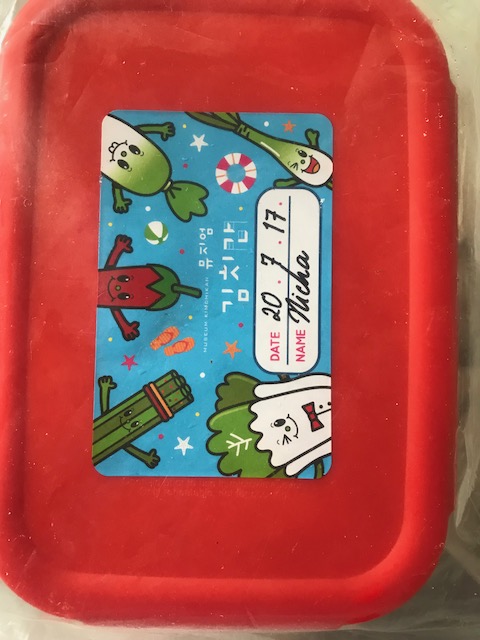
I have just spent 630 words blathering on about “Let’s Eat”. That is how much I love this show. I haven’t even gotten into how its examination of Korean food has given me an appreciation for the variety and freshness of Thai food.  It’s also given me the strength of character to open the boxes of kimchi we carted back from the Kim Chi Museum in Seoul LAST JULY.
kimchibox

kimchi

In fact, I love this show so much that I’ve run out of steam writing about what I originally intended to write about, and which I’ll save for next week. If you desire a taste of something more Thai food-related, why not check out a Thai cooking masterclass run by Spice Vagrant? I initially turned on the first season of “Let’s Eat” to help jog my memory for this post, but now I find myself yet again sucked in, and will have to sign off in order to re-re-watch it in earnest. Send help, someone, please.

4 Comments

Filed under Uncategorized

The food of our dreams

uni

The uni roll at Kanesaka in Ginza

I just saw “Black Panther”, and plan on seeing it again this weekend with my son. Part of the thing I love about “Black Panther” are all the great think pieces that it’s inspired. But don’t you worry. I am not going to write a think piece about “Black Panther”. There are plenty of far more qualified people writing things about it.

One of those think pieces that really struck me — Jelani Cobb’s in the “New Yorker” — basically says that, yeah, Wakanda is a fictional place, but the “Africa” depicted for the rest of the world for hundreds of years was also fictional. As with most things, that got me thinking about food. Because food is also a cultural construct, and people actively choose how to showcase it to others. How many times have you seen images of Bangkok, streets heaving with locals in coolie hats and live animals (“Bridget Jones Edge of Reason”), or sidewalks choking with street food carts selling God-knows-what (every Bangkok food documentary), or intrepid, good-looking adventurers gamely chomping on crispy grasshoppers or freshly grilled intestines (everything else). I’m not criticizing it, because that’s what people want to see if they haven’t been somewhere; they want to see something that’s different from what they know. I do this too. In Harbin, China, where I spent four days freezing my ass off in -40-degree Celsius temperatures, I wasn’t really all that interested in taking photos of the deep-fried fish and steamed dumplings that everyone eats over there. It was stuff like this:

cocoon

Cocoons, fresh enough to jiggle from time to time

chickenfetus

Chicken fetuses

This is why you get the Africa you see in “Tarzan” and all those colonial safari movies and Taylor Swift videos. Who wants to see some dude grabbing groceries at Big C before trudging to his condo in On Nut after a long day of work? I don’t even want to see that, unless it’s to pass judgment on the quality of his food haul (probably instant noodles and beer, amirite?) It’s why I don’t watch reality TV shows like “Dance Moms” or “Real Housewives”: if I want to hear some lady yelling at me, I can just call my mom.

What I do want to criticize, because hello, this is me, nice to meet you, is Bangkok’s reaction to it. When Bangkok does crazy shit like build a “tasting robot” to judge food authenticity (a losing proposition if there ever was one) or try to “declutter” streets by taking away people’s food choices, they are reacting to this construct, this culinary jungle Tarzan idea, that is completely out of their control. This seems about as useful as complaining about anyone who is still Facebook friends with your ex-boyfriend (didn’t they hear what a dick he was? Omigod Taylor.)

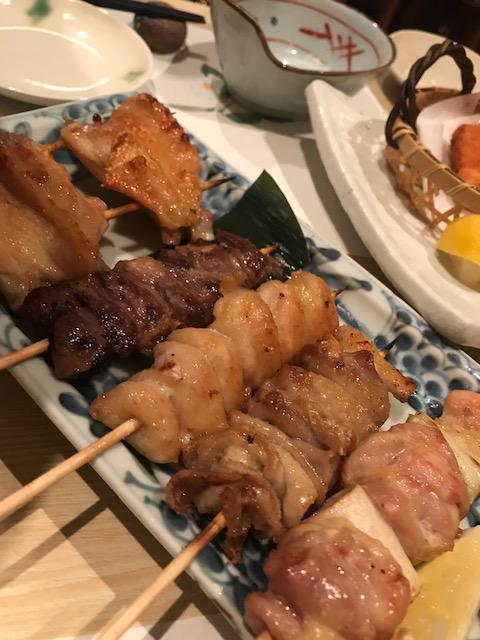
There’s a flip side to this Tarzan, though, and that’s Wakanda: something that is awesome because it is different, something that you want to seek out, and not as a foil to show off the superiority of the mundane. When you go to a different country, you want to find that sense of wonder, Wakanda even, in your food. In Japan, that usually means stuff like sushi or — since sushi is ubiquitous all over the world now — delicious chicken bits on sticks like this:

yakitori

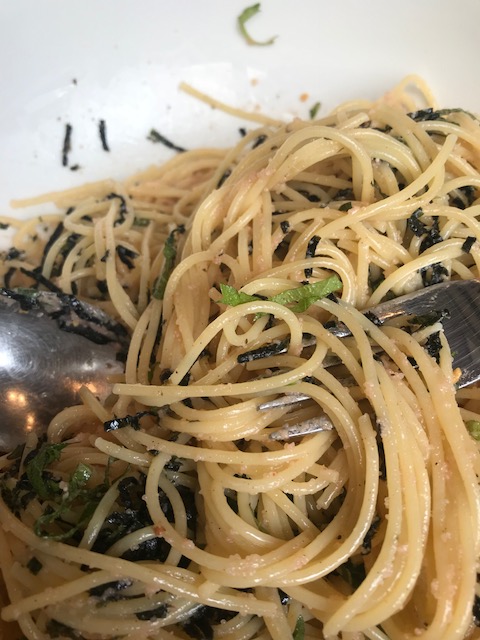
It usually doesn’t mean stuff like pasta, even though a form of it is what Japanese people (and Asians everywhere) eat all the time, either with the tomato sauce, cream sauce or pesto that you recognize and love, or with fish eggs, seaweed, shiso leaves and a crapload of freshly ground black pepper, like at my favorite restaurant in Tokyo (no joke), Spajiro:

spajiro

In Thailand, the food that gets fetishized as “exotic” varies, of course, depending on who you are. There are insects, sure, and pad Thai and soup noodles, but if you ask me (no one asked me), nothing screams “Thailand” and “exotic” and “Other” like Isaan food: grilled meat, chilies, spicy dips and relishes, baskets brimming with lush local fauna, and the holy food trinity of pounded papaya salads, grilled chicken and sticky rice. For the truly die-hard, the bona fide Thai chili head, it’s Isaan food that moves the emotional needle, the thing that screams “Thailand” whether that’s what a majority of Thais are eating (quite a few suggest that might be the case) or not.

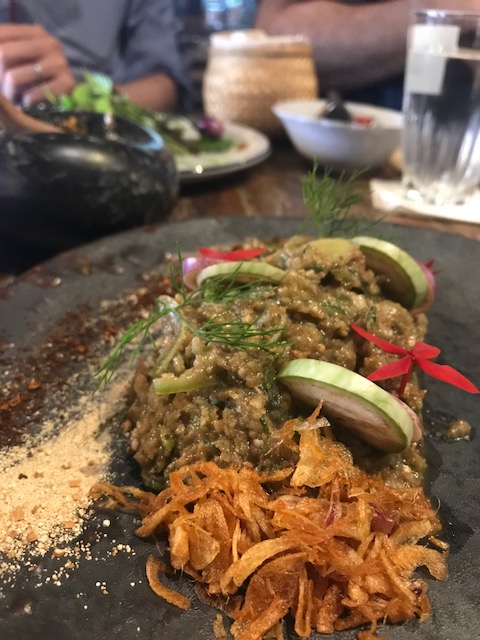
Right now, there is nothing more “Instagram-ready” than what you would find on the menu at the extremely buzzy 100 Mahaseth, an Isaan specialist that I can unabashedly say I am a big fan of (hence the write-up of a place that is not even close to being street food. (Also, Instagram is destroying food, but that’s fodder for another day’s thoughts. Also, microherbs=millennial parsley)).  Yes, there are descriptors like “nose-to-tail” and ya dong (moonshine) on tap and its Thai hipster clientele and its very buzzy location on the very buzzy Charoen Krung Road, but it’s more than those parts. It’s well-made food that still surprises even the most jaded Thai palate and gives umami up the wazoo:

eggplant

The pounded Thai eggplant salad, which looks a lot better than my own version

The cassia leaf and braised oxtail curry (tom ki lek), the fish sauce-marinated pork chop with young green chili dip, the curried pig’s brain with rice noodles, the grilled bone marrow dressed in perilla seeds, even the house-made ya dong: there is so much to try, so little time. Like the next showing of “Black Panther”, I am already planning my next visit.

13 Comments

Filed under Uncategorized

Generation gap

filet

The filet mignon at Today Steak

(All photos by Dwight Turner)

There is something that happens when you’re seated at a table and a plate of food is set in front of you. There is no longer any need to think; there is only the basic, animal act of getting that food into your mouth in a way that will settle the stomach that’s telling you it’s been ignored. After a few bites in, after your brain truly gives you the green light to dig in and you really start hitting your stride, the euphoria of finally getting what you want starts to settle in. All is suddenly right with the world, your mind instead focused on this element with that sauce, or maybe that vegetable with this protein, the task of cleaning the plate the only one looming in your immediate horizon. When that world, your plate, is gone, so is your high. And that’s when you ask your dining companion, “What should we have next?”

This is something that happens, even if, as I was, you are somewhere patronized mainly by university students. Let me tell you, I typically avoid places that host a lot of university students as a rule. The reason is simple: they are young and their main motivation is value for money. They are young enough to think they have a lifetime of meals ahead of them, calories and grease and deep-fried breading be damned. So when Dwight (@bkkfatty) told me about a specific niche of restaurant that championed “steak” for student budgets, I was intrigued and made him take me to the Sam Yarn market, where Today Steak (or Steak Today, we can never be sure) resides on the second floor.

Thais have always been good at taking foreign influences and twisting them into something that is unique and probably unrecognizable to their creators. These budget steakhouses — and they are a specific niche, perhaps most famously represented by Chokchai Steakhouse — fall roughly into a similar category to the mid-century “luxury Western” restaurants like Silom Pattakarn and Agave that serve Chinese-Thai takes on Western dishes such as beef stew and Anglicized chicken curry. These steakhouses are, if not exactly parodies, then idealized versions of their American counterparts, serving food that is actually affordable and tailor-made to young Thai tastes.

dinner

My “pork godfather”, even though I asked twice for beef

At Today Steak, we took seats in an air-conditioned room dominated by what was clearly a Chulalongkorn University student meeting of some sort. A bridge actually connects the second floor of the market to the campus, making it basically another canteen of the university. I envied these students with their lives ahead of them, thinking that there were good things to come. Because you see, I had already seen the menu.

The basic philosophy of these types of restaurants are that there is nothing that a slab of processed cheese, bacon or red sauce cannot fix. There is no dish in which one of these elements is not present, unless you give up completely and order the Thai food (and then, why are you here?) The prices never veer over 200 baht, even if you order a T-bone steak (160 baht). But again, why chicken out and order the T-bone steak, if you are here? You came here to play, did you not?

And, even if you do try to order beef, there is a very good chance you will not get it. I twice tried to order the “beef godfather” for 150 baht (OK, I liked the name), only to receive a breaded pork cutlet garlanded with a salad tossed in mayonnaise and peas, cold white bread touched with margarine and the kind of ketchup-y Thai spaghetti that makes you realize why Pan Pan became such a culinary sensation in the 1980s.

table

Me, thrilled to be so close to a big bottle of mayonnaise

Dwight ordered the “filet mignon” (120 baht), which we assumed would be a beef ribeye. Smothered in a red sauce and slices of flabby bacon, it looked a lot more like well-seasoned pork. Does this explain the price tag? In any case, the fries were as good as Dwight promised they would be.

But authenticity is not the point. It’s never the point here, unless it’s Thai food. The point is that this food is the stuff of someone’s childhood. This is the Thai equivalent of that alarming “salad” of lime jello, pineapple and nuts that your grandma keeps busting out on Thanksgiving. Tuna casserole with lots of canned cream of mushroom soup and potato chips crumbled on top. Sweet potatoes crowned with cherry pie topping and mini-marshmallows. Let’s not pretend this is grosser than anything else we’ve seen.

At the end of the evening, though, we showed our age. We finished our meal at Nai Peng Kua Gai and finally considered ourselves fed. As I write this now, I am planning on chasing my next high with a big plate of pad se ew.

kuagai


3 Comments

Filed under Uncategorized