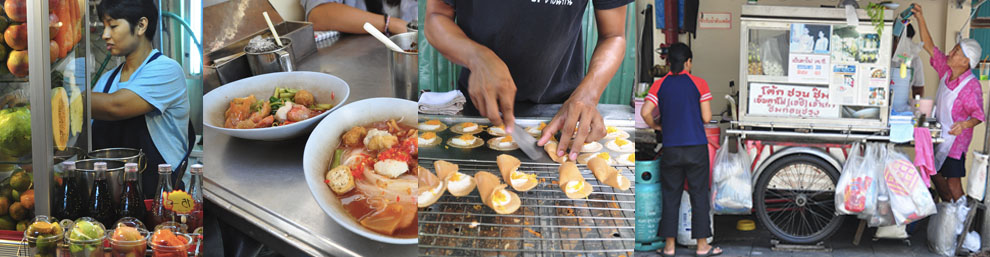
My friend James is a repository of useful food info, so when I learned that I was visiting the actual homeland of James’ ancestors, of course I was quick to ask him about what to eat. He came back with reams of information, including the fact that Cape Verde is home to a host of interesting and rare deep water fish and shellfish — think marlin, wahoo, yellow fin tuna, percebes, limpets and a meaty fish called forcado, with thick hollow bones like a cow. He told me about caldo de peixe (fish soup), made with big chunks of fresh fish and hearty root vegetables, and regaled me with tales of the delicious coffee of Fogo, grown in the soil in the crater of a volcano.
I did not get to sample these treats, but I fell in love with Cape Verde anyway … or at the very least, its cultural capital Mindelo, located on the island of Sao Vincente, one of the country’s 10 islands. This is the birthplace of Cesária Evora, the world’s most famous singer of morna, a musical art hailing from Cape Verde. Sao Vincente is also famous for its panoramic vistas, making it, in James’ words, the “Edinburgh of archipelagos”.
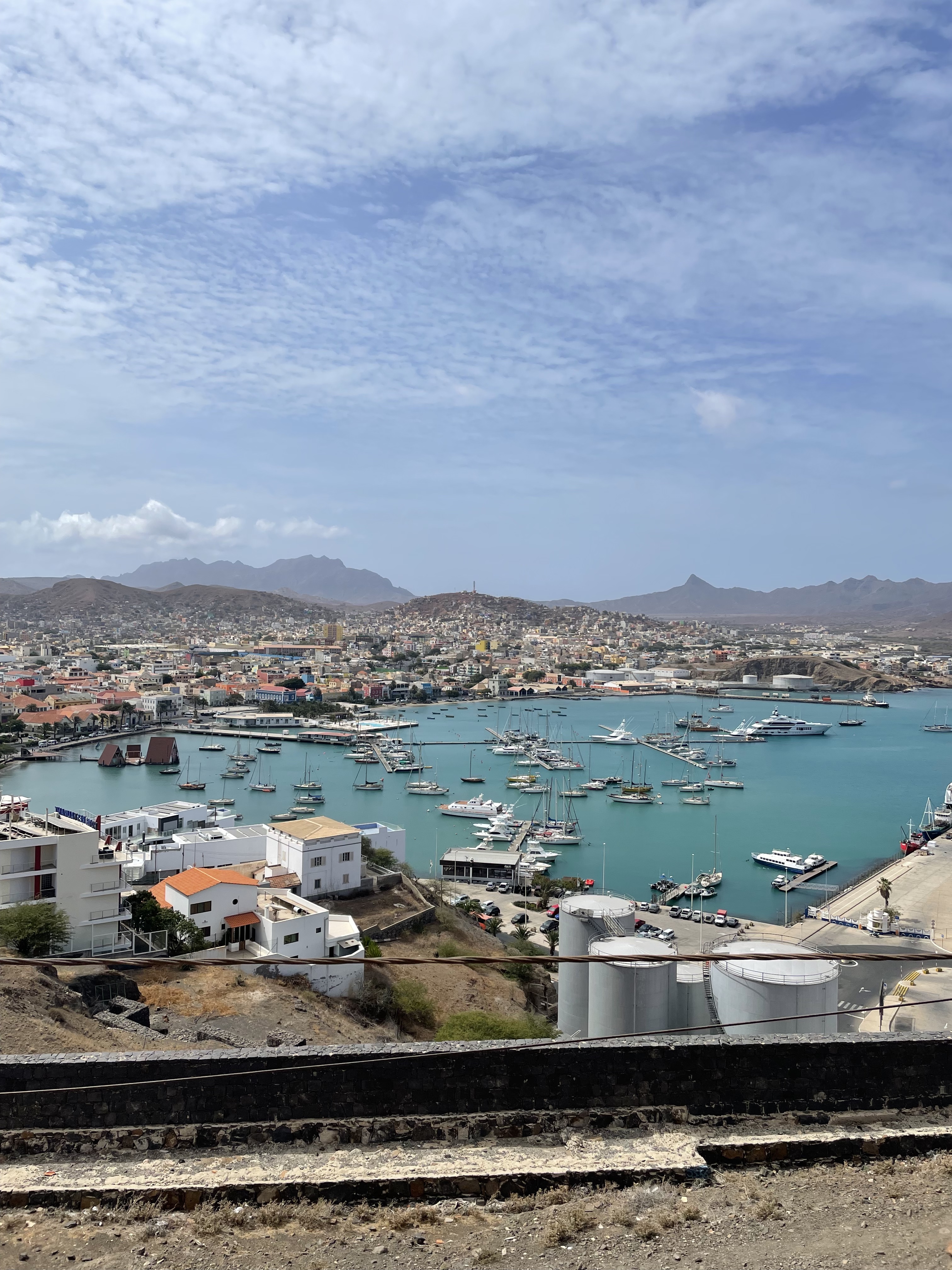
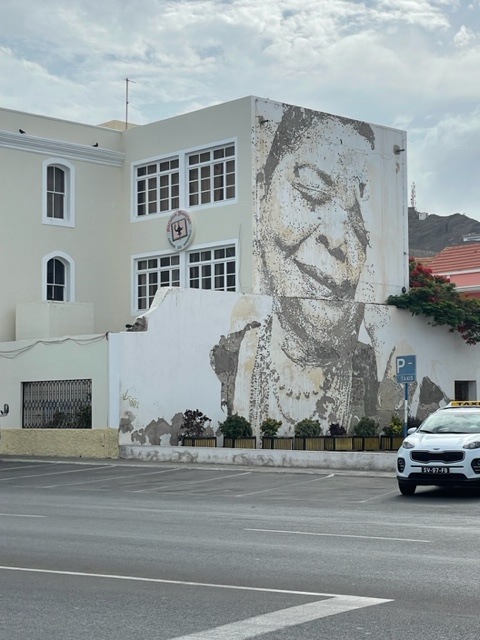
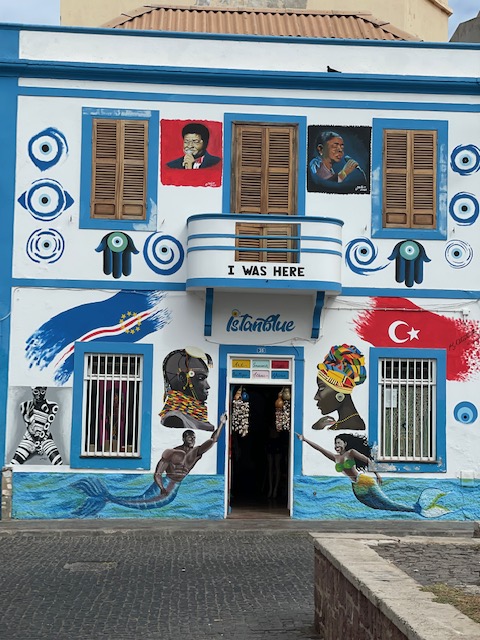
I’m not sure about Edinburgh, as I went at the age of 15 and remember almost nothing about that trip, but what I’d say about Mindelo at least is that it’s a beautiful city full of art, flowers, and bright buildings.
It also harbors a charming set of beaches, one of which appears to be ruled by a pack of very healthy and happy looking dogs, and another of which is home to a clutch of fishing boats that apparently no one will steal. When I find a place that I really like, I automatically pick out a home there, and my chosen place on Sao Vincente is a two-story shophouse with a bay window overlooking this spot.

We also saw a music performance accompanied by local dances, performed by a heartbreakingly beautiful woman and her younger brother. During the show, we were served three types of local liquor: grogue, like Brazilian cachaca but meant to serve as a “pick-me-up”; tamarind rum; and bondcha, a potent alcoholic syrup tasting of honey. The drinks were strong enough that members of the tour spontaneously started to dance in the dining room. I was just happy that there were also little salted fish nibbles to eat so that I did not stumble back out into the street rip-roaring drunk.
But it wasn’t until our tour was over when we managed to get to the meat — literally — of our day. We walked back out of the ship to a tempting restaurant I spotted called Nautilus , where I figured we would enjoy a nice leisurely lunch far away from the bustle of the boat. So it was a big surprise when we arrived and ended up encountering half of the other people on board, no doubt fruitlessly hoping for a nice leisurely lunch far away from the bustle of the boat themselves.
As a result, service was painfully slow, but we were so grateful to finally get our food that our server giggled. We’d ordered catchupa, a filling stew of beans, corn, cassava and meat described on the menu as Cape Verde’s national dish. James says that leftover stew can be drained the next day, fried into a patty and topped with a fried egg to make one of his favorite dishes called “catchupa guisado”.

We also had braised octopus and conch with good bread, alongside cubes of the local goat cheese with olives.

To pair with the meal, we chose a local wine called manecon, made from grapes grown on Fogo. Perhaps because of the wait, or perhaps because we just liked it so much, no matter: we ended up with two bottles, which pretty much put a stop to the rest of our day.
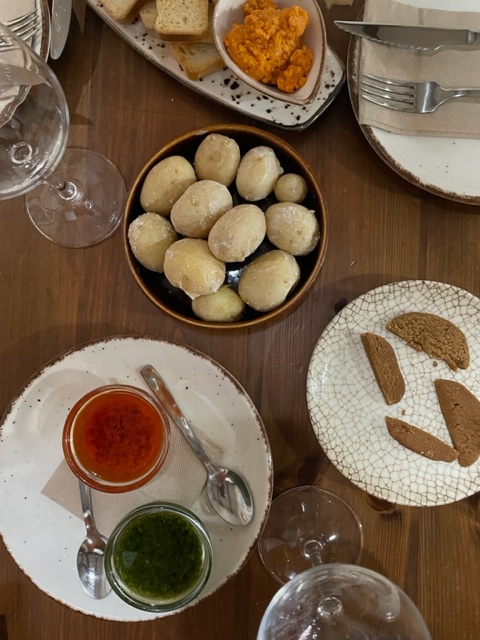
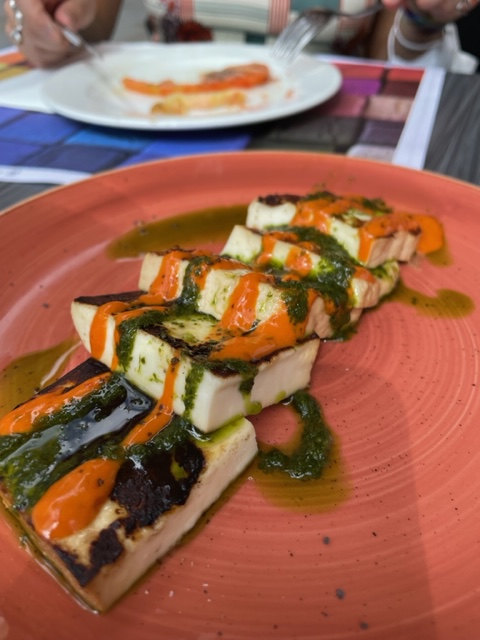
We then sailed to Santa Cruz de Tenerife, one of the Canary Islands, which made many people happy because finally their phones worked again. Here, obviously, the food was very Spanish-inclined, but with a few staples that seemed very “Canarian”: wrinkled potatoes, cooked in heavily salted water, paired with a garlicky green sauce and a mildly spicy red one; a handmade bread of mashed nuts, meal and honey with a consistency (and taste) like cookie dough; and the ubiquitous goat cheese, either sliced simply or mashed with garlic and paprika as a dip.
It was here where we also ended up wandering aimlessly into a movie set, spying a heavily bearded Gerard Butler. After upsetting his plans a second time by hooting and hollering from our table, well into our third and fourth servings of wine, several members of our party managed to walk up to the van in which he was hiding from us and finagled selfies out of him. Of course, I was not one of those people. I did, however, enjoy explaining to my tablemate Richard from London the vast lexicon of Mr. Butler’s films (“Plane”, no not that one; the one where he saves the president that’s not Channing Tatum; that horrible movie with Katherine Heigl that’s not “27 Dresses”; don’t you know “300”?)
We now are in the real homestretch of our around-the-world journey, and I have to say, I’m ready to go home. So is everyone else. Bring on Spain proper. Paella and ham, here we come.
 Bangkok Glutton
“When I find a place that I really like, I automatically pick out a home there”–This proves it–somehow, somewhere, you and I are related. It’s enough to propel me into the arms of 23andme to find out exactly how that happened. Also–wrinkled potatoes! The worst food name since mushy peas–
But somewhat more delicious I think
I need to find a recipe–they do intrigue me. Wrinkles calling to their own kind, no doubt.
It’s just skin on cocktail potatoes boiled in very salty water