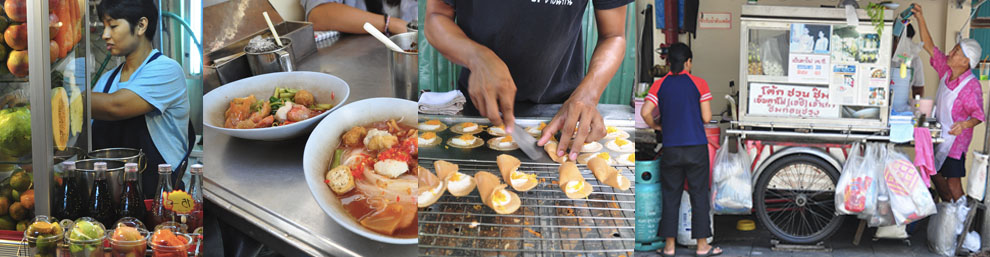

The piece of paper, hastily scribbled in red ink by Chef Jordi, read “12:30 Cerveceria Catalanas”. By the time we’d arrived (a wee bit late, I’ll admit), Jordi and his sous-chef Cordero were waiting near the front of a long, snaking line that double-backed on itself like the Chao Phraya River, in front of an unassuming building that resembled Barcelona’s answer to Kalaprapruek.
This was the famous aforementioned restaurant, representing a different facet of Jordi’s tapas vision: more mass-market, more commercial, way less expensive. According to Jordi, this was the kind of restaurant that might work in Bangkok: “Bread? Tomatoes? Potatoes? This costs very little to buy, but look at how much they are charging.”
Somehow, the customers queueing outside did not seem to mind that the restaurant was getting away with crazy profit margins. The restaurant inside was surprisingly spacious, made up of several rooms, all packed at Ikea-looking tables in a nondescript setting. There were nominal gestures at making the restaurant resemble a traditional tapas bar, with a “hot tapas” counter on one side of the entrance, a seafood counter on the other. The kitchen was made up of several sections, each catering to a different part of the menu — “meat”, “charcuterie”, “things on bread”, what have you. Each section numbered 2-3 chefs. This was less a restaurant and more of a tapas factory.
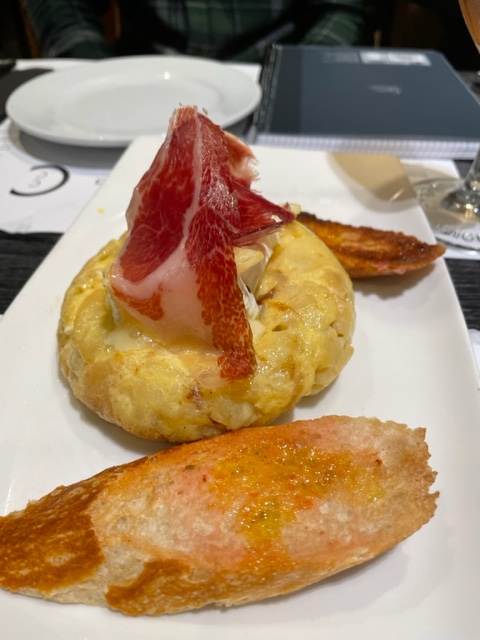
Taking one of the “daily specials” print-outs from the menu (“Here, it’s for you,” he said as he shoved this into my bag), Jordi said that specials changed every day, numbering enough dishes to make up the entire menu at another, lesser cerveceria. He ordered one special (a mayonnaise-y salad of crab and squid on toast with a pickle garnish) but mostly stuck to the classics for us: a tortilla, tomato bread with ham, and a beautiful mix of charred matchstick potatoes with a runny fried egg and more Iberico ham.

But we did not linger long over our meal here; ever mindful of the mammoth line growing outside, we left after half an hour, giving me barely enough time to finish my beer before we were back out into the street, Jordi hailing the cab like a lifetime New Yorker with a wolf whistle and a loud shout.
Our second spot was Paco Meralgo , sans the Jay Fai-like line of the first place, but buzzy in a different, quieter way inside. We shared a large table with another group of 4 and did not have to wait long until a procession of dishes arrived: the requisite tomato bread with vinegary anchovies; barely-cooked langoustines dressed in olive oil; baked baby scallops in their shells; raw, meaty clams; horned sea snails resembling the spindle that pricked Sleeping Beauty’s finger; green chilies that were thinner, longer and more pungent than the regular padron peppers.

Jordi showed us how to shuck the “Carril” clams by running our butter knives around the edge of the flesh, while we pried the snails from their horned shells with thick bamboo skewers (this one dish made me miss Thai seafood sauce). To end the meal, the proprietor brought out what was said to be the special of the house, cubes of juicy beef in a clay container, peppered with crisped garlic.

Noticing how I was relishing my langoustines, risking my dentist’s wrath by biting at its legs with my teeth, Jordi said, “You like this?”
“Obviously,” I said, langoustine fat in my hair.
“This is average,” he said. “Are you free tonight? I can take you to the seafood market. We can go at 2 in the morning.”
Now, I love seafood as much as the next person. But I am also 1,000 years old. I need 8 hours of sleep on average every night, which is why I am usually tucked up in bed by 10. In fact, my phone reminds me at precisely 9:14 pm to start getting ready for bed.
But a Michelin-starred chef was asking me to go to a seafood market open only to professionals for a personal tour. Was I literally crazy? Of course I would have to go.
“Can we go tomorrow night?” I asked. “We have to go to Gramona early tomorrow morning”.
Jordi laughed, recognizing that it was ridiculous I was not jumping at the chance to go to the seafood market immediately. “No,” he said. Then he smiled. “OK.”
Our trip to Gramona had also been arranged by our friend Jean-Claude, who, it turns out, is one of their global ambassadors. We had no idea what to expect, but the company had been kind enough to send a car to pick us up, with the added bonus of getting to listen to Simon & Garfunkel the entire way there.
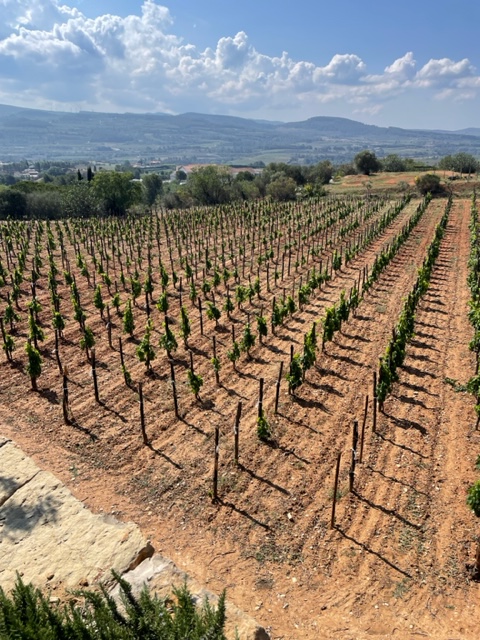
When we arrived, the main viticulturist, Jesus, met us, a warm, genial man who remained friendly even as my son sulked and pouted his way through the vineyard tour. The vineyard was a marvel, having become completely bio-dynamic over the past decade, with horses to work the fields, sheep to help eliminate the weeds and terrifying geese to guard the vines. Every year a man arrived with falcons to keep grape-loving sparrows at bay. The “pesticides” used were completely plant-derived.
And it was clear that, if there was a man born to grow things, that man was Jesus. He explained that every plant had its own personality, and that a successful grower had to recognize that. “Some plants are productive, some plants are lazy,” he said. “You have to know how to deal with them like people.”
Later, Jesus takes us to what he calls a “nursery”, where young plants are being trained to grow upright, their stems still spindly and small. Some have had the temerity to grow a few grapes, but Jesus says those will have to be clipped. “Their energy needs to be focused on growing up,” he said. “They are not ready to be productive yet.”
All the same, Jesus too was seeing changes to the vineyard wrought by climate change. “The Chardonnay, the Pinot Noir, I don’t know if we can keep growing it,” he said. He showed us a field where the plants looked stunted and gnarled. “These plants are fighting for their lives because they are malnourished,” he explained, adding that rainfall had lessened by more than half over the past three years. “They are doing everything they can to just survive.”
All the same, other plants thrived. When we get to the main chateau, workers are busy harvesting what looks like an entire grocery store shelf of onions. An enormous mastiff pads over to look. A cat, recognizing that my husband is allergic to it, immediately sits on his lap.

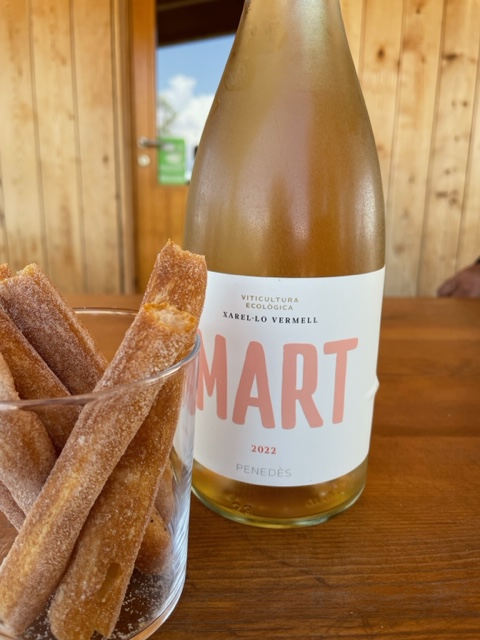
Jesus pads out with a bottle of wine and breadsticks that we immediately devour, as my son sits at a separate table out in the sun, intent on showing his displeasure with our activities. “He isn’t a productive plant yet,” I say, and Jesus laughs.
Before we leave, Jesus takes us to the chicken coop, where he literally lifts plump black hens from their nests to collect the eggs underneath. When he hands them to me, they are still warm from the chickens’ butts. It was one of the best gifts I’d ever received.
 Bangkok Glutton
As you know, it’s normal adolescent behavior. Later he’ll look back at it with embarrassment. How much later is anyone’s guess. I still have moments of regret at how bratty I was — and I’m 75 now.
Me too