My favorite street food things

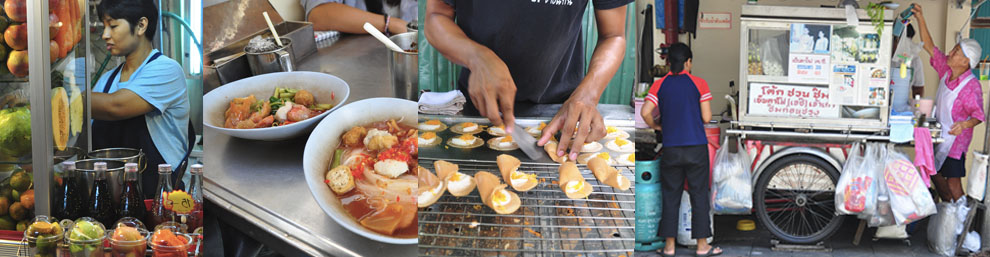
Fried wontons with homemade plum sauce at Bamee Gua

(Photo by @anuntakob)

If there’s one thing I’ve discovered from voraciously reading blogs and glossy weeklies, it’s that there are not enough lists out there posing as articles. To address this obvious imbalance, I’m going to try my hand at a few “list” stories, because I know that everyone, everywhere, is starving for more lists.

Such as: who do I blame first when something goes wrong?

1. My parents

2. My lost iPhone

3. Thailand

Or: What are my top three recurring nightmares?

1. Being chased by voracious man-eating crocodiles

2. Being chased by angry man with chainsaw

3. Going to a buffet and getting paralyzed by the immense variety of choice before finally coming to a decision, only to discover that I’ve lost your way back (OMIGERD SO AWFUL).

Or how about: Which successful eating spots leave me completely baffled? (aka I DON’T GET IT, YOU GUYZ)

1. Smith (I’m sorry)

2. Coffee Bean (it’s because of the cakes, right?)

3. MBK Food Court (this one most of all. If you must go a-food-courtin’, just amble on down the road to Platinum Mall, where it is MUCH BETTER. Really).

But why wallow in negativity? We should dispense with this talk of nightmares and food courts. What about my favorite three street food dishes right now? If you asked me about this a year ago, I would have said something along the lines of bamee kai (egg noodles with soft-boiled eggs), fried chicken, and, uh, bamee kai. But things change. What I can’t wait to eat now:

1. The minced pork noodles with egg at Bamee Gua (guaythiew moo san gub kai dip)

I’ve written about this fabulous noodle place before, but I want to emphasize how much I absolutely love this stand (sandwiched between the Vietnamese restaurant at Luxx XL hotel on Langsuan Rd). Everything here, down to the pickled turnip bits they use as garnish on their noodles, is homemade: the bamee, the wonton wrappers for their giew (dumplings), the plum dipping sauce for their fried wontons. While street food is, first and foremost, a convenience thing — “fast food” — it doesn’t necessarily mean everything should be some mass-produced whatever, all instant noodles, MSG and some processed squid strands. The food should be a convenience for the diner, but not for the vendor. The very best street food should be a labor of love (think In-n-Out Burger, not McDonald’s).

Bamee Gua embodies this, especially in a dish like the minced pork noodles, which are hard to find nowadays. Sort of like a Thai adaptation of spaghetti bolognese, it features thick rice noodles topped with a thick pork ragu, fragrant with curry powder and topped with a bright raw egg yolk for that extra somethin-somethin. I could go on and on, but I’ll just say: It is absolutely delicious.

2. Grilled fatty pork shoulder at Moo Jum on Suan Plu (kaw moo yang)

One of my editors put me onto this place (located at the entrance to Suan Plu Soi 3), which I had heard about for years but never went to. After writing a story that I thought pretty comprehensively listed all the places in Bangkok at which you could eat Thai food, he asked: “HAVE U HEARD OF THIS PLACE WITH THE FATTY PORK NECK? THE PHOTOGRAPHER TOOK SOME GOOD PICS THERE” and I was all: “NAH” while thinking mind yer own freakin beeswax, photographer guy. 

Despite the fact that Photographer Guy liked it first, Moo Jum is a great place, and not just because of the fatty pork neck, which is tender, meaty, saucy, even a little sweet. It’s got great service, a loyal clientele, and a super range of sides — the spicy squid salad comes to mind — as well as the Isaan-style sukiyaki that is the namesake dish. In short, it’s got everything, and I’m glad I finally made it there.

Fatty pork at Moo Jum

(Photo by @SpecialKRB)

3. Yen ta fo noodles at a whole bunch of different places like Guaythiew Pik Gai Nam Pung on Sukhumvit)

There is nothing that says THAI FOOD to me more right now than yen ta fo (seafood noodles in a pink fermented tofu sauce), which is funny since this is a Chinese-Thai dish. Whatever. The mix of flavors and textures — tart, sweet, spicy, slithery and crunchy — tell you everything you want to know about the interplay of all the elements that come to hand in Thai food, from the lip-puckering tartness of the red sauce to the surprise savory crunch of the deep-fried pork rind garnish.

You must choose carefully though; yen ta fo made badly is a bad, bad dish, all insipid sweetness with no depth whatsoever, the Playmate of noodles. The worst one I’ve had was at (and here we come full circle) the MBK Food Court, but I’ve had far more bowls that were fantastic, all over the country. Like everything else that’s worth the effort, explore and find your own favorite.

A bowl of yen ta fo noodles

(Photo by @SpecialKRB)
6 Comments

Filed under Asia, Bangkok, food, food stalls, noodles, pork, Thailand

Just Delish

Something different: naem tod

It will probably not surprise you when I tell you I think Bangkok street food is the best in the world. It’s not just the flavors or the “above-the-title” dishes: the pad thai, the som tum, the I’m-gonna-kill-you spices or soothing coconut cream. It’s the sheer breadth of it, the mind-boggling variety — from soups and salads to grilled hunks of meat to curries to porridges to desserts and everything in between; even the formats change, from shophouses to mobile vendors to cafeteria-like khao gub gaeng (curry rice) to aharn tham sung (made-to-order). There is so much variety that sometimes people argue over whether something is even actually “street food” or not. Having been to a few countries over the past few year, I can tell you that this is a great luxury, to get to argue over what category So-and-So place actually falls into. Thailand is very blessed, food-wise.

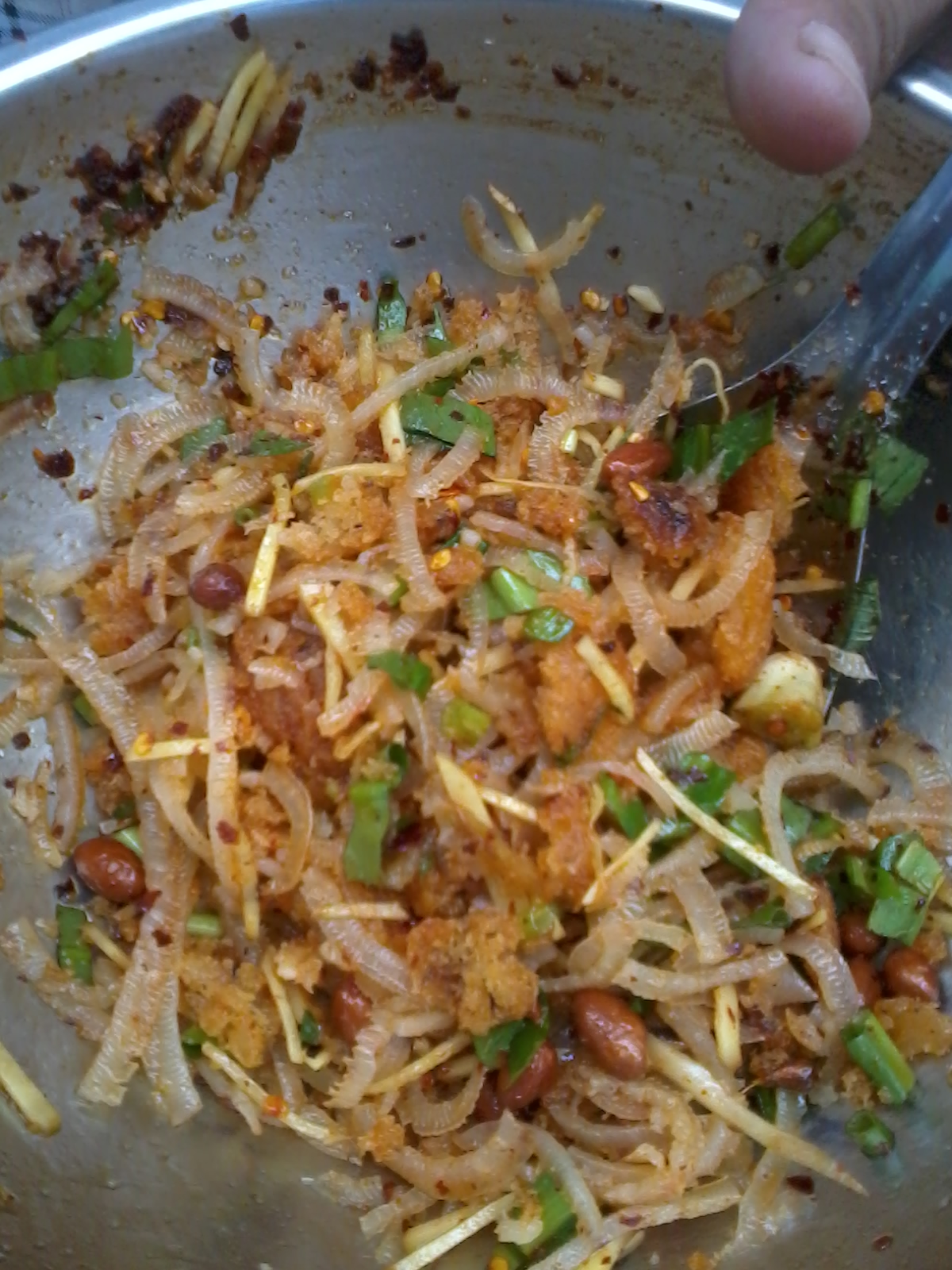
To me, naem tod is an example of the awesomeness of Thai street food: a recent discovery that I now can’t help seeing everywhere I go. Naem, the beloved sour fermented sausage originating from both the North and Northeastern regions of the country. Usually made from a mix of pork, crunchy piggy bits like cartilage or skin, chilies, garlic and a bit of sticky rice, naem is wrapped up and “cooked” by leaving it to ferment for a few days, lending the meat its characteristic tang (for the record, my mother’s favorite naem maker is “Naem Anchan” in Chiang Mai).

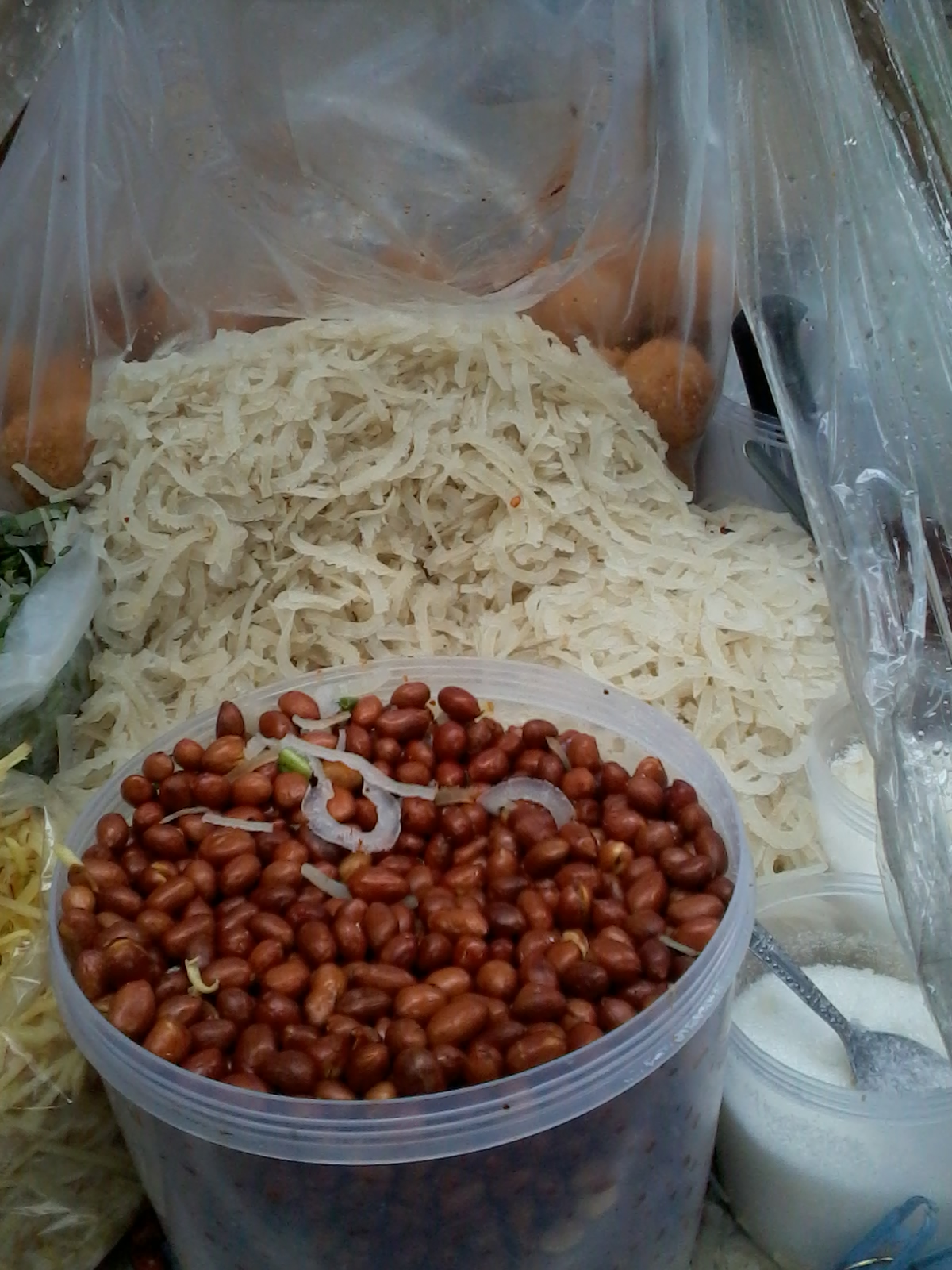
Thais like to make sure everything is presented in its own special way, and naem is no different. The “proper” way to serve it — the best way to offset its acidity and slightly gummy texture — is with whole fresh bird’s eye chilies, fresh ginger, bits of rind-on lime,  slivered shallots, roasted peanuts and fresh cabbage. What naem tod does is to basically combine the shredded sour sausage (or, in some vendors’ cases, pork skin or cartilage) with its accompaniments, chopped salad-style, and top it with Northeastern Thai-inspired “croutons”: shredded bits of deep-fried sticky rice. The ensuing salad is then tossed lightly in a spicy yum-like dressing (a mix of fish sauce, lime juice, chilies and sugar).

Naem tod vendors can be spotted by the glimpse of croquette-like deep-fried sticky rice balls they usually place on their carts — these vendors are almost always ambulatory. The fixings that go with naem are also included, alongside “fresh” veggies like the aforementioned cabbage, sawtooth coriander and/or betel leaves. As for the name, well, the naem is occasionally wrapped in the sticky rice and deep-fried, which I think is ingenious. But sometimes it’s just shredded, or there is an approximation of it via just using the crunchy pig bits, and that’s ok, because the flavors and textures are all still there: fiery hot and tart, mitigated by some crunch and a bit of bounce.

The vendor I photographed here is in front of the Kasikornbank near Sukhumvit 33; he is on Sukhumvit 23 in the afternoons. There is another one at the entrance to the shortcut to the Polo Club from Rama IV Road, next to the Esso gas station by the muay Thai stadium there. My favorite, though, is at the entrance to Petchburi Soi 14.

The naem tod vendor’s typical wares


10 Comments

Filed under Asia, Bangkok, food, food stalls, Isaan, pork, Thailand

Glutton Abroad: Nepalese Wonderland

Puppets for sale in Patan

Psychics and Dionne Warwick aside, it is impossible for most of us to tell the future. But handy signals do exist to tell us what may happen if you continue with your foolish ways. People call these “warning signs”, which come with varying levels of urgency. For example, a restaurant that is empty on a Friday night at 7pm = buyer beware. On the other hand, a guy who compares himself in any way to Don Draper = run, don’t walk, in the opposite direction.

A tour guide who cannot believe you are taking her particular tour = somewhere in between the two extremes on the “warning sign” spectrum. To be fair, when I look back on my overland trip through Tibet into Nepal, I can’t believe I took it either. There were restaurants with indiscriminate brown smears on the floors and walls, where people hawked on the floor and the dishes appeared indistinguishable from one another. There were the numerous road checks along the way, and the thin air. And finally, there were the filthiest rest stops I have ever seen, where a smear of feces and a pile of used maxi pads appeared to be the de riguer decorative devices needed to pull every door-less toilet cubicle together (eventually, we would give up and go out in the open, searching for whatever shelter we could amid the shrubbery and rocks).

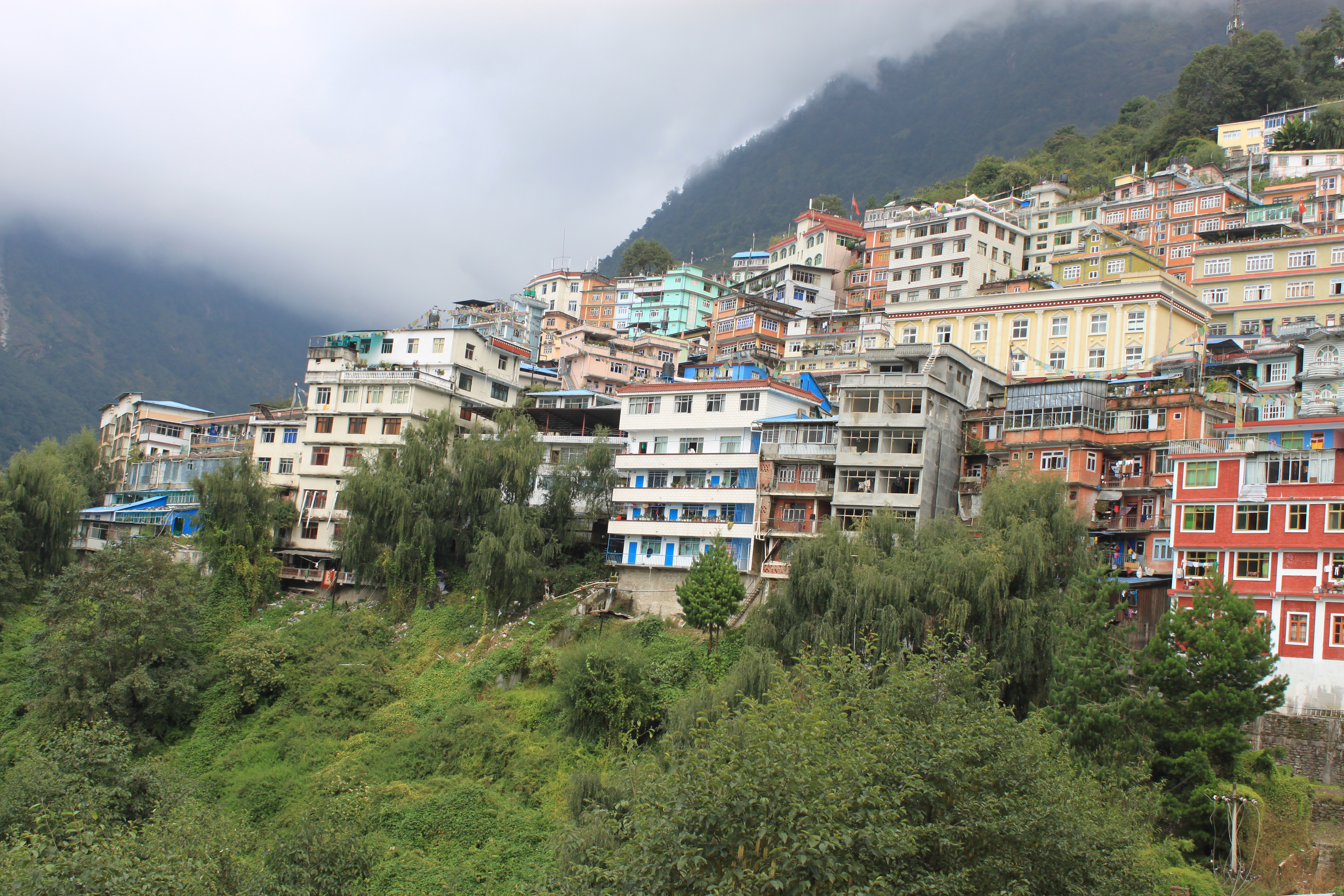
So it may not actually be true that Nepal is a wonderful wonderland, full of My Little Pony dust and butterfly wings and Ryan Gosling’s tears. It seemed that way to me, though. After passing through the southern Tibetan border (where we were temporarily abandoned by our tour guide, who did not know he would be needed to check us through) and crossing a heavily-guarded bridge into Nepal, everything seemed different: the air getting thicker and more oxygenated as we descended down into the Kathmandu valley, the surroundings more lush and green, the soldiers at the checkpoints (something Tibet and Nepal had in common) more handsome.

 Near the Nepal-Tibet border

Nepal is an interesting country, perched on the northeastern border of India but serving as a de facto “buffer zone” between both India and China. The birthplace of Buddha, Nepal is now made up of more than 3,900 villages scattered across three zones: the flatlands, the middle hills, and the high mountains. Although only 20 percent of the country is “lowlands”, half of the people live there. And Kathmandu, home to 2 million people, is considered the “center of everything”.

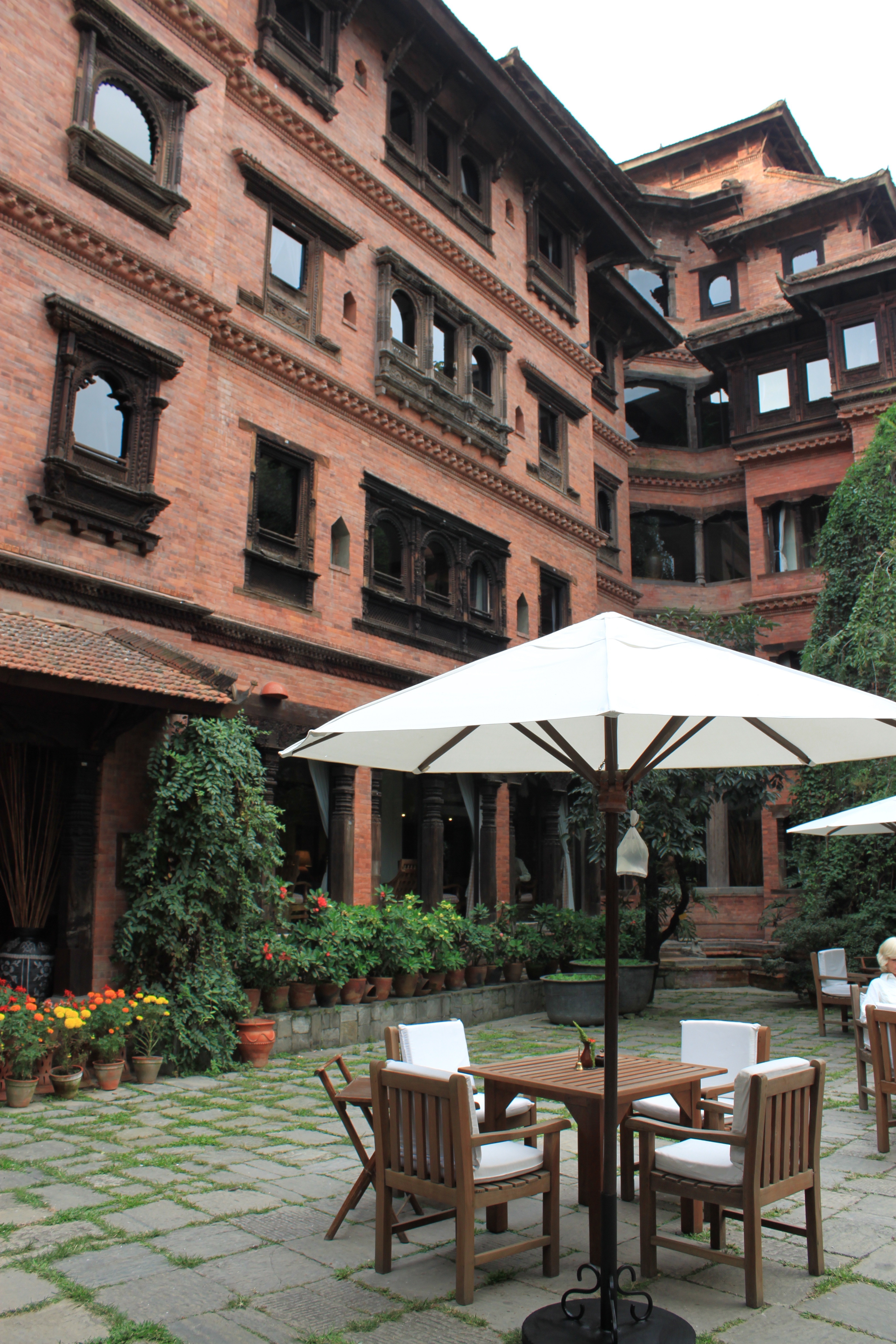
When we finally make our way into the bottom of the valley, guarded over by a gigantic statue of Shiva the Destroyer, I am ready to weep. The altitude is a mere 1,300 m above sea level — practically Bangkok (for the record, between 2-15 sq m above sea level). I will not have to see another plate of yak for … well, as long as I want to. And we are headed to Dwarika’s Hotel (http://www.dwarikas.com), a luxury abode featuring centuries-old Nepali artifacts and a far cry from the decrepit, stained hotels on the western Chinese frontier.

Dwarika’s courtyard

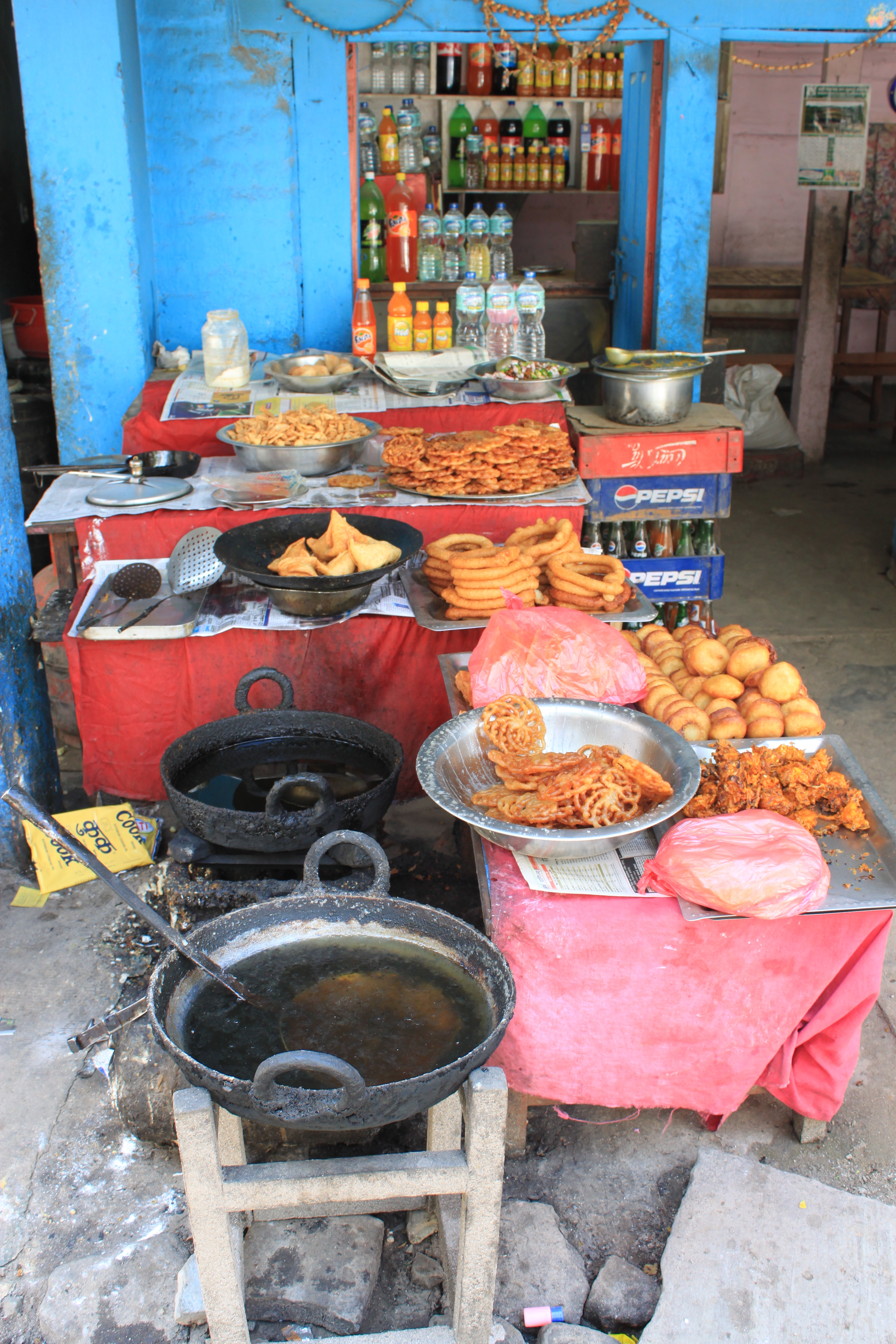
But the thing that most brought a smile was the chance to stuff some different food into my gullet. For a week, it had been stir-fried greens, tofu and the occasional yak dish; we were to trade these dishes in for dal (a lentil stew), spicy pickled chilies, and biryani (meat cooked beneath a mound of rice). On the streets, fried things predominate: triangular samosas, dumplings and what Thais call sai gai (chicken innards), or pretzel-shaped dough deep-fried in a fragrant saffron syrup. There are also carts featuring an exuberance of nuts and puffed rice, over which a tart-spicy sauce and chili powder are slathered. And of course, there are the omnipresent apple, banana and pomegranate carts, everywhere.

Nepalese fritter stand

Even if it was only for a few days, I was glad I got to see Nepal — its fertile, hilly beauty, its friendly people, its exuberance and color. That’s not to say everything was the wonderland it seemed when I first saw it; Kathmandu’s traffic jams are Bangkok-worthy, and the Thamel district is reminiscent of Khao Sarn Road, but, uh, not as nice (make of that what you will). It was an interesting flip side to our Tibet experience: both gorgeous in different respects, both memorable in ways that you wouldn’t expect.

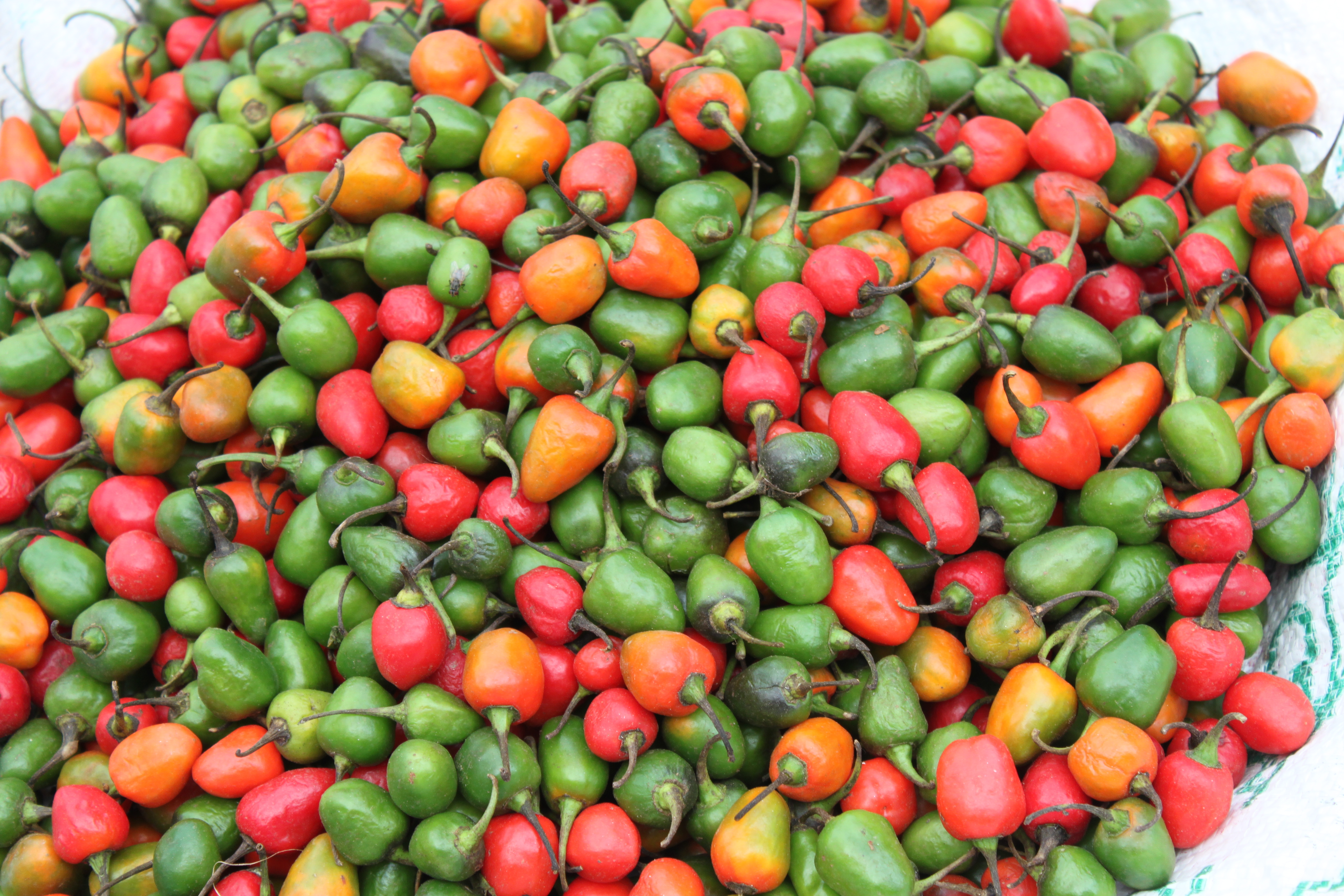
Fat chilies for sale


9 Comments

Filed under Asia, food, food stalls, Nepal